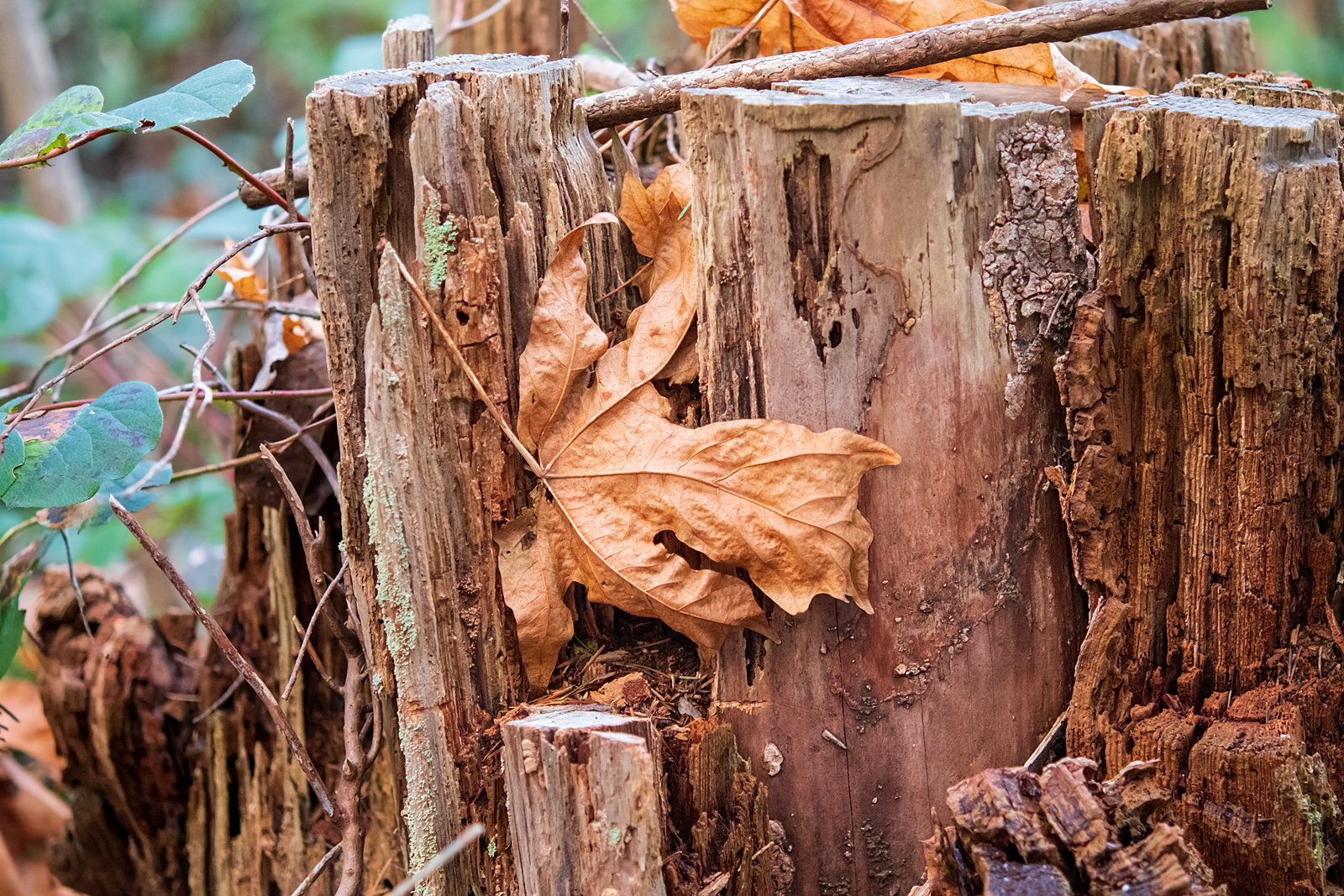
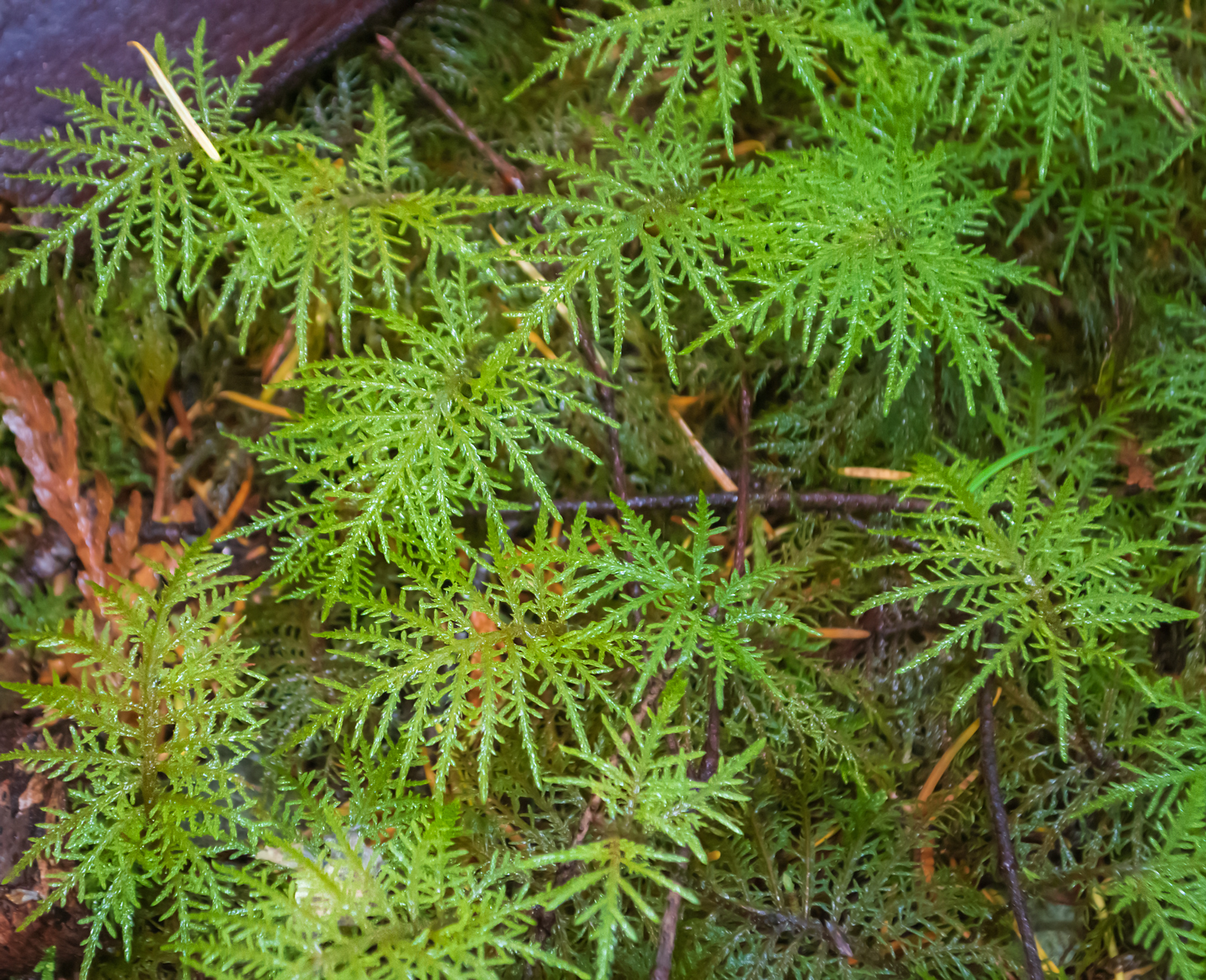
Showing posts with label stump. Show all posts

Wednesday, September 17, 2025

Speeders and Settlers

I had company on my way up to the elk viewing platform. Speedy, elusive little beasties, zipping about, landing on the path and instantly becoming invisible. I took many photos of stones where I was sure I had seen one perch.

Got one, finally! A meadowhawk, Sympetrum illota.

Some things weren't in such a hurry.

Dehydrated stump. still clinging to the hillside, growing scraps of lichen.

A grasshopper dressed to disappear among the lichens and toasted mosses. When I got too close to these, they would take off with a loud "click".

A better look at its face. A short-horned grasshopper, Dissosteira sp

In the bit of shade under a hill, sunlight frames the rocks and glows through salal and Oregon grape leaves. And is that a face I see? An annoyed penguin, maybe?

Just another rock, out in the open, with lichen and dried moss, and leaf shadows.

~~~~~~~~~~~~~~~~
Me acompañaron mientras subía hacia la plataforma de observación de los alces; criaturas veloces, fugaces, que volaban o saltaban alrededor mio, se detenían en el sendero e inmediatamente se volvían invisibles. Saqué muchas fotos de lugares donde estaba segura de haberlas visto.
  1. ¡Por fin! Una se detuvo por un segundo. Es una libélula, Sympetrum sp.
  2. Algunos acompañantes no tenían tanta prisa. Este es un tronco viejísimo, totalmente seco, donde empiezan a crecer algunos líquenes.
  3. Un saltamontes, vestido de manera que puede desaparecer entre los líquenes y los musgos quemados. Estos, al saltar, hacían un fuerte chasquido con las alas.
  4. El mismo, ahora con la cara enfocada. Dissosteira sp.
  5. Donde hay un poco de sombra bajo un cerrito, la luz del sol brilla através de las hojas de Gaultheria shallon y Mahonia nervosa, y corona de oro las piedras. ¿Y es eso que veo una cara?  ¿Un pingüino enojado?
  6. Otra roca, en pleno sol, cubierto de líquenes y musgos secos, y con sombras de las hojas.

Wednesday, November 08, 2023

Is it a nurse stump if all it bears is mushrooms?

One stump, oodles of mushrooms. (I only counted one side of the top; 85. I may have missed some.) 

Stump on a side hill, near a creek. A moist environment.

A patch on the side. I love the contrast in textures, old wood and smooth mushroom caps.

Top front. Here's where I counted 85 'shrooms.

Viewed from the side. The whole mass held together by spider webs, of course.

Older caps, with age spots.

A small group, with moss.

Tinies on the edge. And tiniers.

I didn't try to identify these.

~~~~~~~~~~~~

Hongos en un tocón. Cientos de hongos. En un lado del grupo encima, conté 85 hongos. Puedo haber dejado algunos sin contar.

Fotos;

  1. El tocón. Se encuentra en la ladera, cerca de un riachuelo; una zona húmeda.
  2. Un grupo de hongos en el costado. Me gustó el contraste de texturas, la madera podrida contra los sombreros lisos de los hongos.
  3. Una vista del grupo encima de la "mesa". Aquí es donde conté los 85.
  4. El mismo grupo, visto desde un lado, todo unido con telarañas, como se acostumbra.
  5. Un grupo de hongos envejecidos, con sus manchas por la edad.
  6. Otro grupito, con musgos.
  7. Hongos chicos y chiquitos, con las hojas de abeto (2 cm.) para mostrar el tamaño. 
No intenté identificar estos hongos.

Wednesday, January 25, 2023

Ain't dead yet

 And this one, long-since felled, still keeps on supporting its community.

Busy little stumpie
The outer bark and the layers of live wood have mostly rotted away, exposing the solid heartwood. Salal has rooted in the old wood, lichens grow on the outer edges, spiders and their prey hide in the many cracks. And big-leaf maple leaves rest on their trip to join the rotting mulch on the ground beneath.

Down underneath, invisible in the soil, the roots still form part of the living earth, the fungi, the inter-connected roots of the forest, still serving as conduits for liquid and nutrients.

Life goes on. And on.

~~~~~~~~~~~~~~~~~~~~~~~~~~~~~~~~
Otro tronco, éste cortado y desbaratándose, pero que sigue como soporte de su comunidad.

Foto: un tronco cortado bajito.

La corteza y las capas de madera activa se han pudrido en gran parte, dejando a la luz la madera del corazón, el duramen, todavía en firme. El arbusto nativo, salal, Gaultheria shallon, ha penetrado la madera con sus raices, en la superficies exteriores crecen líquenes, arañas y su presa se esconden en las múltiples grietas. Y encima, hojas del arce de hoja grande descansan camino a unirse a sus hermanos descomponiéndose hasta tornarse abono, en el suelo.

Y más abajo, debajo del suelo, invisibles, las raices siguen formando parte de la tierra viva, los hongos, las raices entrelazadas del bosque; todavía sirven para conducir el agua y los nutrientes que lleva.

La vida sigue. Y sigue ...


Wednesday, December 28, 2022

Hideout

 One more hole in wood, this one in a short stump. Under Douglas-fir and big-leaf maple; made obvious by the cones and fallen leaves. And a flying maple seed.

Is that a face on the broken branch?

And today, sunset was at 4:25, six minutes later than it was a week ago. And from now on, the sun will rise a minute earlier every couple of days. The days are grey, but they're getting longer. I look forward to this every winter.

~~~~~~~~~~~~~~~~~~~~~~~~~
Una foto más de hoyos o pozos en madera, este en un troncón cortado muy bajo, bajo abetos de Douglas y arces de hoja grande, como se ve por las piñas y hojas secas que se alberguen allí, también por la semilla volante de arce.

Y parece que hay una cara en esa rama rota.

En otras noticias, hoy se puso el sol a las 4 con 25 minutos, es decir, 6 minutos más tarde que la puesta del sol hace una semana. Y desde hoy, amanecerá un minuto más temprano cada par de dias. Los dias siguen grises, pero se están alargando. Cada invierno, yo estoy esperando este momento.

Thursday, March 31, 2022

Holey stump

I've been walking by this stump behind a beaver pond several times a year for five years. Each time, I stop and look at the lichen, then walk on; there are too many blackberry vines to get in really close. I passed by again today. And now, there's something new.

Holes! Big holes! Big enough to put my hand in.

I'm assuming a woodpecker made these holes. A salal leaf is up to 10 cm. long; compare these to the largest of the leaves below. They're not nest holes; the stump is too close to the ground for safety, but it's an old stump and probably full of ants and other grubs.

What woodpecker makes neat round holes?

~~~~~~~~~~~~~~~~~~~~~~~~~
Por cinco años, he estado viendo este tronco cerca de la laguna donde los castores tienen su madriguera. Cada vez que paso, me detengo para mirar los líquenes que crecen en la corteza. Pasé por ahí hoy otra vez, y ahora hay algo nuevo; algo, probablemente un pájaro carpintero, ha excavado una serie de hoyos redondos, buscando hormigas y gusanitos, creo. Miden más o menos 10 cm de diámetro, comparando con las hojas de Gaultheria shallon a la base.

Pero, ¿cuál de los pájaros carpinteros hace hoyos tan perfectos?


Friday, March 18, 2022

Burnt stump, early spring

 A burnt stump on a hillside, logged off a few years back, hosts salal, huckleberry, and lichens. Doing its bit to restore the lost forest.

The red branches are huckleberry, just ready to bud out. And on the ground, last year's bracken ferns shelter the new buds due to spring up this month from their rhizomes.

~~~~~~~~~~~~~~~~~~~~~~~~
Un tronco quemado en un sitio cosechado por los madereros hace pocos años, sirve como base y nutrientes para nuevas plantas de "salal", Gaultheria shallon; el nativo arándano rojo, Vaccinium parvifolium; y líquenes Cladonia, haciendo su parte en la restauración del bosque.

Las ramas rojas son del "huckleberry", el arándano rojo; están a punto de brotar las primeras hojas. Y el suelo está cubierto de helechos deciduos del año pasado; se mueren con las primeras heladas pero siguen en sitio protegiéndo a los nuevos brotes, que aparecerán este mes, brotando desde los rizomas.


Thursday, December 09, 2021

Protected zone

Microclimates: the inside of a burnt-out stump is protected from wind, warmer, maybe drier than the outside. This little stump is on the hillside above Lake Hoomak.

Hollow stump, with moss, lichens, salal,and evergreen ferns.

On the outside of the stump, the lichen is a Cladonia species. On the inside a dust lichen, probably a Lepraria species, covers the burnt sections. Moss grows on the broken rim, where moisture collects.

~~~~~~~~~~~~~~~~~~~~~~~~~~~~~~
Un tocón de un arbolito, habiendo perdido el centro, crea varios microclimas: dentro, está protegido de los vientos, menos frio, más seco; afuera recibe el impacto de los vientos y la lluvia que estos vientos cargan. Este toconcito está en la ladera arriba del lago Hoomak.

En el exterior, lleva líquenes Cladonia. Adentro, un liquen de polvo, probablemente de una de las especies de Lepraria, cubre la parte quemada. Y el borde superior, donde se detiene el agua, sostiene musgos. Alrededor, hay helechos perennes y salal (Gaultheria shallon).

Wednesday, November 03, 2021

Rainforest carpet

The forest around the shores of Lake Roberts, away from the edges where the sun shines, are, at a human eye level, brown and dark: tall, closely packed trunks of Douglas fir and cedar, with a carpet of Oregon beaked moss and evergreen sword ferns, and here and there the little lights of huckleberry leaves. Earlier in the year, vanilla leaf and starflowers grew among the ferns; now in November, all that remains of them are brown, shrivelled leaves.

Stump with huckleberry crown, brown trunks.

Oregon beaked moss, Kindbergia oregana Step moss, Hyclomium splendens.

Delicate, fern-like leaves of step moss

And this month, now that the rains have returned, the forest floor is covered with flat-topped orange mushrooms, so many that, walking among the trees, I had to be careful where I put my feet to avoid crushing them.

Unidentified orange caps.

Slugs love them.

More mushrooms, other species, tomorrow.

~~~~~~~~~~~~~~~~~~~~~~~
El bosque alredededor del lago Roberts, aparte del borde donde le llega el sol, donde crecen árboles de hoja caduca, son, al nivel del ojo humano, de color café, y algo oscuro; una multitud de troncos de abetos de Douglas y cedro. Abajo, una alfombra verde, hecha del musgo Kindbergia oregana y los helechos perennes. Los arbustos de huckleberry proveen lucecitas verdes de adorno. En el verano, entre los helechos se encontraban Achlys, hoja de vainilla, y flores estrella; ahora en noviembre tan solo les quedan algunas hojas muertas.

Fotos: 1. El bosque, con un tronco cortado, desbaratándose, con su planta de huckleberry encima.

2 y 3. El musgo Kindbergia oregana.

Y ahora que ha vuelto a llover, el suelo está cubierto de hongos de sombrilla anaranjada, plana. Tantos hay que tuve que caminar con mucho cuidado para no aplastarlos.

Fotos 4 y 5. Los hongos. Uno está medio comido; obra de una babosa.

Mañana habrá más hongos, de otras especies.


Saturday, September 25, 2021

Stump fungus

This was on the cut surface of an old stump.

Fungus on old wood.

It had rained the day before, and the stump felt dampish, but the fungus was wetter. The fungus was solid, but the ligher areas felt soft, like velvet. I couldn't detect any scent, other than wet wood.

Zooming in. The dark lumps were higher, about an inch deep, harder and drier.

I have no way to identify this.


~~~~~~~~~~~~~~~~~~~~~~~~~~~~~~~~

Este hongo crece en la superficie cortada de un tronco viejo. No lo puedo identificar. Mide como 1 cm de hondo en las partes más claras, y 2 cm en las bolas. Había llovido el dia anterior, y la madera se sentía húmeda, pero el hongo, en las partes claras, estaba más húmedo. Todo es sólido, pero las partes claras tienen la textura de terciopelo.
 

Thursday, June 03, 2021

Settling in

At the top of the intertidal zone, a huge old root with a jolly face joined up with a stump and they're collecting floating logs.

 
And the stump is growing a garden

Detail of the wood.

~~~~~~~~~~~~~~~~~~~~~~~~~~~

En la zona alta iintramareal, unas raices grandes y viejas, llevando una cara alegre, se ha juntado con un tronco cortado, y juntos, coleccionan madera que llega con la marea. Y el viejo árbol ha empezado un jardincito.

Segunda foto: detalle de la madera de la raiz.

Monday, April 12, 2021

Bad hair day

In the shade at the back of a campsite on McCreight Lake, this stump tries to hide until the huckleberry hair grows out.

Stump, moss, huckleberries in bud.

Sorry, friend; I couldn't resist.

~~~~~~~~~~~~~~~~~~~~~~~~~

Dia descabellado: un tronco con "pelo" de arándanos rojos, muy despeinado, se trató de esconder en las sombras atrás de un sitio del campamento en el lago McCreight.

Tuesday, March 09, 2021

Tippy snag

I have to wonder about this.

Peeled, burnt, holed. And tipped.

Just a snag. But where's the rest of it? Why is it burnt and peeled in a forest with no other burnt wood? Does anyone live in that big hole?

~~~~~~~~~~~~~~~~~~~

Este tronco roto me tiene intrigada. ¿Qué le pasó? ¿Adónde está lo demás del árbol; porqué no está en el suelo cerca del tronco? ¿Porqué está quemado y sin la corteza en medio de un bosque sin ningún otro árbol quemado? ¿Quién vive en ese hoyo?


Monday, January 11, 2021

Recyclable

Just another stump. Loaded with lichen, fungi, and mosses. And rotting wood.

Crumbling.

Or maybe I should call it a recycling operation. Turning the remains of an old tree into nutritious soil.

~~~~~~~~~~~~~~~~~~~~~~

Un tronco viejo, cubierto con líquenes, hongos, y musgos. Lleno de madera podrida.

O mejor, lo puedo llamar un centro de recyclaje, que convierte un viejo árbol en suelo nutritivo.

Thursday, November 12, 2020

Floppies

I don't remember ever seeing mushrooms like these before.

Small brown mushrooms on a stump, drooping.

They look like the lichen agarics, by the shape (depressed centre, pie-crust edges) and location (on decayed wood, although I don't see the lichen that should be there), but why are they so droopy? I've looked at hundreds of photos; they always seem to maintain their shape, even tipped over or broken. But not these!

A closer look.

Unhappy with two days of no rain? Too much sun? The stump is in deep shade on the Elk Falls trail.

~~~~~~~~~~~~~~~~~~~

Nunca he visto antes hongos tan tristes, tan decaídos. Parece que son otros de los hongos de liquen, los lichenomphalia umbellifera, por su forma, con el "ombligo" en el centro y las orillas onduladas, y por su sitio, creciendo en madera podrida, con musgos, aunque no veo los líquenes que los deben acompañar. Pero he mirado cientos de fotografías, y no veo ninguno que se dobla de esta forma; todos, aún rotos y tumbados, mantienen su rigidez.

¿Qué les habrá pasado? ¿Falta de lluvia? Ya que hacía dos dias que no había llovido. ¿O demasiada luz? Pero estaban en sombra densa en el sendero hacia las cataratas.


Thursday, November 05, 2020

Still holding my breath

 Fragile. Suits my mood tonight, watching events down south.

Tiny mushroom on a stump, more stem than cap.

~~~~~~~~~~~~~~~

Frágil. Así me siento esta noche, siguiendo las noticias de los EE UU. Este honguito me llama.


Wednesday, October 28, 2020

Spooky Candlesnuff

On an old, very dead stump in the museum grounds, these black and white clubs grow:

Carbon antlers, Xylaria hypoxylon. Aka Candlesnuff fungus.

These mushrooms are slightly bioluminescent; very slightly; a vague, greenish glow you would notice only at midnight on a moonless night. Just the thing for Hallowe'en week!

The tips are white on young specimens. As they mature, they turn black. The white coating is made up of spores.

As with all mushrooms, the location is important. These need dead wood; they are often the last fungus to show up as a stump disintegrates.

Zooming in to see the individual stalks.

~~~~~~~~~~~~~~~~~~~

En un tronco cortado, ya muy muerto y deshecho, crecen estos honguitos en blanco y negro.

Son Xylaria hypoxylon, comunmente llamado el hongo de la vela, las astas de carbono o el hongo del cuerno de ciervo. Son muy levemente bioluminescentes; en una noche muy oscura, sin luna, se podrá ver una luz tenue, verde, fantasmal. ¡Muy a tiempo para el dia de los muertos!

Cuando son nuevos, la punta es blanca, cubierta de esporas. Mientras madura, se va haciendo negro.

El sitio es importante; cada especie de hongos crece en sus lugares preferidos, a veces solamente en esos sitios, como por ejemplo bajo árboles de una sola clase. Estos honguitos (hasta 8 cm.) requieren madera ya muy podrida.


Thursday, July 09, 2020

Crumbling

There is a tendency to look at the "pretty" things: the fresh green leaves, the dewy flowers, the blue skies and billowing clouds. Sometimes, though, I stop to look at things falling apart.

Like these dead branches and stumps.

Pine tree, crumbling but still standing.

Stump, spilling its innards,

Dead stick and cones in the duff.

~~~~~~~~~~~~~~

Acostumbramos mirar las cosas bellas: las hojas nuevas, verdes; las flores con sus colores frescas, el cielo azul y las nubes blancas, como almohadas. Pero de vez en cuando se me ocurre fijarme en cosas que se están desbaratando.

Como estos troncos y palos muertos.


Tuesday, May 26, 2020

Brown's Bay mix

Here are the last of the Brown's Bay photos, in no particular order, before I move on to something else.

Large stump in the forest. The notch part way up is where the loggers anchored a support to stand on while they cut above the wide root end of the tree.

Tiny creek tumbling down the hillside.

Out in the open, by the RV sites. One tree.

Another view from the rocks. With a boat with some sort of yellow tanks.

And one of the swallow nests I went to look for. No swallows.

I posted this swallow nest and another to the Worst Bird Photographs Facebook page, although it really shouldn't have counted: there are no birds to be seen. Just feathers. The parents were zooming back and forth, but it's probably too early for chicks.

~~~~~~~~~~~~~~~~~~~~

Estas son las últimas fotos de Brown's Bay, antes de que pase a otro tema.

  1. Un tronco grande en el bosque. El corte hecho a medio tronco es donde los madereros insertaron un soporte donde se podían parar para cortar el árbol.
  2. Un riachuelo bajando el cerro a saltos.
  3. En donde se estacionan los remolques y RVs, todo bien "civilizado" con pasto y un solo árbol.
  4. Otra vista desde las rocas, con un barco en la distancia con un gran tanque amarillo.
  5. Un nido de golondrinas. Los padres estaban volando alrededor, pero no hubo polluelos visibles. Probablemente sea un poco temprano y no más hay huevos por ahora.


Monday, March 30, 2020

Green ghost

This is a strange thing. In a tangle of old dead ferns, thimbleberry canes, alder branches, blackberry vines and ancient logs, all in shades of brown and grey, a large mass of pale, sickly green shone out. I pushed through the weeds and climbed over a few slippery logs to get a better look.

It's a stump, almost completely encased in lichen.

Of course, these lichens are everywhere, but what intrigues me is that on none of the surrounding logs or branches is there any sign of it. Just on this stump. The green on the logs on the right is moss; there was no lichen on them.

View from as close as I could get without breaking my neck.

The lichen is mainly lipstick cladonia; here and there you can see the tiny spots of red on the tips. Scattered throughout are a bunch of those button lichens that grow on old trees.

UPDATE: In the comments, M. Goff identified much of this mass, the green stuff with pinkish buttons, as Icmadophila ericetorum, otherwise known as "fairy barf", "fairy puke", "fairy upchuck", and more politely, as peppermint drop lichen or spraypaint lichen.

UBC has a good photo, here.

~~~~~~~~~~~~~~~~

Muy extraño: en un lío de helechos muertos, ramas de aliso rojo, cañas de mora y de "thimbleberry" (Rubus parviflorus), y troncos caídos, viejos y podridos, todo esto en tonos de café y gris, una masa pálida, de un verde claro, llamaba la atención. Abrí camino entre la hierba y sobre troncos resbalosos para poder verlo mejor.

Es un tronco cubierto completamente por líquenes. Estos líquenes son bastante comunes, pero lo que me sorprendió es que ninguno de los troncos y restos de plantas alrededor traían el liquen; solamente en este tronco se veía.

El liquen es Cladonia sp., o sea liquen "lapiz labial", y además unos botones de un liquen parecido al que encontré en el manzano.

Sunday, May 05, 2019

Fish and Wildlife Habitat

On the shore at Oyster Bay ...

Old sign, with rusty staple marks. The logs are just above the tide line around the bay, and protect a variety of salt-tolerant dune plants and grasshoppers.

Detritus, scrambled, tossed ashore, and left to bake in the sun at the highest tide line. Rockweed bladders, so dry they crunched like potato chips when touched, floating miniature "peas", the bladders of sargassum seaweed, bits of dried algae and eelgrass, all very dry. And these tiny tubes, unidentified.

Not present in the photo; a couple of scraps of plastic. I took that out and carried it away, along with a handful of other pieces and too many chunks of styrofoam.

The tubes are hollow; at home a darning needle slid in one end and out the other of a 1 cm. scrap; there was nothing inside to slow it down. Under a bright light and the microscope, the tube is papery, and yellowish, with those circular rings. It's 1.5 mm. in diameter. A worm tube, maybe? A structure from a molted crab? A segmented worm with no innards? I don't know.

I brought some of the dry rockweed home. Soaked in salt water for a few minutes, it became soft and pliant again, but slightly slimy. My hermit crabs thought it was delicious.

A twisty piece of bleached stump. And wildlife: look for the wasp and the baby maple tree.

Powered By Blogger