Saturday, June 29, 2024

Little Bear Bay. No bears.

On the road again. Following the highway north, I came to the turnoff for Rock Bay. A gravel road, full of hungry potholes last time I ventured down it, more than 8 years ago, but ... why not? It's been too long.

And so begins an adventure.

For now, here's a photo of one of the stopping places: Little Bear Bay.

Little Bear Bay  recreation site, at low tide. The couple there had been watching orcas.

I'm still processing photos, but here's a photo I took last time I was there. The tide was high, and I was facing upriver.

Little Bear Bay, February, 2016.

The adventure? Story tomorrow.

A Skywatch post.

~~~~~~~~~~~~~~~~
Explorando ... Siguiendo la carretera hacia el norte, llegué a la salida hacia Rock Bay (Bahía de Rocas). Un camino de grava, lleno de baches hambrientos, comelones de llantas, cuando lo descubrí hace más de ocho años, pero ... ¿Porqué no? Hace tanto tiempo ...

Y así empieza una aventura.

Por ahora, aquí hay una foto de uno de los sitios que visité: La Bahía del Osito. La marea estaba muy baja, y la pareja en el campamento habían visto orcas en el estrecho.

La segunda foto es una que saqué en esa primera visita, en febrero de 2016. Miraba hacia el rio, y la marea estaba a su máxima altura.

¿La aventura? Mañana les cuento.

Un post para Skywatch.

Friday, June 28, 2024

Slug's-eye view

 Sunlight through big hosta leaves:

With raindrops.

~~~~~~~~~~~~~~

El sol ilumina las hojas de mis hostas, vistas desde abajo. Con gotitas de lluvia.

Thursday, June 27, 2024

Flowers within flowers

A new word (to me, anyhow): pseudanthium. "False flower": an inflorescence that resembles a flower. And an inflorescence is a cluster of flowers. Which may be pseudanthia themselves, clusters of smaller flowers. With the true flowers down at the third level.

Confusing?

The pseudanthium or inflorescence of Queen Anne's Lace, Daucus carota.

Ok, not so confusing. We see these everywhere, on parsley, on cow parsnip, angelica, Pacific ninebark, yarrow ... But then, look at the individual "flowers".

Yarrow, Achillea millefolium. This is a pseudanthium.

Each one is actually a cluster of flowers. Two types of flowers. What looks like petals are the ray flowers; on yarrow, there are from 3 to 8. The ray flowers are "imperfect" flowers, with anthers but no stamens. If you look closely, in the ray flower in the centre of the photo, you can see the tiny anther.

The flowers in the centre, the disk flowers, have both male and female parts. And those ever-so-tiny white petals.
 
Ma Nature; the more you look ...

~~~~~~~~~~~~~~

Encontré otra palabra nueva, nueva para mi, por lo menos: seudantio. Se define como "un grupo de flores pequeñas (una inflorescencia) que parecen ser una flor". Y esas flores pequeñas pueden también ser seudantios. Y por fin, en el tercer nivel, encontramos las verdaderas flores.

Foto #1: Una inflorescencia de Daucus carota, la zanahoria silvestre. Es un seudantio.

Vemos este tipo de seudantio en todas partes: en el perejil, en las angélicas, en la pastinaca de vaca, en la milenrama ... Pero hay que examinar las "flores" individuales; que resultan ser también seudantios.

Foto #2: "Flores" de milenrama, Achillea millefolium.

Cada "flor" es en realidad un grupo de flores, una inflorescencia. Hay dos tipos de flores incluidas. Las que parecen ser pétalos son flores imperfectas, llevando unicamente las partes femeninas, las anteras. No tienen estambres. Si miras la foto, se ve una de las anteras a la base de una de estas flores.

Las flores del centro son flores perfectas; tienen tanto anteras como estambres. Y cada flor tiene 5 pétalos diminutos.


Tuesday, June 25, 2024

Woodpecker in a polka-dot vest

 Flickers are shy birds, but this one stopped in plain sight for a long drink.

Northern flicker, Colaptes auratus.

The red "mustache" identifies him as a male. He stood for a good while after each sip of water with his bill pointed upward, letting the water trickle down his throat. They call this the "Sip and Tilt" method, and it is the way most (but not all; watch a pigeon someday) birds swallow water. Gravity feed.

~~~~~~~~~~~~~~~~~~

Los pájaros carpinteros de pechera son tímidos, prefiriendo esconderse bajo los arbustos, pero este se presentó a nuestra vista para tomarse unos largos tragos de agua.

El "bigote" rojo lo identifica como un macho.

Se detenía tras cada sorbo de agua, levantando el pico al aire por un buen rato, dejando bajar el agua por su garganta a fuerza de gravedad. Este método de beber es el que usan la mayoría de los pájaros, No todos; alguna vez mira como bebe una paloma. 

Looking at bees again

Once upon a time, well, back in 2008, 16 years ago, I looked at a bunch of my bee photos, trying to identify them. (Once upon a time, bees were bees) Some, I never did identify; one didn't belong here in BC. A couple were not bees at all, but bee mimics.

But that was over on the Lower Mainland*, bees and copycats seen from Reifel Island to Tsawwassen to downtown Vancouver. What about the bees that pollinate flowers here on mid-Vancouver Island?

Here's what I've come up with so far this summer.

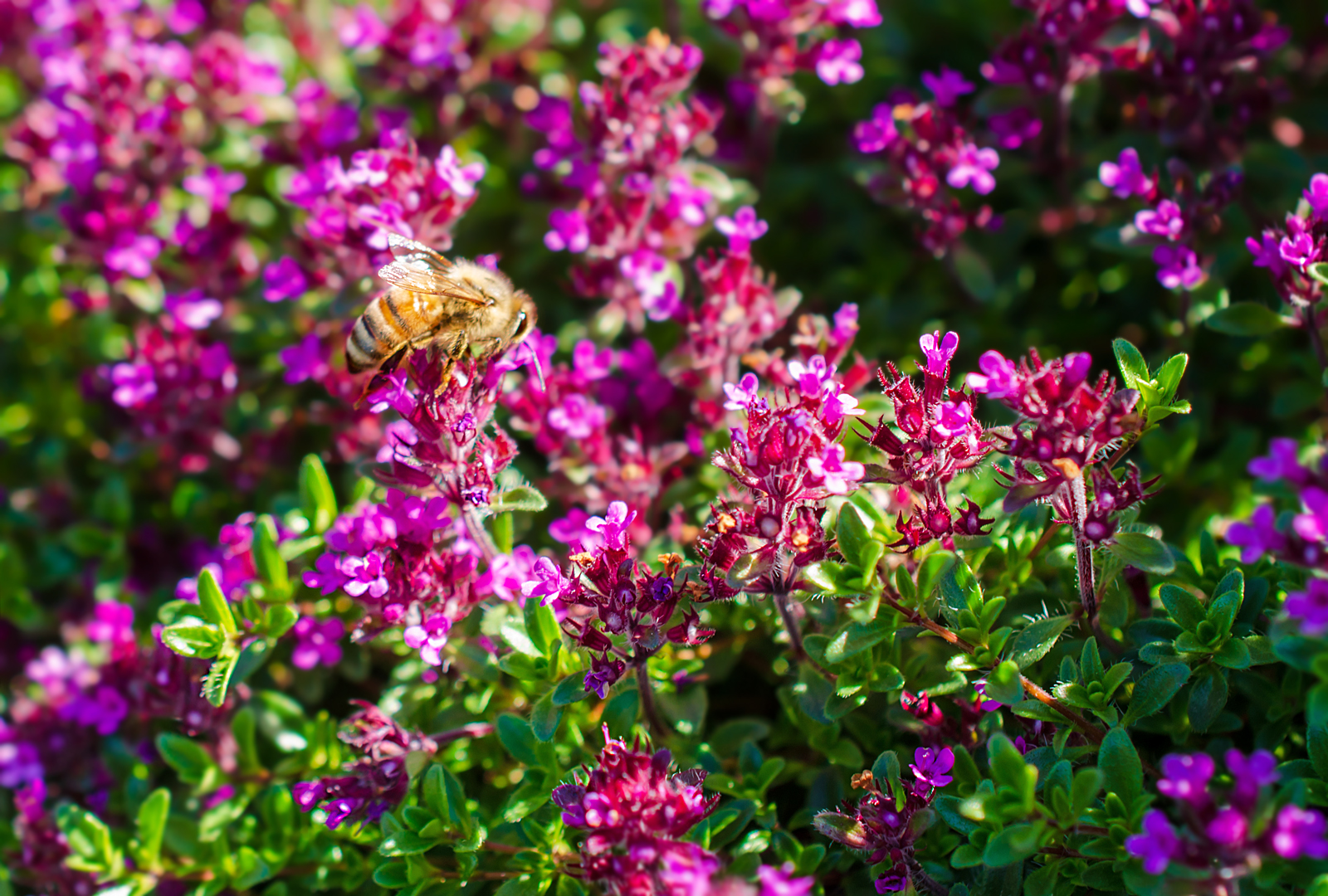
This one was easy; a honeybee, on Creeping Thyme. Next door.

Honeybees (probably Western honeybee, Apis mellifera, the most common species) have those prominent stripes on their apparently hairless abdomens. And, according to BugGuide, hairy eyes.

Bumblebee. In my garden.

The bumblebees have hairy abdomens, in a variety of colours, according to the species. Here on Vancouver Island, we have several species, among them, the Western, Bombus occidentalis and B. mckayi, the Vancouver Island Bumblebee, Bombus vancouverensis ssp vancouverensis (more name than bee!), and the Black-tailed Bumblebee, B. melanogypus

Same bee. I was trying to see if it had a black behind.

This one has a black tail. But so does the B. vancouverensis. Baikie Island.

And this one? Also on Baikie Island.

Trouble is, the colours are extremely variable. And species differenciation depends on details like the shape of sections of the wing. So, I'll go with Bumblebee, plain and simple.

I have yet to see a sweat bee or a carpenter bee here. Maybe later.

*It just occurred to me, getting ready to translate all of this to Spanish, that calling the area the "Lower Mainland" can be confusing. In reality, what we meant by this (and that's what we called it, living over there) is the lower reaches of the Fraser Valley, where the river descends from the hills and meanders down the flats to the Georgia Strait, a stretch about 70 km. long. And I just noticed that calling our place the Mainland, was a referral to the islands beyond, rather than to the rest of the continent. We islanders call the shots.

~~~~~~~~~~~~~
Érase una vez ... bueno, en el año 2008, hace 16 años, examiné muchas de mis fotos de abejas, tratando de identificarlas. (Once upon a time, bees were bees) Algunas no pude identificar, una no debería encontrarse aquí en Colombia Británica. Otras ni siquera eran abejas, sino imitadoras.

Pero eso estaba allí en el Continente*: abejas y sus imitadoras que hallamos desde la isla Reifel hasta Tsawwassen y hasta el centro de la ciudad de Vancouver. ¿Y cuáles serán las abejas que viven aquí en el centro y norte de la isla de Vancouver?

Estas son las que he visto hasta ahora en 2024.
  1. Esta fue fácil: una abeja melífera, Apis mellifera, probablemente la abeja occidental, que es la especie más común. Tienen esas bandas marcadas en el abdomen, que es casi sin pelos. Según BugGuide, también tienen pelos en los ojos.
  2. Bombus sp., abejorro, en mi jardín. Los abejorros tienen el abdomen peludo, en una variedad de colores, anaranjado, amarillo, blanco y negro, según la especie. Aquí en la isla de Vancouver, tenemos, entre otros, el occidental, Bombus occidentalis y B. mckayi, el isleño, B. vancouverensis ssp. vancouverensis (más nombre que insecto), y el de la cola negra, B. melanogypus.
  3. El mismo abejorro. Trataba de ver si tenía la cola negra.
  4. Este tiene la cola negra. Pero también el isleño puede tener el mismo color.
  5. ¿Y este?
El problema es que los colores son extremadamente variables. Y la identificación de las especies depende de detalles como la forma de las venas de las alitas. Yo, por ahora, me quedo con sencillamente "abejorro".

Hasta ahora, no he visto en la isla un abejorro carpintero, o uno de los halíctidos. Tal vez más adelante.

*Se me ocurrió mientras empezaba a traducir esto al español, que nombrar el area donde vivía antes "el Continente" puede ser algo extraño. Más sería usar el término que usan los residentes: El Continente Bajo". Se trata, en realidad, del valle del rio Fraser, desde donde desciende de los montes para vagar sobre el terreno plano hasta llegar al Estrecho de Georgia, unos 70 kilómetros de distancia. Y más, me di cuenta que al llamar el sitio "El Continente" están haciendo referencia a las islas, en vez de verse como parte de la nación entera. Nosotros, los isleños, mandamos.

Sunday, June 23, 2024

While the sun shone

So  many flowers these days! I went out today, and just alongside the highway the foxgloves are all blooming, there are daisies everywhere, I saw honeysuckle just getting started, there's salal and yarrow and goat's-beard and nine-bark and ocean-spray, and — unfortunately — Scotch broom. I picked a big bouquet of foxgloves, pink and white, for my table. And I took no photos, because it was pouring rain.

That's ok; I barely finished processing the flowers from my garden this afternoon. Here's the first batch:

Rose buds and flower. Strange pose, but I liked it. Over the stair rail.

Purple bacopa. Humble little ground cover.

Calibrachoa sp. Looks like a petunia, but much smaller.

Pink peonies. Going crazy this year.

A new little geranium, still mostly buds.

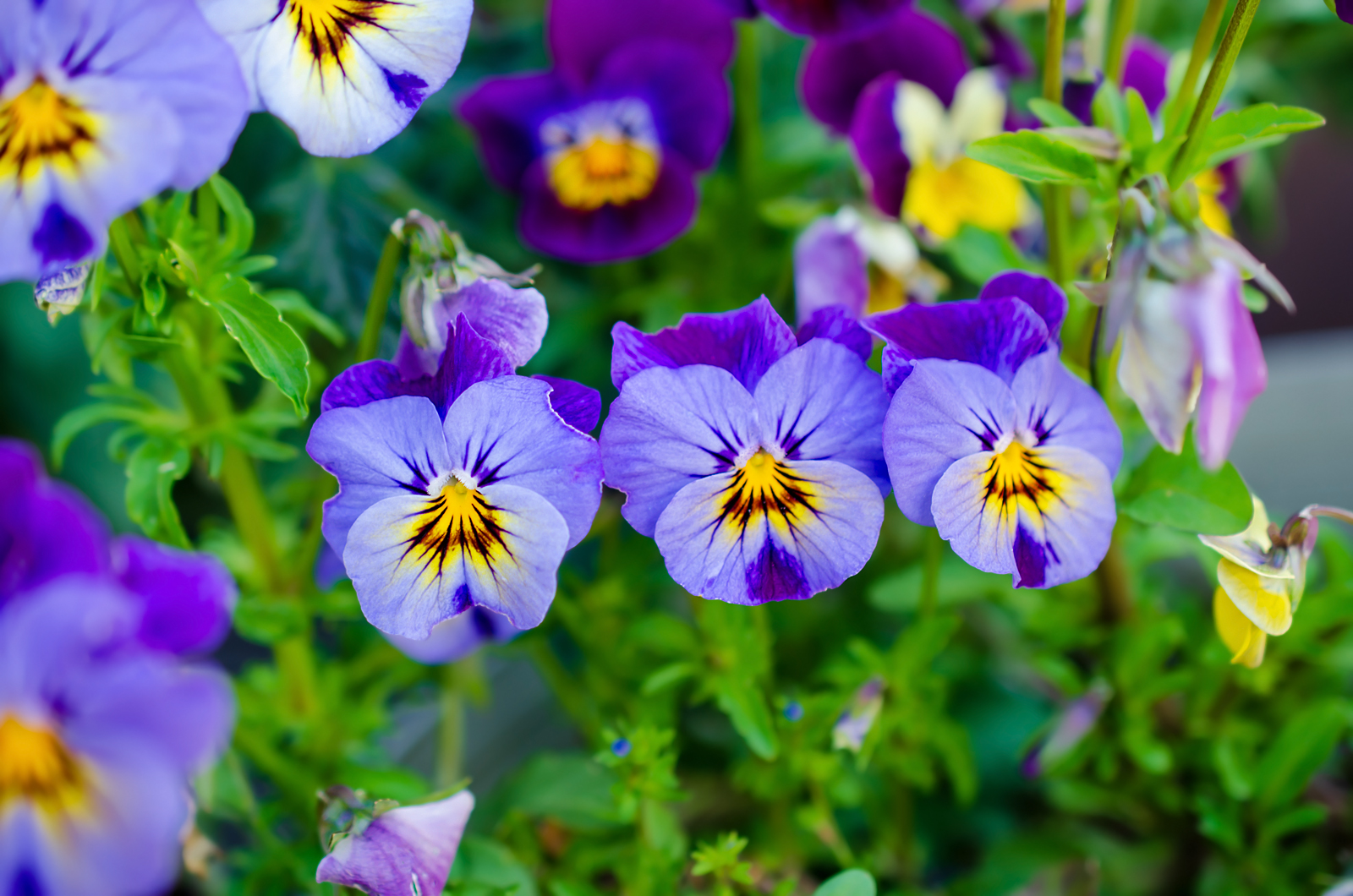
Pansies, three in a row. And I like that worried pansy face in the background.

Starting and ending with roses.

Tomorrow, a couple of bees.

~~~~~~~~~~~~~~~~
¡Hay tantas flores abiertas en estos dias! Salí hoy, dando una vuelta corta, y al lado de la carretera vi: Digitalis purpurea (dedalera), los tallos altos llenos de flores; masas de mariposas dondequiera; Lonicera ciliosa (madreselva anaranjada), apenas empezando a florecer; hay Gaultheria shallon (salal) y Achillea millefolium (milenrama o perejil bravío) y Aruncus dioicus (barba de cabra) y Physocarpus capitatus (ninebark) y Holodiscus discolor (rocío oceánico) y — malafortunadamente — la invasiva retama negra, con sus flores amarilllas. Corté un buen ramo de dedaleras para mi mesa. Y no saqué ninguna foto, porque me agarró la lluvia.

No importa: apenas esta tarde terminé con procesar las fotos de las flores de mi jardín. Aquí subo las primeras.
  1. Rosas, en botón y abierta. Una foto algo extraño, pero me gustó. Como las vi por arriba del barandal de la escalera.
  2. Las bacopas moradas. (Hisopo de agua.) Una plantita humilde, rastrera.
  3. Calibrachoa sp. Estas flores se parecen a las petunias, pero son pequeñas.
  4. Las peonias este año produjeron gran cantidad de flores.
  5. Un geranio nuevecito. Todavía tiene más botones que flores.
  6. Tres pensamientos alineados. Y me gusta la cara preocupada del pensamiento en el fondo. ¿En qué estará pensando?
  7. Y empiezo y acabo con las rosas.
Para mañana, dejo unas abejas.


Saturday, June 22, 2024

A ghost unmet

 Lurching off-topic for a moment:

Four years ago (Was it that long? Time just flashes by!) I wrote a series of posts about summers spent on Ferrer Point, in an abandoned WWII radar station, back in the early 1950s.

Here's a list:

Today, someone working on a history of the area asked me for some more information, and wondered if I had any other photos of the site. (Yes, a few.) And digging through old file boxes, I found something else; a black, fuzzy paper album page, torn and falling out of an album I'd carried around since I was little, with an old, faded newspaper photo of Zeballos glued on it. (Population, these days: 107, back then, a few more, not many.)

Zeballos Hotel and Hammond Grocery, Zeballos

I cut this out of the newspaper in 1986, but the photo dates back to the 1940s or maybe '50s. It's a bit newer-looking than the way I remember it, in 1955. And check out that cool car! Brought in by boat; there were no roads to Zeballos in those days. Even today, it's 40 kilometres of gravel off the paved highway.

About Zeballos: I wrote about this, too: View from the Zeballos dock.

Oh, the ghost? She was still around when I was there. Susie Woo was a laundress for the hotel, and died in her room there, in the 1940s. People said she kept coming back and moving things around. I never met her, though. 

Zeballos is still on the list of BC's Haunted Spots. There's a more recent story, here: "A Haunted Tale ..."

Must. Go. Back.

~~~~~~~~~~~~
Cambiando de tema por un momento:
Hace cuatro años — y parece que fue ayer — escribí una serie de posts hablando de los veranos que pasaba en los años de mediados de la década de medio siglo 19, en un campamento en lo que había sido un puesto de vigilancia de radar durante la Segunda Guerra Mundial, ya abandonado. 

Aquí hay una lista de la serie:

Hoy un arqueólogo que estudia la historia de este rumbo, me pidió más información y preguntó si tenía otras fotos del sitio. (Si algunas.) Pero buscando entre papeles viejos, encontré algo más; una página de un album viejo, que he guardado desde que era niña, una página de papel grueso, negro, con los bordes desbaratados. Y pegado en esa página, una foto vieja, cortada de un periódico, mostrando el hotel y una tienda en el "pueblo" de Zeballos. (Población ahora: 107 almas, en aquel entonces, algunos pocos más.)

Foto: la página del album, con la foto de Zeballos; el hotel y una tienda de comestibles. La leyenda dice — Una foto vieja del hotel Zeballos, el hogar del espectro que siempre regresa, Susie Woo.

Había cortado esta foto del periódico en 1986, pero la foto viene de los años entre 1940 y 1950 más o menos. Se ve un poco más nuevecito que cuando yo lo veía, en 1955. ¡Y mira ese coche modernísimo! Lo trajeron en barco; en esos años no había ruta sobre tierra para llegar al pueblo. Aun hoy, el camino es de grava; 40 kilómetros de grava a partir de la carretera pavimentada. 

Acerca de Zeballos: describí algo de su historia: View from the Zeballos dock. (Vista desde el muelle de Zeballos)

Y el espectro? Seguía en el pueblo cuando yo visitaba. Susie Woo fue una lavandera que trabajaba en el hotel, muriendo allí en su cuarto, en la década 1940-50. La gente decía que seguía allí, moviendo cosas en la noche. Yo nunca la ví.

Zeballos sigue en la lista de los sitios embrujados de Colombia Británica. Y hay una historia más reciente, aquí: "A Haunted Tale ..."


Thursday, June 20, 2024

It behaves nicely, it's angelic.

 Another volunteer flowering plant grows beside the driveway. By the shape of the flower heads (umbels, really) I figured it was another member of the carrot family, the Apiaceae. Like my parsley, or the Queen Anne's Lace and cow parsnips that grow in any waste space at this time of year, but also like the horrible,  poisonous water hemlock, so I was cautious when I cut a flower umbel to examine the tiny flowers. Even touching the water hemlock, or sometimes the cow parsnip, can cause skin damage. But this one was fine; I cut leaves and turned them every which way, trying to identify the species, and my hands are ok.

Angelica sp.

My guide book mentions three species of Angelica, a couple only distinguishable by the bends in their leaf stalks. I'm still not sure of this one.

And the flowers, like all these carroty ones, are tiny, tiny, tiny. I looked at a couple under the microscope:

5 petals, like the parsley flowers. And that twinned centre. The background is one of the leaves.

Google image search was a great help with this one. And with a couple more, that I'm saving for tomorrow.

~~~~~~~~~~~~~~~
Otra planta voluntaria está floreciendo al lado de mi camino de entrada. Por la forma de su capítulo floral (la umbela), calculé que iba a ser otra de la famila de las zanahorias, las apiáceas. Como mi perejil, o como la zanahoria silvestre (Daucus carota) y la pastinaca de vaca (Heracleumm lanatum) que crecen en cada espacio libre en esta temporada del año. Pero también como el horrible y venenosa Cicuta douglasii, y por eso tuve cuidado al cortar una umbela para mirar las florecitas individuales. Hasta con tocar la Cicuta douglasii, o para ciertas personas, también la pastinaca de vaca, se puede traumatizar la piel. Pero esta planta resultó ser buena; corté una ramita y le di muchas vueltas, tratando de identificar la especie, y mis manos siguen sin daño.

Foto: Angelica sp.

Mi libro guía menciona tres especies de Angelica locales, unas se distinguen solamente por las dobleces en los tallos de las hojas. Por fin, no pude saber cual de las tres tengo en mano.

Y las flores, como todas las de los apiáceas, son miniaturas. Examiné unas bajo el microscopio:

Foto: la flor de Angelica. Tiene  pétalos y el centro doble, como el del perejil.

La búsqueda de imágenes de Google me ayudó con estas. Y con otras, que dejo para mañana.


Took me a while

 A dozen or more years ago, I planted some parsley in a clay pot and put it in a corner of my garden. A garnish for my meals, one I usually forget. The parsley, forgotten, grew and thrived. It re-seeded itself, year after year. When I moved here to Campbell River, going on 9 years ago, I brought the pot with me. It likes it here. The pot broke, as they do after repeated cycles of freezing and thawing, and the parsley escaped. Last year, it grew a rambunctious, waist-high forest behind my compost bin.

I haven't been paying it much attention. Sometimes I tell myself that I should be freezing some for winter seasoning, but I never really get around to it. Last year, I chased bees on the umbels one day. That's about it. Not until a couple of days ago did I actually look at those flowers.

They're tiny; that might count for an excuse.

Unopened parsley buds.

The buds are just buds. But then they start to open, and look at them!

Beginning to sprout stamens and petals.

Each little bud is a twosome; they look like pairs of tiny, traditional African drums, each one topped by a glossy lemon custard cap, and extending a snail siphon. (If that sounds like a mixed metaphor, blame the buds.)

And some open flowers: 5 white petals, 5 long stamens. And spider webs.

I cut one flower umbel and looked at it under the microscope:

One individual flower.

The centre of the flower keeps that twinned theme.

I see that I'll have to keep a close eye on these as they go about making seeds. Will they be twins?

~~~~~~~~~~~~~~~~~
Hace una docena de años, sembré un poco de perejil en una maceta de barro, y lo coloqué en un rincón de mi jardín. Algo para sazonar la cena, algo que casi siempre se me olvida. Y la planta, olvidada, creció y prosperaba. Esparcía sus semillas, año tras año; cada primavera, se llenaba la maceta de nuevo. Cuando me mudé a Campbell River, ya hace casi nueve años, traje la maceta con todo y perejil. Le gusta su nuevo hogar, La maceta se rompió, como es de esperar después de tanto congelar y descongelar, y el perejil se escapó. El año pasado, formó un bosquecito entusiasta que me llegaba a la cintura, atrás de mi depósito de compost.

No le he puesto mucha atención. Crece feliz sin que yo haga nada. A veces pienso que debo estar congelando algunas hojas para usarlas en el invierno, pero me distraigo y se me olvida. El año pasado observaba las abejas que buscaban polen en las umbelas. Nada más. Fue apenas hace un par de dias que se me ocurrió mirar las florecitas.

Bueno, son muy, muy pequeñitas. Eso puede que me sirva de excusa.

Fotos:
  1. Botones de perejil, sin abrir. Parecen botones "normales".
  2. Pero se empiezan a abrir, ¡míralas! Cada botoncito es una pareja; parecen dos tamborcitos tradicionales Africanos. Con una tapa de amarillo brillante; parece flan de mango. Y levanta un sifón de caracol marino. (Si parece que estoy mezclando metáforos, la culpa la llevan esas flores.)
  3. Unas flores abiertas. Tienen 5 pétalos, y 5 estambres.
  4. Corté una umbela y la miré bajo el microscopio. Esta es una sola florecita.
  5. Se ve que mantiene esa forma como de gemelos todavía en el centro de la flor.
Veo que voy a tener que seguir examinando estas flores mientras producen sus semillas. ¿Serán semillas gemelas?

Tuesday, June 18, 2024

One at a time

 It sounded so simple; take photos of the flowers in my garden, process them quickly, post them. Life doesn't work that way, though. Here's one (1) photo. I didn't recognize these, and they're growing in a pot where I planted sweet peas. These are no sweet peas!

The posts are there for sweet peas to climb on.

A Google image search brings up photos of Phlox, none an exact match, but close enough.

And now I'm stuck on the next one. And then there are the bees ...

~~~~~~~~~~~
Parecía que iba a ser sencillo: sacar fotos de mis flores, procesarlas rapidamente, y subirlas aquí. ¡Optimismo injustificado! Con la primera foto, estaba perdida. No reconocí estas flores, que crecían en una maceta donde sembré semillas de guisantes de olor. ¡Estas no son guisantes de olor!

Foto: las flores. Los postes están allí para sostener a los guisantes de olor.

Una búsqueda de imágenes de Google me presentó con muchas fotos de Phlox (flox), ninguna que correspondía exactamente a estas, pero alli va.

Y ahora, me he quedado perpleja con la segunda planta. Y luego, siguen las abejas ...


Monday, June 17, 2024

Knee-high to a speck.

It was just a wall. A cement retaining wall, painted grey. Just a wall ...

The sun came out. So did I, camera in hand, to look at my flowers. On the steps, a black speck ran past my shoe. Just a speck, but it moved like a spider. And I had the camera ready.

Zebra jumping spider, Salticus scenicus.

"Goodbye!"

I came down the steps; now the retaining wall was about elbow height. I was looking to see where Zebbie had gone, and there was another spider, much smaller. Knee-high to a speck.

Smooth spider, not a jumper. And a red mite!

A mite may grow to just over a millimetre in length. I wouldn't have seen this one without my reading glasses, which I was wearing to see the camera's screen. But the wall had more to offer.

The spider, leaving. As they do. Here she hides in the leaves of Creeping Jenny.

Now that I was looking at it from a few inches away, I saw that the wall, freshly painted about 4 years ago, is growing a good crop of lichens; tiny buttons, brown with white trim, orange, and bright yellow. And among those lichens, dozens of those red spider mites raced about.

Section of the wall, with a mite.

I went back into the house and brought out a hand lens. It was too awkward to chase galloping mites, holding the camera in one hand, the lens in the other; I needed an extra to anchor myself on the wall. So I parked the lens right on top of a mite and took his photo.

Blurry, but with some extra details.

Just a wall.

~~~~~~~~~~~~~~

Era una pared, nada más. Una pared de cemento, un muro de contención, pintado de gris. Un muro solamente ...

Salió el sol. Yo también, con la cámara, para ver las flores. En la escalera, un puntito negro corría. Solo una manchita negra, pero se movía como una araña. Y yo tenía lista la cámara.

  1. Una araña saltadora "cebra", Salticus secenicus.
  2. Y ¡Hasta luego!
  3. Bajé la escalera. Ahora, el muro de contención me llegaba a los codos. Trataba de ver a donde había ido la araña saltadora cuando vi otra araña, más chiquita que la primera. Una arañita café, no una saltadora. ¡Y acompañada de un ácaro rojo! Un ácaro puede crecer hasta poco más de un milímetro, antenas a cola. No habría visto este si no llevara mis lentes para leer, para poder ver la pantalla de mi cámara.
  4. Pero había más de interés en esa pared. Aquí, la araña se esconde entre las hojas miniaturas de una Lysimachia nummularia. Y ahora vi que el muro, pintado hace unos 4 años, ya lleva un gran número de líquenes; redonditas, como botones, unos cafés con bordes blancos, unos anaranjados, y otros de un amarillo brillante. Y alrededor de esos líquenes, docenas de ácaros correteaban.
  5. Una parte del muro, con un ácaro y los líquenes.
  6. Fui por una lente de aumento. No lograba detener la cámara en una mano, siguiendo las carreras de los ácaros, detener la lente con la otra, y sostenerme firmemente en el muro con la tercera ... Puse la lente encima de un ácarito y así le hice su retrato. Salió con más detalle, pero borroso.
Era tan solo una pared ...

Pink, white, purple

It has been a cool spring. We're halfway through June, almost into summer, and it's still cool most days, usually cloudy, often rainy. I've been fussing over the garden for months, planting, re-planting when nothing grew, re-planting again even last week. And finally, finally, things are bursting out all over. These flowers were the first of my summer blooms, showing up two weeks ago.

Sweet rocket, Hesperis matronalis. A volunteer. No need to plant this one!

Mock orange, Philadelphus sp.

Alyssum. These, I bought already blooming.

Bacopa, white and purple.

I don't know what these are. Too tiny even to see the shape with the naked eye. Another volunteer?

Allium on a neighbour's deck. I cheated with this one; a couple of messy sheds in the background got in the way, so I put trees on top of them.

And now the peonies are in full bloom, greeting me with their sweet scent, the roses (the ones the deer haven't eaten) are opening their buds, the scarlet runner beans are curling up the wall ... If the sun comes out tomorrow, I'll go out and take their photos.

~~~~~~~~~~~~~

La primavera, este año, fue más bien fria; el cielo nublado, cuando no estaba lloviendo. Y ya estamos a mediados de junio, y sigue con lo mismo. Un dia de sol, tres de lluvia ... He estado tratando de hacer crecer mi jardín, sembrando, volviendo a sembrar cuando nada brotó, volviendo a sembrar otra vez, hasta la semana pasada. Y por fin, se ven resultados; hay flores por todos lados. Estas flores son las primeras flores del verano que se abrieron hace quince dias.

  1. La juliana, Hesperis matronalis. Esta es una flor nativa, y apareció sin necesidad de sembrarla.
  2. Philadelphus sp.
  3. Aliso. Estas plantas las compré ya con flores.
  4. También estas. Bacopa, o hisopo de agua.
  5. No sé que son estas. Flores demasiado pequeñas como para distinguir la forma de la flor a simple vista. ¿Será otra planta voluntaria?
  6. Allium, cebollas ornamentales en la terraza de una vecina. Hice trampa aquí; en el fondo había unos garages o talleres mal cuidados, que echaban a perder la vista. Les puse árboles encima.
Y ahora, las peonías están abiertas, perfumando el aire; las rosas miniaturas (las que no comieron los venados) se están abriendo, los frijoles escarlatas (judías escarlatas) empiezan a escalar la pared ... Si sale el sol mañana, les sacaré unas fotos.


Saturday, June 15, 2024

Green-feathered visitor

This little moth turned up on the shade of my bedside light the other night.

Pasiphila rectangulata, against the light. About 3 cm, wingtip to wingtip.

One of the amazing people at BugGuide identified it as a Green Pug moth, one of the inchworm family.


Against the wall, the green feathers show up.

I'm keeping a camera on my bedside table, these warm days. No telling who'll come to visit!

~~~~~~~~~~~~~~~

Esta palomita se detuvo en la pantalla de mi lámpara de noche. Uno de los asombrosos expertos de BugGuide, la identificó como Pasiphila rectangulata, de la familia de los geométridos, los gusanos medidores. En inglés, su nombre común, Green Pug, trae a la mente los perros pug, pero verdes.

  1. En la pantalla, contra la luz. Mide de 2 a 3 cm, desde la punta de una ala hasta la punta de la otra.
  2. Contra la pared, con la luz de este lado ahora, se le ven las plumas verdes.
En estos dias, cuando ya no hace frio, tengo una cámara siempre en mi mesa de noche, en espera de visitas.

Friday, June 14, 2024

Pretty is as pretty does

 Along the trail through the woods where crews are busy restoring habitat, we passed an attractive shrub, sort of huckleberry-ish, but with thorns. The leaves are spoon-shaped, and of varying sizes.

Japanese barberry leaves, Berberis thunbergii

I didn't recognize these, and did a Google image search. It's another invasive species. It loves shady, moist woods, and quickly overruns native species. And it encourages the ticks that carry Lyme disease; no thanks!

It's an attractive plant; bright green leaves that turn red and stay on the shrub in winter, pretty yellow flowers, and long, bright red berries that also overwinter. Nice to have in your garden, maybe, but the invasive species lists recommend digging them up; even from your garden, the birds can spread the seeds.

There are two barberries reported in BC; this, and the common barberry, also not a native, and on some (but not all) invasive species lists. B. vulgaris is similar, but the leaves have toothed edges.

After another visit, to pinpoint the exact location of the shrub, I will notify the Greenways Land Trust, the people doing the restoration work.

~~~~~~~~~~

En el sendero que pasa por los bosques donde los restauradores de habitat natural están trabajando, encontramos un arbusto que yo no conocía; algo así como un arándano rojo (huckleberry), pero con espinas. Y las hojas tienen forma de cuchara, y su tamaño varía.

Foto: Berberis thunbergii, el "barberry" japonés.

Busqué la planta en Imágenes Google. Es otra especie invasiva. Crece en bosques húmedos, sombreados, y rápidamente domina las especies nativas. Y provee un ambiente favorable para las garrapatas que traen la enfermedad de Lyme.

Es un arbusto atractivo; tiene hojas brillantes, verdes en la primavera, y que se vuelven rojas y permanecen en el arbusto todo el invierno. Y flores amarillas, y luego frutas rojas, brillantes, ovaladas, que también permanecen durante el invierno. Con razón la gente los siembra en sus jardines, pero varios de los sitios web que tratan de especies invasivas recomiendan destrozarlos de todas maneras, porque los pájaros pueden diseminar las semillas a sitios no controlados.

Hay dos especies de "barberry" que se hallan en Colombia Británica; esta y el "barberry" común, Berberis vulgaris. Este tampoco es nativo, y se incluye en algunas (pero no todas) listas de especies invasivas. B. vulgaris es parecido a B. thunbergii, pero los bordes de sus hojas son dentadas.

Voy a volver a buscar el arbusto, para localizarlo con exactitud, y luego reportarlo a los que están restaurando el habitat.

Thursday, June 13, 2024

Perfect!

Definitions are strange things, sometimes. Take flowers. Perfect flowers. Like a rose.

Perfect flowers are flowers that include both male and female parts within a single flower. Imperfect flowers are flowers that have only male or only female parts.

A complete flower contains sepals, petals, pistils, and stamens. An incomplete flower is missing one of those parts. 

Incomplete flowers can be perfect or imperfect flowers. Perfect incomplete flowers have both stamen and a pistil present on the same flower, but lack sepals or petals. Imperfect incomplete flowers lack either the stamen or the pistil on the same flower but have sepals and petals. (Study.com)

 So what is this one?

False bugbane,Trautvetteria caroliniensis.

This flower has no petals. Where we expect to see petals, it has from 50 to 100 stamens, the male organs. And there are 15 pistils, the female parts, so that makes it a perfect flower. But incomplete.

Nootka rose, rosa nutkana.

The rose, whether it's a wild rose, with its 5 petals, or one in your garden, with up to 40, is perfect and complete. It has petals, sepals, stamens, and pistils.

False lily-of-the-valley, Maianthemum dilatatum.

And these are both perfect and complete, too. Or maybe not. What looks like petals are tepals, which means they couldn't figure out whether they were sepals or petals. And a complete flower has both.

False lily-of-the-valley flowers. Photo by Alpsdake.

But then, there are several types of definitions; in my everyday language, all these flowers are perfect, absolutely complete, and delightful.

~~~~~~~~~~~
Las definiciones de algunas palabras son algo extrañas. Por ejemplo, hablando de las flores; ¿qué se entiende cuando decimos que una flor es "perfecta"? Una rosa perfecta, digamos.
Las flores perfectas son flores que incluyen partes tanto masculinas como femeninas en una sola flor. Flores imperfectas son flores que tienen solamente partes masculinas o partes femeninas.
Una flor completa contiene sépalos y pétalos, pistilos y estambres. A una flor incompleta le falta una de esas partes.
Una flor incompleta puede ser perfecta o imperfecta. Flores perfectas pero incompletas tienen tanto el estambre como un pistilo en la misma flor, pero le faltan o los pétalos o los sépalos. A las flores incompletas e imperfectas les falta o el estambre o el pistilo en la misma flor, pero tienen los pétalos y sépalos. (Study.com)
  1. Y esta, entonces, ¿qué es? Trautvetteria caroliniensis. Esta flor no tiene pétalos. Donde esperamos ver los pétalos, se encuentran los estambres, desde 50 a 100 estambres, los órganos masculinos. Y hay 15 pistilos, que son femeninos, lo que hace que la flor sea una flor perfecta. Pero incompleta.
  2. La rosa, sea una rosa silvestre con sus 5 pétalos, o una en tu jardín, con hasta 40 pétalos, es perfecta y completa. Tiene los sépalos, los pétalos, los estambres, y los pistilos.
  3. Y estas, Maiathemum dilatatum, el falso lirio de los valles, también son perfectas. ¿Completas? Tal vez no lo son. Lo que parece ser pétalos, son tépalos, lo que quiere decir que no pudieron decidir si eran pétalos o sépalos. Y una flor completa tiene que tener ambos.
  4. Las flores del falso lirio de los valles. Photo de Alpsdake, Wikimedia 
Pero estas son definiciones científicas; hay otras. Para mi, estas flores, todas, son perfectas, totalmente completas, y un encanto.


Wednesday, June 12, 2024

River, tied in knots

The Campbell River is a short one, dropping 150 metres in just over 7 kilometres from the outlet of Campbell Lake to the estuary mouth. It's quite an adventurous little river, though; plunging in the first few bends over a dam and three waterfalls, then racing, foaming and chattering on its way down to the city, almost at sea level. And there, on the flats, it loses all sense of purpose; no longer in a hurry, it splits up and wanders off in all directions. Some of the water turns back and sits around in quiet lagoons. Some finds low spots in the forest and makes mud pies. There are islands, small and smaller, to encircle, long spits of land, sand bars and mud flats and grassy beds for ducks and geese. And tidal islands, here now, gone in a few hours. There's a slough full of sedges and diving buffleheads. A couple of extra creeks drop in to join the fun.

Eventually, it all finds its way back to the river again, and sweeps out to sea.

In January, crews were busy restoring habitat along these shores. And now, I found on Google maps a new photo showing a bridge where there was no passage before. We (my son and his wife were with me) checked it out, and now there's a safe path all the way from Baikie Island to the highway out of town. With three bridges, because the river is everywhere.

Good kayaking country.

View from the trail.

The beginning of one of the side streams.

Tomorrow: a few of the plants we saw there.

~~~~~~~~~~~~~~~~

El rio Campbell es un rio corto; bajando 150 metros en una distancia de apenas 7 kilómetros, desde su origen en el lago Campbell, hasta la boca del estuario. Es un rio activo, sin embargo, saltando sobre la presa y tres cataratas en las primeras curvas, luego corriendo, haciendo espuma y sus comentarios sobre el clima, camino a la ciudad, allá abajo al nivel del mar. Y allí en lo plano se le pierde toda idea de propósito; ya no tiene prisa, y se divide, y vaga en todas direcciones. Parte del agua se da vuelta y va a dormitar en lagunas. Otra parte encuentra sitios bajos en el bosque y hace sus tartas de lodo. Hay islas, chicas y muy chicas, lenguas largas de tierra, barras de arena y lodazales y hierbas donde duermen ganzos y patos. Hay islas mareales, aquí en el momento, desaparecidas en unas pocas horas. Hay agua poca profunda, llena de juncos, y de patos moñudos buceadores. Un par de riachuelos añaden sus aguas claras.

Por fin, el agua se vuelve a reunir con el rio, y sigue su marcha hacia el estrecho.

En enero había gente trabajando aquí, ocupada en la restauración del habitat natural. Y ahora, encontré en las mapas de Google una foto nueva, mostrando un puente donde antes no se podía llegar. Fuimos, yo con mi hijo y su esposa, a ver que habían hecho. Y ahora hay camino seguro desde la isla Baikie hasta donde pasa abajo de la carretera al extremo del pueblo. Camino con tres puentes, porque el rio anda por todas partes.

Buen sitio para pasar una tarde en un kayak.

  1. Una vista desde el sendero nuevo.
  2. Agua recién escapada del rio.
Mañana, subo unas fotos de algunas de las plantas que vimos.

Tuesday, June 11, 2024

Still wandering in Sundew Bog

The plants in Sundew Bog (beside Upper Campbell Lake) grow in three distinct layers. First, the nose-to-the-ground level, the yellowish sphagnum mosses, the sundews that give the fen its name, the tiny bog cranberries. 

Get up off your knees and meet the middle layer. These are shrubs, knee- to waist-high. The bog-laurels, with their pink flowers in May, the Labrador tea, filling the fen with white flowers in June. Buckbeans, here and there a skunk cabbage, in a deeper puddle, a starter group of water lilies.

Stand tall and look up: there are a few trees, a snag or two. A smidgen of shade over a bench on the central platform. A handful of young evergreens. Mostly, though, there's open sky.

This week, the bog-laurel has produced its tiny, inedible fruit.

Kalmia microphylla ssp. occidentalis.

Strange fruits: tiny red capsules, with the flower's pistil still present at the top, looking like a continuation of the stem, as if the fruits were beads strung on a red string. 

In wetter, open areas, the buckbeans are waving their short stalks with three leaves to a stalk. A few, too far away to see clearly, are in flower.
 
Frilly buckbean flowers, Menyanthes trifoliata.

The tallest of the trees, too tall to get it all in without leaving the boardwalk. Lichen replaces the needles it once held.

Hemlock cones, above the observation post.

~~~~~~~~~~~~~~
Las plantas que observamos en la Ciénaga de Rocíos del Sol (al lado del lago Upper Campbell) crecen en tres niveles. Primero, con tu nariz casi en el suelo, ves los musgos esfagnos, y las plantas carnívoras que dan el nombre al sitio, y los arándanos de pantano, tan pequeñitos.

Estabas de rodillas. Ahora, párate para ver las plantas del nivel mediano, a la altura de tus rodillas hasta la cintura. Arbustos como la Kalmia microphyla, con sus flores color de rosa en mayo, el thé de Labrador, que ahora llena todo con sus flores blancas. Hay tréboles de agua, Menyanthes trifoliata; una que otra col de los pantanos; y en un charco algo profundo, unos lirios de agua.

Ahora levanta la cabeza. Cielo abierto, pero con unos cuantos árboles, tantos muertos como vivos. Un poco de sombra sobre uno de los asientos en la plataforma de observación. Algunos arbolitos juveniles de hoja perenne. 
  1. Esta semana, la Kalmia microphylla ha producido sus frutas pequeñas, no comestibles. Tienen una forma rara; un tallo rojo, luego la fruta, redonda como una canica, y luego el pistilo de la flor, como si fuera una extensión del tallo, como si la fruta fuera una perla roja ensartada en un hilo rojo,
  2. Tréboles de agua; cada tallo lleva tres hojas. Algunos, pero muy lejos, ya estaban en flor. Las flores son blancas con detalles en rosa, y con volantes en los pétalos.
  3. El árbol más alto. Ya muerto, con líquenes sustituyendo a las hojas.
  4. Una rama de un Tsuga sp., con sus piñas. Este árbol es el que nos dió un poquito de sombra donde nos sentamos a descansar.


Powered By Blogger