Showing posts with label June flowers. Show all posts

Friday, June 19, 2026

And yet more flowers

Flowers, flowers, flowers! My photo files are full of flowers at this time of year. These are some of the ones growing just outside my door, wild and tame.

Trailing bellflowers, Campanula poscharskyana. A reliable perennial.

The first batch of flowers were white; today's were almost blue.

Another of the bellflower family, Campanula sp. Here growing with Wall-lettuce, Latuca muralis. Not in a pot: these are volunteers.

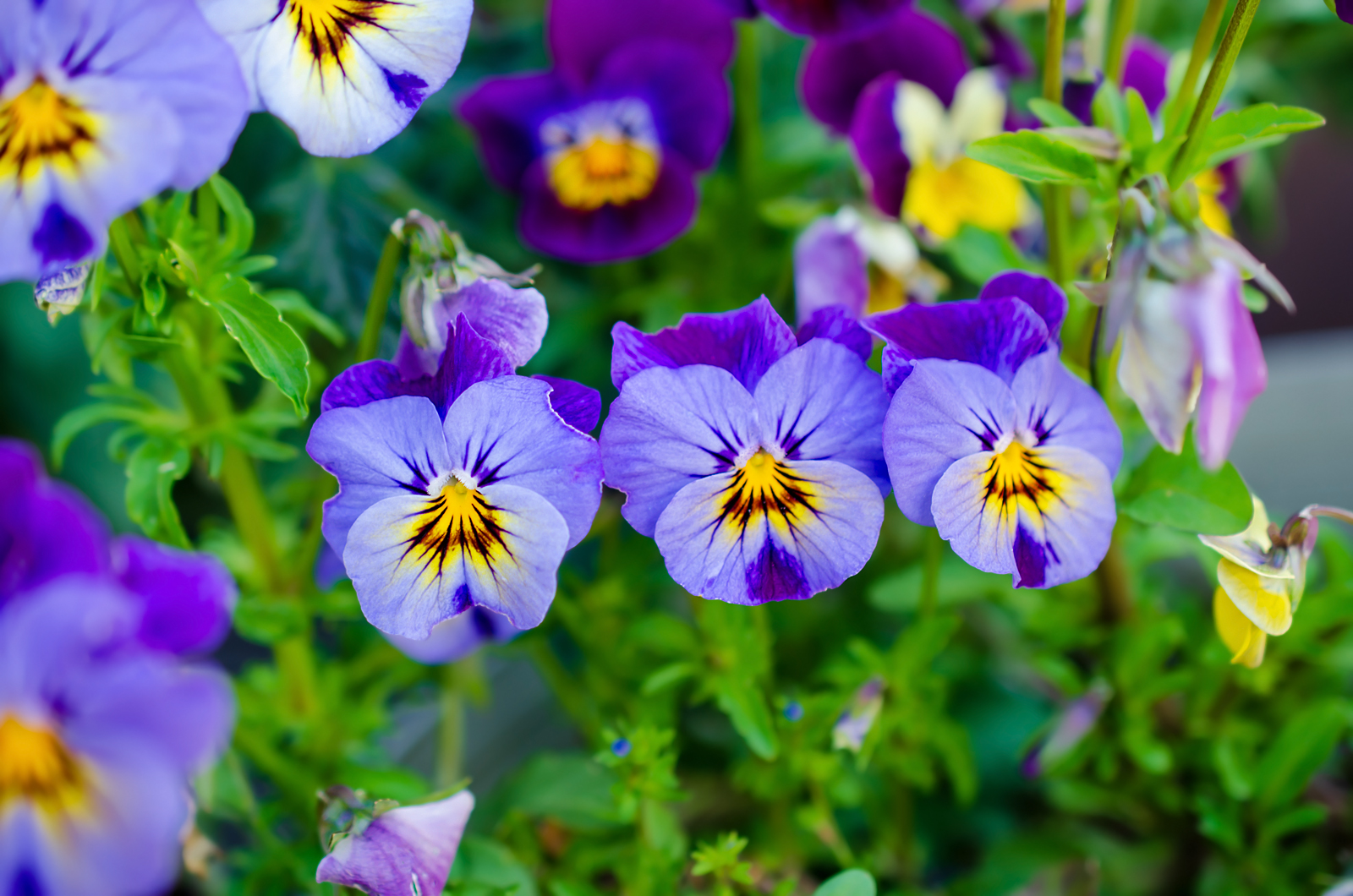
Johnny-Jump-ups again. 

One flower of that wall-lettuce.

And, found on the harebells, a leafhopper nymph.

~~~~~~~~~~~~~~

Es junio; y hay tantísimas flores; más cada dia. Estas son unas de las que crecen junto a la puerta de mi casa.

  1. Campanula poscharskyana. Estas regresan año tras año. Las primeras salieron blancas, y luego salieron estas. Las de hoy son azules, todas en la misma planta.
  2. Estas son las blancas.
  3. Otra especie de campanulas, estas levantadas sobre tallos altos. Con una "hierba mala", lechua de las paredes, Latuca muralis.
  4. Viola tricolor. Unas que los venados pasaron por alto, probablemente porque estaban ocupados comiendo mis frijoles.
  5. Una ninfa de los insectos cicadélidos, o saltahojas. La encontré entre las hojas de las campanulas.


Monday, June 08, 2026

White, pink, pinker, red

 And here are a few more flowers.

Angelica sp.

This is growing wild beside the driveway. I brought in a handful of flower stalks, from ground up, trying to see if I could identify the plant; is it the Kneeling Angelica, or the Sharptooth? Or, (I hoped not) the poisonous Water hemlock, another look-alike.

At least I can rule out the Water hemlock; the stem, at the base, is chambered; these are not. And the leaf veins end at the base of the "teeth" at the edge; both the Angelicas have veins that go to the tip. But that's as far as I got.

Well, besides a few tiny, tiny, tiniest, millimetre-long critters that jumped off the leaves. Too small, too fast to be captured. But ... today, I've got photos of the cutest little green jumper! I'll post the best tomorrow.

Astilbe sp. Just the buds, for now.

Astrantia sp. Also known as Hattie's pincushion.

More red geraniums.

And one perfect Bacopa flower. The yellow leaf is Creeping (should really be called Galloping) Jenny.


~~~~~~~~~~~~~~~
Y aun más flores:

    1. Angelica sp.

Estas flores son silvestres, aquí se han establecido al lado de mi camino de entrada. En la noche, corté un manojo de tallos con flores, y con las bases, para ver si lograba identificarlas; si la planta es la Angélica "de rodillas" o la "de dientes afilados". O, pero sería mala suerte, la cicuta "de agua", que es muy venenosa, y muy parecida a las Angélicas.

Bueno, por lo menos no es la cicuta. Estas, en la base del tallo, tienen varios compartimientos; las que tengo aquí no. Y las venas de las hojas, en la cicuta, terminan en la base de los "dientes" del borde de la hoja. En las Angélicas, las que tengo aquí, se extienden al punto del diente. Pero hasta allí pude llevar la identificación.

Pero, además encontré varios insectitos miniaturos, de un milímetro o menos de largo, que saltaron de las hojas. Muy chicos, demasiado rápidos; no pude ni verlos claro. Ni modo. Pero hoy, saqué fotos de un insecto saltarin verde muy bonito. Mañana subo una foto.

    2. Astilbe sp. Por ahora, los botones.

    3. Astrantia sp. También se conoce como "El alfilero de Hattie". (Hattie es un apodo de las Enriquetas.)

    4. Geranios rojos.

    5. Y una flor perfecta de Bacopa sp. La hoja amarilla es de Lysimachia nummularia.


Friday, June 05, 2026

Mostly pink

Do plants wake up in the morning and say, "Oh, good, it's raining"? No? Ok, I'll say it for them: Oh, good, it's raining! And all my plants are happy. The rosebuds have all turned into roses, the peonies are top-heavy with pinkness, and the dahlias have suddenly burst out with new flower buds.

Two more days of gentle rain, they're promising us before the heat comes back. In a rainforest, that's always good news.

And here are a few more flowers from this week, before the rain.

The first of the peonies.

Colour markings in a half-opened flower.

Sea thrift.

Sweet rocket. Another invasive "weed", but I keep a space for them anyhow.

Rosebuds. All open now.

The first of the columbines.


And my scarlet runner beans have started climbing up their stakes. Yay!


~~~~~~~~~~~~~~~~~~~~~~~~~

¿Despertarán las plantas en la mañana diciendo — ¡Qué bien! ¡Está lloviendo! — felices? ¿No? Bueno, yo lo dig: ¡Qué bien; está lloviendo!. Y todas mis plantas están contentas. Los capullitos del rosal todos se han convertido en rosas, las peonías hacen una explosión de color de rosa, y las dalias ya están cubiertas de botones nuevos.

Nos prometen dos dias más de lluvias finas antes de que regrese el calor. En tierra de bosques pluviales, eso siempre se considera buenas noticias.

Y aquí hay otras flores que salieron esta semana, antes de que empezara a llover.

  1. Las primeras de las peonías.
  2. Los colores de un botón medio abierto.
  3. Clavelinas de mar, Armeria maritima.
  4. Julianas, Hesperis matronalis. Esta planta es otra de las dichas "hierbas malas" invasivas, pero yo siempre le dejo espacio en una esquina del jardín.
  5. Estos botones ya están completamente abiertas.
  6. Las primeras de lasd columbinas, Aquilegia sp.
Y mis frijoles escarlata (judías escarlata, ejotes, o ayocote {nahuatlismo de ayecohtli} — no conocía este nombre antes), Phaseolus coccineus, ya empezaron a treparse en sus estacas. ¡Excelente! 

Wednesday, June 03, 2026

All the little flowers

My garden has big, showy peonies, bright pink bleeding hearts, roses and hydrangeas; the dahlias are coming right along, so are the clematis. But I love best, I think, the littles, the quiet, humble, persistent ground-huggers. Like these.

An old favourite, the Johnny-Junp-Ups. They come back every year on their own.

Alyssums, just getting started. They'll bloom until the first snow, then come back next year.

This one's a leftover from last year that somehow managed to sprout in a hole on a concrete wall.

Bacopa. I planted these last year and didn't expect them to survive the winter. But here they are.

Thyme. There were bees until I arrived with the camera. Sorry I couldn't get a photo of the delicious scent!

Weeds? Lemon balm; good for teas, good just for the scent. And the ubiquitous buttercups; beautiful, but stubbornly invasive.

A neighbour left this on the table by my door, in a cup of water. I don't know for sure what it is. Pretty, isn't it?

Peonies tomorrow.

~~~~~~~~~~~~

En mi jardín hay peonías, grandes y llamativas, corazones sangrantes color de rosa intenso, rosas y hortensias; las dalias ya están por abrirse, y también las clemátides. Pero las que más me gustan, creo, son las florecitas pequeñas, las flores humildes, sin pretensiones, pero duraderas. Como estas.
  1. Pensamientos salvajes, Viola tricolor. Regresan cada año sin necesitar cultivo.
  2. Los alisos producirán sus flores hasta las primeras nevadas del invierno.
  3. Uno, de alguna semilla que cayó en un hoyo en una pared de cemento. ¡Valiente!
  4. Bacopas, Chaenostoma cordata. Esta planta la sembré el año pasado. No esperaba que aguantaría el frio del invierno, pero aquí está.
  5. El tomillo. Casi siempre hay abejas buscando polen en las flores. Se fueron cuando llegué con la cámara. ¡Lástima que no se puede fotografiar el aroma!
  6. ¿Hierba mala? No. Limoncillo, Melissa officinalis. Hace un thé muy bueno, y huele a limón. Con una flor de botón de oro, Ranunculus repens. Las flores son hermosas, pero la planta es invasiva y persistente; las arranco a diario, pero siempre hay flores nuevas.
  7. Un vecino dejó esta plantita en la mesa al lado de mi puerta, en una taza de agua. No sé que planta es. ¿Bonita, no?
Mañana, habrá peonías.

Monday, July 07, 2025

June flowers, Take Two

 And here's the second batch of June flowers.

Labrador tea, Rhododendron groenlandicum. A wetlands plant; I found these in Sundew Bog. Last May.

Another lab tea, with ant.

Mock orange. Possibly our native Philadelphus lewisii. The sweet rocket, Hesperis matronalis, is a volunteer, one of the earliest spring flowers; these are the last blossoms for this year.

Peony. Beautiful, big flowers, but short-lived, especially in the rain.

Queen Anne's Lace. They're everywhere, but these were out by Echo Lake.

Miniature rose. So far, not eaten by the deer; they're waylayed by my scarlet runner beans.

Sweet William. This was a volunteer, years ago; it comes back every year.

Next; Dragon- and damsel-flies. Or maybe ... The cat just brought me a buzzing Ten-lined June beetle. Maybe she — she's female — will pose for a portrait.

~~~~~~~~~~~~~~~~~
Esta es la segunda mitad de mis fotos de flores de junio.
  1. Té de Labrador, Rhododendron groenlandicum. Es una planta de humedales; estas las vi en el Pantano de los Rocíos del Sol. En mayo.
  2. Otras flores del mismo sitio. Estas, con una hormiga.
  3. Un filadelfo, posiblemente nuestra planta indígena, Philadelphus lewisii. Las flores color de rosa son las julianas, Hesperis matronalis. Estas aparecieron sin necesidad de sembrarlas, y son del las primeras flores de la primavera. Las que se ven aquí son las últimas de la temporada.
  4. Peonía. Flores grandes, llamativas, pero que duran poco tiempo, especialmente cuando llueve.
  5. "Encaje de la Reina Ana", la zanahoria silvestre, Daucus carota. Ahora, se ven por todas partes; estas las vi cerca del Lago Echo.
  6. Una de mis rosas miniaturas; hasta ahora no las han comido los venados; están  muy ocupados comiendo mis frijoles.
  7. El clavel del poeta, Dianthus sp. En inglés, "Dulce Guillermo". Otra planta voluntaria; regresa cada año.

Mañana, tengo planeadas fotos de libélulas. Pero tal vez no. ... La gata me acaba de traer un escarabajo rayado (hembra) bastante enojada. A ver si me permite sacarle unas fotos ...

Saturday, July 05, 2025

June flowers

I seem to be always playing catch-up. Here it is July, and all my flower photos from June (and some from May) have been left for "later". So I've piled them all into two folders, and here's the first batch; in alphabetical order, according to the labels I gave them back when.

Astilbe, still in bud. By now it's in full flower.

Astrantia. I saw these a few years back, in Tsawwassen; they were loaded with soldier beetles. Hoping to attract some insects here.

Bee on blackberry. Ferry landing at Crofton.

Buttercups in my "lawn".

Carnation somebody brought me for Mother's Day.

False bugbane, Quinsam River.

I love these messy Bacopa flowers; they seem to concentrate the sunlight.

 Next batch, tomorrow.  Then on to dragon- and damsel-flies.

~~~~~~~~~~~

Parece que siempre ando atrasada. Ya casi pasa la primera semana de julio, y sigo sin subir las fotos de las flores que vi en junio y hasta unas de mayo. Las he dividido en dos grupos; este es el primero.
  1. Astilbe; los botones. Hoy, las plantas están en pleno flor.
  2. Astrantia. Vi estas flores hace algunos años en Tsawwassen; estaban cubiertas de escarabajos "soldado",  o cantáridos. Aquí las sembré en espera de atraer algunos de estos insectos.
  3. Una abeja en una flor de la mora invasiva (pero ¡tan deliciosa!), Rubus discolor. En el embarcadero de Crofton.
  4.  Ranúnculos; otra planta agresiva. Estas tratan de cubrir mi jardín, con césped y todo.
  5. Un clavel que me trajeron para el Dia de la Madre.
  6. Trautvetteria caroliniensis. Es de la misma familia de los ranúnculos, pero se encuentra en los bosques, cerca de agua. Estas están a la orilla del rio Quinsam.
  7. Me encantan estas flores, algo desordenadas; intensifican la luz del sol.
Las demás las dejo para mañana; y luego habrá más libélulas.

Sunday, June 23, 2024

While the sun shone

So  many flowers these days! I went out today, and just alongside the highway the foxgloves are all blooming, there are daisies everywhere, I saw honeysuckle just getting started, there's salal and yarrow and goat's-beard and nine-bark and ocean-spray, and — unfortunately — Scotch broom. I picked a big bouquet of foxgloves, pink and white, for my table. And I took no photos, because it was pouring rain.

That's ok; I barely finished processing the flowers from my garden this afternoon. Here's the first batch:

Rose buds and flower. Strange pose, but I liked it. Over the stair rail.

Purple bacopa. Humble little ground cover.

Calibrachoa sp. Looks like a petunia, but much smaller.

Pink peonies. Going crazy this year.

A new little geranium, still mostly buds.

Pansies, three in a row. And I like that worried pansy face in the background.

Starting and ending with roses.

Tomorrow, a couple of bees.

~~~~~~~~~~~~~~~~
¡Hay tantas flores abiertas en estos dias! Salí hoy, dando una vuelta corta, y al lado de la carretera vi: Digitalis purpurea (dedalera), los tallos altos llenos de flores; masas de mariposas dondequiera; Lonicera ciliosa (madreselva anaranjada), apenas empezando a florecer; hay Gaultheria shallon (salal) y Achillea millefolium (milenrama o perejil bravío) y Aruncus dioicus (barba de cabra) y Physocarpus capitatus (ninebark) y Holodiscus discolor (rocío oceánico) y — malafortunadamente — la invasiva retama negra, con sus flores amarilllas. Corté un buen ramo de dedaleras para mi mesa. Y no saqué ninguna foto, porque me agarró la lluvia.

No importa: apenas esta tarde terminé con procesar las fotos de las flores de mi jardín. Aquí subo las primeras.
  1. Rosas, en botón y abierta. Una foto algo extraño, pero me gustó. Como las vi por arriba del barandal de la escalera.
  2. Las bacopas moradas. (Hisopo de agua.) Una plantita humilde, rastrera.
  3. Calibrachoa sp. Estas flores se parecen a las petunias, pero son pequeñas.
  4. Las peonias este año produjeron gran cantidad de flores.
  5. Un geranio nuevecito. Todavía tiene más botones que flores.
  6. Tres pensamientos alineados. Y me gusta la cara preocupada del pensamiento en el fondo. ¿En qué estará pensando?
  7. Y empiezo y acabo con las rosas.
Para mañana, dejo unas abejas.


Tuesday, June 18, 2024

One at a time

 It sounded so simple; take photos of the flowers in my garden, process them quickly, post them. Life doesn't work that way, though. Here's one (1) photo. I didn't recognize these, and they're growing in a pot where I planted sweet peas. These are no sweet peas!

The posts are there for sweet peas to climb on.

A Google image search brings up photos of Phlox, none an exact match, but close enough.

And now I'm stuck on the next one. And then there are the bees ...

~~~~~~~~~~~
Parecía que iba a ser sencillo: sacar fotos de mis flores, procesarlas rapidamente, y subirlas aquí. ¡Optimismo injustificado! Con la primera foto, estaba perdida. No reconocí estas flores, que crecían en una maceta donde sembré semillas de guisantes de olor. ¡Estas no son guisantes de olor!

Foto: las flores. Los postes están allí para sostener a los guisantes de olor.

Una búsqueda de imágenes de Google me presentó con muchas fotos de Phlox (flox), ninguna que correspondía exactamente a estas, pero alli va.

Y ahora, me he quedado perpleja con la segunda planta. Y luego, siguen las abejas ...


Tuesday, June 06, 2023

LBBs also stands for Little Bugs and Beetles

 When we look at flowers, as often as not, we find them populated. In my garden this week, I've seen bees and butterflies, mostly the cabbage whites, ants and sowbugs. And spiders, always the spiders. This week there was an orange one I hadn't seen before. Running, of course. Most of the critters didn't hang around long enough to get a photo. But there was one fly so happy on her bouquet of parsely flowers that she ignored the camera a couple of inches away.

Just an "everyday" fly.

And there are always the ones I don't see until I upload the photos to the computer. Here, a very small orange-bellied beetle of some sort climbs a blade of lawn grass.

Among the buttercups. And a fuzzy ant in the background.

~~~~~~~~~~~~~
Mirando las flores, casi siempre las encontramos con sus residentes del reino animal. Esta semana en mi jardín he visto abejas, mariposas (la mayoría blanquitas de la col), hormigas y cochinillas. Y las arañas, siempre las arañas. Esta semana vi por primera vez una araña color naranja. Corriendo, claro. Casi todas las criaturitas no se quisieron detener para que les hiciera su retrato. Pero sí hubo una mosca tan contenta con su ramo de flores de perejil que no se fijaba en mi cámara, acercándose hasta apenas unos pocos centímetros.

Foto: la mosca y las flores de perejil.

Y siempre hay los bichos tan, tan pequeñitos que no los veo hasta que subo las fotos a la computadora. Como este escarabajito con el abdomen anaranjado que se trepaba a una hoja del césped.

Foto: el escarabajo entre los ranúnculos. También hay una hormiga en el fondo.


Monday, June 05, 2023

It's going to be a flowery summer

Here we are in the first week of June, and my garden is suddenly bursting with new flowers.

Peony bud.

Sweet rocket. I love these, so do the bees.

Bleeding hearts.

Mock orange

Loaded with flowers.

Not my flowers; a friend's garden, and I can't remember their name. Tiny, really tiny.

There are more, coming up next.

~~~~~~~~~~~
Estamos ya en la primera semana de junio, y de repente, mi jardín se llenó de flores. Estas son algunas de ellas.
  1. Un botón de las peonías.
  2. Hesperis matronalis, la juliana o la violeta de los jardines. Estas flores son favoritas de las abejas.
  3. Corazón sangrante
  4. Philadelphus sp. En inglés se llama naranja falsa.
  5. Y una rama cargada de flores.
  6. Estas flores las vi en el jardín de una amiga, y no me acuerdo cual fue su nombre. Son muy, muy pequeñitas.
Hay más; algo para mañana.


Powered By Blogger