Showing posts with label garden flowers. Show all posts

Friday, July 31, 2026

Mostly pink

These are a few of the flowers from my garden, a week or so ago.

Dahlia, against a background of azalea leaves.

From buds to wilted remains.

I don't understand how one hydrangea bush can have flowers from yellow to pink to blue to lilac.


This one's not in my garden. I found it in the bush, near an old apple tree. There is no sign anywhere near of human habitation, but someone must have planted them. This is an ornamental spiraea, not native to this area.

Sweet William, Dianthus barbatus, escaped from a pot years ago.

I went out today to take photos of my vegetable garden flowers. The zucchini and the cilantro are loaded with blooms, but the deer have eaten most of the scarlet runner bean tops. And then it started to rain. I'll try again when it stops raining.

~~~~~~~~~~~~~~~

Estas son algunas de las flores en mi jardín, hace una semana.

  1. Una dalia con hojas de azalea de fondo.
  2. Dalias, desde botones hasta las flores ya marchitas.
  3. No entiendo como es que las flores de un solo arbusto de hortensia pueden salir amarillas, color de rosa, azules, o color lila.
  4. Este arbusto no está en mi jardín. Lo encontré en el bosque, cerca de un manzano viejo. No hay ningún indicio cercano (aparte de estas dos plantas) de residencia humana, pero alguien debe haberlos sembrado. Estas flores son de una Spiraea sp., pero no una de las especies nativas.
  5. Clavel del poeta, Dianthus barbatus; esta planta brotó desde la tierra de una maceta rota, hace años; ahora vive debajo de un rosal.
Salí hoy, pensando sacar fotos de las flores de las plantas comestibles de mi jardín; las calabacitas y el cilantro están cargadas de flores, pero los venados se han comido casi todas las flores de frijol escarlata. Y mientras contemplaba esto, empezó a llover, y dejé el proyecto para cuando salga el sol otra vez.

Sunday, June 23, 2024

While the sun shone

So  many flowers these days! I went out today, and just alongside the highway the foxgloves are all blooming, there are daisies everywhere, I saw honeysuckle just getting started, there's salal and yarrow and goat's-beard and nine-bark and ocean-spray, and — unfortunately — Scotch broom. I picked a big bouquet of foxgloves, pink and white, for my table. And I took no photos, because it was pouring rain.

That's ok; I barely finished processing the flowers from my garden this afternoon. Here's the first batch:

Rose buds and flower. Strange pose, but I liked it. Over the stair rail.

Purple bacopa. Humble little ground cover.

Calibrachoa sp. Looks like a petunia, but much smaller.

Pink peonies. Going crazy this year.

A new little geranium, still mostly buds.

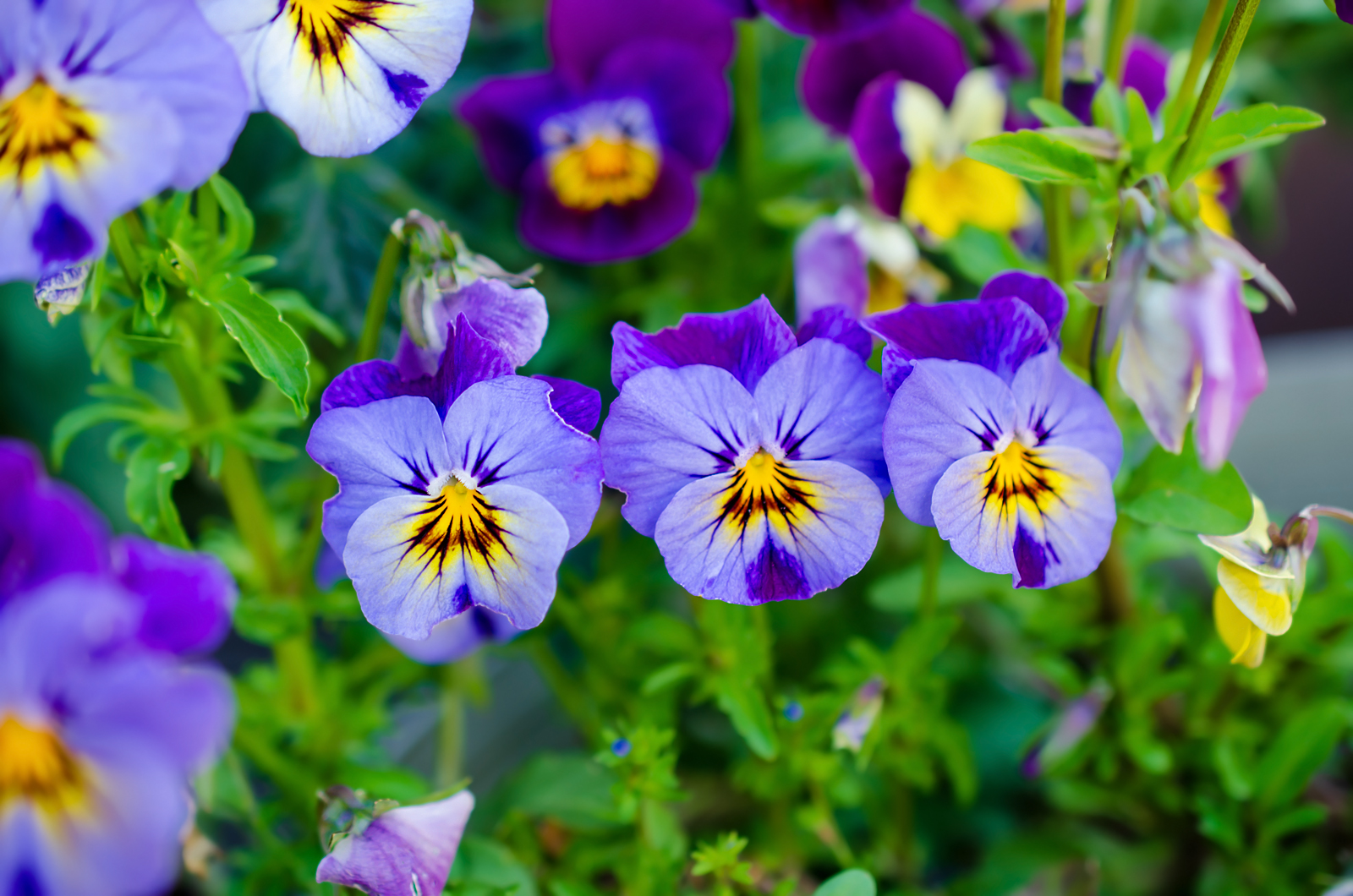
Pansies, three in a row. And I like that worried pansy face in the background.

Starting and ending with roses.

Tomorrow, a couple of bees.

~~~~~~~~~~~~~~~~
¡Hay tantas flores abiertas en estos dias! Salí hoy, dando una vuelta corta, y al lado de la carretera vi: Digitalis purpurea (dedalera), los tallos altos llenos de flores; masas de mariposas dondequiera; Lonicera ciliosa (madreselva anaranjada), apenas empezando a florecer; hay Gaultheria shallon (salal) y Achillea millefolium (milenrama o perejil bravío) y Aruncus dioicus (barba de cabra) y Physocarpus capitatus (ninebark) y Holodiscus discolor (rocío oceánico) y — malafortunadamente — la invasiva retama negra, con sus flores amarilllas. Corté un buen ramo de dedaleras para mi mesa. Y no saqué ninguna foto, porque me agarró la lluvia.

No importa: apenas esta tarde terminé con procesar las fotos de las flores de mi jardín. Aquí subo las primeras.
  1. Rosas, en botón y abierta. Una foto algo extraño, pero me gustó. Como las vi por arriba del barandal de la escalera.
  2. Las bacopas moradas. (Hisopo de agua.) Una plantita humilde, rastrera.
  3. Calibrachoa sp. Estas flores se parecen a las petunias, pero son pequeñas.
  4. Las peonias este año produjeron gran cantidad de flores.
  5. Un geranio nuevecito. Todavía tiene más botones que flores.
  6. Tres pensamientos alineados. Y me gusta la cara preocupada del pensamiento en el fondo. ¿En qué estará pensando?
  7. Y empiezo y acabo con las rosas.
Para mañana, dejo unas abejas.


Tuesday, June 18, 2024

One at a time

 It sounded so simple; take photos of the flowers in my garden, process them quickly, post them. Life doesn't work that way, though. Here's one (1) photo. I didn't recognize these, and they're growing in a pot where I planted sweet peas. These are no sweet peas!

The posts are there for sweet peas to climb on.

A Google image search brings up photos of Phlox, none an exact match, but close enough.

And now I'm stuck on the next one. And then there are the bees ...

~~~~~~~~~~~
Parecía que iba a ser sencillo: sacar fotos de mis flores, procesarlas rapidamente, y subirlas aquí. ¡Optimismo injustificado! Con la primera foto, estaba perdida. No reconocí estas flores, que crecían en una maceta donde sembré semillas de guisantes de olor. ¡Estas no son guisantes de olor!

Foto: las flores. Los postes están allí para sostener a los guisantes de olor.

Una búsqueda de imágenes de Google me presentó con muchas fotos de Phlox (flox), ninguna que correspondía exactamente a estas, pero alli va.

Y ahora, me he quedado perpleja con la segunda planta. Y luego, siguen las abejas ...


Monday, June 17, 2024

Pink, white, purple

It has been a cool spring. We're halfway through June, almost into summer, and it's still cool most days, usually cloudy, often rainy. I've been fussing over the garden for months, planting, re-planting when nothing grew, re-planting again even last week. And finally, finally, things are bursting out all over. These flowers were the first of my summer blooms, showing up two weeks ago.

Sweet rocket, Hesperis matronalis. A volunteer. No need to plant this one!

Mock orange, Philadelphus sp.

Alyssum. These, I bought already blooming.

Bacopa, white and purple.

I don't know what these are. Too tiny even to see the shape with the naked eye. Another volunteer?

Allium on a neighbour's deck. I cheated with this one; a couple of messy sheds in the background got in the way, so I put trees on top of them.

And now the peonies are in full bloom, greeting me with their sweet scent, the roses (the ones the deer haven't eaten) are opening their buds, the scarlet runner beans are curling up the wall ... If the sun comes out tomorrow, I'll go out and take their photos.

~~~~~~~~~~~~~

La primavera, este año, fue más bien fria; el cielo nublado, cuando no estaba lloviendo. Y ya estamos a mediados de junio, y sigue con lo mismo. Un dia de sol, tres de lluvia ... He estado tratando de hacer crecer mi jardín, sembrando, volviendo a sembrar cuando nada brotó, volviendo a sembrar otra vez, hasta la semana pasada. Y por fin, se ven resultados; hay flores por todos lados. Estas flores son las primeras flores del verano que se abrieron hace quince dias.

  1. La juliana, Hesperis matronalis. Esta es una flor nativa, y apareció sin necesidad de sembrarla.
  2. Philadelphus sp.
  3. Aliso. Estas plantas las compré ya con flores.
  4. También estas. Bacopa, o hisopo de agua.
  5. No sé que son estas. Flores demasiado pequeñas como para distinguir la forma de la flor a simple vista. ¿Será otra planta voluntaria?
  6. Allium, cebollas ornamentales en la terraza de una vecina. Hice trampa aquí; en el fondo había unos garages o talleres mal cuidados, que echaban a perder la vista. Les puse árboles encima.
Y ahora, las peonías están abiertas, perfumando el aire; las rosas miniaturas (las que no comieron los venados) se están abriendo, los frijoles escarlatas (judías escarlatas) empiezan a escalar la pared ... Si sale el sol mañana, les sacaré unas fotos.


Sunday, September 17, 2023

Planting hope

Where does the time go? It seems just a short while ago that I was looking at tiger lilies in full bloom. But that was back in July. And then in August, there were bulbils.
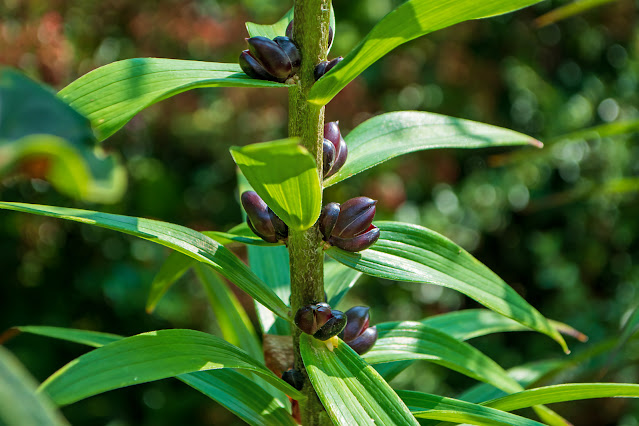
Tiger lily, Lilium lancifolium

Our native wild tiger lilies produce seeds in the usual fashion, from fertilized flowers. This import from Asia usually needs to be hand pollinated; our local insect pollinators don't quite manage. But the plant has a second string to its bow. Along the stem, in the leaf axils, it grows tiny bulbs. These fall to the ground and plant themselves; at the base of each bulbil, even while it is still attached to the parent plant, tiny white roots are sprouting, ready to dig into the soil.

It's a slow process. Seeds will produce flowering stalks within a year. The bulbils take from 3 to 5 years to bloom. The resulting plants will be clones of the parent.

I collected a dozen or so bulbils from several stalks. The bulbils were about the size of a popcorn grain (unpopped). Out of the base of each one, three or four teeny white rootlets had sprouted. I found instructions on planting them; plant in the fall, 15 cm. deep, 15 to 20 apart, in well-drained soil with plenty of sunlight. So I took my harvest home and planted them against a wall facing the morning sun.

Now to wait three years. It's good that time flows so quickly these days.

~~~~~~~~~~~~~
­¡Cómo vuela el tiempo! Parece dias apenas cuando miraba las flores grandes y anaranjadas de los lirios de tigre. Pero mirando el calendario, fue en julio. Y un mes más tarde, en agosto contemplaba los bulbos que se habían formado a lo largo de los tallos en las axilas de las hojas.

Foto: Tallo del lirio de tigre con los bulbillos. Este es el lirio importado, Lilium lancifolium.

Los lirios de tigre nativos a este continente producen semillas en la manera común, a base de flores fertilizadas. Pero esta planta importada desde Asia casi siempre necesita que la polinicen a mano ya que nuestros insectos locales no lo logran. Pero no se da por vencida la planta; tiene otra strategia. A lo largo del tallo produce bulbos pequeñísimos, brotandos donde las hojas se unen al tallo. Estos bulbillos caen al suelo y se siembran; ya vienen con las raices listas para penetrar en la tierra.

Toma su tiempo. Plantas que nacen de semillas producen flores dentro de un año. Si empiezan con los bulbillos, pueden tomar de 3 a 5 años antes de florecer. Las plantas serán clones de la planta original.

Coseché una docena o más de bulbillos. Cada uno era del tamaño de un grano de maiz. Y desde la base brotaban tres o cuatro raicitas. Encontré en la red instrucciones para sembrarlos; hay que sembrarlos en otoño, unos 15 cm. bajo la superficie, separados por unos 15 a 20 cm, en tierra con buen drenaje, donde les llega el sol por buena parte del dia. Me los traje a casa y los sembré protegidos contra una pared donde les pega el sol matutino.

Ahora, a esperar. Tres años. O cinco. ¡Qué bien que pasa el tiempo tan rapidamente en estos dias!

Tuesday, August 17, 2021

Pink. Just pink.

 So pink ...

Cosmos and bud.

Hollyhock by the staircase. And buds.

A small pink rose. Planted last year; loaded with blooms now.

~~~~~~~~~~~~~~~~~~~~~~~~~~


Flores color de rosa en mi jardín:

Cosmos, con botón, Alcea, también con botones, y una rosa pequeña. Sembramos este rosal hace un año, y ahora está cubierto de una multitud de flores.


Sunday, August 15, 2021

Sweet

 Alyssum; it keeps coming back, year after year, always slightly wilder, always fragrant and durable. And I can't resist taking its photo, year after year.

Sweet alyssum, Lobularia maritima

~~~~~~~~~~~~~~~~~~~

Alyssum: vuelve a florecer año tras año, cada vez un poco más entusiasta, siempre perfumada y duradera. Y año tras año no puedo dejar de sacar otra foto.


Powered By Blogger