Showing posts with label turkey tail fungus. Show all posts

Sunday, April 12, 2026

Turkey tail, Cladonia, and a lousy photo of a speeding bug.

Seen on two stumps near the shore at Oyster Bay; one loaded with an enthusiastic crop of red-tipped Cladonia lichens, the next bearing turkey tail fungus.

Cladonia sp., probably C. transcendens, "Easily the most common red-fruited Cladonia" says my guidebook. Some branched podetia (stalks); some have double red tips.

Trametes versicolor. Making a chunk of dead wood a thing of beauty.

I went to Little Bear Bay again this afternoon. (Pics and story later.) On the way, I stopped at a rock quarry, to see what these cliffs are made of. All greyish rock, with sparkles of  mica. Nice! There was a deep pool beside the quarry, and I climbed the bank to look down into it. More sparkles; the sun was highlighting floating specks of dust, floating alder catkins, twigs. And speeding dark dots, blinking on and off as they crossed into sunny spaces. I couldn't get too close; the bank was unstable, so I just zoomed the camera out and shot a dozen photos; hoping to maybe catch one of the speeders in focus.

Well, maybe. Sort of. Almost in focus, almost visible under the sparkles.

I think it may be a Common Backswimmer, Notonecta undulata.

Made my day! And the bay was beautiful, too.

~~~~~~~~~~~~~~~~
En dos tocones cerca de la playa en Oyster Bay; uno adornado con un grupo de líquenes Cladonia, el otro rodeado de hongos "Cola de pavo".

    1. Cladonia sp. Creo que puede ser C. transcendens, — Facilmente el liquen Cladonia con frutos rojos — dice mi libro guía. Algunas de las podetia (tallos) forman ramos; algunas tienen apotecios dobles.

    2. Trametes versicolor.

Hoy regresé a Little Bear Bay (Bahía del Osito). (Eso lo dejo para otro post.)  En camino, me detuve en una cantera donde habían estado extrayendo rocas, para examinar las piedras. Roca gris, con puntitos brillantes de mica. ¡Muy bonitas las piedras!  A un lado de la cantera hay una poza profunda, y subí las rocas para poder mirar el agua. Más puntitos de luz; reflejos del sol en granitos de polvo, en las candelillas de los alisos caídas, en palitos.  Y también en unos bichos que nadaban allí, muy pequeños, muy veloces, como foquitos que se encendían y se apagaban al pasar de sombra a donde les tocaba la luz. No me podía acercar más; la orilla era movediza, pero saqué una docena de fotos, por si alguna lograra enfocar justo a tiempo de captar uno de esos bichos.

Bueno, más o menos. Casi casi. Me salió una foto con bicho, medio escondido bajo los destellos.

    3. Creo que puede ser un insecto acuático, Notonecta undulata.

Un hallazgo que me alegró mucho. Y la bahía estaba asoleado y hermoso, también.


Monday, November 10, 2025

Final recyclers

 A rotting log end beside the river trail is sprouting white "antlers".

Candlesnuff fungus, aka Stag's horn fungus, Carbon Antlers.

Xylaria hypoxylon.

Down another rabbit hole ...
Candlesnuff Fungus specialises in consuming neither the softish cellulose nor the much tougher lignin but rather the polysaccharides - glucan and other minority content compounds of timber that bind the cellulose and lignin together to form what we recognise as wood. As a result, when these and various other ascomycetous fungi have consumed what they can of a dead stump the remainder is a nutrient-rich soft mess ... (First-Nature)
Ok. Wood is made, mainly, of three materials: first, lignin, the tough fibres that give the wood it stiffness, and keeps trees standing tall. The higher content of lignin in the wood is what makes hardwood, such as our big-leaf maples, hard. Hemlock and Douglas-fir, softwoods, have less; grass has a bare minimum.

Then there's cellulose. It's another fibre, this one made of long chains of glucose molecules. (And no, it's not sweet, it doesn't raise your blood sugar; a molecule in a chain behaves differently than one out on its own.) It is the most common structural component of plant cell walls, providing strength and stiffness, and serving as a conduit for nutrients.

And the third: the hemi-celluloses. More sugar chains. Cellulose chains are straight; hemi-c's are branched and contain different sugar molecules. They are amorphous fibres that serve as the basic glue that holds the cellulose and lignin together. These are the molecules that the Candlesnuff fungus breaks down.

Look at a standing tree. Sprouting from the sides, we see the Red-belted polypore, Fomitopsis mounceae. This fungus digests the cellulose and hemi-c. It doesn't touch the lignin. The tree will stand for years yet.

The same tree, later. We find it on the ground, still solid. A flock of Turkey-tail fungi, Trametes versicolor, spreads across the bark and cut end. This fungus is digesting the lignin, leaving the wood still holding its shape, but you will soon be able to break it apart with a fingertip. Bears dig through it, looking for ants and other grubs.

And later, the Candlesnuff fungus dissolves the last bit of glue that holds the wood together; it crumbles into the soil.

Oh, if you come across these fungi in a dark corner of the woods, they're bioluminescent. They shine in the dark. Only, though, faintly, possibly visible to the naked eye in pitch-black darkness. Maybe if you wrap your hands around one and peer into them. And wait until your eyes adjust ...

Unfortunately the amount of light from this and most other bioluminescent fungi is very weak indeed, and to see it clearly you need either an image intensifier (such as those built in to night sights used by soldiers and spies) or to take a long-exposure photograph in a totally dark room. (First-Nature)

... or if you're a spy.

~~~~~~~~~~~~~~~~~~

En un pedazo de tronco podrido en el sendero a la orilla del rio, vi estos hongos:

  1. Xylaria hypoxylon
  2. También se conoce como cuerno de ciervo y hongo candela.

Y me distraje; empecé con hongos, terminé con espias.

El Hongo Candela se especializa en consumir ni la celulosa suave ni la lignina, mucho más duro, pero en vez de estas, los polisacáridos - glucano y otros componentes menores de la madera, los cuales unen la celulosa y la lignina para formar lo que nombramos madera. Como resultado, cuando estos y otros hongos ascomicetos han digerido todo lo que pudieron de un tocón muerto, lo que queda es una masa suave, rica en nutrientes. ... (First-Nature)
Bueno... La madera se hace, principalmente, de tres componentes. La lignina, las fibras fuertes que le dan a la madera su rigidez, y mantiene los árboles de pie. La mayor cantidad de lignina en la madera es lo que hace las llamadas "maderas duras", tales como nuestros arces de hoja grande, tan duras. Tsuga heterophylla y los abetos de Douglas, maderas suaves, tienen menos lignina; el pasto apenas tiene una cantidad mínima.

Luego, la celulosa. Esta es otra fibra, compuesta de cadenas largas de moléculas de glucosa. (Y no, no es dulce, no aumenta la glucosa en tu sangre; una molécula en cadena se comporta de manera distinta que una que anda sola.) La celulosa es el componente estructural más común en las paredes celulares de las plantas, y provee resistencia y rigidez, además de servir como via para los nutrientes.

Y la tercera; las hemi-celulosas. También son cadenas de azúcares. Pero las cadenas de las celulosas son directas; las de las hemi-celulosas son ramificadas y contienen una mezcla de moléculas de azúcares. Son fibras amorfas que sirven como el pegamento que une la celulosa y la lignina. Estas son las moléculas digeridas por el hongo candela.

Mira un árbol vivo, de pie. Brotando de sus lados, vemos el poliporo Fomitopsis mounceae. Este hongo digiere la celulosa y la hemicelulosa. No toca la lignina. Este árbol se puede mantener en pie por muchos años.

El mismo árbol, años más tarde. Lo encontramos tumbado en el suelo, pero todavía entero. Una bandada de hongos "Cola de pavo", Trametes versicolor, se extiende sobre la corteza y el extremo cortado. Este hongo está digiriendo la lignina, dejando la madera todavía aparentemente entera, pero pronto podrás penetrarla con un dedo. Los osos la excavan, buscando hormigas y larvas.

Y más tarde aun, el hongo candela disuelve lo que queda del pegamento que une la madera y se desmorona, formando parte del suelo.

Aparte de todo eso; si encuentras estos hongos en un rincón oscuro del bosque, son bioluminescentes. Emiten luz en la oscuridad. Bueno, solamente una luz tenue; apenas visible si la oscuridad es total. Tal vez si cierras las manos alrededor del hongo y aplicas el ojo a una apertura. Y esperas hasta que se ajusten tus ojos ...

Desafortunadamente la cantidad de luz emitida por este y la mayoría de los otros hongos bioluminescentes es verdaderamente débil, y para verla claramente necesitas o un aumentador de luz (como los que tienen los lentes para la noche que usan los soldados y las espías) o debes sacar una foto de larga exposisión en un cuarto en oscuridad total. (First-Nature)

... o si eres un espía.


Monday, August 25, 2025

Dark, green, damp. Just the ticket!

 These hot days there's nothing better than a walk in a shady forest. Like down the trail to Roberts' Lake.

Ancient stump, new trees, moss and ferns and green algae.

A rich assortment of mosses on a burnt stump.

Banana slugs love this damp, cool hillside.

Moss and lichen on a fallen tree.

A tree full of turkey tail polypores.

Study in contrasts.

Another stump with its mossy coat.

Tomorrow's another hot day, but rain is coming soon.  The slugs, the moss, and I will be happy.

~~~~~~~~~~~~~~~
En estos dias calurosos, no hay nada mejor que caminar en un bosque verde y sombreado. Como por ejemplo, en el sendero que baja hasta el lago Roberts.
  1. Tronco antiguo, cortado a la manera de antaño, por dos hombres con una sierra de mano. Y  árboles nuevos, musgos, helechos, y algas verdes.
  2. Otro tronco con una variedad de musgos.
  3. A las babosas banana, Ariolimax columbianus, les encanta este bosque, siempre húmedo, siempre en sombra.
  4. Musgos y líquenes en un árbol caído.
  5. Un árbol colonizado por los hongos  "cola de pavo", Trametes versicolor.
  6. Texturas en contraste.
  7. Otro tronco viejo con su abrigo de musgos.
Y mañana será otro dia de color, pero pronto vienen las lluvias. Las babosas, los musgos, y yo, estaremos felices.


Sunday, April 13, 2025

Mushrooms old and new

It's not a mushroomy time of the year, even though it's warm (at least not usually freezing) and generally rainy. But everywhere I go, I see only one or maybe two mushrooms, sometimes the remains of last year's 'shrooms. So in over a month, I've collected photos of only 4 species.

These:

Early March, Baikie Island. On an old, old fallen branch. Unidentified.

Baikie Island. Out of the rain under the overhang of the roots of a downed tree.

Today. Roberts Lake. Lichenomphalia umbellifera.

According to my mushroom guide book, this Lichen Agaric is "the first species to be seen in the spring." This afternoon I found about a dozen, all on well-rotted stumps, in the dark forest at Roberts Lake. Although I was searching closely, I saw only the remains of one other mushroom, mostly eaten by slugs. None of them had fed on any of the Lichen Agarics; not to their taste, I wonder?

The mushroom is actually a lichen; the mushroom is the fruiting body, and the algal component of the lichen is that dark green algae that covers the stump around this one. I had never seen it before arrange itself in these long lines, following something in the structure of the old wood, apparently.

These and others like them were on a few stumps in the deepest shade of this already gloomy forest, stumps covered with these green algae and a dark green dust lichen. Several times I have attempted to get photos of them; this was the first that halfway captured them. I've got a new pocket camera; it doesn't do RAW, and the photos are noisy, but it incorporates a ring light on the ultra-macro setting, which allows me to get really close, even in dark places.

Another stump, another Lichenomphalia, same camera. The green alga is that smear of green on the burnt wood.

Turkey tails, down by the river, mid-March.

~~~~~~~~~~~~~~~

En esta temporada del año casi no encuentro hongos, aunque ya no hace frío (por lo menos no baja la temperatura a menos de 0 grados por lo general) y hay lluvia suficiente. Pero dondequiera que busco, veo tal vez uno, tal vez dos hongos, estos pueden ser restos de los hongos del año pasado. En más de un mes, solo he podido sacar fotos de 4 especies.

Estos son:

  1. El once de marzo, en la isla Baikie, creciendo en una rama muy vieja. No los pude identificar.
  2. En la isla Baikie, protegidos de la lluvia bajo las raices de un árbol caído.
  3. Hoy, en el lago Roberts. Lichenomphalia umbellifera. 

    Según mi libro guía, este hongo es "la primera especie que se ve en la primavera." Hoy en la tarde encontré más o menos una docena, todos creciendo sobre tocones viejos, muy podridos, en el bosque oscuro cerca del lago Roberts. Aunque buscaba con atención, solamente vi los restos de un hongo distinto, este casi completamente devorado por las babosas. Pero no habían ni siquiera probado estos hongos Lichenomphalia umbellifera. ¿Será que no les guste el sabor?

    El hongo es, de hecho, un liquen; el "hongo" es el cuerpo fructífero, y el componente algal es esa materia verde oscuro que cubre el tocón alrededor del hongo. Nunca antes he visto que se distribuye en esas lineas largas, que aparentemente siguen algo en la estructura de la madera vieja.

    Estos y otros de la misma especie crecían en unos tocones que se hallan en la parte más oscura de este bosque, de por sí bastante sombreado. Estos tocones están todos cubiertos por estas algas verdes y un líquen de polvo, también verde oscuro. Varias veces he atentado sacar su foto, pero esta es la primera vez que más o menos salieron las fotos.  Tengo una camara de bolsillo nueva; no saca fotos en RAW, y todas las fotos muestran bastante ruido digital, pero la cámara tiene un iluminador circular alrededor de la lente, lo que me permite acercarme a unos pocos centímetros del sujeto, aun en sitios muy oscuros.
  4. Otro tocón, otro Lichenomphalia umbellifera, la misma cámara. El alga es ese tinte verde sobre la madera quemada.
  5. Hongo "cola de pavo", Trametes versicolor, en la orilla del rio, a mediados de marzo.


Thursday, May 09, 2024

Just tidying my files

 Seen in passing: random shots from here and there, in the last couple of weeks. In no particular order.

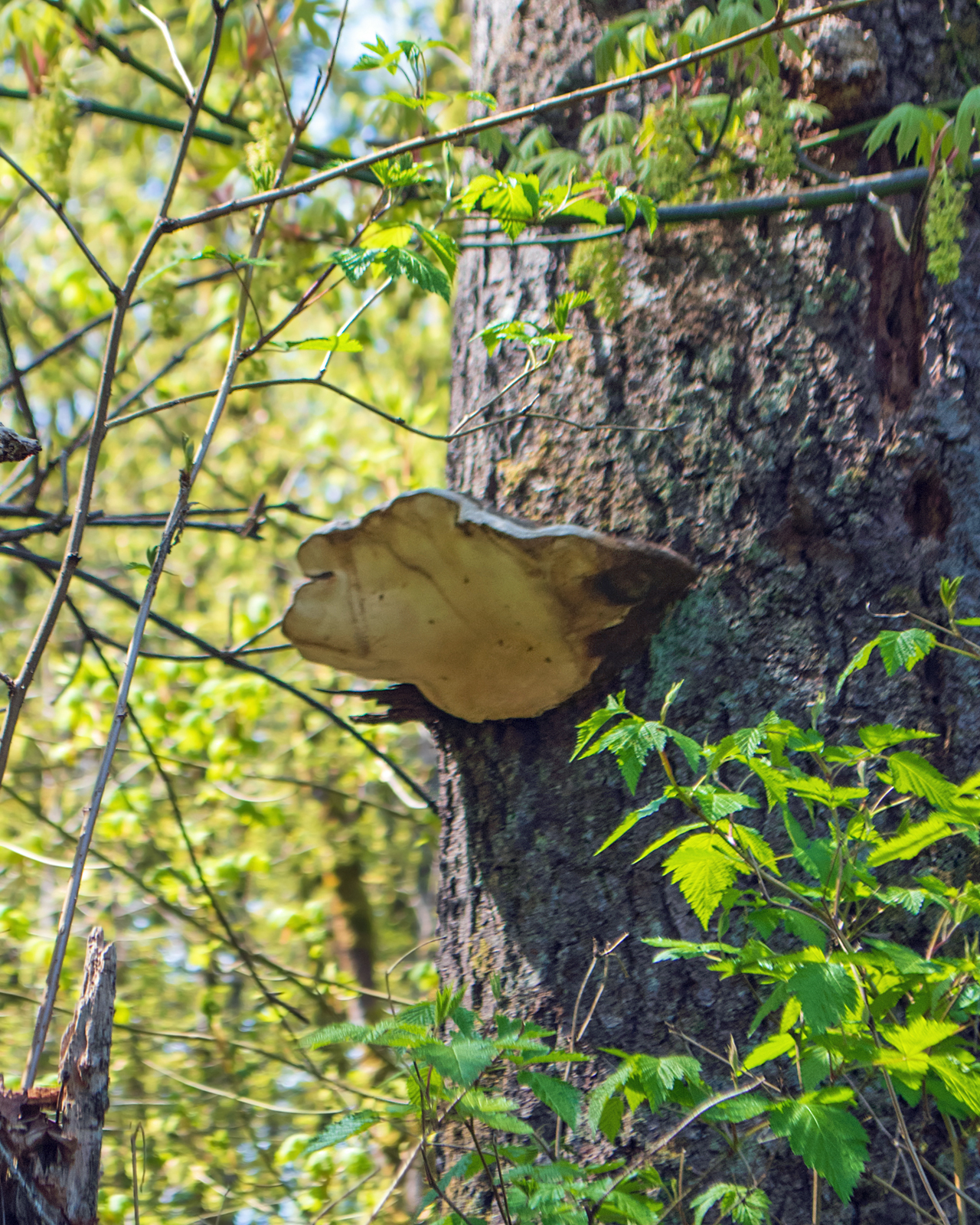
Turkey tail polypores on the end of a log. Near Echo Lake.

Red-flowering currants in the forest. Miracle Beach.

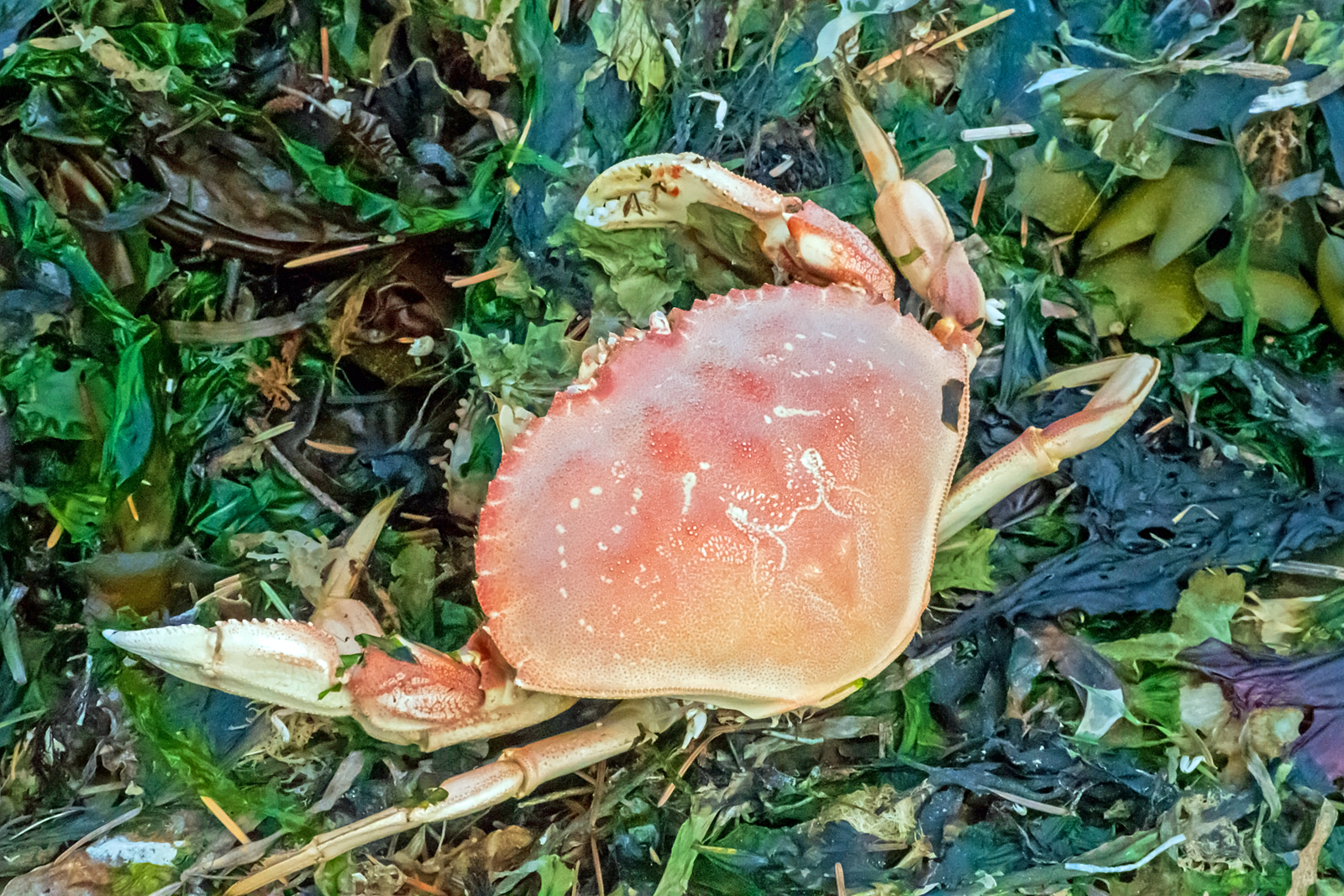
Crab molt on a pile of drying seaweeds. Miracle Beach

View of Mount Washington from the top of a rock.

Lookout trail sign, near Sundew Bog. With map in plastic wrap.

Tiny brown mushrooms and green lichens in a rotted log. Oyster Bay.

A Skywatch post.
~~~~~~~~~~~
Cosas vistas al pasar: estoy poniendo en orden las fotos de las últimas semanas. 
  1. Hongos políporos "cola de pavo" en un troncón. Cerca del lago Echo.
  2. Las flores de Ribes sanguineum en el bosque de Miracle Beach.
  3. La muda de un cangrejo depositada sobre algas marinas dejadas al sol. Miracle Beach.
  4. Vista del monte Washington, desde una roca cubierta de musgos.
  5. Un letrero apuntando hacia un sendero que lleva a un punto de observación. Con su mapa envuelta en plástico por la lluvia.
  6. Honguitos cafés y líquenes verdes dentro de un tronco podrido. Oyster Bay.


Thursday, November 24, 2022

And there were 'shrooms

I've been disappointed this fall in my searches for mushrooms. But in this alder wood, when I was not looking for them, there they were. Small to teeny, and only two species, but there they were in abundance.

Almost pure white with a faint piecrust edge and pale brown stalks.

These white mushrooms were everywhere. The ones in this photo were the largest, maybe 1 cm. across. The others? Too small to identify, usually too small even to get down to their level. Look:

Pinhead mushroom, stretching up through the moss.

And there were turkey tails or their look-alikes:

Chilled and exposing their undersides on a fallen tree.

They sprouted out of the trunk from top to bottom (now end to end).

This tree still stands. And the mushrooms are more the usual colour.

And a cluster of moss, for good measure.

And I'm not done yet with that walk through the alder woods. More tomorrow.

~~~~~~~~~~~~~~~~~~~~~~~~~~~~~~

Este otoño no he encontrado los hongos que siempre espero ver. Pero finalmente, en este bosque de alisos, cuando no los buscaba, ahí estaban. Pequeñitos a miniaturos, y de solo dos especies, pero ahi estaban, y en abundancia.

Fotos:

  1. Estos hongos blancos (con un leve baño de color crema claro), con los bordes ondulados y los tallos lisos y color café, pero con todo eso demasiado pequeños para identificarlos, estaban en todas partes. Estos, de la foto, eran los más grandes que vi, a hasta 1 cm. de diámetro.
  2. La mayoría eran del tamaño de este honguito; un hongo como la cabeza de un alfiler.
  3. Estos, los llamados "cola de guajolote" o "cola de pavo", Trametes versicolor, llenaban el tronco de un arbolito caído.
  4. Desde la raiz hasta la corona.
  5. En un aliso vivo, tienen el color más acostumbrado.
  6. Y una ramita de musgos creciendo en un aliso.
Y sigo con este bosquecito de alisos, con más fotos mañana.

Tuesday, May 03, 2022

Shelves, bubbles, and burn spots.

Still following the trail along the river banks: a selection of fungi, mostly polypores, on trees and logs.

Red-belted polypores on the cut end of a log. With fungal duck.

More red-belted polypores, with a "weepy" fungus.

On a mossy trunk, an orange "bubble". It may be a young red-belted: knob-like when young.

This I had never noticed before: see how the light bounces off the mushroom to project a warm glow onto the bark.

Spreading the sunlight

Too far up on a trunk, too far off the trail to get close, I saw a very large artists' conk. 

Side view.

As close as I could get.

These conks can get up to 30 inches across, according to my guidebook, although I have never seen one that large. I have one at home about half the size of this one; I measured it once I got home, and it's 10 inches across.

Sorocybe sp.?

This looks like a burnt patch on an old maple, slightly raised, hard to the touch. There were several spots, higher up on the trunk, all seeming to be growing where branches have broken off. I posted the photo on Field Naturalists of Vancouver Island, and am told it is a Sorocybe or similar reisinicolous fungi.

And a small stump, covered with turkey tails.

~~~~~~~~~~~~~~~~~~~~~~~~~~~~

Sigo con fotos del paseo al lado del rio Campbell; aquí unas fotos de hongos que crecen en los troncos de los árboles, o la madera cortada, por su mayor parte poliporos.

  1. Hongos Fomitopsis pinicola, el poliporo de cinta roja; este tipo de hongo también se conoce como hongo repisa. En un tronco cortado.
  2. Otros de los mismos, y con un hongo, sin identificación, con sus gotitas de sudor.
  3. Otro, éste siendo un ejemplo juvenil; toman forma de repisa al madurar. Lo que me llamó la atención, es como el hongo refleja la luz del sol, proyectando un color calientito a la corteza del árbol.
  4. El mismo, de cerca.
  5. Algo lejos del camino, y muy arriba en el tronco, vi otro hongo repisa, este del tipo hongo de artista, Ganoderma applanatum. Estos crecen hasta 75 cm de ancho, aunque no me acuerdo de haber visto uno tan grande. Pero éste es uno de los más grandes que he visto; más o menos el doble de uno que tengo en casa, que mide 25 cm.
  6. El mismo, de otro punto de vista.
  7. Este hongo negro crece en un arce de hoja grande. Es duro, no se despega, parece un quemazón. Había varios en el tronco, todos parecen estar en sitios donde se rompió una rama. Subí la foto al sitio de Naturalistas de la Isla Vancouver, y allí me dicen que es un hongo resinicolo, tal vez del género Sorocybe.
  8. Un tronco cortado, cubierto de cola de pavo, Trametes versicolor.

Thursday, October 28, 2021

Brand new turkey tails

6 weeks ago, I came across a cut stump in the grass at the Campbell River museum. The cut surface was covered with a fungus I couldn't identify.

As seen, September 18, 2021

Searching for mushrooms again last week, I checked out the same stump. Look at it now!

Fresh new turkey tails.

So that's one mystery solved.

~~~~~~~~~~~~~~~~~~~~~~~

Hace mes y medio, encontré en un tronco viejo al lado del bosquecito del museo de Campbell River. Estaba cubierto de un hongo que no pude identificar.

Primera foto: el hongo como lo vi el 18 de septiembre.

La semana pasada, buscando hongos, volví a mirar el mismo tronco. Y ahora, ¡mira como se ha desarrollado!

Segunda foto: hongos "cola de pavo", Trametes versicolor.

Un misterio aclarado.


Sunday, March 14, 2021

Tree mushrooms

Mushrooms in March. Growing on trees.

In a crack on a live tree.

On a dead tree. With script lichen and spider webs.

Turkey tails on a long-dead tree, on the ground.

~~~~~~~~~~~~~~~~~~

Hongos en el mes de marzo. Creciendo en madera.

1. En una grieta en un árbol vivo.

2. En todo el tronco de un árbol muerto. Con líquenes de escritura y telarañas.

3. En un tronco muy muerto, cortado y dejado en el suelo. Son "cola de guajolote", Trametes versicolor. 

Saturday, January 30, 2021

Snowbirds and turkey tails

I thought at first it was a flock of birds. But then again, maybe not. Unless they're white-headed penguins. Is there such a thing? Ducks? Geese?

Snowbirds, anyhow.

Frozen eagles?

Ok, I'll be sensible. Here's a plain old fence.

The greenish patches on the tree are lichen. The green on the fence are algae.

And some log ends.

With polypore fungi. And snow.

And on this one, there are turkey tail fungi, an orange jelly fungi, lichens, and moss.

~~~~~~~~~~~~~~~~~~~~~~~~~~~

Primera foto. Parecen pájaros. Pinguinos de cabeza blanca, tal vez. ¿Existe tal cosa? Bueno, si no, serán patos. O gansos. ¿O águilas congeladas? ¿Los famosos pájaros invernales canadienses?

OK, dejando a un lado las tonterías. Segunda foto: una cerca con algas verdes. Lo verde claro en el tronco del árbol son líquenes. El alga verde siempre tiene un color verde fuerte.

Tercera: un tronco caído con hongos poliporos.

Cuarta: otro tronco; este lleva hongos "cola de guajolote", hongos de gelatina anaranjada, líquenes, y un poco de musgo.


Sunday, August 30, 2020

Up Cedar Creek Road

 I found a road going up in the hills behind the cliff faces I've been looking at.

Cedar Creek road.

The road is cut through deep forest, gravel, in places only one car width wide. In spots, the sun reaches the road, but mostly it's in shadow. In a wider spot, sun bleached a broken stump in the rubble on the shoulder.

Bleached turkey tail fungus.

Where the sunlight is only reflected from the bare road, the undergrowth is deep green.

Another stump. Salal and huckleberries, ripe and sweet. The salal dyed my fingers purple.

Next: a variety of lichens.

~~~~~~~~~~~~~~~~~~~~~~~~
Encontré un camino que sube atrás de los peñascos que he estado explorando. Está cortado por medio de bosque cerrado; el camino es de grava, angosto, a veces apenas permitiendo el paso de un coche a la vez, en sombra por la mayor parte.

En un espacio más abierto, dejaron los restos de este arbolito en pleno sol entre los escombros al lado del camino. El tronco, y el hongo "cola de guajolote" quedaron blanqueados.

Donde el sol apenas llega reflejado del camino, la vegetación es de un verde fuerte. Aquí salal (Gaultheria shallon) y huckleberry (Vaccinium parvifolium) producen sus frutillas, algunas ya maduras y dulces. El salal me pintó los dedos de un color morado.

Mañana: líquenes.


Sunday, May 24, 2020

White mushrooms and a long walk

Above the rocks at Brown's Bay, a road leads up the hill to a few cabins and beyond that, tenting sites. And along that road, a trail leads off into the woods. A steep slope, all brown duff, ferns, and tall, straight trees. And in the distance, large, white mushrooms beckoned me.

On fallen alder trunk. Looks to me like Angel Wings, Pleurotus porrigens, but it's the wrong time of year, so I'm probably wrong.

This one was on an upright stump.

And these on another.

And for variety, a turkey tail.

I mentioned the other day that I walked too far. This is how it happened: first, I can't resist a trail I haven't explored, so coming back from the rocks, I turned aside to climb towards the campsites. Did I say the hillside was steep? All the roads and paths were steep; the land climbs abruptly from the shore beneath.

So I climbed to the beginning of the trail, old legs complaining as I went, but the trail was so enticing that I had to continue climbing. At the last stump (where I found the slug), I cut downhill to a return trail, and headed back to the car.

It was a long way: because of the virus, the road I have driven on before is barricaded, and I had walked from the first cabins. And I made small side runs, like a dog does, exploring this side of the road, that bit of ditch, that patch of flowers, the far side of that stump ...

As I approached the car, I shut down the camera and discovered that the lens cap had fallen off. Can't have that; lenses are too easily scratched. So I retraced my steps; along the main road, up the cabin and campsite road, down the trail, circling every spot I'd stopped along the way. No lens cap.

Over four bridges, up and down too many steep hills. I had just about lost hope when I got to the slug. It was still there. So was the lens cap, in the duff beside it.

On the way back, I went in a straight line, as the crow flies. But then, I still wandered down to the docks to look for swallow nests and anemones. At least that was on the flat.

~~~~~~~~~~~~~~~

Subiendo el cerro desde las rocas en Brown's Bay, un camino lleva a unas cabañas, y más adelante a sitios donde se puede instalar tiendas de campaña. Y cerca del final de ese camino, un senderito entra al bosque. Un bosque oscuro, muy inclinado, cubierto de humus y helechos, con troncos rectos, sin ramas en las partes inferiores. Y en la distancia, como lamparitas, hongos grandes y blancos me llamaban.

Fotos: hongos en un tronco caído y en dos troncos cortados. Se parecen al hongo que se llama Alas de ángel, pero no es la temporada. Y una "cola de gallo" en otro tronco caído, ya bien podrido.

El otro día mencioné que había caminado demasiado. Así fue como pasó. En primer lugar, no puedo resistir un camino que no he explorado, y regresando de las rocas, tuve que desviarme para subir hacia los sitios para acampar. ¿Dije que el camino era inclinado? Si. Muy empinado, todos los caminos y senderitos. El terreno aquí corre hacia las montañas.

Subí hasta donde empezó el sendero en el bosque: mis rodillas viejas se quejaban, pero el bosque era tan tentador que tuve que continuar. Cuando llegué al último tronco, donde encontré la babosa, corté cerro abajo para encontrar un camino de regreso.

Para donde había estacionado era un largo camino, porque el paso normal está cerrado por el virus; no se puede acampar, y no dejan entrar coches. Y además, no camino en linea recta; siempre me desvío para ver algo más; el otro lado del camino, esa zanja con agua, aquellas flores, el lado opuesto de ese tronco ...

Llegando al coche por fin, apagué la cámara, y descubrí que se me había caído la tapa de la lente. Eso no se puede permitir: se dañan las lentes tan facilmente. Así que volví sobre mis pasos, por el camino principal, subiendo el camino de las cabañas y los campamentos, por el sendero en el bosque, dando vueltas mirando cada sitio donde me había detenido antes. No encontré nada.

Cuatro puentes, demasiados cerros inclinados, arriba y abajo. Casi había perdido la esperanza cuando llegué al último tronco, donde había visto la babosa. Todavía estaba allí. Y también estaba la tapa, entre las hierbas a su lado.

Camino de regreso, lo hice en linea recta, como vuela el cuervo. Pero todavía se me ocurrió ir al muelle a buscar anémonas de mar y nidos de golondrinas. Pero por lo menos allí no hay subidas ni bajadas.


Powered By Blogger