Showing posts with label red-flowering currant. Show all posts

Monday, March 30, 2026

Yep. Spring has really sprung.

Yes, the red-flowering currants are blooming. And the salmonberries. I found them on Baikie Island, all through the bush.

Ribes sanguineum. The leaves are starting to unfold now.

The flowers come in red, ...

... pink, ...

and sometimes in palest pink.

Salmonberry, Rubus spectabilis. More leaves than flowers now.

With these, the colour of the flowers is consistent. Berries may vary.

And there were birds everywhere, bouncing and flitting through the undergrowth, diving and just dawdling in the slough. Next.

~~~~~~~~~~~~~~~~~

Pues sí; ya están en flor las grosellas. Y las salmonberry (bayas de salmón). Las encontré entre los arbustos en la isla Baikie.

  1. Grosella de flores rojas, Ribes sanguineum. Ahora se están abriendo las hojas.
  2. Las flores pueden ser rojas ...
  3. O color de rosa ...
  4. O casi blancas, con un poco de color de rosa.
  5. Salmonberry. Rubus spectabilis. Hay muchas hojas nuevas, pocas flores.
  6. El color de las flores de salmonberry no varía mucho. De las frutillas, sí.
Y por dondequiera había pájaros, botando y volando entre los arbustos, buceando o nada más pasando el tiempo en las lagunas. Eso, para más tarde.

Saturday, March 28, 2026

Sampler

And now the streets in town are bright and colourful, with pink cherry blossoms and yellow forsythia; there are purple crocuses and hyacinths and yellow daffodils.  At my door, the flowers are tiny. So far.

Red and white bleeding heart buds.These are the garden variety, imported, Lamprocapnos spectabilis.  Our native species, Dicentra formosa, won't bloom for another month, in its cool, shady hideaways.

Plum blossom. These are the purple prune plums.

Most have pink centres.

This looks like the Pasqueflower, Pulsatilla vulgaris; purple, hairy, early bloomer, but it's only 10 cm. tall.

Windblown. Or better described; wind blasted. This tiny plant only has two flowers.

It's supposed to be sunny and warm tomorrow. (10°C) And we'll get 12 hours, 43 minutes of daylight. The flowering currant should be blooming by now, maybe even salmon- and huckleberries. I must go see.

~~~~~~~~~~~~~~
Ahora las calles del pueblo están llenas de colores; las flores color de rosa de los cerezos, flores de forsitia amarillas; en los jardines hay crocos y jacintos morados y los narcisos amarillos. Aquí, en mi puerta, las flores son dimunitas. Hasta el momento, por lo menos.
  1. Botones de el corazón sangrante asiático, Lamprocapnos spectabilis. Esta es una planta importada; nuestro corazón sangrante nativo, Dicentra formosa, escondida en la sombra de los bosques, no tendrá flores hasta fines de abril.
  2. Las flores de mi ciruelo. Este árbol produce unas pocas frutas moradas.
  3. Casi todas tienen los centros color de rosa.
  4. Esta flor se parece a la Pulsatilla (flor de Pascua), P. vulgaris; es morada, peluda, y florece al principio de la primavera, pero mide solamente 10 cm.
  5. El viento se ha llevado algunos de los pétalos. Esta planta tiene solamente 2 florecitas.
Dicen que mañana será asoleado y templado, llegando a 10° C. Y nos tocan 12 horas con 43 minutos de luz del sol. En el bosque, las grosellas de flor roja, Ribes sanguineum, ya deben tener flores. Y tal vez también los huckleberry y salmonberry, Vaccinium parvifoliumRubus spectabilis. Mañana salgo a buscarlas.


Tuesday, March 18, 2025

Spring startups

When is it really springtime? The equinox is still a day away; do I have to say today is still winter? Or did spring start with the first skunk cabbage poking its nose up through the mud? Or when crocuses lifted purple heads beside my door? Or was it yesterday, when I saw the first (to me, anyhow) tree covered in pink flowers glowing in spite of the rain?

Away from the city, where heat leaking from houses and businesses and blasting out of cars' tailpipes hurries spring on; up on the cooler hills surrounding us, early flowers are mostly hiding in the understory. Salmonberry and thimbleberry shrubs are still leafless and flower-free; so are the maples. Salal stays green all winter, but there are no flower buds yet. The wild roses are sprouting the first leaf buds; I've seen a couple of leaves starting on the red elderberry stem tips.

Is it spring yet?

The red-flowering currants think so.

Red-flowering currant, Ribes sanguineum.

Nearer town, the Oregon grapes are showing off.

Oregon grape buds. Mahonia nervosa. Baikie Island.

And the green huckleberry stems have red tips.

The red huckleberries live in shady evergreen forests; like their neighbours, the salal and the evergreen ferns, they're well adapted to take advantage of every stray ray of sunlight that manages to filter through the canopy. Though they're deciduous, losing their tiny leaves in winter, the stems are bright green, and stay green all winter, still busy converting sunlight, what there is of it, to food.

~~~~~~~~~

¿Cuando empieza la primavera? Nos falta un dia para el equinoccio; ¿tengo que decir, por eso, que hoy estamos todavía en invierno? ¿O empezó la primavera cuando la primera linterna de los pantanos se asomó de su escondite bajo el lodo? ¿O fue cuando los crocus abrieron sus flores en mi jardín? ¿O fue ayer, cuando vi el primer árbol estrenando sus flores color de rosa, alegres a pesar de la lluvia?

Fuera de la ciudad, donde el calor que escapa de las casas y los negocios y que vomita desde los mofles de los coches acelera la entrada de la primavera; fuera, en los cerros que nos rodean, las flores tempranas se esconden en el sotobosque. Los arbustos de salmonberry y thimbleberry (Rubus spectabilis, Rubus parviflorus) siguen sin hojas ni flores; los arces igualmente. El salal (Gaultheria shallon) se mantiene verde todo el invierno, pero todavía no aparecen sus flores. En los rosales indígenos se ven los primeros brotes de hojitas y vi unas cuantas hojas en las puntas de un par de ramas de saúco rojo (Sambucus racemosa).

¿Estamos en primavera ya?

Las grosellas rojas dicen que sí.

  1. Flor de grosella roja, Ribes sanguineum.
  2. Cerca del pueblo, las uvas de Oregon, Mahonia nervosa, lucen sus flores amarillas.
  3. Y en las ramas verdes de los arándanos rojos (Vaccinium parvifolium), las puntas finales se han vuelto rojas.
Los arándanos rojos viven en la sombra de bosques de coníferos; al igual que sus vecinos, el salal (Gaultheria shallon) y los helechos siempre-verdes, están muy adaptados para aprovechar cada rayo tenue de sol que logra colarse por el dosel arbóreo. Aunque son arbustos deciduos y pierden sus hojitas en el invierno, los tallos son de un verde vivo, y se mantienen verde todo el invierno, todavía ocupados en convertir la escasa luz del sol en nutrientes.

Thursday, May 09, 2024

Just tidying my files

 Seen in passing: random shots from here and there, in the last couple of weeks. In no particular order.

Turkey tail polypores on the end of a log. Near Echo Lake.

Red-flowering currants in the forest. Miracle Beach.

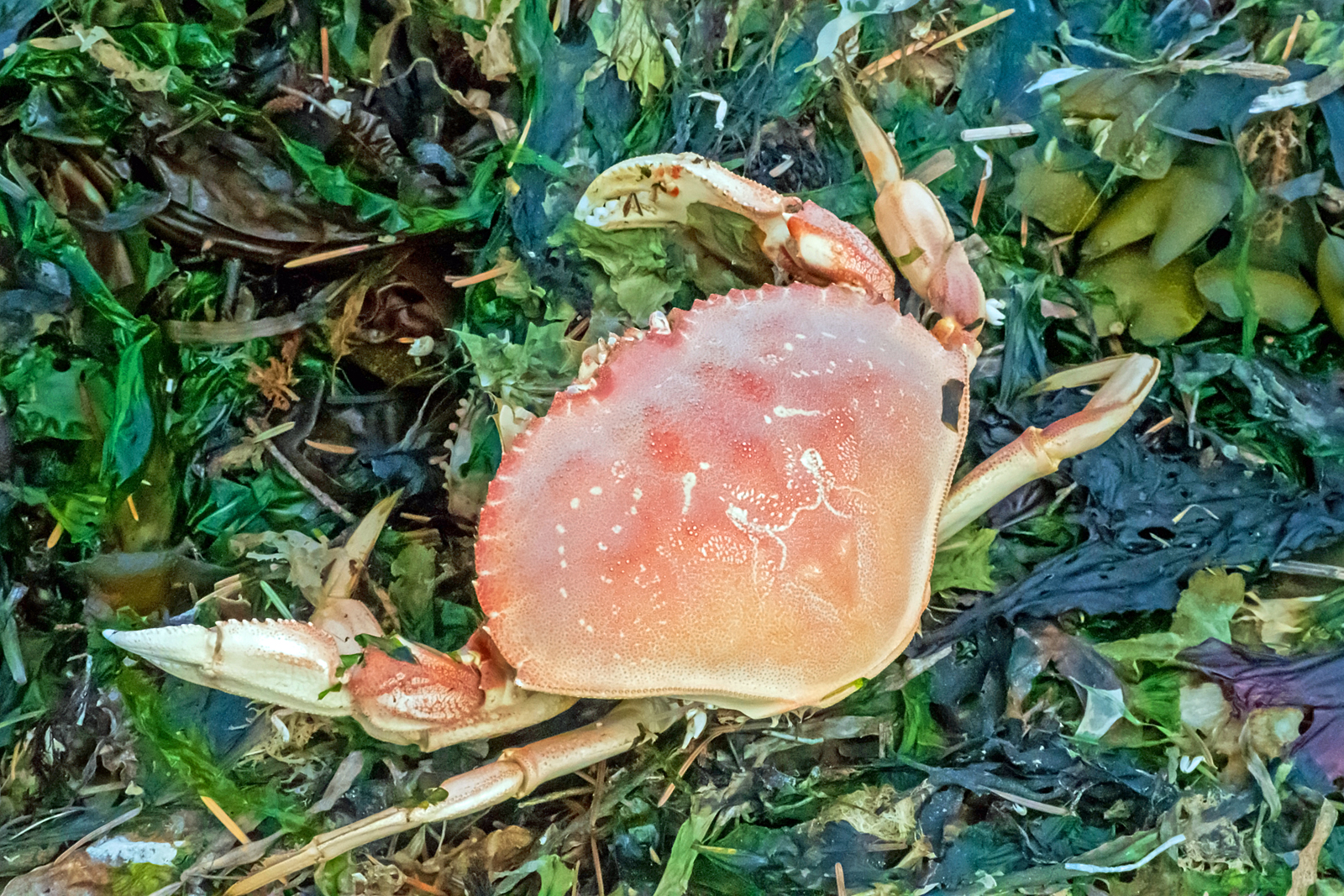
Crab molt on a pile of drying seaweeds. Miracle Beach

View of Mount Washington from the top of a rock.

Lookout trail sign, near Sundew Bog. With map in plastic wrap.

Tiny brown mushrooms and green lichens in a rotted log. Oyster Bay.

A Skywatch post.
~~~~~~~~~~~
Cosas vistas al pasar: estoy poniendo en orden las fotos de las últimas semanas. 
  1. Hongos políporos "cola de pavo" en un troncón. Cerca del lago Echo.
  2. Las flores de Ribes sanguineum en el bosque de Miracle Beach.
  3. La muda de un cangrejo depositada sobre algas marinas dejadas al sol. Miracle Beach.
  4. Vista del monte Washington, desde una roca cubierta de musgos.
  5. Un letrero apuntando hacia un sendero que lleva a un punto de observación. Con su mapa envuelta en plástico por la lluvia.
  6. Honguitos cafés y líquenes verdes dentro de un tronco podrido. Oyster Bay.


Tuesday, April 04, 2023

While I wait

The weather is ... well, typical Vancouver Island spring weather; sunshine, snow, rain, freezing wind, fog, sun warm on your back; all in quick succession, changing from moment to moment.

But the spring flowers just keep on trucking. Daffodils bloom under my kitchen window, crocuses and hyacinths and Johnny-jump-ups beside the carport, forsythia over the lawn and up and down the street. And I saw a bee foraging among the plum blossoms.

Crocuses and hyacinths. And the first leaves of the next wave: bluebells.

Forsythia against a briefly blue sky.

Zeroing in on a pair of crocuses. Love that purple!

At the edge of the woods, red-flowering currant is coming right along.

The first salmonberry flowers should be opening in a week or so. Waiting is hard.

~~~~~~~~~~~~~~~~~
Si hay una palabra que define el clima de la isla, sería "cambiadizo". Especialmente durante la primavera. De un momento a otro nos ofrece sol, lluvia, nieve, vientos helados, neblina, el calor del sol en nuestras espaldas, más nieve, más lluvia, ...

Pero las flores de la temporada siguen como si nada. Bajo la ventana de mi cocina, florecen los narcisos; al lado de la cochera, los jacintos, las pensamientos, los crocus. Arriba, la forsitia se extiende hacia el cielo. Y vi una abeja buscando polen en las flores del ciruelo.

Fotos:

  1. Jacintos y crocus, y las primeras hojas de las campanillas.
  2. Forsitia.
  3. Unos crocus blancos con violeta oscuro. Me encanta este color.
  4. Al borde del bosque, las primeras hojas de Ribes sanguineum toman el sol.
Las primeras flores de salmonberry, Rubus spectabilis deben abrirse en una semana, más o menos. Me cuesta trabajo esperar.

Saturday, April 09, 2022

Pretty in pink

 Another early spring flower in our woods: red-flowering currant. Last year, I found a few shrubs on Baikie Island; this year, they line all the paths. I couldn't choose between these photos, so here's the batch.

Ribes sanguineum, with hover (syrphid) flies.

They like disturbed sites, such as roadsides.

Flowers grow in tight clusters ...

or long, hanging stems.

~~~~~~~~~~~~~~~~~~~~~~
Ribes sanguineum, la grosella de flores rojas (aunque son más bien color de rosa)  es otra de las primeras flores de primavera en nuestros bosques. El año pasado, encontré unos cuantos arbustos en la isla Baikie; este año, están en todas partes, bordeando el camino principal y los senderitos.

Fotos: Ribes sanguineum

  1. Con moscos sírfidos.
  2. Crecen bien en sitios disturbados, como los bordes de caminos.
  3. Las flores crecen en racimos densos, ...
  4. o largos, colgantes.

Tuesday, April 20, 2021

Lights in the understory

The red-flowering currants are among the earliest flowers blooming in the shady edges of the forest. This year, they even beat the salmonberries.

Red-flowering currant, Ribes sanguineum

With a background of sun shining through new leaves.

~~~~~~~~~~~~~~~~~~~~
Las grosellas de flor roja. Ribes sanguineum, son de las primeras flores que aparecen en las sombras de la periferia del bosque. Este año hasta le ganaron a los Rubus spectabilis,  a los que aquí llamamos "salmonberry", o sea "baya de salmón", que casi siempre son las primeras flores que veo.


Sunday, April 14, 2019

April flowers

Along the Myrt Thompson trail.

Red flowering currant. They are growing wild in the bush along the river's edge, but this and a dozen or so more have been planted as part of the restoration project.

Sign near the beginning of the trail

Text of the sign:
Myrt Thompson Restoration
This trail winds along the banks of the river and through the heart of the estuary. After a century of industrial use by the forest industry, the Myrt Thompson trail is now being restored to provide habitat for a wonderful array of wildlife, including bald eagles, cedar waxwings, and black bears. Invasive species such as Scotch broom and Himalayan blackberry have been cleared by volunteers and replanted with native species. These plants will provide a diverse habitat for avian wildlife. Riverside vegetation also helps to protect the riverbank from erosion and provides hiding places for juvenile salmon.
The eagles were much in evidence this week. A couple of years ago, I saw many piles of bear scat. It's too early this year for them; they'll show up when the berries ripen.

More red-flowering currant. Looks like there will be a good crop of berries. For now, they'll attract hummingbirds.

Salmonberry flower. More bear bait coming up.

A lineup of salmonberry buds.

I think this is Pacific crabapple, Malus fusca.

Thursday, May 03, 2018

So pink!

Another of our early spring wildflowers: red-flowering currant.

Ribes sanguineum. The Latin name means "bloody", but the colour varies from pale pink to almost red. This vibrant pink is the most common in this area.

Red-flowering currant is native to BC.This week, they're blooming in the museum woods at the end of my street, along the sides of the road in various places, and probably, unseen, in open areas along our unvisited coast.

The berries are bluish black. They are edible, but tasteless, to humans. The birds like them, though. And hummingbirds visit the flowers.
Powered By Blogger