Showing posts with label intertidal zone. Show all posts

Thursday, March 12, 2026

Just wondering. No answers.

I look at a beach and I wonder. What shaped it like this? How? And how long did it take?

Sometimes there are answers. Sometimes (usually?) they include words like "maybe", "possibly", "it has been suggested".

Wind, water, ice, (moving or still). Gravity, friction, chemistry, heat, life. And time, lots of time. Or not.

These are photos from one hour on one small stretch of beach. 

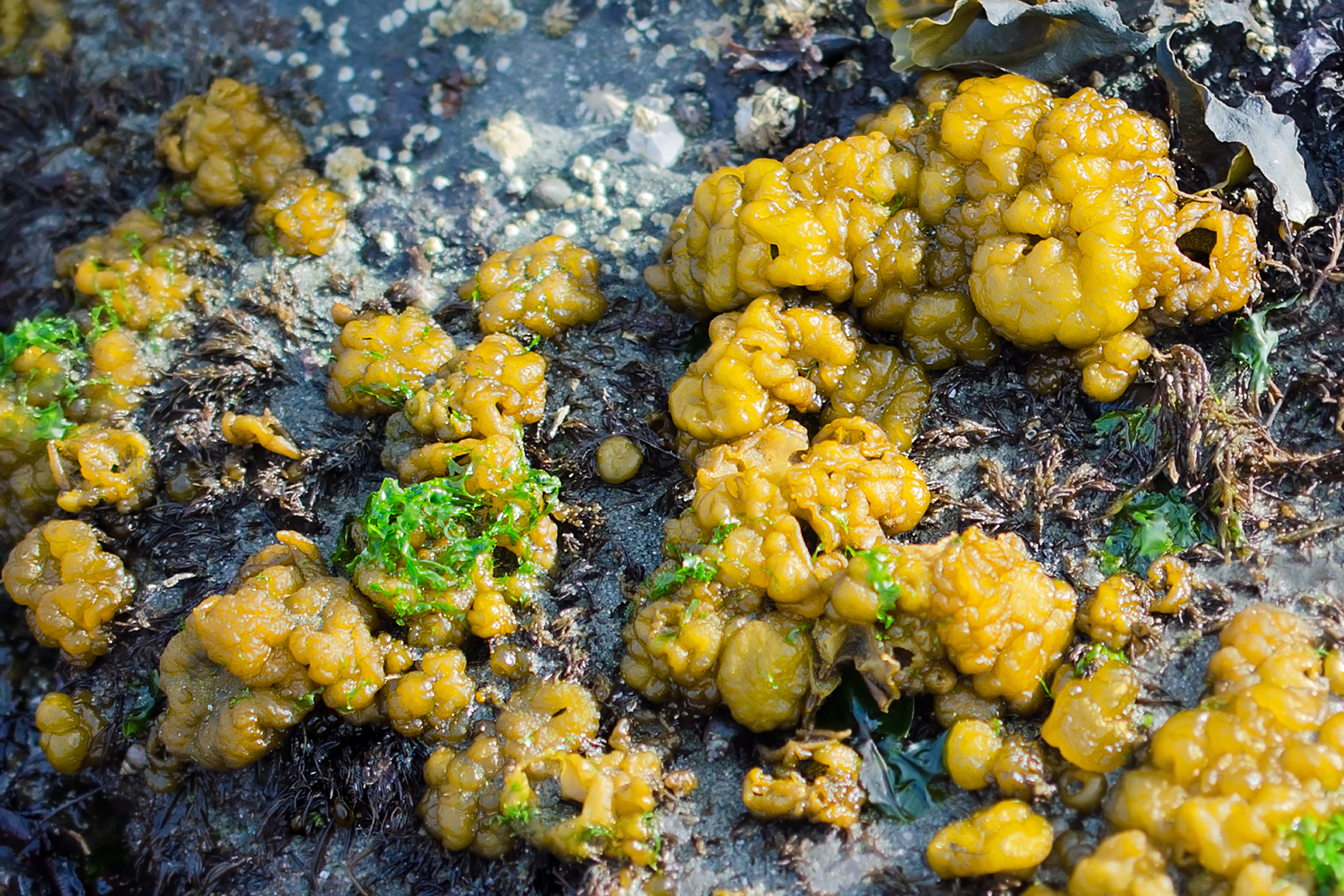
At the bottom of the intertidal zone. Soft rock, shaped by waves, currents, colonized by barnacles and oysters.The tip is probably exposed at high tide. This rock is marked on the boating map, labelled "awash rock".

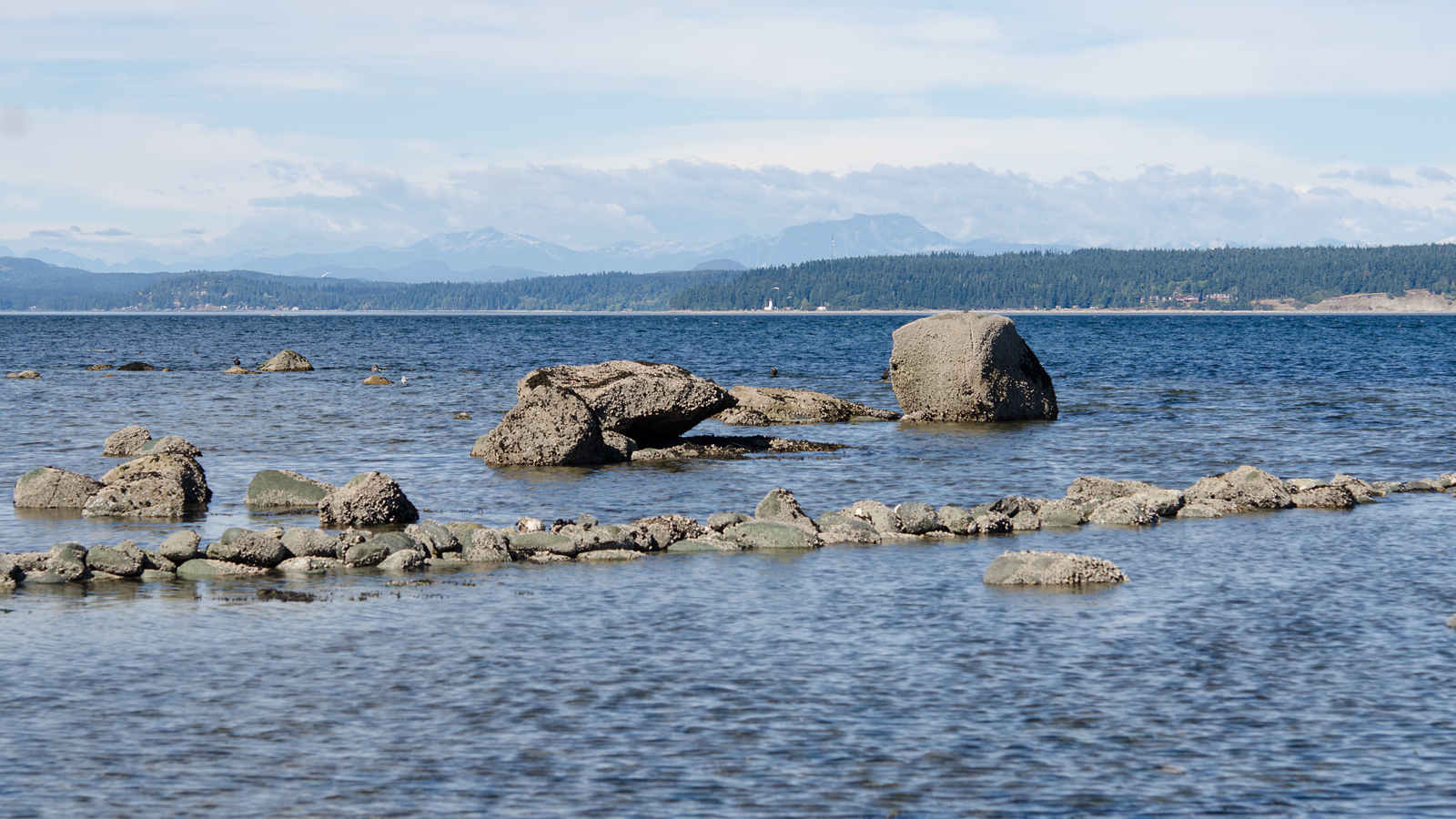
Glacial erratics. Oysters, barnacles, seaweeds. Quadra Island in the background. The current in this channel runs fast and strong and sometimes chaotic.

Wide stripes, running out to the water: rocks, then flat stone or sand, then rocks, then ...

Upper beach, almost flat. Water draining from pools around rocks as the tide goes out carves lines in the sand. (Land to the right here, ocean to the left.)

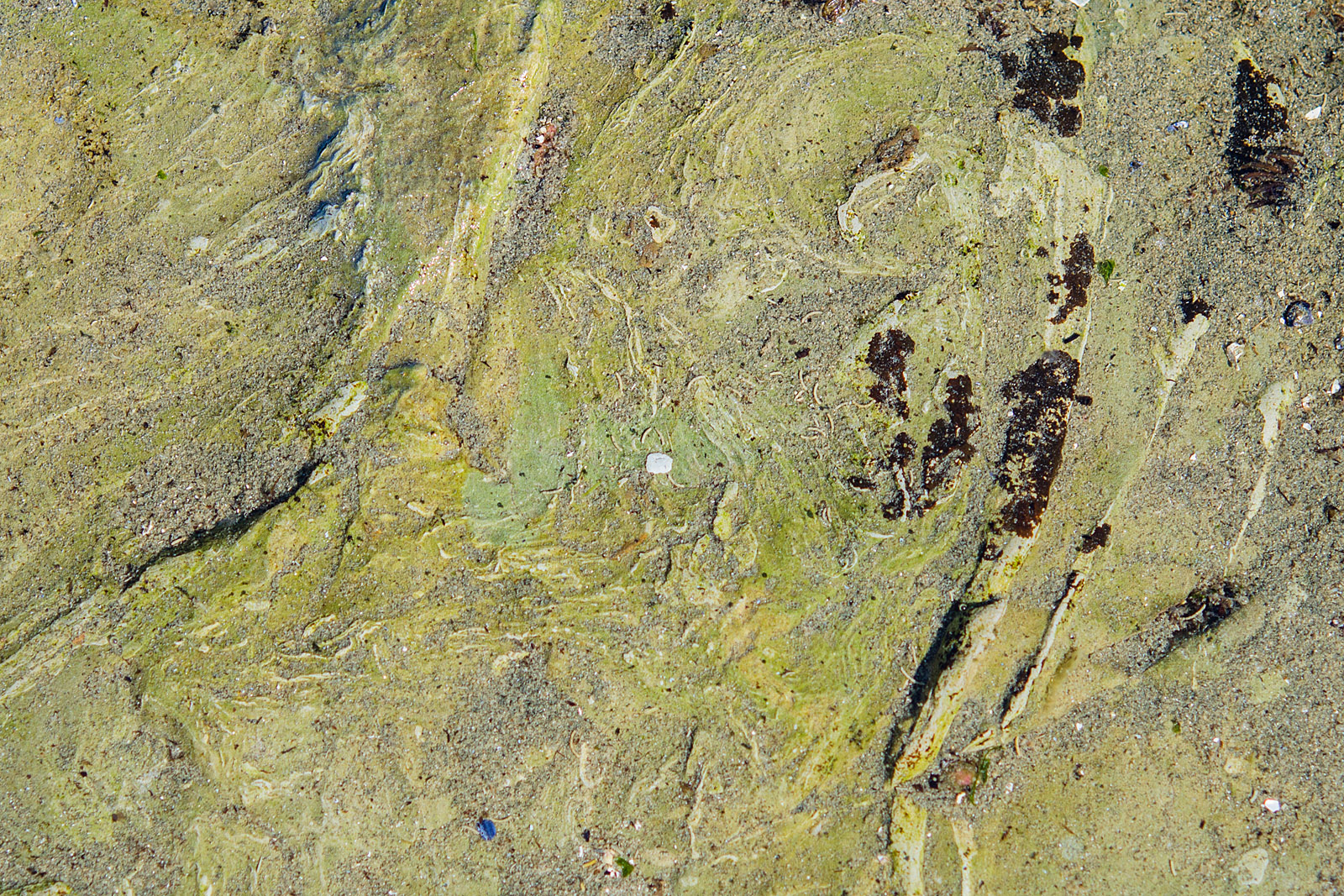
A bit higher up. The tide is far out, and the sand is almost dry, but water still trickles down from the land above the tidal zone, seeping through the sand.

~~~~~~~~~~~~~~~~

Miro una playa y me pregunto: ¿Qué le dió esta configuración? ¿Cómo? ¿Y cuánto tiempo fue necesario?

A veces hay respuestas. A veces —¿Casi siempre? — las respuestas incluyen palabras como "tal vez", "posiblemente", "se ha sugerido".

El viento, el agua, hielo, tranquilos o en movimiento. La gravedad, la química, la fricción, las temperaturas, la vida. Y tiempo. Mucho tiempo. O no.

estas son fotos que saqué en un tramo pequeño de playa. 

  1. Donde termina la zona intermareal. Rocas suaves, esculpidas por las olas, las corrientes, y colonizadas por bálanos y ostiones. La cima probablemente sigue descubierta con la marea alta.  Esta roca está señalada en el mapa para navegantes.
  2. Bloques erráticos, dejados por los glaciares.  Ostiones, bálanos, algas marinas. Al otro lado del estrecho se ve la isla Quadra. La corriente en este sitio corre rápido y fuertemente, a veces en forma caótica.
  3. Franjas amplias, corriendo en dirección hacia el agua. Piedras, luego roca aplanada o arena, luego rocas, luego ... se repite.
  4. En la zona superior de la playa, casi horizontal. Agua que drena desde pozas alrededor de las rocas al salir la marea dibuja lineas en la arena. (Tierra firma queda a la derecha.)
  5. Esto está en la parte más alta de la zona intermareal. La marea ha dejado casi seca la arena, pero agua sigue escurriendo, bajando de la tierra firma.


Friday, February 27, 2026

Of tides and maps and worm poops

The stretch of beach that I wandered around this week while the sun shone (we're back to cloudy daytime skies and low tides after sunset again) is an almost-flat rock slab with hundreds of large rocks scattered on top, glacier droppings, not part of the base rock. The intertidal zone reaches out some 200 metres, and then the bottom falls away.

Google map view. The usual intertidal zone goes out to the white wave line. Most of the rocks line up, leaving large, smooth areas of rock. 

(I fell down another rabbit hole. I've spent all afternoon crawling around a map of the sea bottom  of this area. It is meant for boaters and fishers, but it includes all sorts of things in the intertidal zone; pilings, shipwrecked hulks — the Matane is one, another I'll go and look for —, large rocks, lights and docks and waves and kelp beds and mud flats ... The lighter area on the Google map corresponds to the 2 metre line on the boating map.)
The first bit of this beach, near the shore line, is sandy and the sand is busy.

Worm poops. Lugworm fecal castings. The worms, Abarenicola spp., live in a J-shaped burrow head-down in the sand, where they swallow sand, digest the organic detritus, then eject the cleaned sand onto the surface.

One worm's pile.

A periwinkle snail, Littorina sitkana. With a red alga I haven't been able to identify.

Snail trail. Lumps in the sand are his cousins, already in hiding until the water comes back.

Two limpets. Conditions in the intertidal zone for animals that don't hide at low tide are harsh, and these limpets' shells are badly weathered.

On this beach, I didn't see any sand dollars; they hang out in the mid to lower intertidal zones, and here, the rock lower down has, at most, a slight dusting of sand. Nor were there any moon snails, which also need deep sand.

Next: the rock dwellers.

~~~~~~~~~~~~~
La playa que visité esta semana mientras brillaba el sol (y ahora ya regresaron los dias nublados y las mareas bajas nocturnas);  la playa es una placa plana de piedra, y encima están esparcidas cientos de rocas sueltas, estas abandonadas por los glaciares. La zona intermareal se extiende por unos 200 metros, y aquí el fondo se hunde y desaparece a la vista.

    1. Mapa de Google. La zona intermareal alcanza hasta la linea marcada por las olas. Las rocas se arreglan en lineas rectas, dejando amplias areas limpias, lisas.

(Me distraje otra vez. He pasado toda la tarde estudiando un mapa del fondo del mar de esta zona. Está orientado a los navegantes y pescadores, pero incluye detalles de cosas que se encuentran en la zona intermareal: pilotes, barcos hundidos — uno es el Matane y hay otro que iré a buscar —, rocas grandes, faros y muelles y olas y lodazales y sitios donde crece el quelpo ... El area más claro en el mapa de Google corresponde al nivel con menos de 2 metros de agua en el mapa para navegantes.)

El tramo superior de esta playa, cerca de la orilla, es arenosa.  Y la arena está poblada.

    2.  Roscas fecales de gusanos poliquetos. Estos gusanos, Abarenicola spp., viven cabeza abajo en una madriguera qque hacen en la arena en forma de J; allí ingieren arena, digieren la materia orgánica, y luego expulsan la arena limpia en la superficie.

    3. Una rosca de uno de estos poliquetos.

    4. Un caracol Littorina sitkana, con algas rojas que no he podido reconocer.

    5. La huella de uno de estos caracolitos. Sus primos ya están escondidos bajo la arena, protegidos hasta que regrese el agua.

    6. Dos lapas. Las condiciones en la zona intermareal para los animales que no se esconden en las horas de marea baja son difíciles. Estas lapas tienen las conchas muy desgastadas.

En esta playa no vi ningún dólar de arena; se congregan en las zonas intermareales mediana y baja. Aquí en esta playa las rocas más bajas tienen acaso un salpicón de arena.  Ni tampoco había ningún caracol luna, que también necesitaría una profundidad amplia de arena.

Siguiente: animales de las rocas.

Sunday, January 07, 2024

On a winter beach

The north end of Miracle Beach, where it joins the outlet of Black Creek, is mostly flat, fine sand and small, rounded stones, held down by seashore salt-grass, suited to the changeable water, now fresh as the creek washes the area, now salt as the tide covers it all. At low tide, there are the tufts of salt-grass to walk on, with shallow puddles between them, and, near the high tide line, a layer of shredded seaweeds, fresh and bright, deposited by the recent storms.

A large kelp crab. Dead, not a molt, but still very fresh.

Sieve kelp, Agarum clathratum.

This is a subtidal brown alga that grows to over a metre tall, blade and stipe. By the time it ends up on the upper beach, it comes in bits and pieces. This large section included a bit of the central rib.

Turkish towel, Chondracanthus exasperatus. Very faded already.

Another large, subtidal seaweed that turns up on the beach in shreds. Feels like a towel, they say, but it is not a fabric-softened towel fresh out of your dryer; more like the dish scrubber I use on pots and pans. Those little pointed projections are tough.

Gull and salt-grass, Distichlis spicata.

And these weren't strictly on the beach, but just offshore, diving for food in the shallow water.

Buffleheads, Bucephala albeola, three males and one more subdued female.

Buffleheads eat aquatic invertebrates that they find in the intertidal zone, such as crabs and snails, so they swim close to shore, taking short dives; where you saw them go down, they'll come up again. (Not like the loon, offshore, going down here, coming up a long time later, and far away.)

~~~~~~~~~~~~~~
El extremo norte de Miracle Beach, donde se une al estuario de Black Creek, es una playa aplanada, de arenas finas y piedritas redondeadas, todo fijado en su lugar por las hierbas halófilas Distichlis spicata, adaptadas a la salinidad variable, ahora agua fresca cuando las cubre el rio, ahora en agua salada cuando sube la marea. A marea baja, se puede caminar allí, pisando los montoncitos de grama salada; alrededor, el agua llega a unos pocos centímetros de profundidad. En la zona más alta, hay una capa de algas marinas deshechas, arrancadas de sus sitios en el fondo y depositadas aquí por las tempestades de invierno.

Fotos:
  1. Cangrejo de algas del norte, Pugettia producta. Muerto pero recientemente, totalmente entero.
  2. Quelpo coladera, Agarum clathratum. Este es un alga que crece en la zona submareal. Llega a alcanzar más de un metro, contando el estipe y las frondas. Ya cuando llega a la playa, está desbaratada. Este pedazo grande llevaba algo de la espina central.
  3. Toalla turca, Chondracanthus exasperatus, ya perdiendo su color rojo fuerte. Esta es otra alga submareal que llega a la playa hecha pedazos. Se siente como una toalla, dicen, pero no es una toalla suave, recién salida de tu secadora de ropa; más bien es como el estropajo con que limpio los sartenes. Esos puntitos son fuertes.
  4. Una gaviota y la grama salada.
  5. Y estos últimos no estaban exactamente en la playa, pero cerca. Los patos porrones coronados (aquí tres machos, y una hembra) comen animales invertebrados que viven en la zona intermareal, como por ejemplo, los cangrejos y los caracoles marinos. Nadan cerca de la playa, haciendo buceos cortos; donde los viste desaparecer, allí subirán a la superficie y muy pronto. (No como lo hacen los colimbos, que se sumergen lejos de la playa, y luego aparecen mucho más tarde y bien lejos, donde menos los esperas.)


Monday, April 26, 2021

Too much to see

 It has been said that, "coastal BC has a greater species diversity than anywhere else in North America". (Raincoast Conservation Foundation, in BC’s coastal biodiversity: the highest in North America, an article that completely bypasses marine invertebrates, but does pay attention to seaweeds; "In British Columbia, more than 500 species of macroalgae have been recognized, making up about 4.5 % of the world’s total marine algal species.")

Nowhere is this biodiversity more apparent than on the intertidal plain. With every cautious step at low tide, I crunch the shells of tiny animals, slip on seaweeds pink, red, green, brown and yellow, send critters scuttling and splashing for shelter, or squirting small fountains at my legs as clams and worms retreat deep under the sand. A tidepool is a multi-coloured, multi-textured collage, too varied to be sorted out on the fly.

I am reduced to taking photos at random, hoping something will come into focus on my computer screen.

Tidepool about 2 inches deep; my shadow at the bottom right.

At first glance, examining this photo, I see 9 separate species of seaweed:

  • green sea lettuce
  • red bladed algae; smooth, wide, translucent blades.
  • pink crustose coralline algae, coating stones
  • a green hairy seaweed
  • a red seaweed, with stiff central blades, from which sprout thinner red "leaves"
  • rockweed
  • old eelgrass, with
  • encrusting fuzzy algae along the blades (or these may be hydroids, an animal)
  • yellowish algae coating an old clamshell and a snail (or hermit crab) shell.

But that's not all: under every stone, under every shred of seaweed, crabs and hermits, worms and small fish and assorted isopods and hunting whelks hide from the sunlight, and from my moving shadow. And, of course, hundreds of eggs. Among those not doing so good at hiding, I can see:
  • a burrowing anemone, Anthopleura artemisia,
  • snail shells which may house the original shell, or just as likely, a small hermit crab
  • several limpets
  • and a couple of legs of a kelp crab who thinks he's out of sight.

What looks like a single-culture mass of seaweed turns out to be another collage:

Bad (green) hair day.

In this photo the algae are the green hair, green sea lettuce, and that red-bladed alga. In the background; rockweed and a fuzzy brown seaweed. Snails and barnacles dot the rocks.

And I know I'm missing half of what's there!

~~~~~~~~~~~~~~~~~~~~~~~~~~~

Se ha dicho que —las costas de Colombia Británica contienen una mayor diversidad de especies que la que se presenta en todo lo demás del continente — (del sitio Raincoast Conservation Foundation, en un artículo que olvida por completo el reino de los inveterbrados marinos, pero si nota de las algas marinas, que —en las costas de Colombia Británica se han reconocido más de 500 especies de macroalgas, constituyendo aproximadamente un 4.5 porciento de las especies de algas marinas mundiales.) 

En ninguna parte se nota más esta diversidad de especies que en la zona intramareal. Con cada paso que doy, tan cuidadosamente, aplasto una variedad de animalitos, me resbalo sobre algas marinas rojas, verdes, amarillas, color de rosa o de café, espanto varios animales que se apuran a esconderse bajo las piedras o que, retirándose dentro de la arena, hacen pequeños fuentes que bañan mis piernas. Una poza intramareal hace un "collage" de una multitud de texturas y de colores, tan variado que no se puede capturar a simple vista.

Me veo forzada a sacar fotos al azar, esperando que al verlas en la pantalla, se puedan entender.

La primera foto es de una poza intramareal, más o menos de 4 o 5 cm. de profundidad. 

A primera vista, veo hasta 9 especies de algas marinas:
  • lechuga marina, Ulva spp.
  • una alga roja de hojas anchas, lisas, translúcidas
  • una alga coralina incrustante, color de rosa
  • una alga verde en forma de pelos
  • una alga roja con tallos tiesos, de los que brotan hojas delgadas
  • sargaso vejigoso, Fucus spp.
  • hierba marina Zostera madura, cubierta de
  • una alga encrustante a lo largo de las hojas (o puede ser un hidroide, o sea un animal)
  • una alga amarillenta creciendo en una concha abandonada de una almeja y en un caracol.

¡Pero eso no es todo! Bajo cada piedrita, bajo cada hoja de alga, se esconden cangrejos y ermitaños, gusanos y pescaditos, isópodos variados y bocinas cazadores, fuera de la luz fuerte del sol, y también huyendo de mi sombra. Entre los que no se escondieron perfectamente veo:
  • una anémona, Anthopleura artemisia
  • conchas de caracol marino, que pueden contener los caracoles mismos, o si no, cangrejos ermitaños
  • varias lapas
  • y un par de patas de un cangrejo "kelp" que cree estar bien escondido.

Segunda foto: lo que aparece una masa de una sola alga resulta ser otro collage. Las algas aquí son un pelo verde, lechuga marina verde, y la alga roja de hojas anchas. En el fondo se ven sargaso vejigoso y un alga café. Caracoles y bálanos toman el sol en las piedras.

Y por seguro, mucho se me pasa sin observar.


Monday, June 11, 2018

On Willow Point

The beach sometimes looks bare. A sprinkle of sand on sandstone, a few scattered rocks, a smear of sea lettuce, leftover tidewater; not much else.

Willow Point beach, looking towards Quadra Island and, in the distance, the mainland.

But slow down, crouch, look underneath rock overhangs, behind the stones ... the barren beach is full of life and colour.

Purple starfish, clinging to the bottom of a rock. With pink-tipped green anemones for company. And limpets and barnacles, of course.

An assortment of seaweeds. Green sea lettuce, yellowish rockweed, one (or two?) of the many stringy, bushy brown algae. a blob of sea cauliflower, and tasty-looking succulent seaweed, Sarcodiotheca gaudichaudii. (I love that name!)

Sea cauliflower with a garnish of sea lettuce, accompanied by rockweed leaves and brown alga shreds.

Rocks and mounds of brown algae, crawling with hermits and crabs, isopods and snails. Good feeding grounds for a pair of mallards, now leaving their unfinished dinner in haste because of that pesky photographer. (They came back as soon as I walked away.)


Sunday, April 15, 2018

Thoughts on a rocky shore

I love a rocky beach.

Polished rocks, a sprinkling of barnacles

The current runs strong along the eastern shore of the Georgia Strait, and the tides pound in and drain out quickly. Many of the rocky areas are like this; water-polished rocks, with very little life visible. Turning over stones at low tide, I find more smooth stones. No crabs, no hermits, no worms. They must be there, but have retreated to deeper, safer hideouts.

Sometimes there are barnacles, in flatter areas thickly covering the stones, in other spots clustered on the sheltered sides and bottoms of the rocks. There are spots where none are to be seen, where the rocks shine as if they were waxed and buffed.

Down near the lowest tide line, seaweeds cover the rocks. It's dangerous walking; the weeds are slippery, and the rocks move underfoot. No matter how carefully I step, I'm always a twisted ankle away from a spill. But here, the crabs and other critters find a refuge. From the waves, from hungry gulls, and also from me, as I usually gingerly skirt the greenest areas, keeping an eye on the water's edge, ready to hurry towards land when the tide turns; I don't want to be caught in seaweed over stones as the water races in. Too risky.

A flatter spot, in the lower intertidal zone, with small erratics and tide pools. More barnacles here.

Coming towards a tide pool, I see ripples and splashes at the surface. By the time I get there (and sometimes I sneak up from the far side of the rock) there is nothing. The pool looks empty, just more clean stones with clear water. Even the tiny fish have hidden underneath the stones.

But there are always snails. Tiny, and tinier snails, dotting the rocks, basking in the warmth or resting in a tide pool. Most are pinhead size, some as "big" as a grain of rice. They hold on tight, or don't provide enough resistance to the waves to be washed away. Maybe their shape helps; smooth and rounded, with a sharp tip.

Under an inch of water in a tide pool, rice-grain snails and a few limpets choose the warmest rock.

Everywhere else, where I find tiny snails, a good half of the shells house miniature hermit crabs. Not here. I think I saw one leg poking out of a shell; otherwise, every snail shell is full of snail. Hermits can easily be bowled over by a wave and swept away.

The tiniest snails are a worry for me. In some spots, every decent-sized stone is covered with them, like sprinkles on a donut. I can't put my foot down without stepping on some. I try to brush them aside, but risk tripping myself up as the stone shifts. I am glad my shoes have deep ridging; at least some of my footprint is safe for tiny critters.

Sand is safer, for the snails, and for me.

Tuesday, April 10, 2018

Valley of the gulls

It looks like a bare mountaintop:

With a long glacier, its river, and a dusting of snow on the slopes.

Except that it's not. It's a glacial erratic on the beach. The lower valley is at my eye height.

The "glacier" and "snow" are gull poop, the "forest" is seaweed. The light-coloured "rocks" are small acorn barnacles.

I want to go hiking there.

Sunday, October 01, 2017

The worms crawl in ...

Flipping a rock on the beach usually exposes a scramble of leggy crabs, heading for cover. When they've gone, if the substrate is wet, knots of worms rouse themselves and ooze or paddle away, more slowly.

Flatworms flow like melted butter, slowly, insensibly, but surely. They're the first to disappear. Note the two eyespots; they're watching me! The green ribbon is a worm, too.

Purple ribbon worms, Paranemertes peregrina, with their pale, creamy bellies, twist and turn, and gradually untangle themselves. It takes them a while to get out of sight. All of the snail shells, I think, are rented out by young hermit crabs.

The polychaetes move quickly; they hate the light. But they're long, so they take a while to entirely hide themselves.

Detail of the longest worm, showing the dot-and-hair extension on each paddle "foot". I don't remember seeing this before. I've saturated the red colour a bit, to make the hairs more visible.

Thursday, September 28, 2017

New beach, with rocks

Randomly driving about, I found a new access point to the beach, a short road, almost like a driveway, halfway along a row of private houses, unmarked except for a tiny sign at the bottom, "Shore Access". A brief scramble over rocks and logs leads to a wide, flat, sandstoney, seaweedy, rocky point, echoing with bird calls, tweets, squawks, screams, and peeps.

The south end of the beach, Gulls ahead, peeps to the right, sparrows among the logs lining the shore. Behind me, ducks, the heron, crows, more peeps. No people, no abandoned plastics.

And the beach is home to an interesting variety of rocks. See:

Rounded rocks and sand patches. Some are highly polished, by centuries of waves.

Button rock, sandstone, not polished.

What Laurie used to call an "Organic rock". With a heart.

Flat, but highly eroded rock, populated by barnacles.

Another flat rock, with interesting swirls and trails.

Glacier erratic, standing all alone.

There were many small slabs scattered about, looking as if they'd been chipped out of the rock on purpose. This one's even squared off.

A couple more. They make nice roofs for critters, easy to flip, even if they're wide.

Tide coming in. A row of rocks between sandy patches, a few more erratics. And a few dark ducks, too far away to identify without binoculars.

Blue-green rock, with barnacles and snails.

In a sandy patch, a peep with a long bill wades a tidepool.

Critters coming up next.

Friday, June 10, 2016

Bathed mud crawlers

I keep finding chitons. Under rocks, in tidepools, on soggy mud, under blackish algae, there they are, not moving, almost invisible, looking like oval mud patches surrounded by shreds of algae. When I've seen one in a sludgy pool, there are sure to be more, sometimes in plain sight, although I hadn't seen them.

Years ago, on Stories Beach, Laurie and I found a lined chiton. Easy to see, away from its favourite red algae, and a fast crawler besides. Easy to identify.

Lined chiton, Tonicella lineata, 2010

This year's finds are more challenging. Most of my photos have turned out like blurry blobs of mud. But I caught two chitons on the underside of rocks, lifted them into the sunlight, and poured water over them until the mud washed away. And then it turns out that they are as beautiful in their own way as their showier kin.

Mossy chiton, Mopalia muscosa.

The outside rim, called a girdle, spiky and hairy as it is, is a mud catcher. And the eight plates covering the centre come in variable colours, from grey to brown to green.

Zooming in to see the pattern of the plates. The head end is to the left and the plates overlap each other, going from head to tail.

Brown and yellow, with a couple of decorative accents, red algae.

Zooming in on the head. 

These chitons are night crawlers. In daylight, they sleep. Even disturbed by a rude rock flipper, and given a good bath, these two barely moved. The first one lifted an edge, then flattened itself more tightly to the rock; that was enough exercise for the moment.

These two were on the 50th parallel.

Friday, May 06, 2016

Evening on the beach

I had an unexpected free evening, the last before I became responsible for a demanding kitten, so I went to wander on the shore and watch the light fade. It was raining slightly, off and on; I threw on a jacket, more to shelter the camera than for me.

While there was still light, I scrambled down to the water's edge and peered under rocks. Down in the tidepools, crabs scuttled away at my approach, tidepool sculpins dashed out of cover, and then froze, trying for invisibility in plain sight, not very successfully.

Random shot from a precarious, slippery balancing stone. I count 9 stripy sculpins here.

In the shade of the larger rocks, a pink encrusting growth covered many surfaces.

Pink encrusting algae, limpets, plumose anenomes, hermit crabs, snails, and sea urchins. If you look closely, you can find tiny orange specks; spiral calcareous tubeworms, feeding.

The pink encrusting algae, and a deeper red crust. I think the greenish sections are older patches of the red.

An assortment of red algae, including one iridescent species, growing higgledy-piggledy together. The little dotted lines are hermit crab antennae.

The rain picked up; I headed back to the top of the beach, close to shelter. The rain stopped.

Cloudy sky, looking north from Big Rock. 7:34 PM.

Looking east to the mountain peaks on the mainland. 8PM.

An orange glow just before the light fades. 8:15 PM.

And then it was raining again. But I'd found the remains of a driftwood fire, still glowing under the logs, and stayed to feed it until the wood was too wet.

Let it rain!

A Skywatch post.

(This was a difficult post: Chia doesn't understand why she shouldn't be helping with the typing.)


Powered By Blogger