Showing posts with label rock flipping. Show all posts

Tuesday, March 23, 2021

What the camera saw

Many (most?) of the animals that live in the intertidal zone hang out on the underside of rocks, or when the tide goes out, under stones. So I flip stones to find the crabs and the whelks and all the myriad scrambling creatures. Or I kneel and prop myself on my elbows to look for starfish under the big rocks.

Sometimes, I can't get down far enough. Then I shove the camera under the rock and take blind photos; you never know what's under there!

For example:

A normal mix. Limpets, barnacles, periwinkle snails (but some may house hermits). And something orange.

Another shot, closer to the rock above. Barnacles, periwinkle (and I'm pretty sure the second from the top has a hermit inside). And those orange and white balls. What are they?

Cropped and zoomed in.

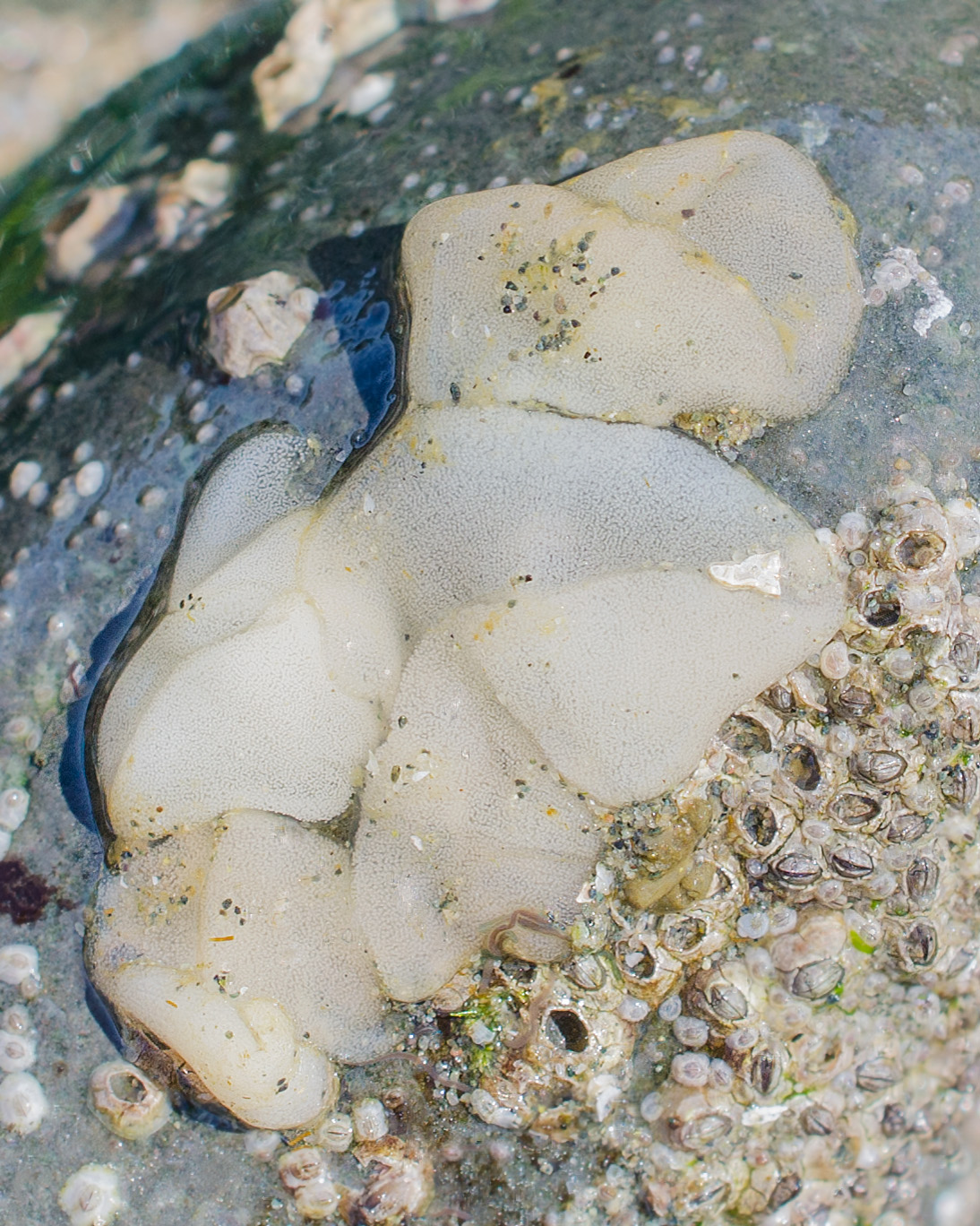
So what are those orange and white balls? Eggs of some critter? And the white one with a hole would be one that's hatched? I checked Buzz's collection of eggs; scroll down to three photos that look like a match.

They look most like the singing toadfish's eggs, both the size and shape and the location, although they were completely out of the water at low tide, and there was no father fish to be seen. (It's the fathers who babysit the eggs until they hatch. And sing to the females; nice guys!)

I found one of these, eggs and all 9 years ago on Boundary Bay. There, the eggs had fry inside. And there were hundreds of eggs. And this was in July.

Midshipman (singing toadfish) eggs, with fry, 2012.

Or they could be whelk eggs, except they're too perfectly round. Herring roe is due about now, but it's cream coloured, and comes in with the tide.

What do you think?

~~~~~~~~~~~~~~~~
 Muchos, o tal vez la mayor parte de los animalitos que viven en la zona entre mareas se la pasan pegados a la parte inferior de las rocas grandes, o cuando baja la marea, los animalitos pequeños se esconden debajo de las piedras. Así que para encontrar los cangrejos y ermitaños y toda la multitud de criaturas que pululan en esta zona, ando dando vueltas a las piedras, o poniéndome a gatas, rodillas y codos en las piedras, para buscar estrellas de mar debajo de las rocas grandes.

Y a veces, no puedo hacerme tan chica, y entonces meto la cámara debajo de la roca y saco fotos a ciegas. ¡Quien sabe que maravillas la cámara va a descubrir!

Por ejemplo:

Primera foto, tomada debajo de una roca del rompeolas: lapas, bálanos, conchitas de mar (aunque varios de ellos tal vez estén ocupados por ermitaños muy pequeños). Y una cosa anaranjada.

Segunda foto, con la cámara más cerca: bílanos y caracoles; uno contiene un ermitaño; y esas cosas anaranjadas y blancas. ¿Pero qué son?

Tercera foto, recortada para ver esas pelotitas.

Y ¿qué son? ¿Huevos de algún animalito? Y la pelotita blanca, ¿será uno que ya nació? Fui a mirar la página de Buzz, que ha coleccionado muchos huevos de la zona entre mareas cerca de aquí. Y hay tres que parecen similares.

Se parecen estos por el tamaño y forma, y también por el lugar, a los huevos del pescado "sapo cabezón", al que aquí llamamos pescado sapo cantante, porque el macho le canta a la hembra. Pero estaban completamente fuera del agua con la marea baja, y no vi a ningún pescado cerca. Y cuando los he encontrado antes, era en Julio.

Los vi en la playa de Boundary Bay, hace 9 años; un macho con sus centenares de huevos amarillos, en los que ya se veían los pescaditos adentro. (Cuarta foto.) Son los machos que guardan los huevos hasta que nazcan. Y antes, cantan para atraer a las hembras. ¡Buenos compañeros!

O tal vez podrían ser huevos de un caracol marino, aunque no conozco ninguno que los pone así, cada uno solitario, y perfectamente redondos.

O tal vez sean huevos de arenques, ya que es la temporada para estos. Pero los huevos de arenques son de un color cremoso y se depositan con las olas en gran número, montones y montones en toda la playa.

¿Qué opinas tú?


Thursday, July 25, 2019

Colours under rocks

What a difference a few metres make! I've been on this beach (Willow Point), flipping rocks at low tide before, but this time, the tide was the lowest I've seen it. The last time, I saw crabs and small snails and hermit crabs and barnacles. Not much else. This time, every rock had a diverse community on the underside.

Wosnesenski's isopods, multi-coloured snails, limpets, a tiny, tiny clam, barnacles, spiral tube worms, unidentified eggs, and a possible red chiton.

I was chasing Wosnesenski's isopods; they're big and visible, but very fast, very motivated to get back underneath a stone. None of them stop to challenge me, like a shore crab will.

"I'm going to pinch you and crunch your shell! No matter how big you are!"

(Aside: what's that weird thing under the clamshell on the upper left?)

Wosnesenski's isopod (Pentidotea wosnesenskii) stubby isopod (Gnorinmosphaeroma oregonensis -the name is longer than the beastie), and red chiton.

This isopod ran away, as they do, but exposed a stubby isopod and a red blob, which the camera saw better than I did. Stubby isopods are small, at most 1 cm long, usually less.

Stubbies. I think there are two of them, stacked. Two flatworms and their eggs, a barnacle, and a small, red chiton.

Chitons are fairly common in the lower intertidal zone. So far, I've seen the giant Pacific chiton (up to 14 inches; the ones I've seen were between 5 and 6 inches long), the beautiful red-lined chiton, the woody (to 8 cm), the mossy (10 cm), and some hairy species, so buried under their overgrowth of algae that they were unidentifiable. But I hadn't seen one so small, and so red. I don't know the species; none of the 30 species in my encyclopedia seem to match.

A more usual find; a woody chiton, still very small.


Sunday, October 01, 2017

The worms crawl in ...

Flipping a rock on the beach usually exposes a scramble of leggy crabs, heading for cover. When they've gone, if the substrate is wet, knots of worms rouse themselves and ooze or paddle away, more slowly.

Flatworms flow like melted butter, slowly, insensibly, but surely. They're the first to disappear. Note the two eyespots; they're watching me! The green ribbon is a worm, too.

Purple ribbon worms, Paranemertes peregrina, with their pale, creamy bellies, twist and turn, and gradually untangle themselves. It takes them a while to get out of sight. All of the snail shells, I think, are rented out by young hermit crabs.

The polychaetes move quickly; they hate the light. But they're long, so they take a while to entirely hide themselves.

Detail of the longest worm, showing the dot-and-hair extension on each paddle "foot". I don't remember seeing this before. I've saturated the red colour a bit, to make the hairs more visible.

Wednesday, May 18, 2016

Under-rock assortment

You can't flip just one. It's hard to stop at one hundred; I don't know if I could, if it weren't for the tide coming in.

Flipping rocks at low tide. Each one hides another treasure. And I stand up, holding my back and groaning, and tell myself it's time to quit. But there's a likely-looking rock in front of me. And another over there; and another ...

So here I am, a week later, still sorting photos of the one session on the beach. And the low tides in mid-afternoon are still beckoning.

Here, in no particular order, are a few of the remaining photos of under-rock critters.

Black prickleback, black blenny, Xiphister atropurpureus. The black bands with white edging behind the eyes identify it. The Rock prickleback has the same bands, but the edging is dark, the centres light.

A tiny northern clingfish, caught in a clamshell. Gobiesox maendricus.

Nudibranch egg ribbon. I'm not sure which nudibranch laid them.

Baby grainy hand hermit, in a broken baby moon snail shell.

Another grainy hand. The legs are a clear yellow when they're small.

Pink-tipped green anemone. And I think that's a nudibranch near the centre top, under the seaweed.

Unidentified chiton. This was one of a group almost hidden in the mud in a tidepool full of floating seaweed fragments. The largest was a bit over an inch long.

Another unidentified nudibranch, half-hidden under a rock and not seen until I examined my photos.

Seaweeds floating in the tide.

More goodies tomorrow. And then, a day trip to Mitlenatch Island. And a video or two. I'll never catch up!


Thursday, May 12, 2016

No star is an island

A few more starfish. But nothing on the shore lives alone; the more time you spend looking, the more complex you realize the community is. Even in a simple photo of a stone and a star, there's something I didn't see until I got it home.

I think these two are juvenile mottled stars. Look for the fly on the upper snail shell, an opportunist dropping in for a snack as soon as I turned over the stone. Also if you look closely, you may find four baby (infant) sea urchins, tiny snails, and a flatworm.

Four-and-a-quarter arm star. Ochre sea star, with purple tips to his arms. On a bed of assorted seaweeds, over sandstone. Between the weed and the stone, a scramble of hermit crabs.

A small purple star with an unusual stripe down his arms. Around him on the stone, a few worms in their own casing of sand, exposed when I flipped the stone. The spirals are calcareous tubeworms, and the slimy stuff may be flatworm eggs, but I wonder about the patch at the bottom, with its smokestack.

Two more juvenile mottled stars. purple and pink, and blue and green. Also present; a hermit, all scrunched up, the remains of a bryozoan colony, barnacles, tubeworms, bits of a pink encrustation, and seaweed.
Coming up: worms, worms, worms.

Sunday, September 06, 2015

Calling all Rock Flippers!

Just a reminder: International Rock Flipping Day is next Sunday, September 13th. It's time to make your plans, invite your friends, and look for an interesting rock (or rocks.) Small rocks, big rocks, flat rocks, chunky rocks, even man-made rocks; they're all good, and no telling what lives underneath. What will we find this year?


In case you missed it, history and instructions are here.

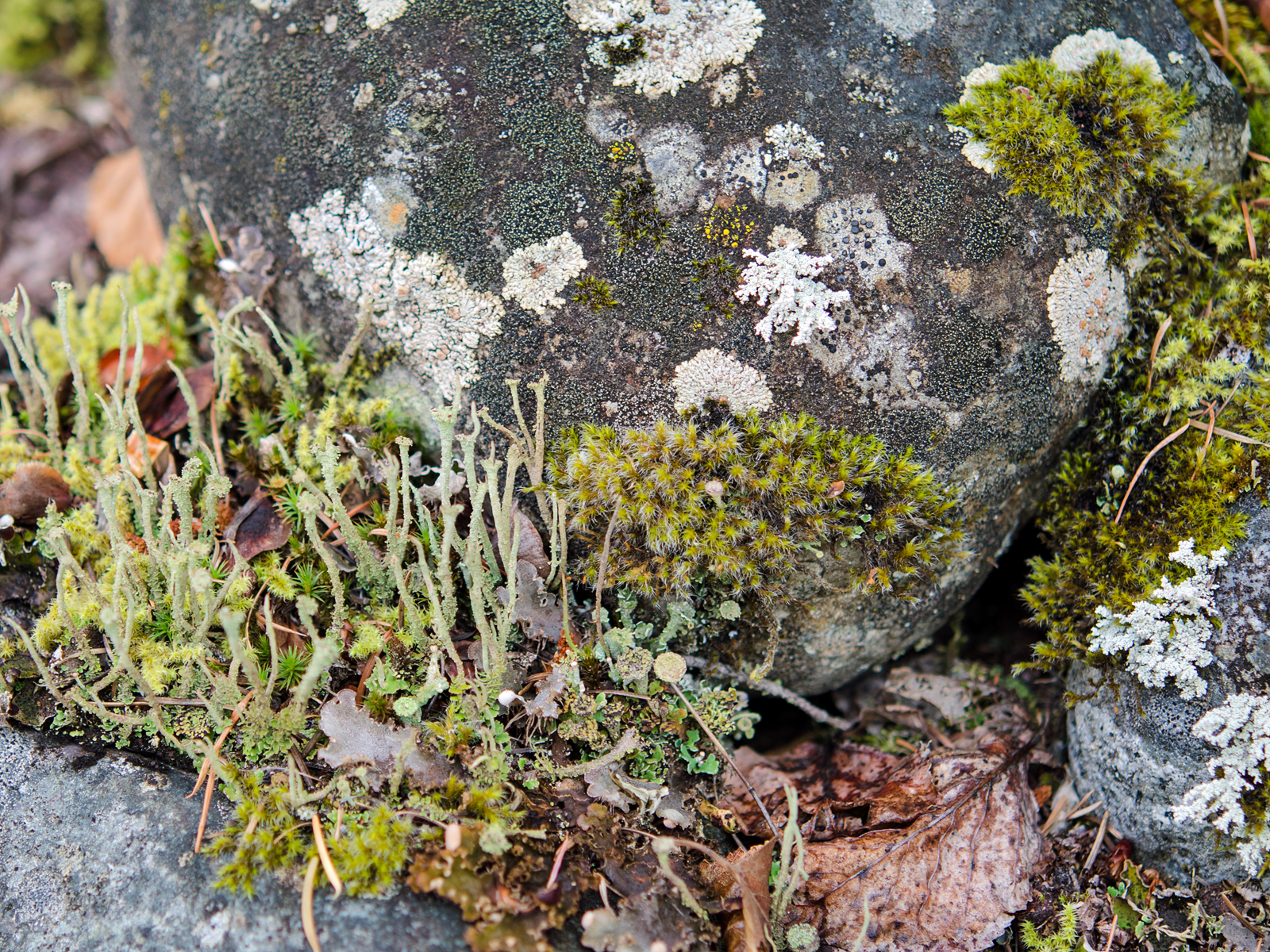
Rocks, lichen, moss, old leaves. Burnt Bridge, Bella Coola valley. I should have had a flashlight to see what lives in that mini-cave.

If you're joining in for the first time, here's a quick rundown of the procedure.
  • On or about September 13th, find your rock or rocks and flip it/them over. 
  • Record what you find. "Any and all forms of documentation are welcome: still photos, video, sketches, prose, or poetry." 
  • Replace the rock as you found it; it's someone's home. 
  • Post on your blog, or load your photos to the Flickr group. (Even if you don't have a blog, you can join.) 
  • I will collect the links, e-mail participants the list, and post it for any and all to copy to your own blogs. (If you're on Twitter, Tweet it, too; the hashtag is #rockflip.) 
  • There is a handy badge available for your blog, here. (Or copy it from this post.)


Have fun, and be careful out there!

Saturday, August 22, 2015

Rock Flipping Day coming up!

It's that time of year again; here in the north, the summer heat is dissipating, the rains are coming (YMMV). Back-to-school sale flyers are showing up in our mailboxes. And the rocks are beckoning!

It's time for the annual International Rock Flipping Day (IRFD), this year as usual, on the second Sunday of September, the 13th.


I love rock flipping day, in part because people find classes and even subphyla of critters that they've never encountered before. (Sara Rall, commenting after last year's RFD.)

No-one has volunteered to host it this year, so we're back here for another year.

I'm getting lazy: I'll post, again, the instructions and history as before.

History:

Rock Flipping Day was started by Dave Bonta and Bev Wigney in 2007. The idea is simple; in Dave's words,
... we pick a day for everybody to go outside — go as far as you have to — and flip over a rock (or two, or three). We could bring our cameras and take photos, film, sketch, paint, or write descriptions of whatever we find. It could be fun for the whole family!

37 bloggers joined in that first September.

On 9/2/2007, people flipped rocks on four continents on sites ranging from mountaintops to urban centers to the floors of shallow seas. Rock-flippers found frogs, snakes, and invertebrates of every description, as well as fossils and other cool stuff.

Instructions:

If you're joining in for the first time, here's a quick rundown of the procedure.

  • On or about September 13th, find your rock or rocks and flip it/them over. 
  • Record what you find. "Any and all forms of documentation are welcome: still photos, video, sketches, prose, or poetry." 
  • Replace the rock as you found it; it's someone's home. 
  • Post on your blog, or load your photos to the Flickr group. (Even if you don't have a blog, you can join.) 
  • Send me a link. Or you can add a comment to any IRFD post. 
  • I will collect the links, e-mail participants the list, and post it for any and all to copy to your own blogs. (If you're on Twitter, Tweet it, too; the hashtag is #rockflip.) 
  • There is a handy badge available for your blog, here. (Or copy it from this post.) 

Important Safety Precautions:

A caution from Dave:

One thing I forgot to do in the initial post is to caution people about flipping rocks in poisonous snake or scorpion habitat. In that case, I’d suggest wearing gloves and/or using a pry bar — or simply finding somewhere else to do your flipping. Please do not disturb any known rattlesnake shelters if you don’t plan on replacing the rocks exactly as you found them. Timber rattlesnakes, like many other adult herps, are very site-loyal, and can die if their homes are destroyed. Also, don’t play with spiders. If you disturb an adjacent hornet nest (hey, it’s possible), run like hell. But be sure to have someone standing by to get it all on film!

About Respect and Consideration:

The animals we find under rocks are at home; they rest there, sleep there, raise their families there. Then we come along and take off the roof, so please remember to replace it carefully. Try not to squish the residents; move them aside if they're big enough; they'll run back as soon as their rock is back in place.

Previous Rock Flipping Days:

  • 2007 (In the halls of the mountain millipede) 
  • 2008 (IRFD #2) 
  • 2009 (The early bird gets the worm.) 
  • 2010 (Mongoose Poop?) 
  • 2011 (We Haz Critters) 
  • 2012 (Great Expectations) 
  • 2013 (And in 2013, I totally forgot until it was too late. Never again!) 
  • 2014 (At the Edge of the Ordinary) 

Last year, a total of 18 Rock Flippers posted their findings; a collection of four-, six-, eight-, and multi-legged critters. What will we find this year? Put it on your calendar, go flip some rocks, and we'll see!

Random stones, White Rock beach


Saturday, August 23, 2014

Rock Flipping Day update

It's confirmed; this year, our host for the International Rock Flipping Day (#rockflip) will be Heather Mingo, on her blog, At the Edge of the Ordinary.

Heather is another of my favourite BC bloggers. She describes herself as,
... a writer, blogger, and amateur naturalist living in a small town in the Canadian province of British Columbia (one of the most beautiful places in the world) with 3 cats, 700+ books, and 40+ house plants. ... a geek about plants, fungi, insects, ecosystems, and all that, and I even have a degree in natural resource science to prove it.
... and her blog:
The edge of the ordinary is a place where you can remember your interdependence with the rest of nature, rediscover your inherent creativity, and simply be.  The edge of the ordinary is not in the wilderness or far from home.  It is here, all around you: in the sky, in the air, in the vacant lots, in the cracks in the sidewalk, in the small details that most people ignore.  At the edge of the ordinary you will discover a world of depth and meaning and everyday wonder.  A world peopled by plants and animals and fungi and slime moulds and mountains and rivers and stars and atoms and galaxies.  A world in which to be human is to be both very small and also very large.


A perfect fit for all us Rock Flippers!

So the weekend of September 13/14, then, go out and flip your rocks, record your findings, and send your links to Heather by email or by filling out her contact form. I will be monitoring the Flickr group and passing those links on to her, as well. Any other links that arrive here, I will simply forward.


Powered By Blogger