Showing posts with label pearly everlasting. Show all posts

Wednesday, September 10, 2025

Brief encounter

 I found this fly with a yellow face on pearly everlasting flowers at the beaver pond. I'd never seen one before.

Not sure of the species. Probably one of the Tachinid flies.

It has a yellow face, and orange patches at the inner end of the wings. And a very hairy butt.

A lucky shot; I took three fast photos and it flew away.

~~~~~~~~~~~~~~~~

Encontré esta mosca entre flores "eterna pelada",  Anaphalis margaritacea, en el camino que da a la laguna de los castores. Nunca la había visto antes.

No la pude identificar con alguna certeza, pero parece que pertenece al género de las moscas Tachina. Tiene la cara amarilla, manchas anaranjadas en la parte superior de las alas, y pelos largos al final del abdomen.


Saturday, July 29, 2023

Beware!

The pearly everlastings were barely open and so sparkling white, so pearly. I chose two and took a few photos, then saw the brown beetle. More photos, mostly blurry. Not till I got home did I see the yellow menace on the extra stalk.

Pearly everlastings. The brown beetle, all unaware of his danger, is on the one on the right.

And here's the menace. A yellow crab spider, arms akimbo. "The better to hug you, my dear."

~~~~~~~~~~~~~
Vi unas flores nuevecitas de Anaphalis margaritacea, la llamada "eterna perlada", y tan blancas eran, brillantes como perlas. Escogí dos y les saqué unas fotos. Y luego vi el escarabajo color café, y saqué más fotos, más o menos mal enfocadas, entre el viento y my postura algo torcida. Y no vi por nada la amenaza amarilla en el tercer tallo hasta que llegué a casa.

Fotos:
  1. La foto con tres plantas. El escarabajo, explorando las flores sin saber el peligro que corre, está en la planta a la derecha.
  2. Y aquí la amenazadora. Una araña cangrejo amarilla con los brazos abiertos, como para recibir a su visitante con un abrazo cariñoso.


Saturday, August 06, 2022

Flowers wild and tame

I keep putting flower photos into a folder for "later". These are from July and these first days of August:

Cilantro flowers, from a friend's garden.

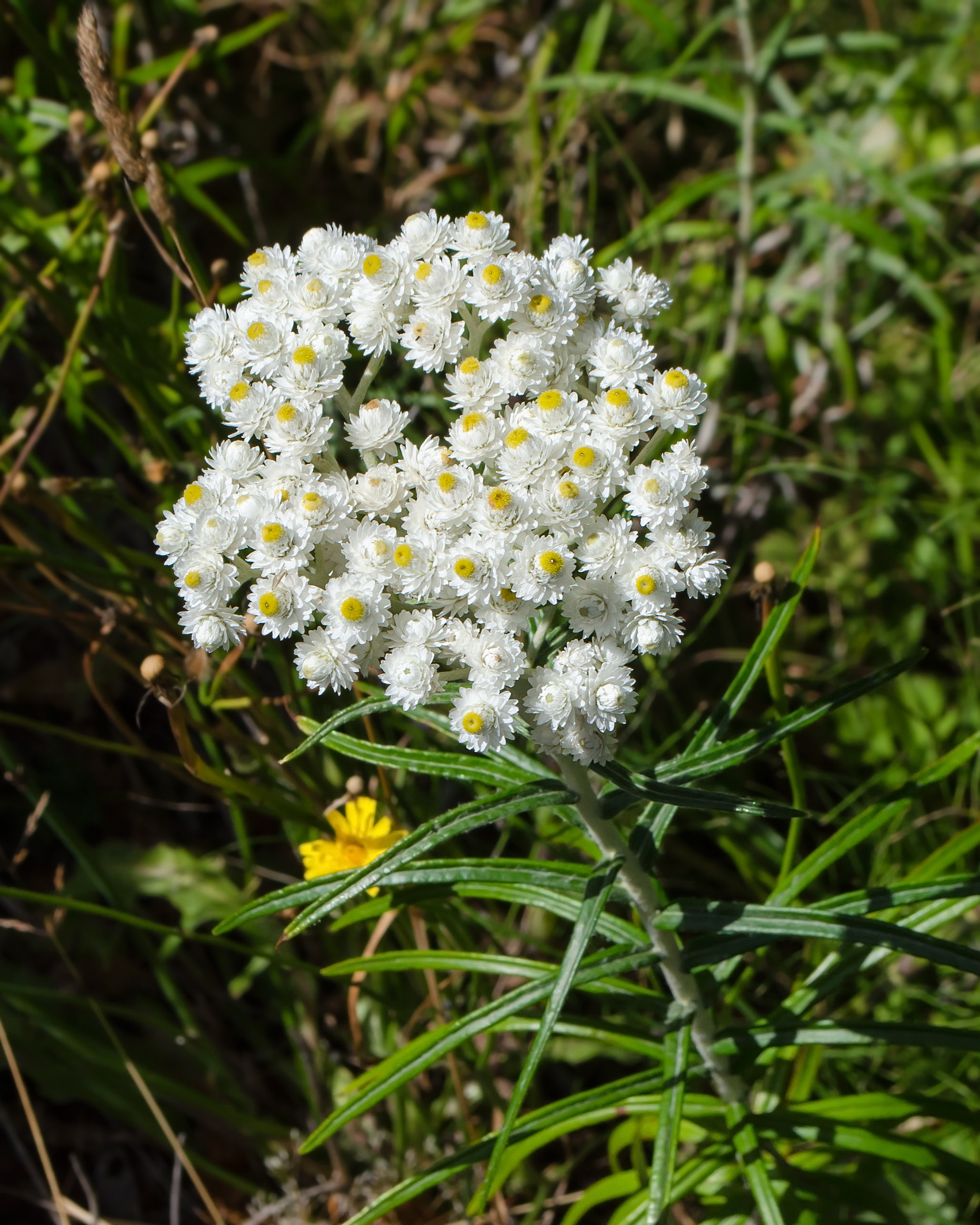
Pearly everlasting, Anaphalis margaritacea, on every roadside.

Foamflower, Tiarella trifoliata, going to seed.

Another garden plant. Pink lily.

On a cliff face at Buttle Lake. Spreading stonecrop, Sedum divergens

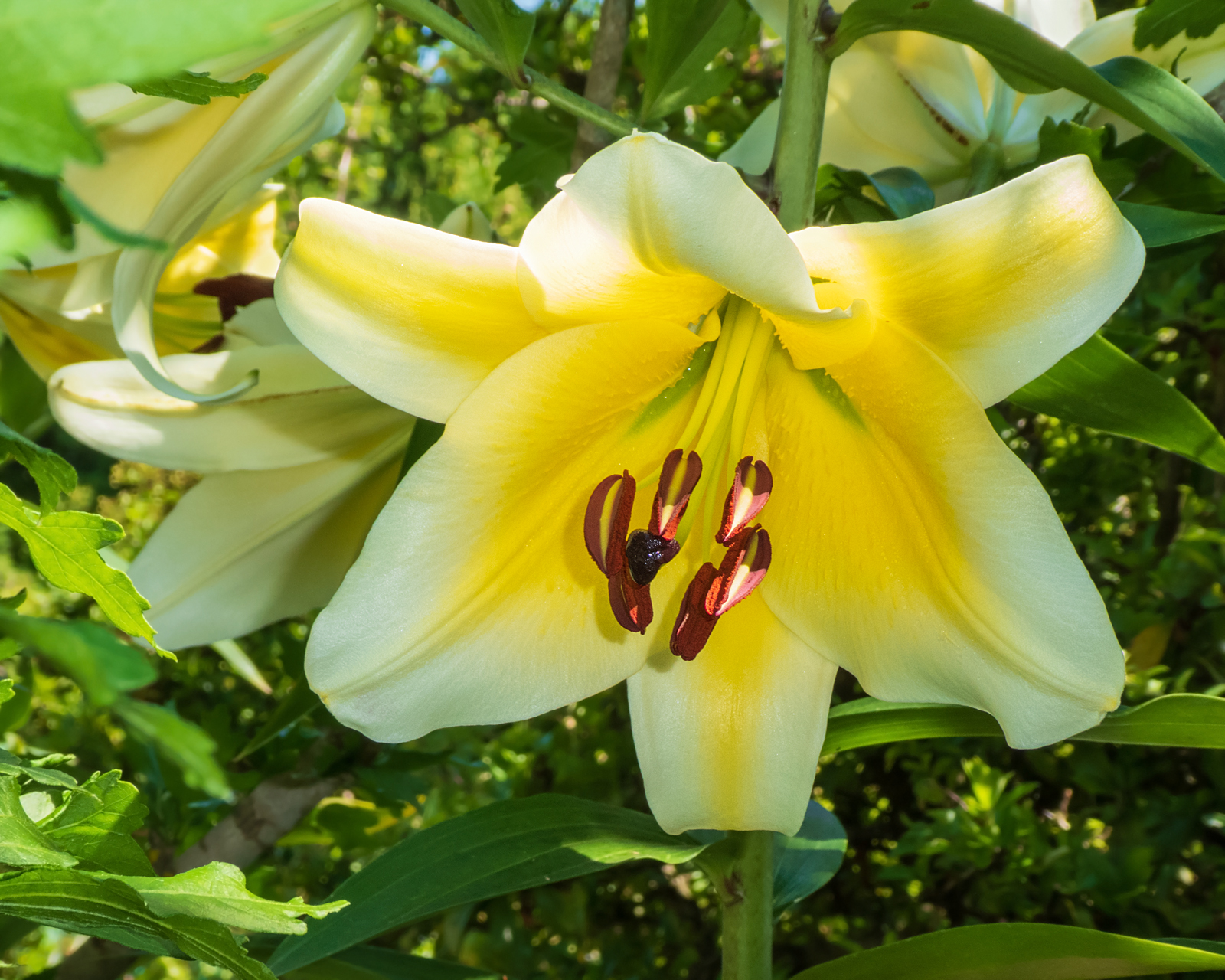
And another lily, yellow and white.

Another cliff dweller. I think it is one of the pussytoes, ready to spread its seeds.

And the brown moss that grows on these dry cliffs: look at the left on this last photo: it looks to me like a stuffed toy, a sleeping dog. And there's a mouse, too.

~~~~~~~~~~~~~~~~~~~~~~~~~~~~~~~~~~~~
He estado guardando fotos de flores, dejándolas para "más tarde". Pues ahora es más tarde; estas son fotos sacadas en el mes de julio y estos primeros dias de agosto.

  1. Flores de cilantro en el jardín de una amiga.
  2. La eterna perlada, Anaphallis maragaritacea, que crece en todas partes.
  3. La flor espuma, Tiarella trifoliata produciendo semilla. Esta planta crece en sombra.
  4. Un lirio grande, color de rosa, en el jardín de mi amiga.
  5. Sedum divergens, creciendo en un acantilado al lado de Buttle Lake.
  6. Otro lirio, este amarillo con blanco.
  7. Otra planta que crece en las rocas. Creo que es uno de los "dedos de gato", Antennaria spp.
Y en esta última foto, mirando ese musgo color café que crece en estas caras del acantilado, se me ocurre que parece animalitos de peluche; mira a la izquierda; hay un perrito dormilón, ¿no? ¿Y un ratoncito?


Monday, August 30, 2021

Billions and billions and billions

 Aphids. They're a pest. They make plants sticky and spoil the looks of flower bouquets. They drop honeydew on lawns. They attract ants. In large numbers, they suck the sap out of new plant growth. Otherwise, they're mostly harmless, but no-one seems to like them much.

But they can be interesting. And cute, too.

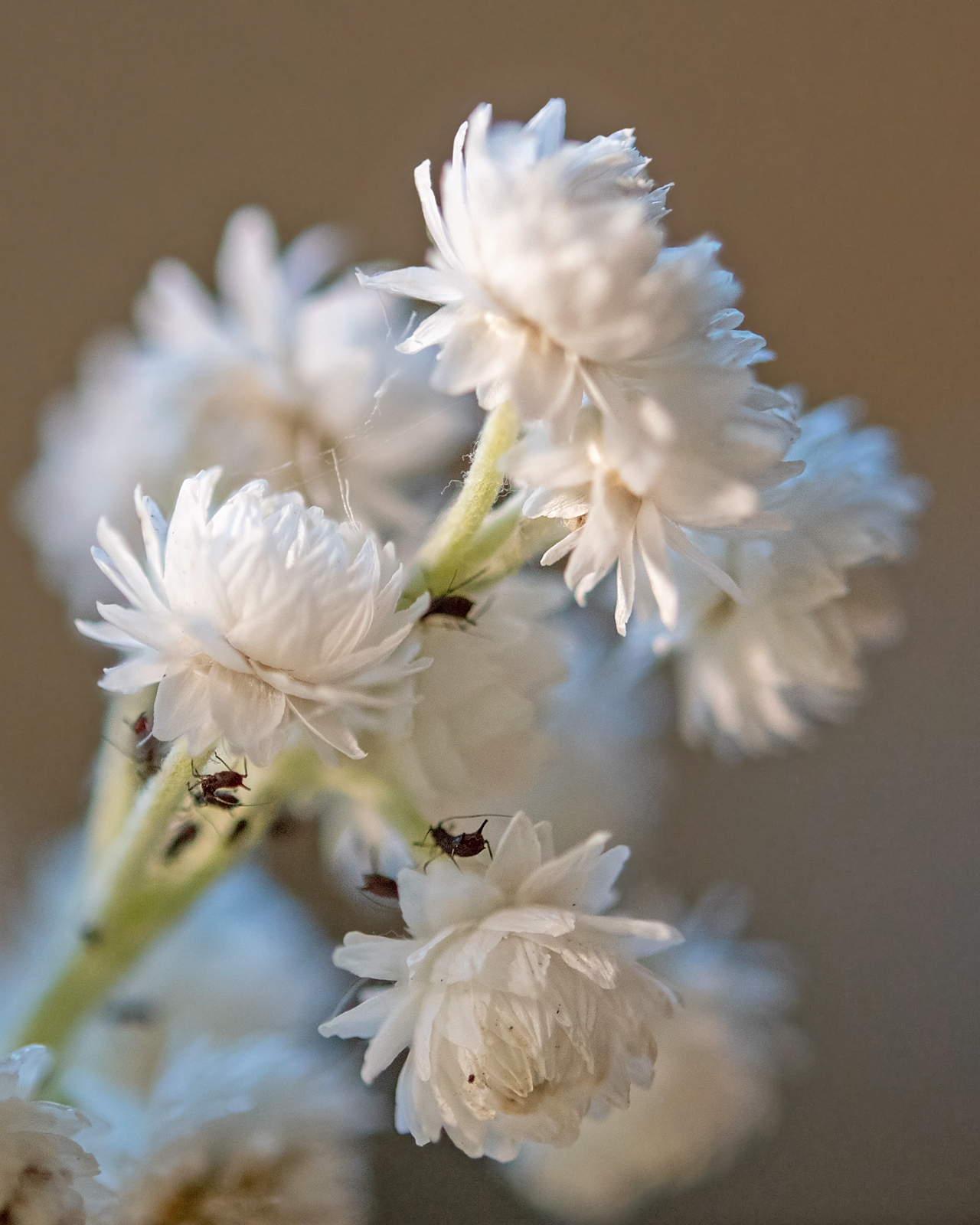
A handful of pearly everlasting gathered for winter blooms from the shores of Upper Campbell Lake came home with its cargo of blackish aphids.

Busy little beasties.

The two projections, called siphunculi or cornicles, near the rear are unique to aphids. They're tubes that exude a quick-hardening defensive fluid, cornicle wax.

Most of these aphids will be females. Some will be pregnant with their daughters and granddaughters.

Aphids have been known to have what is called telescoping generations. With telescoping generations the female aphid will have a daughter within her who is already parthenogenetically producing its own daughter at the same time. (McGill university page)
While the weather is warm, aphid females go on producing generations of daughters. When the weather turns cold and food becomes scarce, males are born; both males and females born at this time may have wings. They mate and the females lay eggs which will hatch in the spring.

Some species of cabbage aphids (like Brevicoryne brassicae) reproduce rapidly during the summer. They are all females, and can produce up to 41 generations of offspring. If no aphids had died during the summer, there would be more than one and a half billion billion billion aphids (1.5 x 10²⁷) by the end of the season. (McGill)
Yikes!

All wingless still. The weather has been warm.

What yoga position is this?

~~~~~~~~~~~~~~~~~~~~~~
Los áfidos. Pulgones, les llamamos. Son una plaga. Vuelven las plantas pegajosas y arruinan la belleza de nuestros arreglos florales. Depositan melazo en el césped. Atraen a las hormigas. Cuando son muchos, impiden el crecimiento de las flores y fruta. Aparte de esto, no son muy dañinos, pero nadie parece tenerlos afecto.

Pero pueden ser interesantes. Y chistosos, también.

En un manojo de perlado eterno que traía a casa desde la orilla del lago Upper Campbell para hacer bouquets para el invierno, había una familia de áfidos oscuros.

Fotos: perlado eterno con sus áfidos.

Los dos apéndices hacia el posterior del insecto, que se llaman sifúnculos o cornículos, son una característica única de los áfidos. Son tubos que exudan un líquido defensivo que se endurece rápidamente, o sea cera de cornículos.

La mayoría (tal vez todos) de estos áfidos son hembras. Algunas están embarazadas. Con sus hijas y sus nietas. (Las hijas, todavía sin nacer, ya llevan adentro sus propias hijas.)

Los áfidos tienen lo que se han llamado generaciones telescópicas. Con una generación telescópica el áfido hembra traerá adentro una hembra en proceso de desarrollo, la cual también está produciendo partenogénicamente su propia hija al mismo tiempo. (de McGill U.)
Mientras el clima permanece caluroso, las hembras siguen produciendo hijas. Cuando llega el otoño y las dias de frío, nacerán áfidos machos; también tanto las hembras como los machos pueden tener alas. Se aparean y las hembras ponen sus huevos, que eclosionarán en la primavera.

Algunas especies de áfidos que viven en la col (repollo), como por ejemplo Brevicoryne brassicae, se multiplican rápidamente en el verano. Todas son hembras, y pueden producir hasta 41 generaciones de hijas. Si no se hubieran muerto ninguna durante el verano, habría más de 1.5 x 10²⁷ (15 con 26 ceros) de áfidos al final de la temporada. (McGill)

:O


Thursday, September 17, 2020

Vertical

A few more cliff photos along the eastern shore of Buttle Lake. Because I just can't resist a good pile of rock.

View from the far side of the road along the shore.

There's the road at the bottom.

A large white section.

The lake is long and narrow and makes a good wind tunnel. I noticed moss hanging sideways on tall trunks facing the shore, and here, the trees seem to huddle towards the cliff, as if for shelter.

That same white patch, with a square-cut block, tipped over. What dances went on in these rocks over the millennia?

Somewhat tamer rock face, and a sharp curve with no visibility. Typical for this road.

Small plants shelter in the shadier spots. Here, pearly everlasting, maidenhair ferns, willow, grass,and a couple of others I can't identify from the photo. And moss, of course.

~~~~~~~~~~~~~~~~~~~~~

Aquí presento unas pocas fotos más de los precipicios al lado del lago Buttle. Porque no puedo resistir un gran montón de piedra.

En la tercera foto se puede notar que los árboles se inclinan hacia la roca, como si buscaran protección. El lago es largo y angosto, y forma un túnel de viento. Noté en otros árboles que el musgo cuelga casi horizontalmente.

La penúltima foto muestra un precipicio menos llamativo, y una vuelta en el camino sin visibilidad, típica de esta carretera.

En la última foto, se ven plantas chicas que se refugian en una grieta, fuera del calor del dia.


Monday, August 17, 2020

Pearly everlasting and pointy beetles

It's the season for pearly everlastings. They're blooming on every sunny roadside. I picked a bouquet for the winter; the flowers stay white and yellow even dry. One clump held a swarm of tiny beetles.

Pearly everlasting, Anaphalis margaritacea, with beetles.

I have spent a couple of hours skimming through about 3,000 photos of sap beetles on BugGuide, without finding a match. I've sent them the photo; maybe someone will recognize them.

In my Bugs of BC guide, the one that looks closest is a sap beetle, the so-called "beer beetle", but I don't see the 4 red spots that it would be wearing. And the beer beetles like fermented fruit, not necessarily flowers. So I'm still in the dark.

*UPDATE. Sara Rall, in the comments, gave me a name: they're tumbling beetles, in the genus Mordella. She gives me a link, and I found more on BugGuide (for example), in this general area. So that's it. Thanks, Sara!

~~~~~~~~~~~~~~~

Es la temporada para las flores "perla perpetua"; ahora alumbran cada margen asoleado del camino,  Recogí un ramo para alegrar mi casa en el invierno: las flores secas mantienen su color fresco, blanco y amarillo, todo el año.

Unas plantas traían estos escarabajos miniaturos. Me he pasado varias horas revisando fotos en BugGuide, tratando de identificarlos, sin mucha suerte. Les mandé mi foto. Tal vez alguien los reconocerá.

En mi guía "Bugs of BC", hay un escarabajo algo parecido, el dicho "escarabajo de cerveza", pero éste tiene cuatro puntos rojos muy evidentes. Y les gusta la fruta fermentada (y la cerveza), las flores no tanto. Así que me quedo con la duda.

¡YA LO TENEMOS! Es un escarabajo de los Mordella, los "escarabajos revolcadores".


Tuesday, November 19, 2019

Meanwhile ... some flowers

The sun came out today, and I went to Baikie Island and found a ton of mushrooms. (Slight exaggeration, I know.) I'll be busy processing them for a bit, so meanwhile, here's a batch of flowers from my "round tuit" file, some old, some older, a few recent.

A real oldie. The last photo of Laurie's garden in Delta.

And the newest, a few weeks ago. But the flowers are old. Or fake. Pearly everlasting, saved from last summer, with a bit of colour from an old decoration.

Such a beautiful, horrible weed! Cat's ear or hawkweed, I can never tell without looking at the leaves.

From my indoor "garden". The spathe of a variegated Diffenbachia

A welcome sight in the spring. Salmonberry flower.

Gumweed in the snow, Tyee Spit.


Monday, November 11, 2019

At the base of the cliffs

Where there is water, there is life. Even on bare rock.

Pearly everlasting guarding the door to a small cave. Water trickles down the right side wall and soaks into the broken stones beneath.

Licorice ferns and moss in a damp crack.

The foot of the cliff collects bits of stick and leaves, which hold the moisture. Lichens, moss, and ferns cover the scree.

Dying bracken fern in the ditch at the base of the cliff glows yellow in the sunlight.

Friday, August 24, 2018

Old favourite

Roadside pearly everlasting:

aka Anaphalis margaritacea. Perennial, in two meanings of the word.

I have an old photo of my Mom, taken after a hike through the coastal bush. She's carrying a bouquet plucked on the trail; salal leaves, Indian paintbrush, and pearly everlasting. It's a sampling of the different terrains her hike took her through; deep shade, wet cliff faces, mossy thickets for the salal, damp meadows and tidal marshes for the Indian paintbrush, and then, coming out into the sunlight and dry, stony slopes, the pearly everlasting.

Mom, 1955, Ferrer Point

Pearly everlasting was one of her favourites; mine, too. It holds its shape and colour as it dries, and lasts for years. (That's where it got its name.) In the long, wet, grey winters on the wet coast, that handful of everlasting was a reminder of the summer past, the warm summers to come. A vase on my bookcase holds last years bouquet, still looking fresh; this year's crop is drying, hanging upside-down on a hook in my hallway.

It grows thickly at this time of  year on gravelly roadsides, dry hillsides, and even bare rock:

Everlasting and its shadow, on a rock face.

Wednesday, August 23, 2017

Opportunists

I love pearly everlastings. Every summer, I collect a fresh handful to dry for winter flowers; they last all winter, and on into the next year, as white and delicate as they were the day they were picked.

Western pearly everlasting, Anaphalis margaritacea

The plant is another of the asters; the "flower" is a cluster of tiny, yellow flowers, in a showy head of papery bracts. The flowers fade, but the bracts persist until next year's crop pushes them aside.

Each flower head is about 1/4 inch across.

I made a mistake this year. I always hang the fresh plants stem up in a dry place until the yellow flowers and the leaves are dry. Last week, I was in a rush, and plopped the whole handful into a vase where a broken hollyhock stem was being cared for. Then I forgot all about it.

When I looked at them again yesterday, the sap was still running. And the stems were covered in fat, dark aphids.

Where did they come from? I'm sure there were none when I brought them home.

When host plant quality becomes poor or conditions become crowded, some aphid species produce winged offspring, "alates", that can disperse to other food sources. (Wikipedia)

Oh. So they may have flown in. Or ...

From KULeuven

(Text: "Did you know? In one season, just one aphid could produce over 600 billion descendants. During their asexual reproduction, the aphids give birth to live young instead of laying eggs. These young already contain their own young, meaning that an aphid gives not only birth to their children, but also their grandchildren.")

They were born here. And they're just getting started!

One aphid, showing off her siphunculi.

Most aphids have a pair of cornicles (or "siphunculi"), abdominal tubes through which they exude droplets of a quick-hardening defensive fluid containing triacylglycerols, called cornicle wax. (Wikipedia, again.)

These aphids are probably in the genus Uroleucon.


Powered By Blogger