Showing posts with label stonecrop. Show all posts

Saturday, August 06, 2022

Flowers wild and tame

I keep putting flower photos into a folder for "later". These are from July and these first days of August:

Cilantro flowers, from a friend's garden.

Pearly everlasting, Anaphalis margaritacea, on every roadside.

Foamflower, Tiarella trifoliata, going to seed.

Another garden plant. Pink lily.

On a cliff face at Buttle Lake. Spreading stonecrop, Sedum divergens

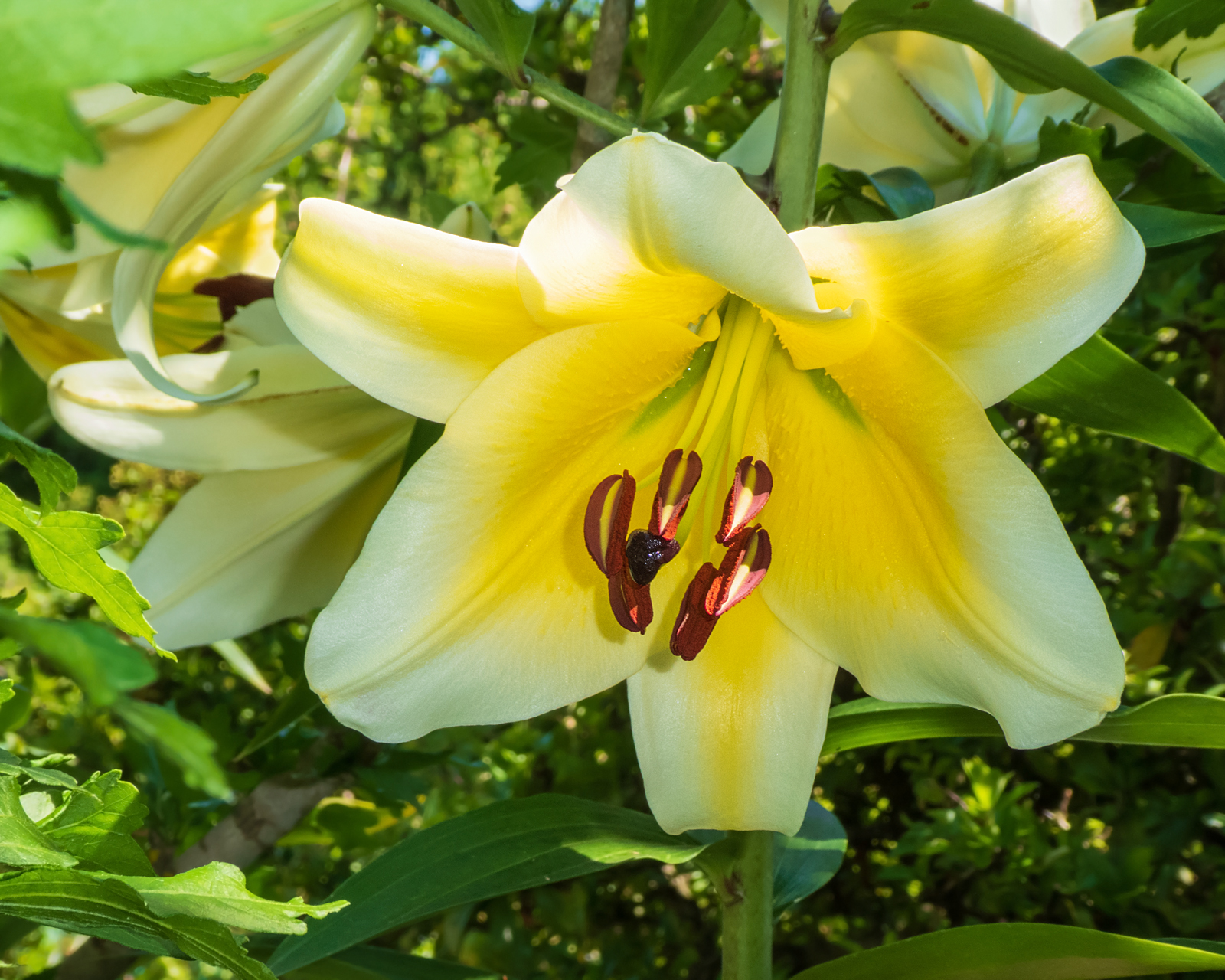
And another lily, yellow and white.

Another cliff dweller. I think it is one of the pussytoes, ready to spread its seeds.

And the brown moss that grows on these dry cliffs: look at the left on this last photo: it looks to me like a stuffed toy, a sleeping dog. And there's a mouse, too.

~~~~~~~~~~~~~~~~~~~~~~~~~~~~~~~~~~~~
He estado guardando fotos de flores, dejándolas para "más tarde". Pues ahora es más tarde; estas son fotos sacadas en el mes de julio y estos primeros dias de agosto.

  1. Flores de cilantro en el jardín de una amiga.
  2. La eterna perlada, Anaphallis maragaritacea, que crece en todas partes.
  3. La flor espuma, Tiarella trifoliata produciendo semilla. Esta planta crece en sombra.
  4. Un lirio grande, color de rosa, en el jardín de mi amiga.
  5. Sedum divergens, creciendo en un acantilado al lado de Buttle Lake.
  6. Otro lirio, este amarillo con blanco.
  7. Otra planta que crece en las rocas. Creo que es uno de los "dedos de gato", Antennaria spp.
Y en esta última foto, mirando ese musgo color café que crece en estas caras del acantilado, se me ocurre que parece animalitos de peluche; mira a la izquierda; hay un perrito dormilón, ¿no? ¿Y un ratoncito?


Friday, October 29, 2021

The colours of flame

It's the tail end of October. The skies are grey and usually drizzling. But on the ground, the colours are the colours of flame.

Big-leaf maple leaves and moss-covered rock. Campbell River museum grounds.

More leaves and rocks.

In a shady corner, the hosta glows after the rain.

Random shot of the garden. Hydrangea, volunteer parsley, stonecrop.

Last spring, I came across a patch of stonecrops beside an abandoned road through the bush. I brought home two stalks and set them in water to root, then planted them. They weren't doing well, so I moved them to the garden, where they sat sulking. Later, I transplanted the hydrangea beside them, too close, but I wasn't expecting the stonecrop to survive. Now, checking out the garden and clearing away dead leaves, I discovered them again, thriving under the shelter of the hydrangea. You never can tell.

Even on a cold and rainy day, a shaft of sunlight reveals warm colours. Quadra Island from the museum grounds with a totem pole looking over the channel from the park across the street.

A few minutes later. The sun has gone, but the shoreline trees still retain the heat of dying bonfire coals.

~~~~~~~~~~~~~~~~~~~~~~~~~~~~~~~
Estamos a fines de octubre. Los cielos están nublados, gris, casi siempre produciendo lluvia. Pero en el suelo, tenemos los colores de fuego.

  1. Hojas caídas de arce de hoja grande, con una piedra y musgo.
  2. Más hojas, más piedras cubiertas de musgo.
  3. En un rincón sombreado, las hostas resplandecen despues de una llovizna.
  4. Limpiando el jardín, encontré esto. Una hoja de hortensia, ya pintada de rosa y amarillo, hojas de perejil voluntario, y unas ramitas de sedum que traje a casa en mayo del año pasado. Las puse en agua en la casa, y luego las sembré en una maceta. No andaban bien, así que les mudé al jardín, donde no más se quedaron alli, como de mala gana. Más tarde sembré allí la hortensia, sin fijarme en los sedum, que parecían estar al borde de la muerte en todo caso. Y ahora, ¡ahi están, felices! Nunca se sabe.
  5. Aun cuando llueve y las nubes cubren todo, un rayito de sol ilumina los colores de otoño. Esto es la isla Quadra, vista desde los jardines del museo, con un totem que vigila el estrecho desde el parque.
  6. Y desaparece el sol. Pero las hojas que todavía se cuelgan de sus árboles siguen mostrando los colores de fuego, éstos, de las brasas de una fogata que se extingue lentamente.

Tuesday, July 07, 2020

Two rocks

And then I look at the rocks from inches away.

Rock at my feet. Moss and lichen and white stone.

The rock here, underfoot near Elk River, was brown, but there were these patches: white, crusty, harder (at least to my fingers) than the underlying brown rock. The grey patches are lichens.

Rock face, beside the highway. With stonecrop and moss.

And this rock is blue-grey. The whitish spots are lichens. The stonecrop, I think, is spreading stonecrop, Sedum divergens, smaller and redder than the stonecrop that gows on the ground.

~~~~~~~

Y luego, me acerco y veo las rocas de cerca.

La primera foto es de rocas bajo mis pies, donde el suelo del bosque no alcanza a cubrir los huesos de la tierra. Aquí, al borde del río, es de color café. pero tiene estos brotes de roca blanca, brillante, más dura que la piedra alrededor. Las manchas grises son líquenes.

La segunda foto es de un precipicio al lado de la carretera. Roca vertical. Aquí la piedra es gris, un gris azul. Las manchas blancas aquí son líquenes. Las flores son de la familia de los Sedum, probablemente Sedum divergens.

Friday, May 22, 2020

Rock garden

The mini-promontory of rock that juts out into the end of Brown's Bay is mostly bare rock, exposed to the waves and the wind. But it is old rock, cracked and broken, and in the crevices, a few handfuls of soil nurture a varied wild garden.

Bare rocks. But look closely!

Rock garden. Beach pea (going to seed already), moss, stonecrops, lichen.

Beach pea, Lathyrus japonicus.

When I blow up the photos, I often discover things that were staring me in the face and I never saw them. Here, there is an interesting bug, half hidden.

On the far side of a leaf, so that mostly his shadow shows through, but look at that pretty tear-drop wing!

Trailing blackberry, Rubus ursinus.

This is a very tiny, extremely tiny plant, unidentified.

Spreading stonecrop, Sedum divergens. Tiny button leaves, yellow flower.

More stonecrops, with two species of lichen. The tiny red dot just under the ledge above the far left group of leaves is a mite; in a photo taken 30 seconds later, it was gone. There's another at the far right.

And several species of lichen.

As well as the Nootka rose (and snake) that I posted yesterday. Busy rocks!

~~~~~~~~~~~~~~~~~~~

La rocas al final de Brown's Bay están, en su mayor parte, roca desnuda, a la merced de las olas y el viento. Pero es roca vieja, rota y agrietada, y en las grietas han caído fragmentos de polvo y materia orgánica, trasportados por el viento. Y así se ha formado encima de la roca, un jardín silvestre minúsculo.

Las plantas: primera foto: legumbres (chícharo de la playa, Lathyrus japonica) formando semillas ya, uva de gato (Sedum divergens), musgo y líquenes.

Dos fotos de Lathyrus; en la segunda, hay un insecto escondido, con una ala en forma de lágrima.

Mora de oso (Rubus ursinus)

Una plantita tan miniatura que no aparece en mis libros guía.

Y la uva de gato, Sedum divergens. Esta planta es apenas unos cuanto centímetros de alto. En la segunda foto, entre los líquenes, busquen los ácaros rojos. Se ven como dos puntitos rojos.

Y al final, unna roca con tres especies de líquenes.

Eso además de la rosa Nutkana (y la víbora) que subí ayer. ¡Un jardín rocoso lleno de vida!

Monday, May 18, 2020

Shy stonecrops

At an open spot along the road I was exploring, I came across a large clump of tallish stonecrops.

About 6 inches tall, all with bowed heads.

New plants, a couple or three inches tall. The hairy red stem on the right is the base of a herb Robert plant.

One stalk, tipped to show the flower buds.

I think these are probably lance-leaved stonecrop, Sedum lanceolatum. If so, they will have yellow flowers. I brought home two stalks, and they are now sitting with their roots in water.

~~~~~~~~~~~~~~~~

En un espacio al lado de mi camino, encontré un grupo de plantas suculentas, como de 15 cm. de alto, todos los de tamaño grande con las cabezas inclinadas.

Creo que son "stonecrop" de hojas de lance, o sea Sedum lanceolatum. Si es así, tendrán flores amarillas. Me traje dos tallos, con sus raices, a casa y los puse en agua. Ojalá den flores.

Wednesday, May 22, 2019

Almost missed them

So, so tiny!

Spreading stonecrop, Sedum divergens. The white flowers (in focus and not) are Shepherd's cress, Teesdalia nudicaulis.

I found these on the sandy dunes at Oyster Bay. A patch a foot across, no more, just at shoe height.

With my fingertip for size. That fingernail is 8 mm. long; I have tiny nails.

The plants will eventually sprout taller stems, up to 6 inches tall, with showy yellow flowers.


Sunday, November 22, 2015

First frost

On a chilly afternoon, on Oyster Bay shores:

Even the ocean is becalmed.

Barnacles and frost on a log

Frost and stonecrop

Zooming in.

Zooming out.

I think this is spreading stonecrop, Sedum divergens. In warmer weather, the leaves and stems are green to red; there's still a hint of green in more sheltered bits.

Powered By Blogger