Showing posts with label tree. Show all posts

Friday, March 12, 2021

Leafless.

 Bare branches ...

With towhee.

With robin

Birdless. As far as I can tell.


~~~~~~~~~~~~~~~~~
 Ramas secas, sin hojas.

1. Con toquí moteado (Pipilo maculatus).

2. Con petirrojo.

3. Sin pájaros. (Por lo menos pájaros visibles.)


Friday, December 04, 2020

Beaded branches

 I give up. I can't identify this little tree.

I've passed it many times, tucked into the edge of the woods beside the meadow at Oyster Bay, and never stopped to look at it until a couple of weeks ago. And it's weird.

Short, stubby branches, like stacked buttons on a string. I've faded the background to make it stand out.

A longer branch.

And another. I call this one the dancers.

The tree is a small one, about 2 metres tall. Leafed out, I never noticed it. Now I have to wait for spring for a clue as to what it is. Unless someone knows. Do you?

The full tree. The bark is smooth and grey.

I thought of mistletoe, which makes short, deformed branches, but only, here, on evergreens. And this has a different growth pattern. And the whole tree?

~~~~~~~~~~~~~~~~~~~~

Me rindo. He estado tratando de identificar este arbolito, y no lo encuentro en ninguno de mis libros guía. Crece a las orillas del bosque en Oyster Bay. Lo he pasado mil veces, pero nunca me fijé en lo extraño que son las ramas.

Son todas cortas, y parecen una pila de botones o tal vez cuentas enhebradas. El árbol mide apenas 2 metros; nada más hay uno. La corteza es lisa, un gris plateado.

Se me ocurrió que podría ser una especie de muérdago, pero ese parásito crece, aquí, en árboles de hoja perenne, y no cubren el árbol entero. Y tienen una forma diferente.

Tendré que esperar hasta la primavera para ver las hojas; tal vez eso me ayudará con la identificación.


Sunday, March 01, 2020

Did I say nobody was home? Wrong!

Just a friendly tree at Roberts Lake ...

"Hi, friend! Make yourself at home!"

~~~~~~~~~~~~~~~~

Un árbol muy amable, al lado del lago. "¡Hola, amiga! Bienvenida! Estás en tu casa.
"

Saturday, February 08, 2020

Winter willow

... at Willow Point.

Catching a few rays.

~~~~~~~~~~~~~~~~~

Un sauce llorón al lado del mar en Willow Point (Punta de Sauces), con los últimos rayos del sol de la tarde.

Saturday, July 28, 2018

Two tall trees at the beaver pond

One looks alive ...

Green and growing.

And another looks dead. But ...

It's full of life.

Snags can provide more habitat for wildlife than they did in their green youth. A "young" snag, like this one attracts insects, lichens, fungi, small plants like licorice ferns, spiders, and birds. Woodpeckers will feast on the grubs in the wood. As the tree ages, squirrels and assorted birds will dig out cavities for their nests; and eagles will perch on the highest branches, keeping an eye on the beaver pond below.

... “dying and dead wood provides one of the two or three greatest resources for animal species in a natural forest… if fallen timber and slightly decayed trees are removed the whole system is greatly impoverished of perhaps more than a fifth of its fauna.” (Ottawa Field Naturalists)


Thursday, May 31, 2018

Silhouette, with dropping sun

Every time I go to Oyster Bay, I end up taking a photo (or three) of this pair of trees. Most get deleted; there are only so many almost identical copies worth keeping.

This time, the late afternoon sun through the leaves almost blinded me. So I took the umpteenth photo, leaning out of the open car door.

8:04 PM. View from the OBSP parking lot.

The yellow shrubs at the edge of the meadow are the horribly invasive Scotch broom, that is gradually colonizing any dryish fields on Vancouver Island. Worrisome.

Tuesday, November 14, 2017

On a windy shore

The stretch of shoreline south of Salmon Point is always windy, even on the hottest, stillest days. In the winter, the wind howls so that it is impossible to hear what your companion on the trail is saying.

This tree shows the prevailing direction: north by northwest.

Looking east, across Georgia Strait to the mainland.


Wednesday, March 08, 2017

Reaching for the moon

In the summer, I love evergreens, so cooling, so light-absorbent. In wintertime, I am enthralled by the empty branches of deciduous trees, sometimes festooned by lichens, sometimes painted with green mosses, always individual, always graphic against the sky.

This one wears green and yellowish moss.

The moon is almost within reach.

And in early spring, I marvel at the sight of the shiny new, neon-green leaves. It won't be long now; buds are bursting out all over.

Another Skywatch post.

Friday, March 11, 2016

Hairy fists

These trees make me sad. I understand; left to themselves, the trees would grow too big for the city streets where they are planted. They would interfere with overhead electric and phone lines (why do we still have those?) and cut off the summer sun.

But it looks painful, even for a tree's limited awareness of pain.

Knobby tree, one of a double row down our main street.

The club ends of the branches, where the new growth is cut back every couple of years, are variously called "knuckles", "knobs", "heads", and, it seems to me appropriately, "fists".

Pollarding is a tree pruning technique that develops a framework of bare scaffold branches with a gnarly knob at the end of each branch. Every spring numerous straight long and leafy sprouts emerge from these knobs to produce a dense, shady canopy. (Wild Willow Design)

Instead of planning to pollard a large tree, consider planting a tree that will fit the space and require only light pruning. Some people consider a knobby, pollarded tree to be ugly and unnatural-looking. (SFGate)

Thursday, February 25, 2016

Swelling buds

Another few days of sunshine, and leaves and flowers will be popping out all over!

Name this tree. Before the buds open. Can you?

The weedy-looking shrub in my front yard has turned out to be forsythia; the flower buds are yellow-tipped. This makes me happy.

Sunday, June 21, 2015

Totally immodest

The gardens and sidewalks are full of exhibitionists these days, shamelessly advertising their sexual availability, sending come-hither messages far and wide.

Flowers, in other words.

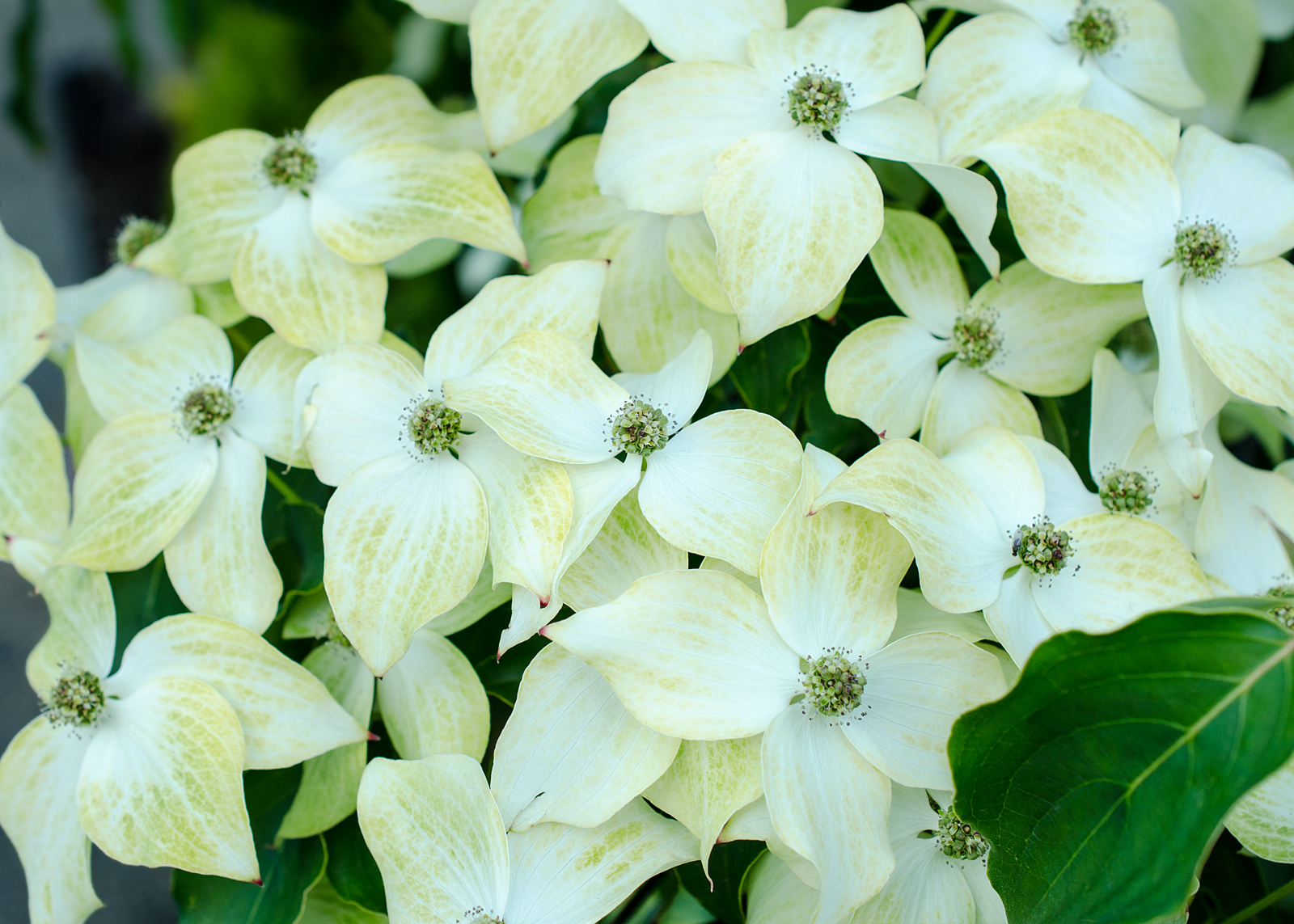
Dogwood, Cornus nutallii, probably.

The flowers are clumped together in a tight ball in the centre of the arrangement, sort of like a bride's bouquet. Each one looks like a greenish little tub with white petals, tipped with purple; the whole posy is surrounded by tethered satellite anthers.* The white "petals" are bracts; they're coarse and leathery to touch.

Zooming in on one of the flower clusters.

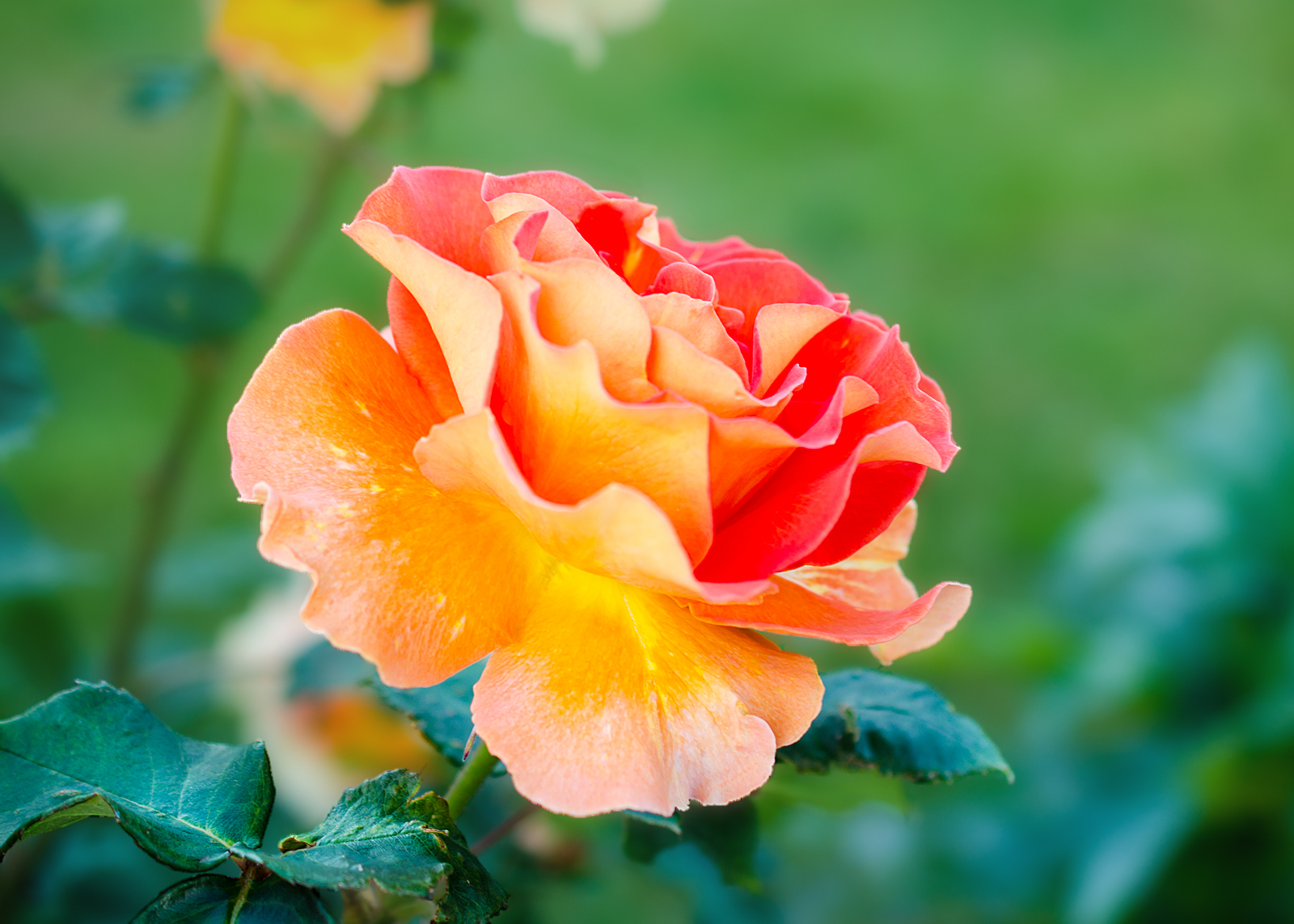
Pink and orange rose.

My columbine keeps on flowering as long as I remember to deadhead frequently.

The first flowers on my tiny salal, Gaultheria sp. The first one has a swollen ovary; she's building a purple berry in there.

I bought three baby salal plants a couple of years ago, each one a different species. Only two survived, and now I don't remember which of the survivors was the native, Guaultheria shallon, and which was an import.

Unidentified, so far. *Update: it's Olympic Bellflower, Campanula piperi. Thanks, Sara!

This plant had escaped a pot and was crawling along a wall in Beach Grove. Laurie took its photo a couple of years ago. A couple of months ago, I went to see how it was doing, and the owner of the house was there. I asked him about the plant; he didn't know what it was, told me it was likely to be invasive, and insisted on digging up a good-sized chunk for me.

I put it in a wide hanging pot and forgot to water it until I noticed it had almost died. Since then, I've remembered, and it has grown. And grown. It has filled the pot and is loaded with flowers.

I've looked it up on Google (who can't count and doesn't know its colours) but I can't find anything to match. Do you recognize it?

Two flowers, the roundish, jagged-edged leaves, and a bonus orange spider.

And I've got another batch of blooms waiting in the camera.

*How's that for mixed metaphors?

Wednesday, July 30, 2014

I wish they'd label these things!

Can you help me identify this tree?

Half in light, half in shade, all in the window.

This is growing beside Central City mall in Surrey, where we stopped for coffee. I was only carrying my little purse camera, and I couldn't get into a position to take the whole tree "live" without getting run down by buses. So a reflection will have to do.

The leaves are arranged oddly, layered tightly around each branch down its entire length, although each branch stands alone.

A few of the top branches. 

The lowest branches, in the shade of the buildings, were just a few inches out of our reach.

Where the sunshine hits, they're yellow-green; in shade, they're blue-green.

Fat, heart-shaped leaves.

It looks familiar, as if I should recognize it, but I don't. It's not in any of our books.

Any ideas?

UPDATE: It's been identified, in the comments and on Facebook, as Katsura.

Cercidiphyllum is a genus containing two species of plants, both commonly called Katsura. They are the sole members of the monotypic family Cercidiphyllaceae. The genus is native to Japan and China.
... Katsura is grown as an ornamental tree for its delicate heart-shaped leaves and bright autumn colour, a mix of bright yellow, pink and orange-red. ... Of particular interest is the scent produced by the leaves in the autumn, resembling burnt brown sugar or cotton candy.

From Wikipedia.

Sunday, March 03, 2013

Friday, November 23, 2012

Facebook in the sky

"Tree has poked you. Poke back?"

Laurie delights in taking these. His trees love the moon, it seems.

Oyster Bay, Vancouver Island, 2009.

Wednesday, November 21, 2012

Singing tree

Among my old hopeless photos, I found this one:

Dead tree,  Chase Valley

I've kept this photo, first on paper, then scanned for the computer, for about 10 years. It was a poor photo; too dark, taken from too far away (but it was as close as we could get without gear), with a competing sky behind the tree. Even cleaned up now, it's not very clear. But it was "our" tree, with a story to tell.

We were staying in a friend's cabin in the hills near Chase, BC. We were basically shut in there; we had no phone, no internet, no neighbours; all around us was scrub bush and evergreen forest, innocent of humans for the most part. Our companions were nuthatches, chickadees, scrub jays and squirrels, hanging around because I was providing seeds and peanuts. There were beaver down by the creek, and we saw a few of those birds that run underwater, the dippers.

To go into town, we had to drive along the bottom of a narrow valley, on gravel roads for part of the way. The view: trees, trees, trees, and the occasional small farm on the bottom land along Chase Creek. I don't remember passing more than one or two cars in the entire time we were there.

Eventually, we would come to civilization; a miniature town hall, seemingly abandoned, a wooden bridge or two, a turn-off down Turtle Valley Road. (That one has a name on the map; our road doesn't.) Then a narrow ravine, a sharp curve, a bit of a slope downwards, and suddenly the world opened in front of us. This was the valley of the river that runs from Little Shuswap Lake, just around the corner, to Kamloops to the west. The fields were lush and bright green, glowing in the sunlight, the river like a mirror held up to the sky. Across the valley the hills started again, rising gradually, melting into a blue haze in the distance. We had to stop to look, often.

And there was the one lone tree, well down the side hill, but still towering overhead.

It was dead, long dead, but still bore life. Every time we stopped, the whole tree was singing and twittering. Sometimes, we saw tiny birds flitting from branch to branch, always dark shadows against the brightness of the sky. We never saw them up close; they remain unidentified. They never seemed to leave the tree; why would they? It was a never-ending source of goodies, bugs and seeds waiting for a forest fire to get them started growing, and free for the eating. No wonder the birds sang!

Eventually we'd tear ourselves away, down into town for groceries and hardware (Laurie was doing some construction work) and a stop at the second-hand book store; then back up that long hill, and we'd dive into the shade of the ravine and the creek valley until next time. The tree stood like a sentinel, watching us return, the birds still twittering madly.

The last time we stopped, to say goodbye for now (but it's been 10 years!) a hawk was perched in a tree above us on the hillside, watching the tree. Next link in the food chain, but I hoped he'd soon go elsewhere.

Is the tree still there? I can't be sure. On the Google satellite photo, there's a dark stain where I think it was. If that's it, I'm sure it's still twittering away.

~~~~~~~~~~~~~~~~~~~~~

Next: I found a whole folder full of trees against the sky. I'll see how many I can rescue.


Monday, December 26, 2011

Under a summery blue sky

Bare branches ...


Reflected in the ice on the birdbath:


This was a few mornings ago; now it's warm and rainy. I foretold it correctly - a grey-green Christmas.

But green is good, right?

A Skywatch post.

Tuesday, January 26, 2010

Tree lace

Ever since I first had a camera in my hands, I've been trying to take photos of leafless trees. I love their shapes, the arrangements of branches, twigs and buds, the nests revealed in the grey light of winter. But most of the photos turn out as mere graphs of a tree; the soul has fled.

I try again, and again. Maybe someday I'll capture what I see.

These are a couple of my recent attempts. Half-way there, maybe.


Like the edge of an old-fashioned doily, the ones grandma had on her occasional tables.


Cold nest

Saturday, January 23, 2010

Between water and clouds

Sometimes, along our shores, there are moments when there is nothing, really, to see, yet it takes your breath away.


From the Westham Island bridge.


Same bridge.


Afternoon nap


Boundary Bay


Tree, Reifel Island


Evening clouds. Reifel Island


I don't usually like photos of me, but this one is different, somehow. Boundary Bay.


Practice session, Boundary Bay


North Shore mountains

Another Skywatch post

Monday, October 12, 2009

Green and gold maidenhair

It was a grey day, grey and chilly. The wind had a bite to it. We went to Chinatown to buy Laurie's favourite baked goods. At the street corners and in the parking lots, the sun did its best to break through the overcast.


Down in the streets, in the shadow of the buildings, even the bright reds and yellows of Chinatown were dulled. We went antiquing, out of the wind.


Detail of antique door panel, with stylized leaves and flowers, possibly ginkgo.

We picked up a few small pieces of jade, modern; no antiques this time. Out on the street again, heading back to the car, we passed this "antique", untouched by the general greyness:


Ginkgo biloba, the maidenhair tree.

The leaves are a glorious spring-time green, in transition from green summer, through spring, to the fall golden yellow.


With the cooperation of the tree across the street and a handy window, pretending to be a garden.


Detail of branches, going every which way.

And back home to Strathcona (we're housesitting again) for tea and then supper. Tapioca pudding and sponge cake for dessert!
.

Powered By Blogger