Showing posts with label dogwood. Show all posts

Tuesday, May 14, 2024

Deceptive dogwood

 It's dogwood flowering time. The spring edition; dogwood also flowers in the fall. In between times, it makes red berries.

Western Flowering Dogwood, Cornus nuttallii. With beetle.

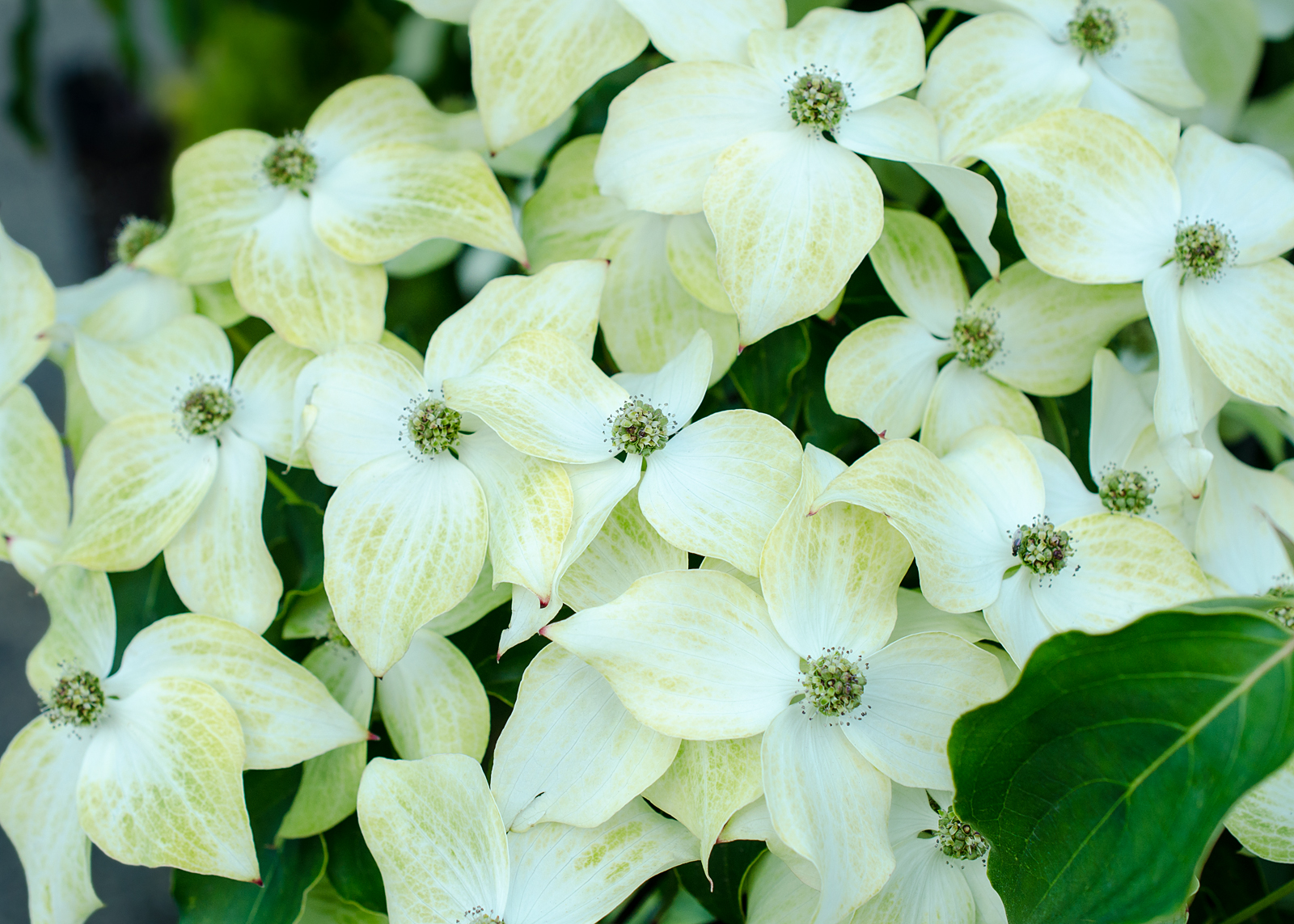
A tree full of blooms.

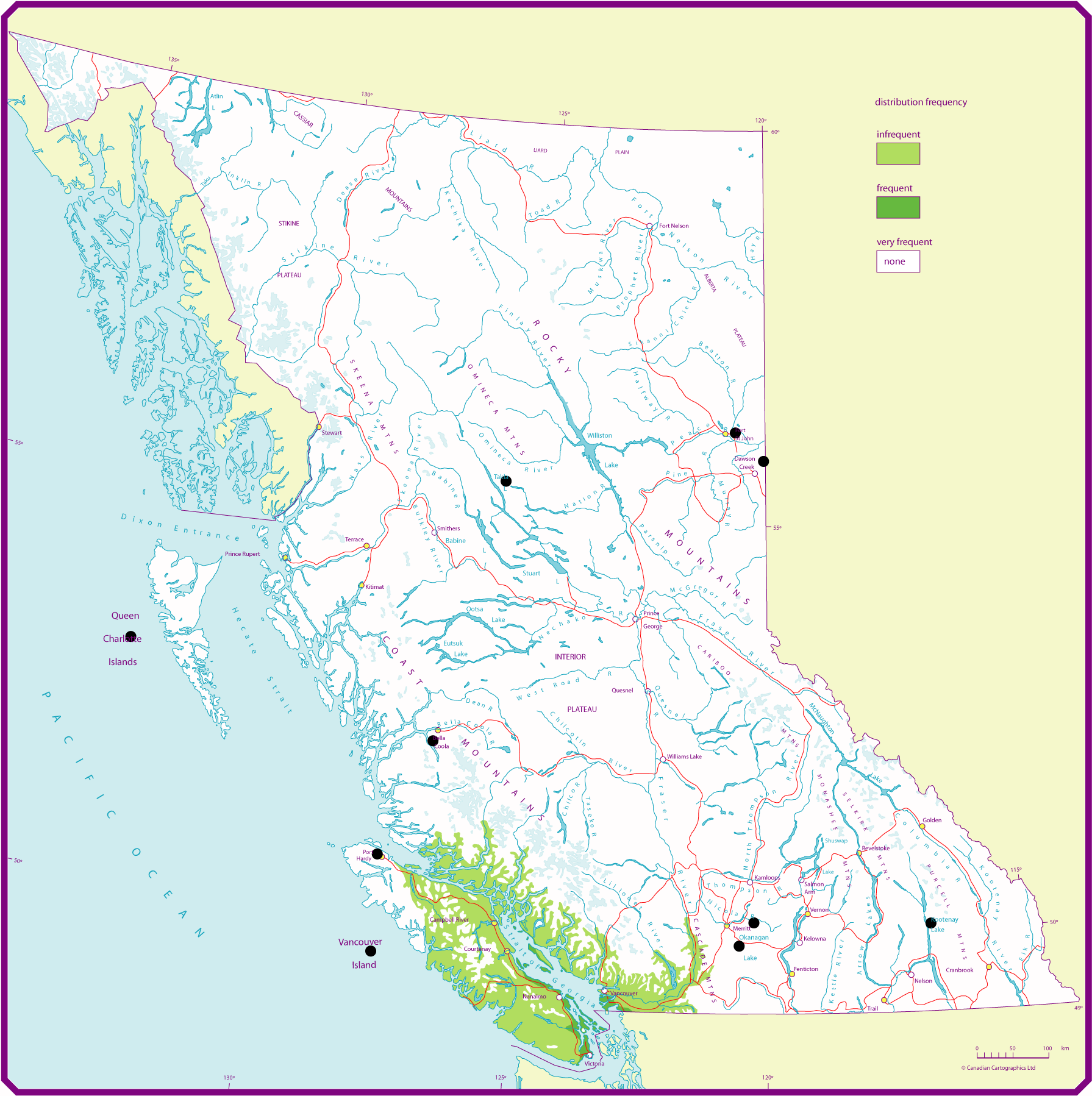
The native dogwood is BC's Provincial flower, although it is found mainly on Vancouver Island and the edges of the fjords on the southwestern coast of the mainland, with a small extension along the lower Fraser River. (See entire BC Forestry map, here.) Its range also includes the western coast of the US.

Cropped portion of BC Forestry map. Green areas are the dogwood's range.

The trees, short, almost shrubby at times, grow along the edges of the forest, liking semi-open spaces. This one is growing beside the road in an area barely recovering from logging.

The flowers range from white to pale yellow, sometimes greenish, often with purple markings. And they're tiny, up to 2 cm. wide, fully open. What we see, unless we're a few inches from the tree, are the wide, showy bracts, white to cream, sometimes pinkish, that surround the cluster of true flowers in the centre.

The central flower head of a dogwood, some flowers open, with 4 petals. A few purplish marks.

This one has only one flower open so far.
 
~~~~~~~~~~~~
Es la temporada de flores del Cornejo del Pacífico (Cornus nuttallii). La primera temporada, la de la primavera, pues vuelve a producir flores en el otoño. En el verano, llevará sus bayas rojas.

Fotos:
    1: Flor de Cornus nuttallii. Con un escarabajo.

    2: Una sección del árbol con muchas flores.

Es un árbol nativo a la región y ha sido nombrado la flor provincial de Columbia Británica, aunque se encuentra principalmente en la isla de Vancouver, y en las laderas de los fiordos de la costa sudoeste de la provincia; también se encuentra en el rio Fraser, y la costa occidental de los Estados Unidos.
    
3: Parte del mapa dando la distribución del cornejo, por BCForestry.  (Véase el mapa de la provincia entera, aquí.)

Los árboles, no muy grandes, casi como arbustos a veces, crecen en los bordes de los bosques; les gustan los sitios medio abiertos. Este, lo encontré al lado del camino en una parcela apenas recúperandose después de la tala.

Las flores van desde blancas a un amarillo claro, a veces verdes, a veces con marcas moradas en los pétalos. Y son muy pequeñas, midiendo a lo más hasta  cm. completamente abiertas. Lo que vemos, a menos de que nos acerquemos mucho, son las brácteas, grandes y llamativas, blancas o color crema, o a veces con un dejo de color de rosa. Estas brácteas rodean el racimo de las verdaderas flores en el centro.

    4: El capítulo del cornejo, con algunas de las flores abiertas. Tienen 4 pétalos, y se ven unas manchas oscuras.

    5: Esta "flor" tiene solo una de las florecitas abiertas.


Sunday, May 03, 2020

Not so shy

This time of year, the Pacific dogwood blooms in our coastal woods. Startling, somehow; the large, showy flowers look like they belong in a residential garden, but here they are among the alders and Douglas firs of the forest edges.

Dogwood and stripy fly

The actual flowers are tiny, pale yellow or greenish-white, and shy. They have four yellow-tipped petals each. The 6 or 8 big "petals" are the bracts surrounding the flower head, like the ribbons and lace framing a bridal bouquet.

Pacific flowering dogwood, Cornus nutalli. 

On one bloom, a striped fly was hard at work, taking care of the pollinating.

Zooming in on that fly. Brown-eyed, yellow-striped. One of the many syrphid flies.

In summer, the trees will produce red berry clusters, not good to eat. And then they'll flower again in the fall.

~~~~~~~~~~~~~~~~~~~~~~~

En esta temporada del año, aparecen en nuestros bosques las grandes flores del cornejo Pacífico, Cornus nutalli. Parece un árbol que se encontraría en un jardín residencial, pero este es un nativo, y se mezcla al azar entre los alisos y abetos de los bordes asoleados del bosque en la costa.

Las flores verdaderas se ven en el centro; los grandes "petalos" exteriores son en realidad hojas modificadas, o brácteas. Las florecitas son blancas con amarillo, de 4 pétalos. Me dan la impresión de un ramo de flores de una novia, rodeado de su marco de listones y encaje.

En una de las flores, una mosca negra con rayas amarillas estaba trabajando; estas están entre las principales polinizadoras.

En el verano, los árboles llevarán frutillas rojas; las comen los pájaros y los oso, pero nosotros no. Y en el otoño, habrá flores nuevas.

Sunday, June 21, 2015

Totally immodest

The gardens and sidewalks are full of exhibitionists these days, shamelessly advertising their sexual availability, sending come-hither messages far and wide.

Flowers, in other words.

Dogwood, Cornus nutallii, probably.

The flowers are clumped together in a tight ball in the centre of the arrangement, sort of like a bride's bouquet. Each one looks like a greenish little tub with white petals, tipped with purple; the whole posy is surrounded by tethered satellite anthers.* The white "petals" are bracts; they're coarse and leathery to touch.

Zooming in on one of the flower clusters.

Pink and orange rose.

My columbine keeps on flowering as long as I remember to deadhead frequently.

The first flowers on my tiny salal, Gaultheria sp. The first one has a swollen ovary; she's building a purple berry in there.

I bought three baby salal plants a couple of years ago, each one a different species. Only two survived, and now I don't remember which of the survivors was the native, Guaultheria shallon, and which was an import.

Unidentified, so far. *Update: it's Olympic Bellflower, Campanula piperi. Thanks, Sara!

This plant had escaped a pot and was crawling along a wall in Beach Grove. Laurie took its photo a couple of years ago. A couple of months ago, I went to see how it was doing, and the owner of the house was there. I asked him about the plant; he didn't know what it was, told me it was likely to be invasive, and insisted on digging up a good-sized chunk for me.

I put it in a wide hanging pot and forgot to water it until I noticed it had almost died. Since then, I've remembered, and it has grown. And grown. It has filled the pot and is loaded with flowers.

I've looked it up on Google (who can't count and doesn't know its colours) but I can't find anything to match. Do you recognize it?

Two flowers, the roundish, jagged-edged leaves, and a bonus orange spider.

And I've got another batch of blooms waiting in the camera.

*How's that for mixed metaphors?

Powered By Blogger