The hydrangea outside my kitchen window is all over new buds. A sign of early spring, maybe, or just a response to the warm weather; it may be a mistake, if we end up with winter weather later this month.
The red alders are wearing their red catkins, too. They started producing them last November, and a bit (or a lot) of freezing weather won't phase them.
 |
| Red alder, Alnus rubra, January 2025. |
The male alder flowers are the long, reddish catkins. Female catkins are smaller, and oval-shaped, greenish when they're new. Both male and female catkins appear before the leaves, but the males will drop off once pollination is finished. The female catkins will develop into small, brown cones; these stay on the tree over the winter. About now, the seeds will be dropping from between the scales of these cones. The first beginnings of pinkish leaf buds are showing at the tips of the branches.
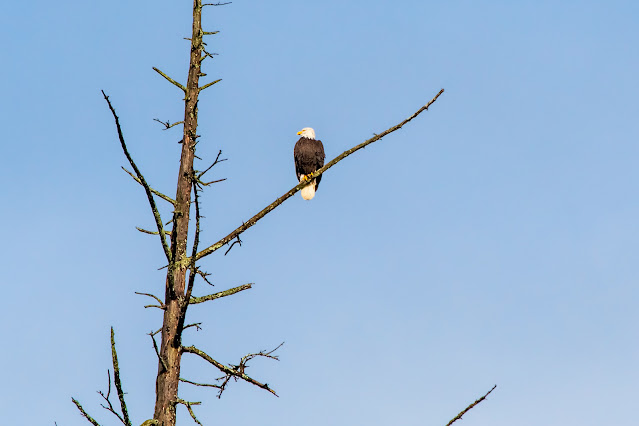 |
| Snag with eagle. No buds on this tree, but there's lichen. |
 |
| Big-leaf maple. No leaves, no buds, no catkins yet. |
~~~~~~~~~~~~~~~
Hay botones nuevos en la hortensia en frente de mi casa. ¿Señal de primavera, tal vez? ¿Una respuesta al clima que este año, hasta ahora, ha pasado por alto el invierno? ¿O un error que se pagará si es que veamos temperaturas de invierno más tarde?
Los alisos rojos ahora estrenan sus candelillas rojizas. Las empezaron a producir en noviembre, y no les espanta el frio, aunque todo se congele.
- Rama de aliso rojo, Alnus rubra, ahora en enero, 2025. Las candelillas machas son largas y rojas. Las candelillas hembras son más chicas, redondeadas, verdes cuando están nuevecitas. Tanto las candelillas machas como las hembras salen antes de que aparezcan las hojas, pero las candelillas machas se caerán una vez terminada la temporada de polinización. Las candelillas hembras formarán pequeñas piñas; estas permanecen en el árbol durante todo el invierno, y ahora las semillas están escapando de entre las escamas. Y se ven en la punta de las ramas los primeros brotes rojizos de las hojas.
- El árbol estará muerto, pero lleva vida; el águila y los líquenes que cubren las ramas.
- Un arce de hoja grande. Este árbol todavía no muestra señas de hojas, ni sus botones, ni las candelillas que aparecerán más tarde.


