Showing posts with label Paradise Meadows. Show all posts

Sunday, July 28, 2024

Elusive blues

Paradise Meadows. The meadow is a fen; the water lies just below the surface of the soil, breaking out here and there in a series of ponds bordered by buckbeans. Where the land rises around the rim of the meadow, peat-brown creeks wind their way down to the flats, chuckling as they go.

Paradise Meadows Loop trail, going and coming.

Prime country for dragonflies and their kin. Fat dragonflies mating over the buckbeans. Just above the green of the grasses, sky-blue needles flashing and disappearing. We take many photos of places where they were a half-second ago. A few times, the camera captures one, more or less.

Boreal bluet, Enallagama boreale

Blurry bluet and its shadow on the boardwalk.

We chased flittering orange butterflies, with no luck. Nearly back at trailhead, this blue one consented to pause for a moment, dancing in place. In the photo, only the weeds stayed still; check out those vibrating antennae!

Blue butterfly, possibly Spring Azure, Celastrina lucia.

~~~~~~~~~~~~~~~~~~
Paradise Meadows, Las Praderas de Paraíso. La pradera es un pantano; el agua reposa casi en la superficie del suelo o saliendo a la vista en una serie de lagunas rodeadas de tréboles de agua. Donde el terreno se eleva alrededor del pantano, riachuelos con agua del color café rojizo de turba corren cantando hacia las lagunas.

Foto #1: El segundo sendero de las Praderas de Paraíso, con sus paseos entablados.

Este es terreno perfecto para las libélulas y los caballitos del diablo. Alrededor de los tréboles de agua, libélulas grandes interpretaban sus bailes nupciales. En el aire sobre lo verde de la pradera, los caballitos del diablo, al parecer agujas del color de los cielos, brillantes, destellaban y desaparecían. Sacamos muchas fotos de sitios donde se habían detenido hacia medio segundo. De vez en cuando la cámara logra capturar uno. Más o menos.

#2: Un caballito del diablo, Enagallama boreale.

#3: Un caballito borroso, y su sombra en el paseo entablado.

#4: Perseguimos mariposas anaranjada, sin suerte. Pero esta mariposa azul se detuvo por un instante entre las hierbas. Por un instante apenas, y eso sin dejar de bailar. ¡Fíjate en esas antenas que no han dejado de vibrar!


Saturday, July 27, 2024

Caught again

I do love a good list.

Paradise Meadows has an online guide to the plants found along their trails; about 100 plants, mostly flowering plants sorted by the colour of their flowers. Some of those plants are ones we are familiar with down here at sea level: fireweed, columbine, twinberries, and violets, for example. Most, though, are species that can handle the brief summer season and the long sleep under snow and ice. Some I can find in my usual guidebooks, once I know where to look. (The Paradise Meadows guide doesn't include much information beyond the photos and the names.)

And they missed some. Many. Another list I found counts 165 plants, but just includes the names, no photos. And one of the flowers I found isn't on that list, either. Google image search took me to iNaturalist, which led me to Wikipedia, and there it was. Another was on a (huge) list in Swedish, which I have now lost; must have deleted the link by mistake.

Well. I was just going to post a few flower pics, and ended up spending several hours scrolling and scrolling, searching for names. 

So: a few flower pics.

I think this is the Mountain Monkey flower, Erythranthe tilingii. "...  grows in mossy alpine seepage sites ..."

Bog blueberry, Vaccinium uliginosum.

Two species of burnet; Menzies' burnet (the pink one) and Sitka burnet; Sanguisorba sitchensis and S. menziesii.

White-flowered rhododendron, Rhododendron albiflorum.

King gentian, Gentiana sceptrum.

And another Menzies' burnet.

~~~~~~~~~~~~~~~

Una buena lista siempre me puede atrapar.

Paradise Meadows (Praderas de Paraíso) ofrece un guía online sobre las plantas que se encuentran alrededor de sus senderos, unas 100 plantas, en su mayor parte plantas con flores, ordenadas según el color de las flores. Algunas son las plantas familiares aquí al nivel de mar; el epilobio, la aquilegia, baya gemela, los pensamientos, por ejemplo. Pero la mayoría son especies que pueden prosperar a pesar del verano breve y el sueño largo bajo la nieve y el hielo. Algunas de estas, las puedo encontrar en mis libros guía usuales, una vez que sé donde buscarlas. (El guía de Paradise Meadows no incluye mucha información aparte del nombre y las fotos.)

Pero no incluyeron todas las posibles. Les faltaron muchas. Otra lista que encontré incluye 165 plantas, pero nada más los nombres; no hay fotos. Y una de las flores que encontré no está en ni la lista de PP, ni la de 165. Buscando en Google con mi foto me llevó a iNaturalist, y de allí a Wikipedia, donde por fin la vi. Otra apareció en una lista enorme, esta con fotos, en sueco. Y esa lista la he perdido, borrando el enlace por error.

Solamente planeaba subir unas cuantas fotos de flores, y terminé pasando varias horas recorriendo listas, buscando nombres.

Regresando a lo planeado: aquí están esas pocas fotos.
  1. Creo que esta es la "Flor Mono de la Montaña", Erythranthe tilingii. "... crece en humedales alpinos con musgo ..."
  2. Arándano azul de los pantanos, Vaccinium uliginosum.
  3. Dos especies de Sanguisorba, S. menziesii (rosa fuerte) y S. sitchensis.
  4. Rhododendron albiflorum
  5. Gentiana sceptrum, Genciana Real.
  6. Y otra Sanguisorba menziesii.

Thursday, July 25, 2024

Where the orchids live

 Orchids! I used to think of orchids as a "special" plant, one that needs careful tending by trained orchid lovers. It always surprises me to see flocks of them out in the wild, blending in, waving in the wind. The first trail out of the Paradise Meadows parking lot circles a fen, at this time of year bright with many flowers, red, white, blue, yellow. The whitest of them all are these orchids:

White bog-orchid, Platanthera dilatata.

And they're perfumed, to boot.

From my guide book:
It is important to remember that many of our orchids have established an intimate relationship between their roots and the fungi growing in the soil. This makes them very difficult to transplant, and they are best left in the wild to be enjoyed.
Where the orchids live. Under snow half the year.

~~~~~~~~~~~~~~
¡Las orquídeas! Antes, creía que estas flores eran algo exótico, una planta que solo se puede cultivar con mucho cuidado, bajo la tutela de expertos. Y siempre me sorprende encontrarlas en el campo, grandes números de flores, parte de la vida natural. El primer sendero que sale del estacionamiento de Paradise Meadows da la vuelta a un pantano, lleno de flores, blancas, rojas, azules, amarillas ... en esta temporada del año. Entre ellas, las más blancas son estas orquídeas.
  1. Platanthera dilatata, la orquídea blanca de los pantanos.
  2. Dos plantas. Son muy perfumadas.
    Dice mi libro guía:
    "Es importante recordar que muchas de nuestras orquídeas han establecido una relación íntima entre sus raices y los hongos que crecen en el suelo. Esto las hace muy difícil de trasplantar, y es mejor dejarlas y apreciarlas en su sitio natural."
  3. Donde viven las orquídeas. La mitad del año, están cubiertas de nieve.


Wednesday, July 24, 2024

Scruffy Jays and Whiskey Jacks

 Picture this. We're standing on the boardwalk at Paradise Meadows, surrounded by raggedy forest, half green trees, half lichen-wrapped snags.

Centennial Loop, Paradise Meadows.

We're behaving; we stay on the boardwalk, we walk sedately, stand quietly. And yet from every side, we're hearing loud complaints. Angry calls, annoyed comments about our invasion. We see nobody at first, then begin to notice quick flittings from high in one distant dead snag to the next; birds that immediately become invisible on their branches against the bright sky, from where they continue to scold us.

Eventually, one or two — they turn out to be Steller's Jays — perch where the light is better. For us, at least.

Scruffy Steller's Jay.

It's molting season, when birds replace their old, worn-out winter feathers with all new ones. Some do this gradually, but some, like the jays and crows, drop whole sections of feathers at once, leaving them ragged and scruffy for a while. And somewhat vulnerable; mallards and Canada geese lose enough wing feathers to become flightless.

Half-bald Steller's Jay.

So what were the jays saying? "Go away, we're not dressed for company!"? Or "We don't feel safe with you standing there right now"?

Junco, singing his heart out. He's got all his feathers: no worries, he says.

A couple of robins, watching us watching jays. The one on the right has the mottled breast of a juvenile.

An hour later, a couple of kilometres on, we came across a group of Whiskey Jacks (aka Grey Jays) mobbing a family with three kids carrying bird seed. We had been nibbling on sesame seed crackers while we watched dragonflies, and I still had half a package. I broke them in half and held one up; within seconds, a jay had come down and landed on my finger to grab the cracker. His talons were sharp; that first time, I jerked my hand away. With the rest of the crackers, I managed to hold still.

Whiskey Jacks are bold, bolder even than gulls, and hang around campsites or follow hikers begging for treats, any human food. They especially like peanuts or any seeds, which they will carry off to hide in the trees for a rainy day.

Waiting to see if I'm going to find more crackers in my pack.

(Audubon Magazine has a good article about molting birds. "Who wore it Worst? Behold the Awkward Glory of Molting". Go see.)
~~~~~~~~~~~~~~~

Imagínate esto: estamos paradas en el paseo entablado de Paradise Meadows, en un bosque mixto; árboles vivos, árboles muertos cubiertos de líquenes.

Foto: el bosque al principio del Círculo del Centenario, Praderas de Paraíso.

Nos estamos portando bien; no salimos del paseo marcado, caminamos tranquilamente, no hacemos ruido. Y sin embargo, de todos lados nos llega un alboroto; quejas furiosas, reclamaciones, protestas contra nosotras las invasoras. Pero no vemos a nadie al principio; después de un rato empezamos a ver figuras que vuelan rapidamente entre los troncos distantes, para luego volverse invisibles otra vez entre las ramas y los líquenes, de donde siguen con sus regaños.

Por fin, unos pocos — y resulta que son los arrendajos de Steller — se detienen donde la luz nos favorece.

# 2 y 3: Arrendajos de Steller, con el plumaje desordenado.

Es temporada de muda, cuando los pájaros pierden las plumas desgastadas del año anterior y se visten de plumas nuevas. Algunos hacen la muda poco a poco, pero los arrendajos y cuervos cambian grupos enteros de plumas a la vez, lo que los deja como despeinados, desordenados, por un tiempo. Los patos ánades reales y los gansos Canadienses hasta pierden las plumas que necesitan para volar, quedando limitados a quedarse en tierra o agua hasta que las nuevas llegan a su tamaño normal.

Y ¿qué estarían diciendo estos arrendajos? ¿"Lárguense; no estamos vestidos para visitas"? O ¿"No nos sentimos muy seguros en este momento"?

# 4: Un junco, cantando feliz. Este pajarito tiene todas sus plumas. Anda sin preocupaciones. 

# 5: Dos petirrojos. El petirrojo a la derecha con las manchas en el pecho es un joven.

Una hora más tarde, a un par de kilómetros de distancia, nos encontramos con una bandada de arrendajos grises, Perisoreus canadensis; una familia con tres niños les estaban echando semillas para pájaros que traían en botecitos de plástico. Nosotras habíamos estado comiendo galletitas de semilla de ajonjolí mientras mirábamos las libélulas y todavía me quedaba medio paquete. Las rompí por la mitad y levanté un pedazo hacia las ramas donde se congregaban; en un instante, un pájaro voló a posarse en mi dedo y llevarse la galleta. Sus garras estaban bien afiladas; esa primera vez, retiré la mano con prisa. Con lo que quedaba de galletitas, pude aguantar sin moverme.

Estos pájaros son atrevidos, más aun que las gaviotas. Se congregan alrededor de campamentos, o siguen caminantes en los bosques, pidiendo alimentos; aceptan cualquier comida de los humanos. Les gustan, sobre todo, los cacahuates y otras semillas, los cuales se llevan para guardarlos en los árboles para tiempos de escasez.

# 6: Un arrendajo gris, esperando para ver si todavía me quedan galletas. Pero no, ya no.

(Hay un artículo muy interesante en la Revista Audubon sobre los pájaros en muda. Haz clic aquí.)

Tuesday, July 23, 2024

On Big Pond

Well, I'm back. With my granddaughter, I've been hiking and museuming and poking around docks and birding and following winding roads going we knew not where. Brown's Bay, Oyster Bay, Paradise Meadows, Mount Washington, and more. And then three days of down time; I'm not quite as young as I used to be. (Aren't we all?)

I have stacks of photos to process. For now, here's the Big Pond in Paradise Meadows, with mallards.

Buckbeans, water lilies, and duck tracks.

Buckbeans, Mentyanthes trifoliata, (aka bogbeans) grow in shallow water. In Paradise Meadows they circle the ponds and line the creeks. We sat on a bench overlooking the largest pond, watching dragonflies wheeling over the buckbean borders. Hunting, perhaps, or just the mating dances?

Mallard female and shallow water.

And a manky mallard, a hybrid with a long, dark grey neck.

Big Pond.

Tomorrow; scruffy jays, I think,

~~~~~~~~~~~~~
Hace una semana me despedí; ahora estoy de vuelta. Con mi nieta, hemos estado siguiendo senderos en varias partes, visitando un museo, mirando criaturas debajo de muelles, buscando pájaros (ella con su cámara con una lente enorme), y perdiéndonos en caminos que no sabíamos a donde nos llevaban ... En Brown's Bay, Oyster Bay, el monte Washington y Paradise Meadows (Praderas de Paraíso, a 1000 m. de altura) y más. Y luego tomé tres dias para recuperarme; los años pesan.

Y ahora tengo toneladas de fotos para escoger y procesar. Aquí son las primeras; fotos de la Laguna Grande en las Praderas de Paraíso, con sus patos.
  1. La laguna, con tréboles de agua, Menyanthes trifoliata, lirios acuáticos y un pato con su sendero marcado en el agua. Los tréboles de agua crecen en agua de poca profundidad; en estas praderas rodean todas las lagunas y siguen los riachuelos. Nos sentamos en un banco mirando las libélulas que volaban sobre y entre los tréboles. Cazando, puede ser, o tal vez haciendo sus danzas nupciales.
  2. Un ánade real hembra.
  3. El segundo pájaro es un ánade híbrido, muy común en esta familia de pájaros. Este tiene un cuello largo y gris.
  4. La Laguna Grande.
Para mañana, creo, tendré fotos de arrendajos.

Sunday, August 01, 2021

Wet feet

Paradise Meadows are soggy and boggy, and the plants that live there are water lovers. Some more than others.

Buckbeans, for example; ankle deep in water is how they like it.

Big Pond, Centennial Loop, Paradise Meadows. With buckbeans.

Buckbeans, Menyanthes trifoliata.

The flowers are white, starry and furry. They bloom in May to June; I was too late to see them. The seeds are like brown, round beans. They float.

And these, I was too early to see the flowers.

Menzies burnet, Sanguisorba menziesii

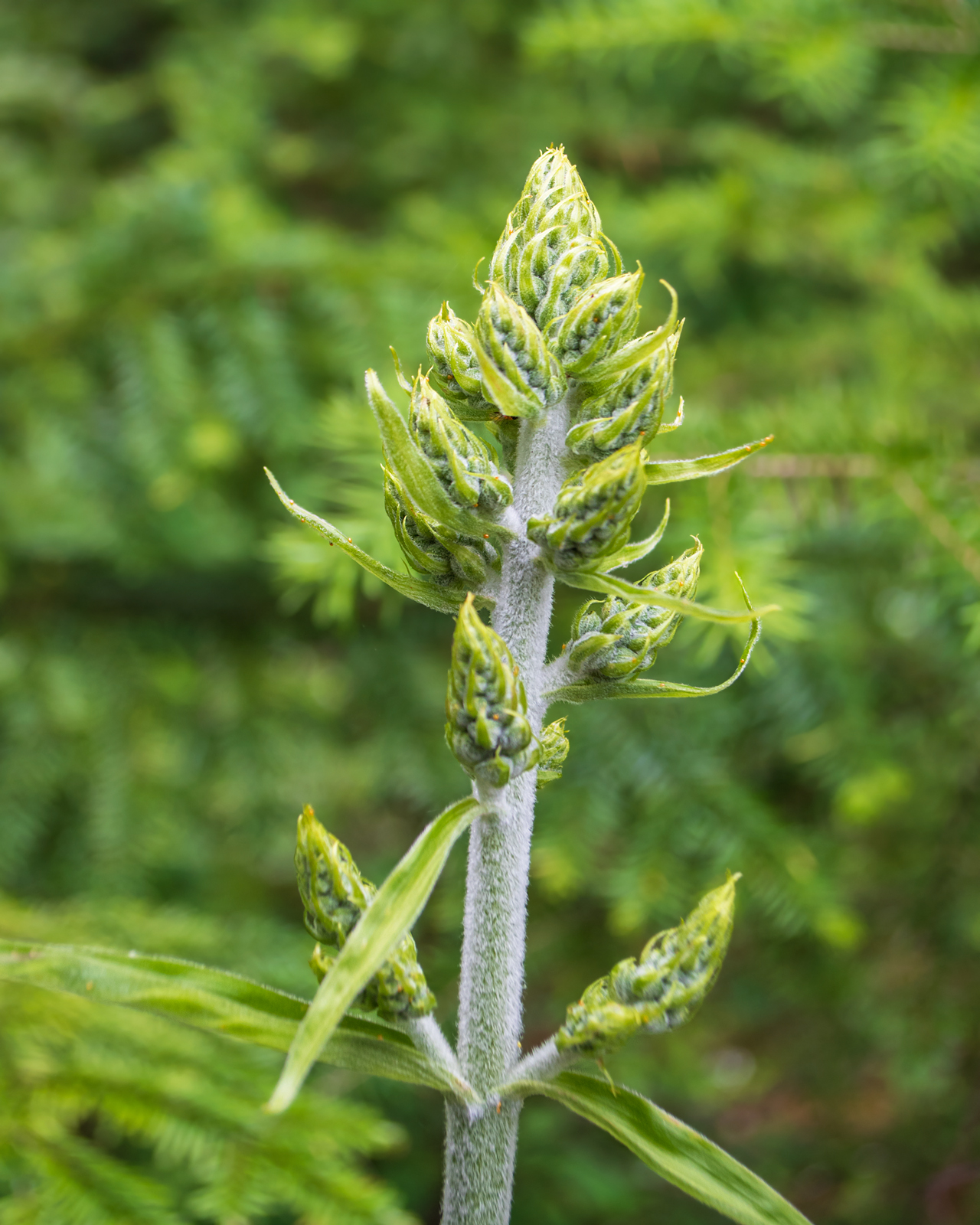
The flowers will be pink to purplish, borne on those tall stalks.

And that's it for this visit to Paradise Meadows. I will go back asap.

~~~~~~~~~~~~~~~~~~~~~~~~

Las Praderas Paraíso constituyen un pantano, o en algunos sitios, lagunas. Las plantas que allí crecen son amantes del agua, algunas más que otras. A los Menyanthes trifoliata, a los que llamamos frijol de pantano, les gusta el agua hasta los tobillos.

Primera foto: Laguna Grande, en el círculo Centenario, con los frijoles.

Segunda foto: las plantas, vistas desde el punto más cercano en el camino. 

Las flores son blancas, en forma de estrella, con pelos. El fruto se parece a un frijol café. Y flota.

Florecen desde mayo a junio. Llegué tarde para ver las flores.

La tercera foto son Sanguisorba menziesii. Las flores, de color rosa a un rojo morado, se llevan en esos tallos largos. Para estas, llegué temprano; no se abrían todavía.

Y estas son las últimas fotos de esta visita a las Praderas. Regresaré tan pronto pueda.

Evergreens of Paradise Meadows

Still on the hill, at Paradise Meadows: a few of the trees. Most of the trees at this elevation (1100 m.) are different species than the ones we see at sea level.

From the Paradise Meadows brochure: "... typical high elevation species, most not found at lower elevations: yellow cedar, Chamaecyparis nootkatensis (rather than redcedar); mountain hemlock, Tsuga mertensiana (rather than western hemlock); amabilis fir, Abies amabilis (rather than Douglas-fir); ... subalpine fir, Abies lasiocarpa." (I have added the species names.)

The two pines, white pine and shore pine, as is the western hemlock, are also found lower down.

I'm not sure which these are; not without a close inspection with a key in my hand.

The edge of the forest, by the Centennial Loop.

Completely festooned by lichens.

Moss patterns on the trunks.

~~~~~~~~~~~~~~~~~~~


Más fotos de las Praderas Paraíso; árboles alrededor del primer círculo. La mayoría de los árboles aquí en la montaña son de especies diferentes de los que vemos al nivel de mar.

Del folleto distribuído por las Praderas Paraíso: " ... especies típicas de las elevaciones mayores, por la mayor parte que nos se encuentran a altitudes menores: cedro amarillo, Chamaecyparis nootkatensis (en vez de cedro rojo); hemlock de montaña, Tsuga mertensiana (en vez de hemlock del oeste); abeto amabilis, Abies amabilis (en vez de abeto de Douglas); ... abeto subalpina, Abies lasiocarpa." (Yo he añadido los nombres científicos.)

Los dos pinos, pino blanco y pino de la costa, tanto como el hemlock del oeste, que también se hallan aquí, se encuentran igualmente en elevaciones menores.

No puedo identificar los árboles de estas fotos, ya que no los pude examinar de cerca, y con una clave en mano.

Segunda foto: un árbol completamente cubierto de líquenes colgantes.

Tercera foto: musgos en los troncos formando diseños regulares.

Thursday, July 29, 2021

Iffy

There are so many strategies for finding food! Here's another:

Bracted lousewort, Pedicularis bracteosa, aka Wood betony.

(This is one of the reasons I wanted to go back to Paradise Meadows; I didn't know what I was looking at, and took photos of the general area. Just lucky to have caught this one sort of in focus.)

Bracted lousewort is a hemi-parasitic plant. It gets some of its nutrients from the soil, but also taps into the roots of neighbouring plants, among these, grasses and groundsels.

It grows in alpine and semi-alpine wet meadows, in full sun. The flowers can be from a pale yellow to purple, and the leaves are green to pinkish.

Here, the leaves are almost red. And I chopped the top off the flower stalk.

The name, lousewort (louse weed) refers to the folk legend that claimed that livestock that browsed on the plant acquired lice. Or maybe there's an alternate explanation; an infusion of lousewort was used to rid people of lice.

The entire plant is edible. But maybe not. It depends on whether it has gathered its nutrients from harmless or from poisonous plants, like the groundsel that grows nearby in Paradise Meadows.

~~~~~~~~~~~~~~~~~~~~~~~

¡Tantas maneras que hay de adquirir los nutrientes! Aquí hay otra.

La planta Hierba piojera, Pedicularis bracteosa, es hemiparásita, o sea, recibe parte de sus sustancias nutritivas del suelo donde crece, pero también depende de nutrientes que roba de las hierbas alrededor, tales como los pastos, y los senecios.

Crece en praderas húmedas alpinas o semi-alpinas. Las flores son desde un amarillo pálido hasta moradas.

El nombre, hierba piojera, se refiere a la antigua leyenda que cuenta que el ganado que se alimenta en campos con piojera, terminan infestados de piojos. O en cambio, puede deberse a que se usaba una infusión de la hierba como lavado para matar los piojos en los humanos.

La piojera se puede comer. Pero tal vez sea mejor no intentarlo, porque depende de donde ha adquirido sus nutrientes. Si estaba parasitando los pastos, está bien. Pero si ha tomado el alimento de plantas venenosas, como el senecio que crece en las cercanías en las Praderas Paraíso, la piojera puede llevar el veneno.

(Las fotos son muy malas; por esto quería regeresar a las praderas. No sabía que es lo que miraba, y sacaba fotos al azahar. Por suerte una que otra salió enfocada.)


Wednesday, July 28, 2021

Beautiful and deadly

They call it corn lily. And it does look, at first glance, like an enthusiastic cornstalk.

False hellebore, Veratrum viride. AKA bear corn, itchweed, devil's bite, etc.

It's not corn. It's a member of the lily family, and extremely poisonous. But it is beautiful, with those wide, glossy, pleated leaves.

Photo of a photo in a Paradise Meadows handout.

Every site I looked at discusses the toxicity of this plant; all parts of the plants are violently toxic to humans and livestock.

It is plentiful in the Paradise Meadows. "Plants of Coastal British Columbia" says it is "most abundant at subalpine elevations, in cold wet meadows and at late snowmelt patches in the forest."

It wasn't in flower when I visited a couple of weeks ago; the buds were just forming at the tips of the tall stalks.

Beginnings of a flower cluster. With beetle.

Zooming in on that beetle. I don't know if the pink is part of the beetle, or the light glinting off its shiny head.

And another cluster of buds. With orange mites.

Zooming in again. Many orange mites, and something leggy, orange and black. A spider?

~~~~~~~~~~~~~~~~~~~

La llaman, entre otros nombres, "maiz de osos", o "lirio de maiz". Y por cierto, a primera vista se parece al maiz. Un maiz que crece con entusiasmo, con hojas grandes, brillantes, y plegadas.

Pero es una planta de la familia de los lirios, Veratrum viride, y es extremadamente venenosa. (Unos le dan el nombre de "mordida del diablo". Crece abundantemente en las Praderas Paraíso; le gustan los campos frios, mojados, sitios donde la nieve persiste hasta bien entrada la primavera.

Cada sitio que vi, y mi libro guía, hacen hincapié en la toxicidad de esta planta. Todas las partes de la planta son venenosas para los humanos y los animales.

No estaba en flor cuando llegué hace quince dias; apenas empezaban a aparecer los botones.

Las fotos:

  1. La planta entera
  2. Una foto de una foto en un folleto que publica Praderas Paraíso.
  3. Botones. Con un escarabajo.
  4. Haciendo zoom para mirar el escarabajo.
  5. Otros botones. Estos con unos ácaros anaranjados.
  6. Zoom. Los ácaros y otro bicho anaranjado con negro. ¿Una araña tal vez?/

Tuesday, July 27, 2021

Boardwalk

 An easy walk: the Centennial Loop at Paradise Meadows.

The wide boardwalk in this first loop.

On some maps it's called the Old Cabin Loop. But I didn't see any cabins.

Paradise Ponds.

I had intended to go back this weekend and walk the next loop, but I've hurt my knee rather badly. An old injury, reactivated: it will get better, but slowly. I'll hope for the early fall, before the snow.

~~~~~~~~~~~~~~~~~~~~~~~~

Fotos del primer círculo de caminos en las Praderas Paraíso; una caminata fácil. Lo llaman el Sendero del Centenio; otros mapas lo denominan "El Sendero de la Cabaña Vieja." No vi ninguna cabaña.

Había planeado regresar este fin de semana para seguir adelante al segundo círculo, pero me he torcido la rodilla malamente. Es una trauma angtigua que se reanuda. Mejorará, pero con tiempo. Espero poder regresar en otoño, antes de que empiece a nevar.


Monday, July 26, 2021

Insectivore

 About midway around the first loop at Paradise Meadows — the boardwalk is a few feet above the soggy ground here — I noticed a few small blue spots down among the grasses. They were too small and far away to see clearly, but I took a few photos.

(Next time, I'll lie down on the boardwalk and hang the camera down at arm's length.)

Common butterwort, Pinguicula vulgaris

It's carnivorous! A bug-eater.

The leaves form a greenish-yellow star shape at the base of the plant, lying flat against the soil. The purplish flowers are carried one at a time at the top of a leafless stalk.

The leaves are the insect-catchers. The top of each leaf is covered with sticky, slimy hairs; insects that venture onto the leaf get stuck, then the leaf margins roll inward, preventing escape while the plant's digestive juices do their work.

Leaf surfaces contain two types of glands. Stalked glands are tipped with globular, mucilaginous (sticky) secretions and sessile glands release digestive enzymes. Small insects landing or crawling on the leaf surface become increasingly mired in the sticky, honey-like secretion, which stimulates the release of digestive enzymes. The prey gradually becomes pooled in digestive juices, and these nutrients (including phosphorus) are gradually absorbed into the leaf. It is also suggested that other nutrient rich substances, including pollen, are also digested and utilized by the plant. Leaves also produce a bactericide that retards the insects from rotting while they are being digested. (Minnesota Dept. of Natural Resources)

There was a sign in another spot, but there were no butterwort plants visible near it.

~~~~~~~~~~~~~~~~~~~

En el primer círculo alrededor de las praderas Paraíso, donde el paseo de tablas nos lleva arriba de la vegetación del pantano, vi entre las hierbas allá abajo, unos puntitos azules, demasiado lejos para mis ojos. Saqué unas fotos para verlos mejor en casa.

(La próxima vez, me voy a tirar sobre las tablas y extender la cámara lo más que pueda.)

Las flores son Pinguicula vulgaris. En inglés las llamamos "butterwort", o sea hierba de mantequilla, tal vez por su uso tradicional para coagular la leche para hacer postres y quesos.

Las hojas forman una estrella amarillenta pegada al suelo; las flores se levantan en tallos sin hojas, una flor por tallo.

Y son carnívoras. Comen insectos.

Son las hojas las que atrapan los insectos, en la parte superior llevan muchos pelos pegajosos; los insectos, atraídos por las secreciones de la planta, no pueden escapar, los bordes de las hojas se enrollan, y los jugos digestivos de la planta disuelven los nutrientes.

"Las superficies de las hojas contienen dos tipos de glándulas. Glándulas con pedúnculos llevan secreciones en forma de globo, mucilanigosas, y las glándulas fijas producen enzimas digestivas. Insectos pequeños que aterrizan o se arrastran sobre la superficie de la hoja se adhieren cada vez más en las secreciones pegajosas, que se parecen a la miel, y esto estimula la secreción de enzimas digestivas. La presa poco a poco se ahoga en jugos digestivos, y sus nutrientes (que incluyen el fósforo) son absorbidos gradualmente por la hoja. Se ha sugerigo que otras sustancias ricas en nutrientes, incluyendo el pólen, también se asimulan. Las hojas también producen un bactericida, lo que previene el pudrimiento del insecto mientras está en proceso de digestión." (Minnesota Dept. of Natural Resources)
Segunda foto: había un letrero, pero en otro sitio, y no había ninguna de estas plantas en las cercanías.

Sunday, July 25, 2021

Shrinking lupines

A few kilometres north, a few hundred metres higher; it makes a difference. In open spaces near our coast here on Vancouver Island, the lupines grow to a metre and a half tall. Their leaves are wide, the flowers densely packed along a long stalk. Taking the highway north, I find smaller lupines, the Nootka lupines, shorter, with smaller leaves; they can reach 1 metre tall. Up on the slopes of Mount Washington, the Arctic lupine grows; the leaves are smaller, with half as many leaflets, the flower stalks barely 60 cm. tall, with a few flowers on each stalk.

Other than that, lupines are lupines.

Arctic lupines, Lupinus arcticus, in Paradise Meadows, 1100 metres above sea level.

6 to 8 leaflets, a few flowers per stalk.

And a long-bodied spider. I think it may be one of the Tetranathidae family.


Saturday, July 24, 2021

While the sun shines

 Vancouver Island's Mount Washington stands at 1588 m. above sea level. Paradise Meadows, on its southwest slope, lies 500 metres below the peak. The climate is harsh, the growing season short. Snow lay on the meadows still this June; in October, it will be snowing again. Most of the summer plants are short; all will spend the winter completely buried in snow. Trees, that have to survive above the snow all winter, grow slowly, break and die under the weight of snow and the bitter winds. They cluster together in islands for protection.

In the meadow, small plants flower and make seeds quickly; time flies.

Bunchberry, cornus canadensis. The flowers are tiny, greenish. The four white bracts make them look like a single flower. The berries will be red.

Deer cabbage, Fauria crista-galli. The flowers are white mountain heather, and the smaller, paler leaves are Bog blueberry, Vaccinium uliginosum.

Sitka burnet, Sanguisorba canadensis.

Pink and white mountain heathers. Cassiope mertensiana and Phyllodoce empetriformis. 

False asphodel, Tofieldia glutinosa.

Ignore the sign: the groundsel is the larger plant at the left; its flowers are yellow. The small white flowers are probably more False asphodel, and there is one starflower hiding under the sign.

Another view of the meadow, sprinkled with white flowers, probably Sitka burnet, possibly False asphodel.

~~~~~~~~~~~~~~~~~~~~~

El Monte Washington, en la Isla Vancouver, se alza a 1588 metros sobre el nivel de mar. Las praderas Paraíso, en su ladera al sudoeste se extiende al nivel de 1100 metros, 500 metros más bajo que la cumbre. El clima es severo, el verano corto. Todavía había nieve en las praderas este junio, y para octubre, empezará a nevar de nuevo. La mayoría de las plantas estivales son bajitas; todas pasarán el invierno completamente cubiertas de nieve. Los árboles, que tienen que aguantar el invierno por lo menos parcialmente expuestos al clima, crecen lentamente, y se rompen y se mueren bajo el peso de la nieve y el impacto de los vientos fuertes y heladas. Crecen en "islitas" para protegerse.

En la pradera, plantas pequeñas florecen y producen sus semillas rapidamente. El tiempo vuela.

  • Bunchberry, Cornus canadensis. Las flores son miniaturas, de un verde pálido; las cuatro brácteas alrededor hacen que el conjunto parece una sola flor.
  • Col de venado, Fauria crista-galli. Las flores blancas son brezo, y las hojas ovaladas son de arándano de pantano.
  • Sitka burnet, Sanguisorba canadensis.
  • Dos brezos, blanco y color de rosa.
  • Asfódelo falso, Tofieldia glutinosa.
  • El letrero pertenece a la planta a la izquierda; sus flores son amarillas, y no se ven. Las flores blancas probablemente son el asfódelo, y hay una sola flor estrella.
  • Otra vista de las praderas, salpicadas con flores blancas, probablemente Sitka burnet o asfódelos.


Powered By Blogger