Showing posts with label flies. Show all posts

Friday, July 10, 2026

It's a buggy time of year

I take a camera to bed with me. Because tiny critters like my night light and bask there, just beside my headboard. So I take their photos. Of course.

Here are some of the ones that have turned up recently.

One of the Gall and Forest midges. The arrow points to one of the halteres.

The Diptera (two-winged), are flying insects; most of our flies, crane flies, hover flies, mosquitos, etc. Most other winged insects have 4 wings, but in the Diptera, the second pair of wings has evolved to become tiny, vibrating clubs, the halteres; they work as flight stabilizers and may help with steering.

A tiny yellow fly with multi-coloured eyes. Chyromya sp.

A female Bee Moth, Aphomia sociella

On the lampshade; a small crane fly, infraorder Tipulomorpha. A male; females have a pointed tip to the abdomen.

A weevil, one of the Snout and Bark beetles.

And a couple of visitors from other spots:

A woodlouse spider on my carpet. Dysdera crocata.

And outside, on my garden wall; a Brown-lipped snail, Cepaea nemoralis.

More beasties to come; it's a buggy time of year.

~~~~~~~~~~~~~~~~~~

Llevo la cámara conmigo a la cama. Porque a muchos insectos les atrae la luz de mi lámpara de noche; se "asolean" allí, en la pared al lado de mi cama. Y, claro, les tengo que sacar fotos.

Estos son unos de los que me han visitado recientemente.

  1. Un mosquito pequeño (jején). La flecha indica uno de los halterios. El orden Diptera (que significa dos alas) incluye los insectos voladores con 2 alas, como por ejemplo, los Tipula, las moscas comunes, los mosquitos, los sírfidos. Otros insectos voladores tienen 4 alas; en el orden de los Diptera, el segundo par de alas se ha convertido en estos halterios, que les sirven para estabilizar el vuelo y pueden ayudar a dirigir la dirección del vuelo.
  2. Una mosca dorada con ojos de muchos colores. Chyromya sp.
  3. Una mariposa nocturna, "Mariposa abeja", hembra, Aphomia sociella
  4. Una Tipula chica. Este es un macho; el abdomen de las hembras tiene el extremo puntiagudo.
  5. Un gorgojo.
  6. Y en otro sitio; una araña Dysdera crocata.
  7. Y en mi jardín, un caracol "Margen marrón", Cepaea nemoralis.
Para mañana, tengo otros insectos; estamos en una temporada del año llena de criaturitas.


Friday, August 18, 2023

Ad infinitum

The house is quiet, the lights are switched off. Only the small lamp on my bedside table remains. And becomes the go-to gathering place for tiny moths and flies and newly-hatched spiderlings. Too tiny for the camera, most of them; too small to be seen except as specks unless I'm a few inches away. A miniature fly, barely a couple of millimetres long, sits on the wall just below the lampshade. So perfect, with its tiny, glittery wings, those outstretched antennae; is it a fly or a wasp? Too small to be sure. I come closer and it's gone.

A moth spirals up towards the bulb, stops for a second on the inner edge of the shade, then disappears. Another rests for a moment on the lamp base; it's about 5 mm. long, a big one for this location. Almost black wings, held closed; I don't see them move when the moth leaps away.

A baby cellar spider, almost transparent, long legs just a hint of movement, walks down the wall. I come a bit closer, and she's gone. I search everywhere; no sign of her.

There's an air filter going full blast under the table. When I clean the filter, it's full of winged specks; I need a lens to see the wings. Moths and flies again. Spiders never seem to be caught.

Great fleas have little fleas upon their backs to bite 'em, And little fleas have lesser fleas, and so ad infinitum. (Augustus De Morgan)

We live in a busy world.

One moth, larger than most, sits still while I fetch the camera.

Still only a few millimetres long. But very much alive and involved with her world.

~~~~~~~~~~~~~~~
La casa está en silencio, las luces apagadas. Solamente sigue prendida la lamparita en la mesilla de noche. Ahora es el sitio popular de reunión para mosquitas y palomillas miniaturas, arañitas recién nacidas. Demasiado pequeñas para que la cámara las llega a enfocar, por la mayor parte; tan chiquititas que apenas se ven desde una distancia de unos cuantos centímetros. Una mosca que mide tal vez 2 milímetros reposa en la pared debajo de la pantalla. Tan perfecta es, con sus alitas destellantes, esas antenas extendidas; ¿será una mosca, o una avispa? Me acerco para mirar mejor, y ya se fue.

Una palomilla sube hacia el foco, y se detiene un segundo en el borde de la pantalla, y luego desaparece. Otra descansa por un momento en la base de la lámpara; una palomilla más grande, casi unos 5 milímetros de largo. Tiene las alas casi negras, las mantiene cerradas; no veo que se muevan cuando salta y se va.

Una arañita Pholcus phalangioides, nuevecita, casi transparente, con esas patas largas que apenas se ven como movimiento sin forma, baja por la pared. Me acerco; ya no se ve. Busco por todas partes, pero no la encuentro más.

Bajo la mesilla tengo un purificador de aire operando a todo volumen. Cuando limpio el filtro, lo encuentro lleno de puntitos con alas; solo con una lente de aumento puedo ver las alas. Son palomillas y moscas; parece que las arañas se escapan.

Las grandes pulgas tienen pequeñas pulgas en la espalda para morderlas, Y las pulgitas tienen pulgas menores, y así hasta el infinito. (Poema por el matemático Augustus de Morgan)
Vivimos en un mundo muy lleno.

Una palomilla, más grande que la mayoría, se queda quieta mientras voy por la cámara.

Foto: la palomilla. Apenas medio centímetro de largo, pero muy viva, muy centrada en su mundo.


Wednesday, August 10, 2022

Dust speck flies

From one extreme to the other. Yesterday, I was looking at huge cliffs beside the highway; today it's the tiniest of the tiny companions at home.

I had been reading: fine print and fuzzy illustrations on my Kindle. I was resting my eyes staring at the empty wall, when I realized that a speck of dust seemed to have wings. I grabbed the camera: it sees better than I do. And when that dust speck turned out to be a fly, I went searching for more.

Tiny fly, 2mm.

This one's a bit bigger. Gall midge, Cecidomyiidae spp.

And this is a small mosquito. With cross-hatched wings.

The largest of them all, 1 cm. long, wings and all. Dead, in a spider's web. Look at the wings; the curves and the spots.

#UPDATE: Identified by BugGuide as a Hairy-eyed crane fly, Tricyphona spp.

And this was the tiniest; a bathroom moth fly, under 2 mm. long.

For variety, there was also a tiny click beetle.

I occasionally see a running speck, a spider out hunting. Or a cellar spider, all legs and a pinprick body. And I wonder what they could be finding to eat. This is it; dust speck flies.

~~~~~~~~~~~~~~~~~~~~~~~~

Paso de un extremo al otro. Ayer, miraba acantilados gigantes al lado de la carretera; hoy, los más pequeños de mis compañeritos en casa.

Había estado leyendo un ensayo en mi Kindle, en letra fina y con fotos algo borrosas; ahora descansaba los ojos mirando hacia la pared. Y me di cuenta que una manchita de polvo parecía tener alas. Saqué la cámara, que ve mejor que yo. Y cuando ese "polvo" resultó ser una mosca, di la vuelta buscando más.

Fotos:

  1. Esa primera mosca; 2mm. de largo.
  2. Otra mosca, un poco más grande, un cecidómino.
  3. Esta es un zancudo chico.
  4. Y la más grande de todas; esta medía como 1 cm. Ya muerta, comida de arañas. Pero observa esas alas; las curvas y las manchas.
  5. Y la más pequeña; una polilla de baño, Clogmia allbipunctata.
  6. Había también un escarabajo, uno de los saltapericos.
De vez en cuando veo un puntito negro que corre; una arañita cazando. O un fólcido con sus patas largísimas y el cuerpo apenas del tamaño de una cabeza de alfiler. Y se me ocurre preguntar —¿qué hallan para comer? — Pues, esto es; moscas tamaño polvo.

Saturday, May 25, 2019

Wings like petals

Better late than never: it's almost June, and the weather gods think it's summer. Everything is in bloom. The streets are lined with flowers, red, pink, yellow, lilac, white. And I'm still processing photos from when it was still spring, three weeks ago.

The indian plum had just burst into flower at Oyster Bay.

And they had company.

I didn't see them at first; the two (and a head) flies on these flowers have white wings that look almost like indian plum petals themselves.

Zooming in on that photo.

In another couple of photos, mostly out of focus, I could see that the flies have a striped abdomen, and, I think, reddish eyes.

Their friends and families were hanging out on the crabapple blossoms.

Five crabapple flowers, a dozen flies. That big monster hiding in the background is an ant; these flies are tiny! Three of them are nose down in the center of the first flower, as if drinking from a fountain. (Click to see the photo full size.)

Back to work: I've got some moss photos to crop and clean (sand on the lens) and a batch of wasp photos still in the camera. I'll catch up one of these days.

Wednesday, March 27, 2019

Empty shore?

It looks bare, but it's full of life.

Gulls, rocks, worms, rockweed. And mist.

But the sand is full of worms, and their hopeful feeding tubes.

Walking over this "bare" sand, every few steps, I get sprayed by an invisible resident just under the surface, reacting to the vibration of my steps and retreating quickly to a deeper level.

The stony end of the beach, colour-coded.

The bright green areas are sandstone with maybe half an inch of green algae on top. Brown areas have about an inch of another seaweed; brownish green is rockweed, maybe two inches deep. And the tan areas are sandstone, the only safe place to put down a foot.

The green algae are as slippery as wet ice; the brown algae is worse; it's like wet ice with a coating of slush on top. Rocks roll; they're just loosely scattered on the sandstone. Stepping a bit more confidently on a patch of rockweed - silly me! - I slipped and ended up sitting in a hollow in the rock, which luckily halted my fall before I twisted anything major.

It's not a human-friendly location. But there are tiny fish in every pool, crabs under the rocks, barnacles and limpets and tiny snails everywhere.

Limpet and barnacle community on the sheltered side of a rock.

The underside of the rocks are bursting with life. Here, a large striped whelk, with a little periwinkle on its tip, a dead clam wearing a pair of limpets, assorted seaweeds, barnacles, and everywhere you look closely, more periwinkles. If you look inside that empty clamshell, you may find a surprising assortment of critters; hermits, crabs, worms, amphipods, limpets, you name it. On the deep underside of the rocks, a few starfish cling, and plumose anemones dangle loosely, waiting for the water to return.

Around the drier rocks, a swarm of tiny flies flitted and danced, almost never stopping. (How do they eat, if they never stand still?) Whenever I stopped to look at anything, the flies moved over to circle my head, tickling a bit, but never landing.

I tried to find one stopped to get a better look, but finally gave up and shot several dozen photos of a spot where they were congregating. I caught two of them:

Long legs and it seems that the wings are striped, or spotted.

And maybe a striped abdomen as well.

I don't know what they are. Nor where they go when the tide comes in. Do they sleep on the bare rocks of the breakwater until the water leaves again?


Thursday, October 26, 2017

It's mushroom (and bug) season

I was sure I'd seen a spider. I was searching through the new growth and the logging slash on a recently cleared site, looking for the last few spiders I need to complete the month of Arachtober. And I knew I had pointed the camera at one. But where was it?

It had been too fast for my shutter finger. I enlarged all my photos and peered at them, looking for even a trailing leg; nothing! But it wasn't wasted effort: I found spider food. Tiny bugs!

White and cream mushrooms. With bluish springtails, a couple of globular springtails (one brown, one orange), and a startling blue fly.

These mushrooms are coated with a jelly-like orange varnish.

Zooming in. A red-eyed fly above, and a tiny, patterned bug on the mushroom.

No critters on this beige mushroom.

Nor on these. They were all too busy on the creamy/orange ones.

A different species of orange mushrooms. The critter here is down on the piece of wood beneath them, too blurry to make out. But it's long, has two antennae visible, and a segmented body. I wish I'd focused on the wood, rather than the mushrooms.

And I eventually got my spider for today's Arachtober entry; he came to my door in the middle of the night.

Crane fly patrol.


Sunday, July 29, 2012

The honeydew eaters

Linden trees, says Wikipedia,
"... are subject to the attack of many insects."
It's all the trees' doing; the sap flows richly and freely in its veins, easily tapped into, nutrient-rich, sweet and fragrant. Aphids harvest it, and serve it up to a throng of other insects.

Linden tree branch, with yellow jacket

Aphids, varying ages, and a molted skin.

The aphids that feed on linden are the Eucallipterus tiliae, the Linden Aphid. The new hatchlings are white or pale green, red-eyed. They develop their characteristic dark spots and stripes as they go from molt to molt. Some adults are winged.*

The thing about aphids is that they eat more than they use, and "spill" the excess. (The proper word is "exude", and the honeydew they produce is an exudate.) The nectar coats the leaves, dripping from branch to branch; the leaves become sticky. Sometimes the whole tree glistens and sweet rain falls to the ground beneath, feeding a black fungus in the grass.

And so the food chain goes, from the lawn to the tree to the aphids, to the ants that farm them and the ladybugs that prey on them, to the horde of winged critters feasting on the lot, and back to the ground to start the next cycle.

Ant on a twig

I cheated: two sizes of ants run up and down the trunk, along the branches, across the leaves. Run and run and run and run. I was having trouble getting one where I could focus on it. So I mashed a raspberry with a bit of water and sugar, and painted a stripe around the trunk, where they couldn't miss it. Five minutes later, the large ones were lining up for the treat.

Dessert bar

Ladybugs don't wait for the aphids to produce honey. They take their juice "on the hoof", with fresh aphid meat.

Medium-sized ladybug larva. The orange deepens as they grow.

Younger larva.

And a nineteen-spot adult.

Of course there are always flies.

Very small fly, unidentified.

Accidental fly. I was chasing the yellow jacket, and didn't notice the silhouette of a common fly on the back side of a leaf until later.

There's a small mob of tiny biting black flies, rarely photographed because I'm so busy swatting them before they bite, and usually being too slow.

I don't know what's hiding under this silky tunnel. Probably a pupating moth.

The wasps - dozens of them as long as the sun shines - flit from leaf to leaf, sipping nectar off the leaf surfaces, and looking for a good home for their babies, inside a caterpillar or spider.

Black and yellow mud dauber, I think.

I caught this wasp with the butterfly net, and had to chill him to calm him down. He woke up almost as soon as I brought him out; within a minute he was on his feet and heading for the door. This photo catches him just stretching and yawning.

The female wasps will build a series of one-egg mud nests. With each egg, they will deposit a paralyzed spider, then plaster over the entrance. The larva will hatch and eat the still-living spider.

The orange wasp, again. She's a ichneumon wasp, Theronia atalantae fulvescens.

These wasps prey on several moths and butterflies, notably the pine butterfly, a relative of the cabbage white. I may have seen these about and mistaken them for cabbage whites; they are very similar. The wasp also takes tussock moths and tent caterpillars.

In all the time I spent examining the tree this year, dodging wasps the whole time, I saw only one spider, and one very small caterpillar. It looks like the wasp babies are well provided.

And a tiny wasp, unidentified. It may prey on the larvae and larva food of the larger wasps.

The bark is juicy, too. I don't know what makes these tooth marks. Squirrel, maybe? An ant in the lower right corner shows the size.

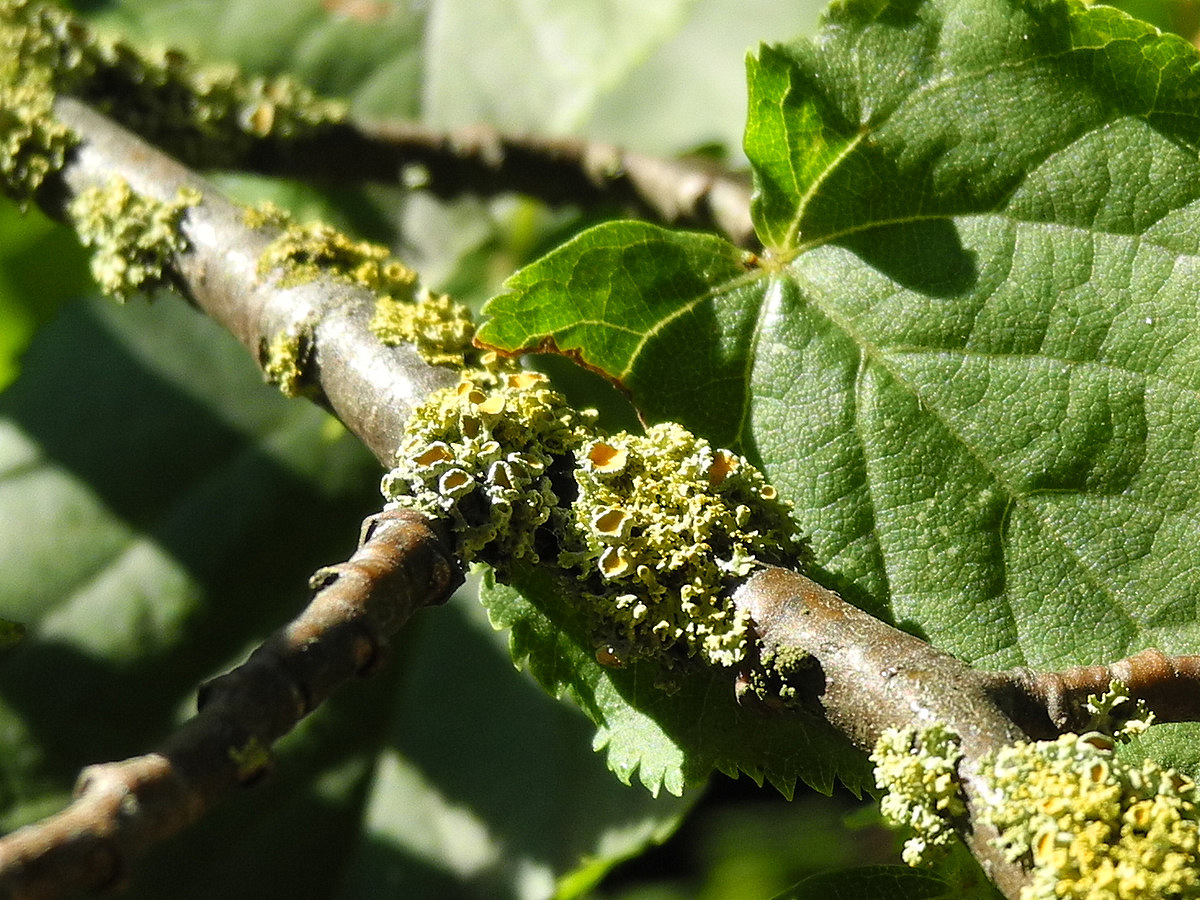
Lichen on a small branch. Just because.

*Last year's post about this same tree, with larger aphid pics, is here.


Tuesday, September 20, 2011

So that's how they do it!

A  crane fly has waited on my window several mornings in a row, begging to have his photo taken. I finally obliged, and he went away. He hasn't been back to see the proofs yet.

Outside view, with flash and quadruple reflections.

From the inside, no flash.

Since this spring, I have been working my way through a college textbook on invertebrates. (Living Invertebrates, Pearse/Buchsbaum) It's a fascinating read. A few weeks ago, I came across this fact: see those two little knobs sticking out from the sides of the crane fly? They are all that remain of the second pair of wings many other insects (bees, beetles, dragonflies, butterfies, etc.) have. The flies belong to the order Diptera, meaning "two-wings"; they only have one pair of wings and these useless-looking knobs.

That I knew; what astounded me was that, if you cut off these tiny halteres, the insect can't fly.

The halteres serve as balancing rods and part of the fly's guidance system. Both of them flap up and down when the wings do, but out of phase with the wings, each one vibrating, as well, in a different plane. As the fly's body turns in flight, sensory organs at the base of each haltere register the resistance of the knob to this change; this information enables the flies to control their flight, and incidentally, to thumb their noses at me and my fly swatter.*

This kind of work revealed why, while fleeing a rolled-up newspaper, for example, a fly can carry out a right angle turn in as little as 30 thousandths of a second. The secret seems to rest in their halteres, a pair of club-shaped organs that beat out of phase with the wings. Prof Dickinson found they act as critical way-stations for information from the insect's brain, taking visual cues from the eye and then relaying them to wing-steering muscles, in addition to making counter motions to help to end a turn. (From The Telegraph, 2005)

*Used mainly for mosquitoes. Which escape to bite another day, as often as not.


Wednesday, May 04, 2011

Red, white and blue accents for the garden

I picked up a few new additions to my shade garden; first, a flat of annual begonias, which always do well here, blooming until the first hard frost as long as they get a touch of sunlight every now and then. Then there are three petunias, red, yellow and strawberry; I've never grown them here, so this is an experiment. And Bacopa, which I'd never heard of, but are supposed to like moderate shade. We'll see.

Strawberry petunia.

Bacopa sutera, "Snowstorm". Likes moist soil, drapes prettily over the edges of pots.

Not a flower. These flies buzzed all over the rhododendrons. Where the sun shone on them, their backs were a brilliant blue.

Powered By Blogger