Showing posts with label ladybug larvae. Show all posts

Friday, July 12, 2013

"Spike"

The ladybugs are back, and feasting on aphids in the linden tree.

Here's a fat larva, with aphid gut dinner.

Messy eater.

More members of the family coming tomorrow.

Sunday, July 29, 2012

The honeydew eaters

Linden trees, says Wikipedia,
"... are subject to the attack of many insects."
It's all the trees' doing; the sap flows richly and freely in its veins, easily tapped into, nutrient-rich, sweet and fragrant. Aphids harvest it, and serve it up to a throng of other insects.

Linden tree branch, with yellow jacket

Aphids, varying ages, and a molted skin.

The aphids that feed on linden are the Eucallipterus tiliae, the Linden Aphid. The new hatchlings are white or pale green, red-eyed. They develop their characteristic dark spots and stripes as they go from molt to molt. Some adults are winged.*

The thing about aphids is that they eat more than they use, and "spill" the excess. (The proper word is "exude", and the honeydew they produce is an exudate.) The nectar coats the leaves, dripping from branch to branch; the leaves become sticky. Sometimes the whole tree glistens and sweet rain falls to the ground beneath, feeding a black fungus in the grass.

And so the food chain goes, from the lawn to the tree to the aphids, to the ants that farm them and the ladybugs that prey on them, to the horde of winged critters feasting on the lot, and back to the ground to start the next cycle.

Ant on a twig

I cheated: two sizes of ants run up and down the trunk, along the branches, across the leaves. Run and run and run and run. I was having trouble getting one where I could focus on it. So I mashed a raspberry with a bit of water and sugar, and painted a stripe around the trunk, where they couldn't miss it. Five minutes later, the large ones were lining up for the treat.

Dessert bar

Ladybugs don't wait for the aphids to produce honey. They take their juice "on the hoof", with fresh aphid meat.

Medium-sized ladybug larva. The orange deepens as they grow.

Younger larva.

And a nineteen-spot adult.

Of course there are always flies.

Very small fly, unidentified.

Accidental fly. I was chasing the yellow jacket, and didn't notice the silhouette of a common fly on the back side of a leaf until later.

There's a small mob of tiny biting black flies, rarely photographed because I'm so busy swatting them before they bite, and usually being too slow.

I don't know what's hiding under this silky tunnel. Probably a pupating moth.

The wasps - dozens of them as long as the sun shines - flit from leaf to leaf, sipping nectar off the leaf surfaces, and looking for a good home for their babies, inside a caterpillar or spider.

Black and yellow mud dauber, I think.

I caught this wasp with the butterfly net, and had to chill him to calm him down. He woke up almost as soon as I brought him out; within a minute he was on his feet and heading for the door. This photo catches him just stretching and yawning.

The female wasps will build a series of one-egg mud nests. With each egg, they will deposit a paralyzed spider, then plaster over the entrance. The larva will hatch and eat the still-living spider.

The orange wasp, again. She's a ichneumon wasp, Theronia atalantae fulvescens.

These wasps prey on several moths and butterflies, notably the pine butterfly, a relative of the cabbage white. I may have seen these about and mistaken them for cabbage whites; they are very similar. The wasp also takes tussock moths and tent caterpillars.

In all the time I spent examining the tree this year, dodging wasps the whole time, I saw only one spider, and one very small caterpillar. It looks like the wasp babies are well provided.

And a tiny wasp, unidentified. It may prey on the larvae and larva food of the larger wasps.

The bark is juicy, too. I don't know what makes these tooth marks. Squirrel, maybe? An ant in the lower right corner shows the size.

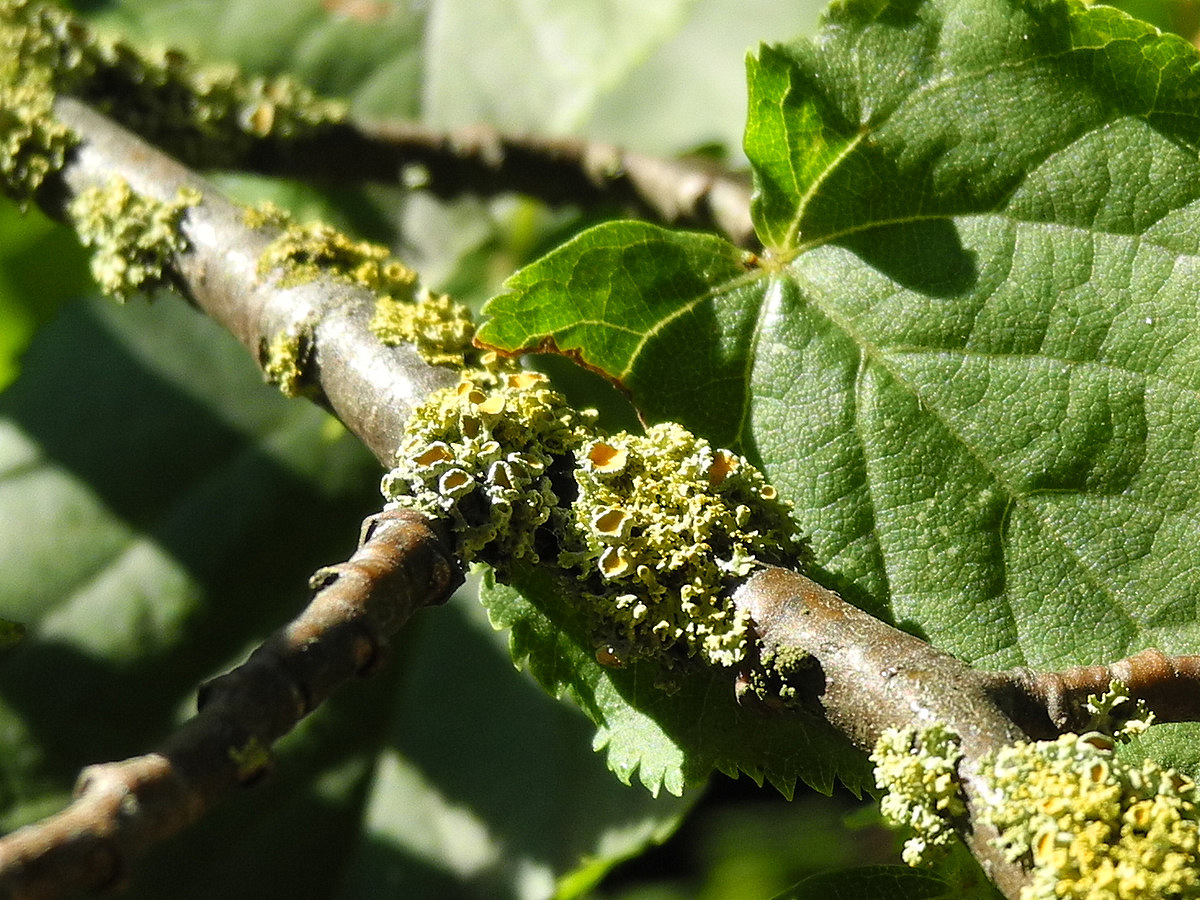
Lichen on a small branch. Just because.

*Last year's post about this same tree, with larger aphid pics, is here.


Friday, July 13, 2012

The view from my desk

I've been busy the last little while, getting ready for company, a wedding, and a week in Campbell River afterwards. I've been carrying my camera everywhere and never taking photos. Traffic isn't all that inspiring, nor are offices and malls.

But in between times, I keep the camera on my desk. And every so often, I look up from the phone or the mail, and see a squirrel hanging by her toes to get at the suet, or a ray of sunlight pointing out a just-opened flower. And sometimes, I take a breather and wander out to the lawn. With the camera in hand, of course.

This evening, just after dark, I looked out, and there was a baby raccoon. A really small baby; I'd never seen one that young before. Such little stubby legs! And the wide-eyed, amazed stare of a baby discovering the world for the first time; so cute!

Then the mother came down the path to take a drink from my bird bath, and four more kits followed her. I rushed out with the camera, but by the time I had it on and focused in the dim light, they were halfway down the lawn, the kits all lined up watching me, the mother trying to lead them away. As the camera finally clicked, they all turned as one and ran off. The photo shows two black blobs. I'm not posting it; you can imagine it; green lawn, black fuzzy blobs.

Laurie came out and we followed them to his hosta and fern garden. There, the kits hid behind a big evergreen trunk and peeped out at us. We stepped closer, cautiously, and the kits started to climb the tree. But they were too young; a few scrabbled at the bottom; a couple managed to get three feet or so above ground, and clung there, uncertain as to what to do next. Finally, they crawled back down, more awkwardly than they had climbed.

The mother left, and the kits, left alone, dashed across the path  one by one, and into the bushes after her.

Some photos do turn out, though. Here are a few backyard sights:

Astilbe. This was a couple of days ago; this afternoon, several red ones had opened up, too.

The underside of a begonia leaf, in sunlight. I saw it glowing from my desk, and had to drop my work and go out to get a better look.

Crow on the lawn

The lawn will never feature in a landscaper's manual; it's a mix of grass, moss, white clover, self-heal, black medic, and creeping buttercups. And hawkweed, but I weed that out conscientiously. And it gets mowed only when the guy who does it is in the mood. We like it. So do the birds.

The flickers are shy and rarely step out of the undergrowth. This one stayed close to safety. I took the photo from my desk; when I finally stood up to go closer, he left.

We pruned a dragging branch off the plane tree, and found several clusters of yellow eggs. And this busy couple of prospective parents.

I brought in a leaf with eggs on it. They were little yellow ovals, standing on end side by side. The next morning, I looked at them again; now they were black.

I didn't have time to check them again until after supper. And the eggs were white, and surrounded by tiny, just-hatched ladybug larvae.

Empty egg cases. Some of the larvae are eating them; two or three are starting to wander about. 

That was last night. This morning, I went back to the tree and harvested a few leaves loaded with aphids for larvae food. I checked the container just now; there are still live aphids, but quite a few dead ones; the larvae are feeding. Some look quite a bit bigger than they were yesterday, already.

Laurie's pansies. I love these angry faces. They remind me of a crowd of protesters, but where are the signs?

A red, red rose.

And now, I'm off to bed. I've got another busy day tomorrow.


Monday, July 18, 2011

Saturday, July 16, 2011

The truth about bugs. And a moth.

"Bugs have no morals!" This was me, half ranting, half laughing this afternoon. Laurie was just laughing.

The story will have to wait until I've put together a bit of a video, say tomorrow or the day after. All I can tell you now is that it involves cannibalistic ladybugs.

Meanwhile, here's a pretty moth, quiet, polite, and innocent of all malice.

It's probably an orange underwing; I saw the flash of colour as it flew away.

Wednesday, July 06, 2011

The hunters, the farmers, and a pair of gadabouts.

A pair of big yellow butterflies has been flitting about the lawn, and I've had the camera close at hand, hoping to catch them at rest. No such luck. I haven't seen them stop yet.

They passed my window again, low down. I grabbed the camera and dashed out. The butterflies flew over the treetops and away. Again.

I was standing there, squinting into the sun, hoping they would come back, when I noticed that it appeared to be raining under a young linden in front of me. A steady rainfall of small drops, but only underneath the tree. I went to investigate. The entire tree is coated in a glistening, sticky fluid; so is the grass underneath.


Each leaf sheltered a number of insects on its sticky underside.

Aphids

Ants ran up and down the trunk and over the leaves. Aphids produce a sweet "honey" that ants prize highly. Some species maintain an aphid farm, and milk their stock regularly, by stroking their backs with their antennae. This doesn't seem necessary on our linden; there's enough honey dripping off the tree to feed any number of ants.

Young aphid, wingless and almost colourless, except for stripes on the antennae.

Older aphid, with dotted abdomen.

Some of the aphids are winged. These may eventually fly to a new tree.

The wings have a dark border and cloudy spots.

Young winged aphid, with the shell of its recent molt.

The aphids won't harm the tree, so I am told. And their numbers will soon be kept in check. I found a 13-spot ladybug on one leaf; she flew away when I tried to photograph her. (It's difficult when your fingers keep sticking to the leaves.) But she has left plenty of progeny:

Family of ladybug eggs and newly hatched larvae. At first, they eat the leftover egg casings, but in a day or two, they'll be hunting for aphids.

These are still very small. They will go through 5 or more molts before they pupate; by then they will be longer than their parent.

So, I feed and water the linden tree, the linden tree feeds the aphids, the aphids feed the ants and the ladybugs, and the ants and ladybugs feed the birds. I wonder; will the honeyed tree attract and slow down the butterflies? I'll keep my eye on it.
Powered By Blogger