Showing posts with label logging slash. Show all posts

Saturday, April 11, 2020

Company on the hill

From the first forest walk, I returned to the logging road and went on up the hill. Now I stopped at a side road, going into a logged-off area.

Recovering.
Seedling trees, saplings, dried ferns from last year, bits of salal. And dried stumps.

Here there is no moss. The sun has baked the old stumps; the ground underfoot is hard and dry.

Closer to the edge of the cleared area, a stump harbours salal and a huckleberry shrub (the red twigs).

From the road, a faint trail led off across the hill. Looked like an elk trail to me.

See it? I followed it to the edge of the hill.

There were a few faint elk tracks, not clear because the ground is so hard, so covered with dry branches left over from the logging. But there was a patch of elk scat.

Elk scat, not fresh, with bits of dead fern on top.

But no elk. Maybe down in the valley ...

Google Earth view. Next trip, I'll go all the way to Pye Lake.

Time to go home. I walked back to the car, crawled down the hillside, dodging potholes. So I was going slowly enough to see the grouse watching me from behind a huckleberry bush. I stopped; so did she. We sat and watched each other for a few minutes. When I rolled down the window to get a photo, she turned and went into the trees.

Photo or no photo, I was happy to have seen her.

~~~~~~~~~~~~~~~~

Desde el bosquecito, regresé al coche y seguí cuesta arriba. Encontré otro caminito que cruzaba un area donde habían cortado los árboles hace unos años.

Aquí no había musgo; todo es seco, duro, tostado por el sol. Pero el bosque se está recuperando. Hay arbolitos, retoños, y jóvenes. El suelo está cubierto de helechos, los del año pasado, ya secos.

Un tronco al lado del bosque protegía plantas de "salal" (Gualtheria shallon) y de "huckleberry" (Vaccinium parvifolium), dos arbustos que se llenarán de frutillas en el verano, alimentos para pájaros y osos.

Un sendero apenas visible cruzaba el camino; parecía hecho por alces. Lo seguí por un rato. Las huellas que vi eran ligeras; el suelo está muy duro. Pero si había caca de alce.

En camino a casa, bajando el cerro despacito por los hoyos en el camino, tuve la suerte de ver una gallina fuliginosa que me observaba desde la sombra de un arbusto. Me detuve; tambien ella. Nos sentamos mirándonos por unos minutos. Cuando por fin bajé la ventana para sacar una foto, ella se dió vuelta y desapareció entre los árboles.

Con o sin foto, me sentí privilegiada de haberla visto.

Tuesday, February 26, 2019

Over the Salmon River valley

What is a road trip, someone wrote a couple of days ago, without a side trip down a dirt road? I agree, although this time it was UP a dirt road. Beside the Salmon River (60 km north of home), I followed a road, paved for the first hundred metres or so, up into the hills, past a few small homesteads, up to the logged-off sidehill.

There I stopped, because there were warning signs beside the road: "This Road is No Longer Maintained", and a creek crossed the road, making a deep ditch. I pulled off as far as I dared, in case of other traffic (not likely, but you never know), and went for a walk.

Peaceful valley. Looking west, towards the late-afternoon sun.

Waiting for spring.

Up on the hill, my patient Toyota waits beside slash piles ready for burning.

One of the slash piles.

After a site is logged off, forestry companies pile all the slash in these large mounds, like enormous anthills. Sometime in the fall or winter, they may be burned, to reduce the risk of them fueling a forest fire. I watched them doing this a few years back when the forests were already burning; crews were busily reducing the heaps of dry logs to ash. No sense leaving dry fuel in the path of an oncoming forest fire.

Above all the destruction and waste of the logged area, Mount H'kusam floats serene.

What I found up there, I'll tell you tomorrow.

Saturday, April 21, 2018

Down a logging road

I can't resist an unmapped road winding off into the bush.

Logging road. A sign near the highway warns of active logging Monday to Friday. Nobody there on Sunday afternoon; perfect for an explore.

A couple of kilometres in, I found logging slash, and a view of distant mountain tops.

I grew up around logging slash, hardly noticing it. In recent years, with the vast increase in machine logging, stripping much of our rain forest of its ancient cover, I've come to detest the thought of it. But here, the old familiarity returned, and I was able to see the beauty even in this ravaged forest, so busy now re-establishing itself.

Among the trees, I can always hear their quiet conversations. Here, on a Sunday afternoon, with the whispering evergreens far across the graveyard of their old friends, it was so silent that the buzzing of a fly echoed down the road. The air was spicy, smelling of cut wood and browning ferns. A few tiny white butterflies danced around the crumbling stumps. Huckleberry shrubs, still young, sprout from the crevices at the tops of nurse stumps, and around their feet, the first green shoots of next season's covering crops, fireweed and ferns, elderberry and blackberry, dot the ground.

I turned over fragrant slabs of wood and strips of bark, each one decorated with the tunnels and shredded fibers left by burrowing grubs.

A beetle's drawing of Don Quixote's nag, Rocinante?

Salal is evergreen and hardy, resisting even the tread of men and machines. With last year's dead ferns. The roots are still there, healthy and ready to sprout, now that the ice is gone.

Logging is still going on, farther into the mountains. Here, recovery begins.


Friday, October 27, 2017

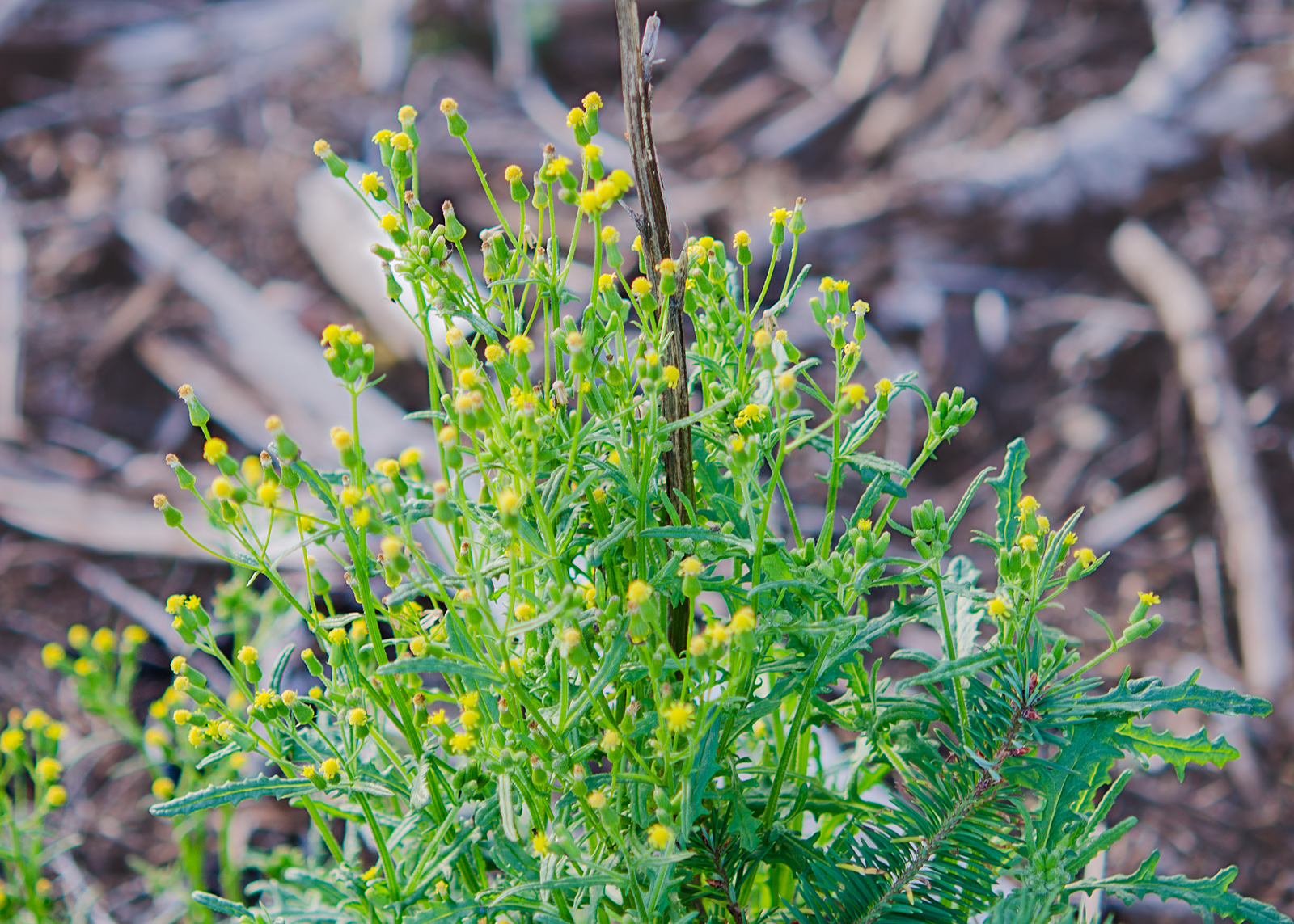
Weed? Or healer?

On a logged-over site, still piled with logging slash, muddy-rutted by large machinery treads, carpeted with torn and broken branches, Ma Nature manages to create spots of beauty.

Wood groundsel, Senecio sylvaticus.

One of the new plants, getting ready to make a zillion seeds. Next year, the site will be green.
Scattered to plentiful, occasionally dominant, in non-forested communities on cutover, fire-disturbed, or continuously disturbed sites, where it inhabits exposed mineral soils. (From E-Flora, wood groundsel.)

Thursday, October 26, 2017

It's mushroom (and bug) season

I was sure I'd seen a spider. I was searching through the new growth and the logging slash on a recently cleared site, looking for the last few spiders I need to complete the month of Arachtober. And I knew I had pointed the camera at one. But where was it?

It had been too fast for my shutter finger. I enlarged all my photos and peered at them, looking for even a trailing leg; nothing! But it wasn't wasted effort: I found spider food. Tiny bugs!

White and cream mushrooms. With bluish springtails, a couple of globular springtails (one brown, one orange), and a startling blue fly.

These mushrooms are coated with a jelly-like orange varnish.

Zooming in. A red-eyed fly above, and a tiny, patterned bug on the mushroom.

No critters on this beige mushroom.

Nor on these. They were all too busy on the creamy/orange ones.

A different species of orange mushrooms. The critter here is down on the piece of wood beneath them, too blurry to make out. But it's long, has two antennae visible, and a segmented body. I wish I'd focused on the wood, rather than the mushrooms.

And I eventually got my spider for today's Arachtober entry; he came to my door in the middle of the night.

Crane fly patrol.


Powered By Blogger