Showing posts with label Elgin Heritage Park. Show all posts

Wednesday, June 18, 2014

Everything's hard at work ...

... and we're just idling along, watching them go at it.

Thimbleberry leaf, collecting sunlight to feed the berries.

Honeybee harvesting pollen. Note the fat pollen bags on her legs.

A small vetch (tufted vetch, maybe?) in a tangle of assorted weeds, enticing pollinators.

Syrphid fly on blackberry leaves. With grass and buttercup going to seed.

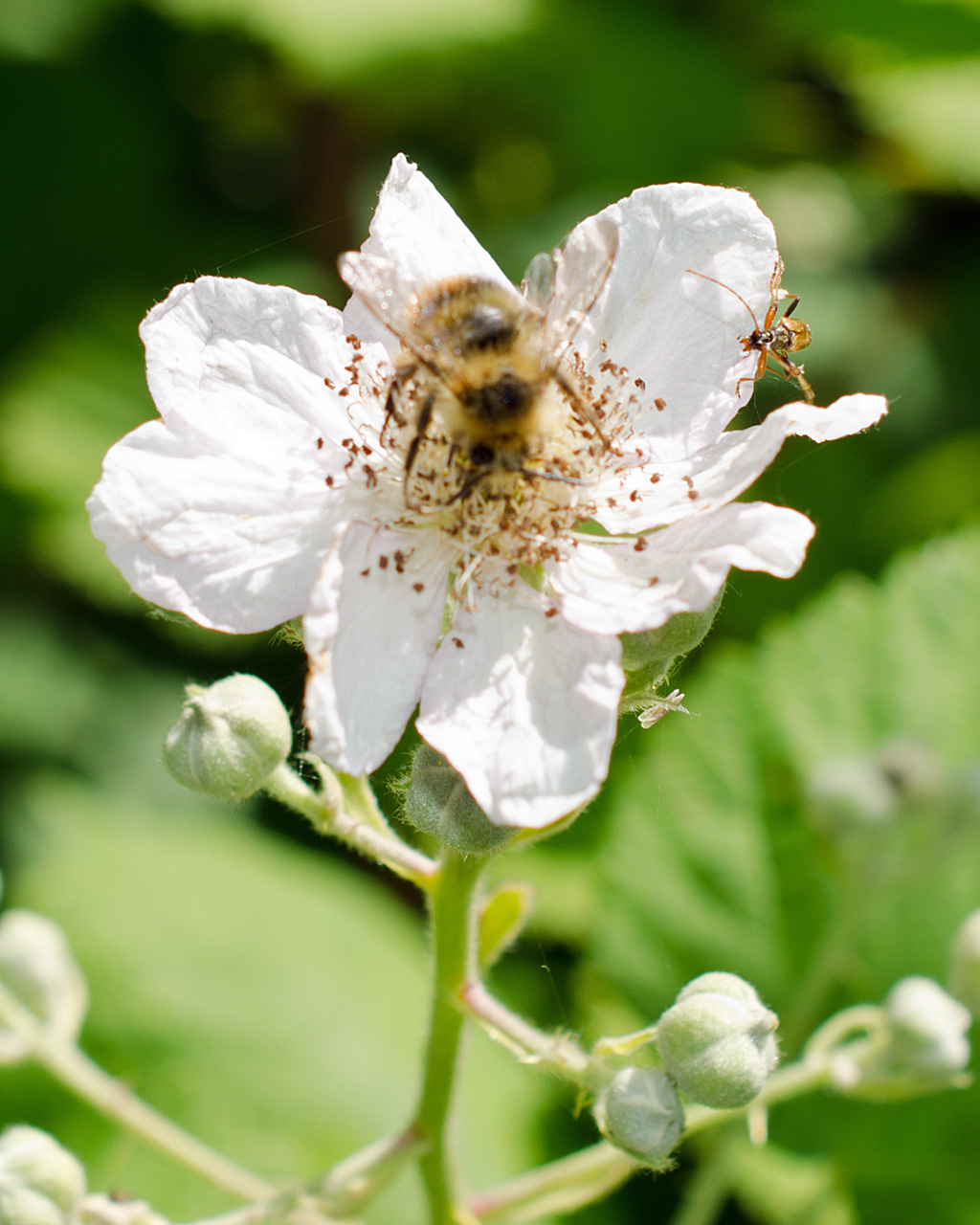
Blackberry flower, with two flying critters. Can you find the second?

Zooming in to see the shapes of the stamens (the pollen-bearing stalks) and the styles and stigmas (the short tubes that receive the pollen).

Yellow and orange fruiting bodies of a cup lichen on a tree trunk.

We were the only lazy ones there. Unless taking photos can somehow be construed as work.


Monday, June 16, 2014

A bit past their prime

The lupins in Elgin Heritage Park last week were "a bit past their prime," I said. That wasn't quite fair to them; it all depends what we consider their purpose to be. Sure, some of the flowers were dead, others were losing their shape and colour, but the plants were still hard at work towards their goal, producing seed.

Hairy, immature seed pods and the remains of flowers.

The pods will be dry, brown, and rattly before they're done. They'll split open then, scattering dried "peas" to start the next generation.

And there's more going on:

There's still pollen for the bees . . .


and sap for fat, grey aphids.

There are still oodles of new stalks, with hundreds of flowers each, dying at the bottom, still budding at the tip.

Second-growth tip, just getting started.

Past its prime? Not even there yet!


Sunday, June 15, 2014

Not quite wordless

Dead leaves, Elgin Heritage Park:

Cottonwood, I think.

Late night, early morning. Off to bed.

Friday, June 13, 2014

Just grass. And spit.

The grasses are probably the most important of the plant families to us humans. I'm ashamed that I know so little about them. I collected heads one afternoon, from one small field; there were more than a dozen different grasses, but I could never identify them.

I occasionally take photos of an interesting head, and then try to find it in my books or on the web. I never do; they're more confusing than caterpillars! My guidebook, Plants of Coastal BC, says there are over 200 species in our area, mostly indigenous.

At Elgin Heritage Park last week, we found a few that I'd never noticed before.

The terrain: flat river delta, soggy wet, even in mid-summer. The grass would be over our heads, but we're standing on the bridge. Behind us, on the opposite side of the bridge, the grass is mixed with taller cattails.

Along the pathway, grasses compete with the blackberries and other shrubs, springing out of the thickets to dangle their seed heads in our faces.

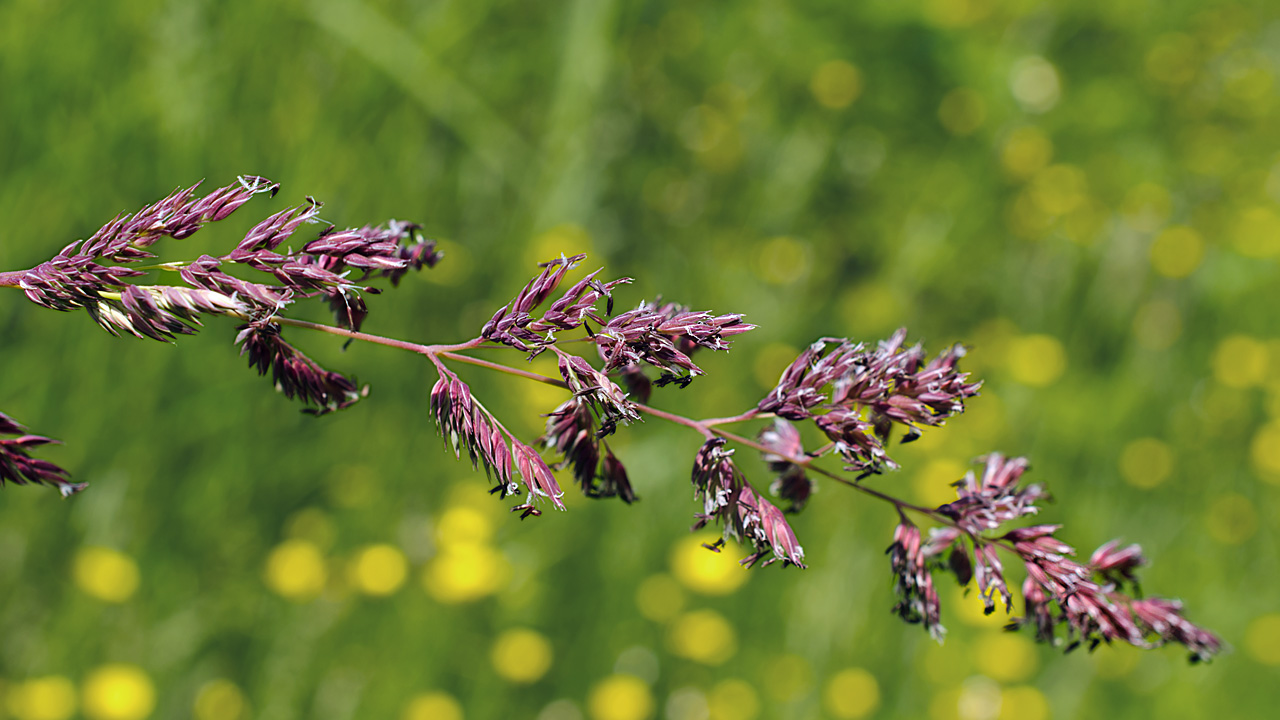
This was really red, almost purple in the sunlight. A tall plant.

Another one, even more purple against the buttercups.

I think these are the same kind. They are growing on the riverbank, with no competition.

Laurie found this, a fuller, fatter head. It seems, from the photo, since I didn't see the plant, to be a rush. But which one?*

*Laurie says it's probably Cocksfoot grass, Dactylis glomerata.

Note to self: "Sedges have edges, rushes are round." The stems, that is.

Farther from the shore, where the ground rises and dries out, other, shorter grasses grow around the lupins. And this week, they were in the midst of a population explosion:

Spit bug** heaven!
**Nymphs of the Froghopper family, aka Spittle bugs, snake spit, frog spit. Laurie knows them as "cuckoo spit". The one that we see in this area is the Meadow Spittlebug, Philaenus spumarius. I have found them on my roses and the hydrangeas at home.


Wednesday, June 11, 2014

Caution: Do Not Eat!

We went again this year to Elgin Heritage Park to look at the lupins. And they were wonderful, if a bit past their prime. But we walked on, past the lupin fields, to the riverside and the circle tour. And I started noticing pre-prime berries.

Thimbleberries, Rubus parviflorus, just starting to ripen.

Ripe, these thimbleberries will be sweet, as soft as cream pie filling, and a luscious, tempting red. But today, they're hard and hairy. And tasteless; I've tried them.

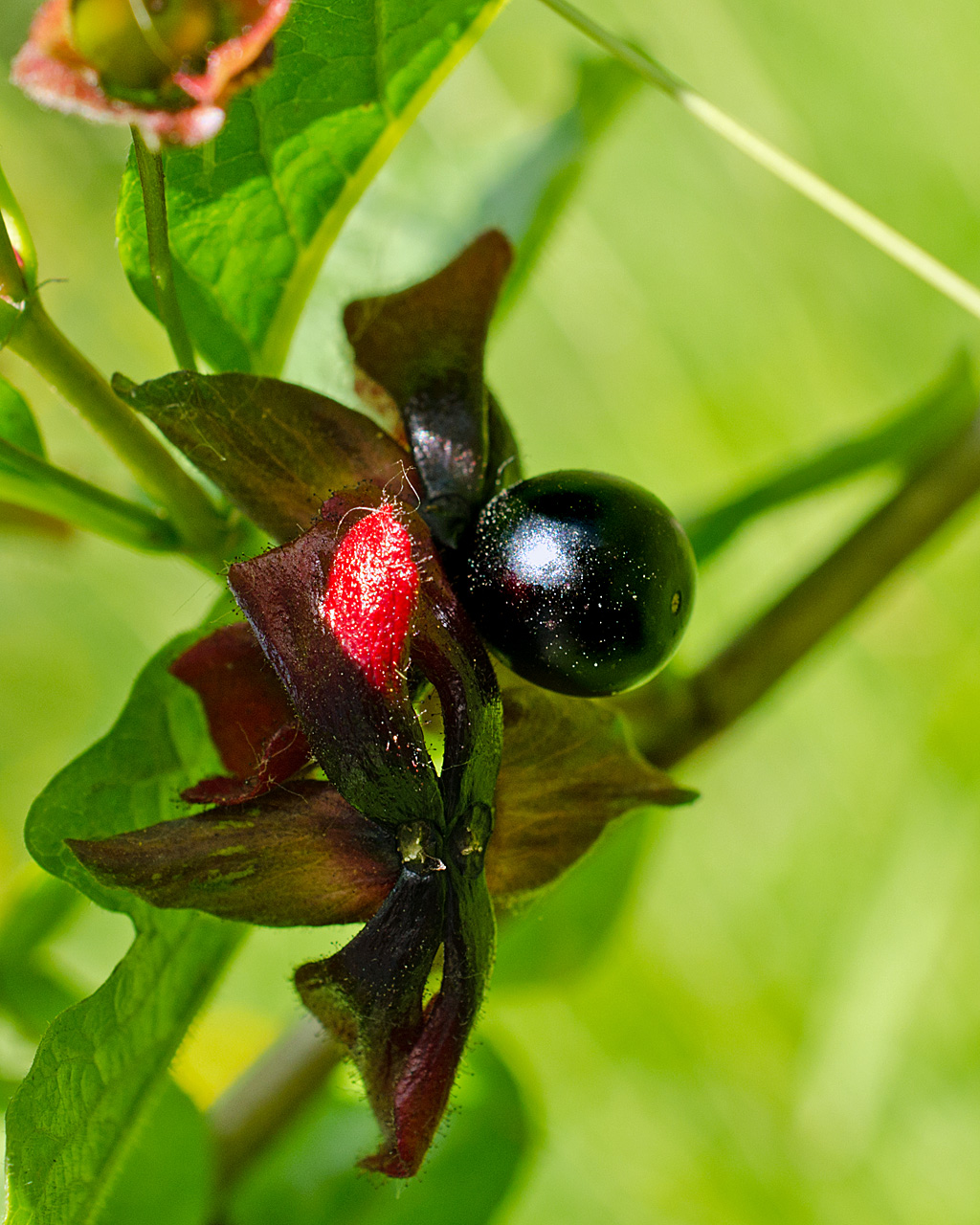
Twinberries, almost ripe.

The ripe berries are blue-black, growing in paired red calyxes. They're pretty, but I've been told the taste is vile. I haven't dared to try them.

Ripe berry, Lonicera involucrata

Half-ripe red elderberries, Sambucus racemosa.

When we had chickens, I used to harvest these berries when they were bright red; the chickens would race around carrying their prize clump, with others in hot pursuit. The mad scramble didn't die down until there was not a single berry left.

They're not people food, though; maybe not poisonous, but who would ever eat enough to find out? I've tasted one tiny berry and spit it out immediately. They're bitter.

The flowers are edible, and not so bad.

This is a tall shrub, growing up to 6 metres high.

Unidentified fruit. Cherry? Apple? Plum? Best to wait and see how it ripens.

There is a large variety of Prunus lookalikes in this area. Some are edible. Some are palatable. Some are even delicious. (Small, yellow crabapples from Reifel Island Migratory Bird Sanctuary come to mind. Try one - only one; they're for the birds - in late fall.)

Not a berry. Yet. Will be Himalayan blackberry, Rubus armeniacus.

Now, these you can eat! If you don't mind scratched arms and torn pant legs, bring a bucket and pick your winter's supply. They're plentiful and delicious.


Wednesday, June 05, 2013

The trouble with lupins

They're show-offs.

They parade over hills and fields, dwarfing the buttercups and out-shining the wild roses, waving their flocks of rainbow-coloured petals, shaming the butterflies and meadowhawks. You always have to take just one more photo. And then another stalk yells out, "But look at me!"

Colours range from white, through pale creams and lilacs, to wine-purple and royal blue.

Magenta and lilac

Pale blue to rosa mexicana

Deep purple

Baby blanket pink

Delicious colours! The bees think so, too.

Feeding on most flowers, the bees' bags of pollen are yellow or orange. I noticed that these bees' bags are deeper colours; dark orange, red or even deep pink.

Nom, nom, nom!

Dangling skinny legs!
Next: Bear Creek Park

Tuesday, June 04, 2013

One single lupin

I've just started on the lupin photos; we took far too many. So many shades, such intriguing shapes, so many foraging bees! It's hard to decide which to keep.

For now, here's one solitary purple bloom.

Stripy petals, pink stem.

More tomorrow.

Thursday, May 30, 2013

Pink fringe

Fringe cups are unnecessarily modest plants, dangling their miniature flowers from a graceful stem, half-hidden beside shady banks and along the edges of the forest. To really see them, you have to get down to their level, and look up at the flowers.

Mostly, the flowers look like wrinkly, papery, green globes with five greenish-white petals, deeply slashed at the edges, escaping from the mouth of the globe. As they age, the petals take on a pink tinge. I'd never seen any as deeply pink as these that I found beside the slough in Elgin Park.

Tip of an upright stem, with more stems in background

Another stem, hanging low above the basal leaves

Zooming in.

Zooming in on the upright stem. It's broken off at the tip; the whole stems end in a bud.


Wednesday, May 29, 2013

Just missed!

. . . and other glitches.

The walk under the trees was peaceful; out on the wetlands, the sun was warm. The weather was glorious, with a clear blue sky and pillows of white clouds on the mountain tops. Sparrows and robins sang in the weeds, thousands of bees buzzed in the lupins waving blue and pink flags on every hill. Cottonwood fluff drifted in the wind and speckled the pools and river. Just simply delightful!

There had to be a fly in that ointment. There was.

On the first leg of the path, grasshoppers popped up from under our feet, waved butterfly wings at us for a second or two, then settled to become invisible again. We stalked them with the cameras. They were too quick for us. The best I got was one shot, where I didn't even give the camera time to focus.

I've sent this to BugGuide for an ID. I'm stumped. Update: It's a Mourning Cloak butterfly, badly frayed. Thanks, Bug Guide people!

Oh, well; grasshoppers are like that. (Update: So are butterflies.) On! Between the trees we could see the boats moored on the Nicomekl river, and the mud flats adjoining, where once we saw flocks of sandpipers sleeping in the grass at the edge. We walked down a little trail to get a good look. No sandpipers. Not even a hint of one. No ducks, either.

But there were oysters. Piles of them, exposed at low tide.

Big guys with frilled edges

They cling to any anchor point in that sloppy mud.

I took it for granted that these were the native oysters that have been living in the Nicomekl for centuries, but didn't risk the mud to go and get a good look. But they're far too big; the natives are barely a couple of inches long, and these are as big as my hand. And they mound up on top of each other, rather than hiding under rocks.

As far as I can tell from the photos, they're the imported and invasive Japanese oysters.
Crassostrea gigas is an estuarine species, but can also be found in intertidal and subtidal zones. They prefer to attach to hard or rocky surfaces in shallow or sheltered waters up to 40 m deep, but have been known to attach to muddy or sandy areas when the preferred habitat is scarce. The Pacific oyster can also be found on the shells of other animals. Larvae often settle on the shell of adults, and great masses of oysters can grow together to form oyster reefs. (Wikipedia)
In some places in the world, though, it is considered by some to be an invasive species, where it is outcompeting native species, such as the Olympia oyster in Puget Sound, Washington . . .
... and here just across the border.

Around the corner, we stopped to take photos of the bees in the thimbleberry bushes, then looked over the pool on the inland side of the trail. Nothing in the grass, nothing on the water. We went on, and a minute or two later, stepped aside to let another walker pass.

"I just saw a fox in the grass back there!" she said, pointing at the fence we had just been leaning on. "It was so shiny!"

I kept looking for the fox the rest of the time. It never showed.

But we saw ducklings; 7 of them:

Way over there against the bank. See them? (I darkened them a bit to make them visible.)

We turned inland at the bridge, to walk back across the wetlands. On the bridge rail, a chipping sparrow was sitting, chipping away merrily. At least we saw him; all the photos show is a vaguely bird-shaped grey-brown splotch.

On the bridge, I was looking over the rail at the mud under the roots of the cattails. Laurie was a way back, trying unsuccessfully to take photos of the redwing blackbirds. Down in the muck, I heard a bird call, one I didn't remember hearing before. And there was a bird down there, a dark brown bird-shaped thing scooting away into the vegetation. I could hear his call, then, as he wandered around in the reeds, but I never saw him again. Nor did Laurie, when he came to help me look.

Looking through the books, I think -- I think -- that it's possibly a Wilson's snipe. A life bird! If you can count a one-second sighting.

On the trail through the grassy field, we passed the barn owl house. I had no hopes of seeing one; they would be sleeping, but still, I did entertain the thought that one might have thought of a mid-afternoon snack. Of course not!

And we passed the tree where, a few years back, a huge wasp nest had hung from an upper branch, like some kind of weird grey strawberry. I looked, but there were none in the tree now. On the home stretch, though, we walked under a broken red alder. In the gap where the wood had torn, there was an abandoned wasp nest, very tiny. I found a long stick and poked it out.

Looking almost straight up.

Very small. Lots of space inside; you can see the inner wall through the gap.

Another view, showing the cells. I can count 6; there are probably a couple of dozen in all. Their entry hole is at the right.

Thinking it over: missed shots, missed sightings and all; it was all wonderful.

And there were still the lupins. And their cloud of bees! (Photos of these, anon.)

(Someone thought I should make the photos larger. I'm trying that, to see how it looks.)


Powered By Blogger