Showing posts with label elderberry. Show all posts

Tuesday, May 16, 2017

Red elderberry flowers.

Everywhere I look this week, I see red elderberry in bloom. Usually, it's on the far side of a tangled ditch, or in a mass of those nasty blackberry canes, or just beyond the devil's club. I broke off a small branch in a salmonberry patch, and brought it back to the car.

Sambucus racemosa flower stalk. A conical mass of tiny, short-lived, green-scented flowers.

The car window makes a neutral background.

Zooming in. The flowers are from 3 - 6 mm across.

The flowers will fade soon, and the red berries will be a favourite food for the birds. Not for humans, though; they may be somewhat edible, but raw, they're bitter. Cooked they are said to make good jelly, once the seeds are removed.

In season, my dad used to make elderberrry flower pancakes. He  made up his usual pancake batter, then dipped the flower heads, one at a time, into it. Each pancake held one flower head. We loved these.


Wednesday, June 11, 2014

Caution: Do Not Eat!

We went again this year to Elgin Heritage Park to look at the lupins. And they were wonderful, if a bit past their prime. But we walked on, past the lupin fields, to the riverside and the circle tour. And I started noticing pre-prime berries.

Thimbleberries, Rubus parviflorus, just starting to ripen.

Ripe, these thimbleberries will be sweet, as soft as cream pie filling, and a luscious, tempting red. But today, they're hard and hairy. And tasteless; I've tried them.

Twinberries, almost ripe.

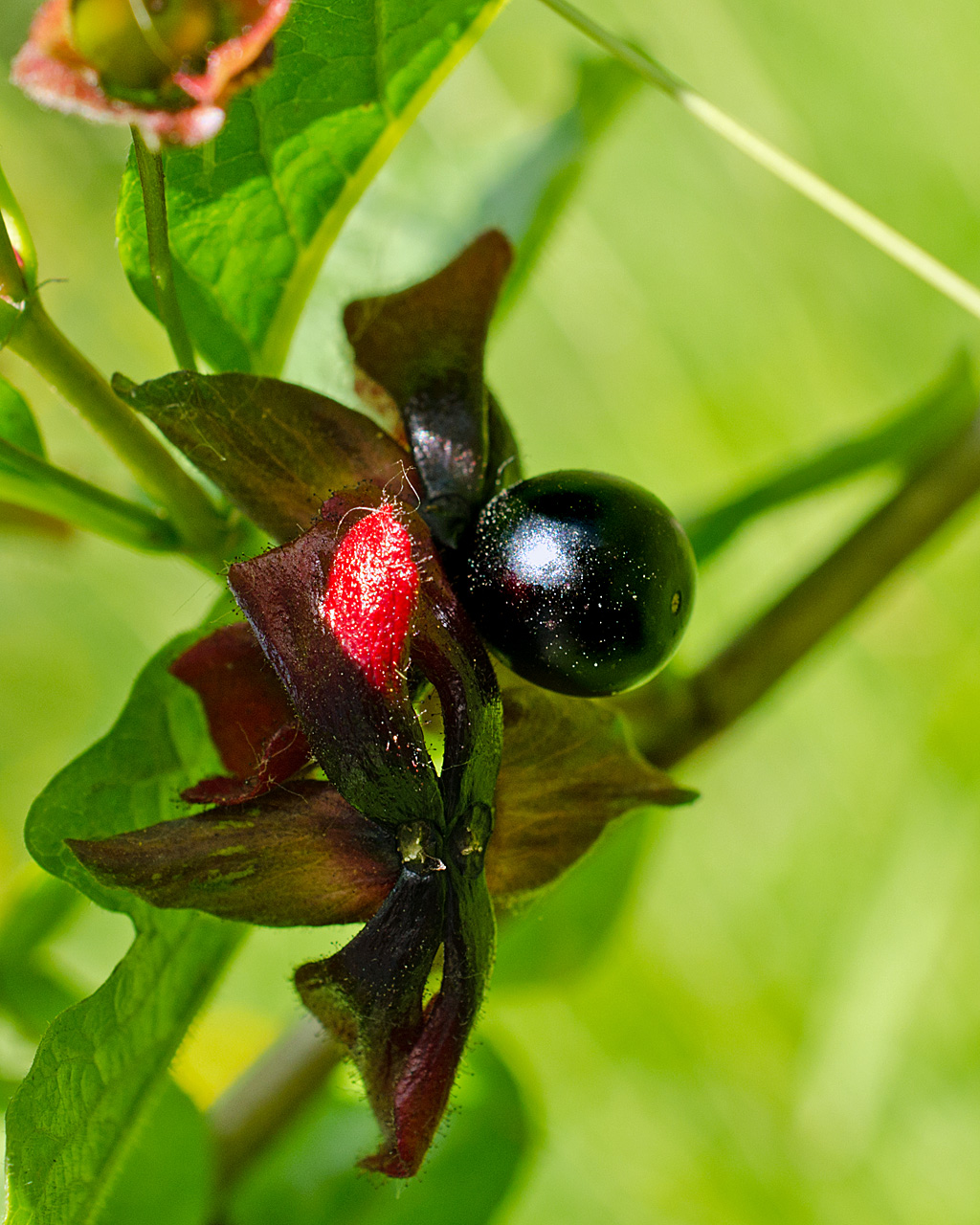
The ripe berries are blue-black, growing in paired red calyxes. They're pretty, but I've been told the taste is vile. I haven't dared to try them.

Ripe berry, Lonicera involucrata

Half-ripe red elderberries, Sambucus racemosa.

When we had chickens, I used to harvest these berries when they were bright red; the chickens would race around carrying their prize clump, with others in hot pursuit. The mad scramble didn't die down until there was not a single berry left.

They're not people food, though; maybe not poisonous, but who would ever eat enough to find out? I've tasted one tiny berry and spit it out immediately. They're bitter.

The flowers are edible, and not so bad.

This is a tall shrub, growing up to 6 metres high.

Unidentified fruit. Cherry? Apple? Plum? Best to wait and see how it ripens.

There is a large variety of Prunus lookalikes in this area. Some are edible. Some are palatable. Some are even delicious. (Small, yellow crabapples from Reifel Island Migratory Bird Sanctuary come to mind. Try one - only one; they're for the birds - in late fall.)

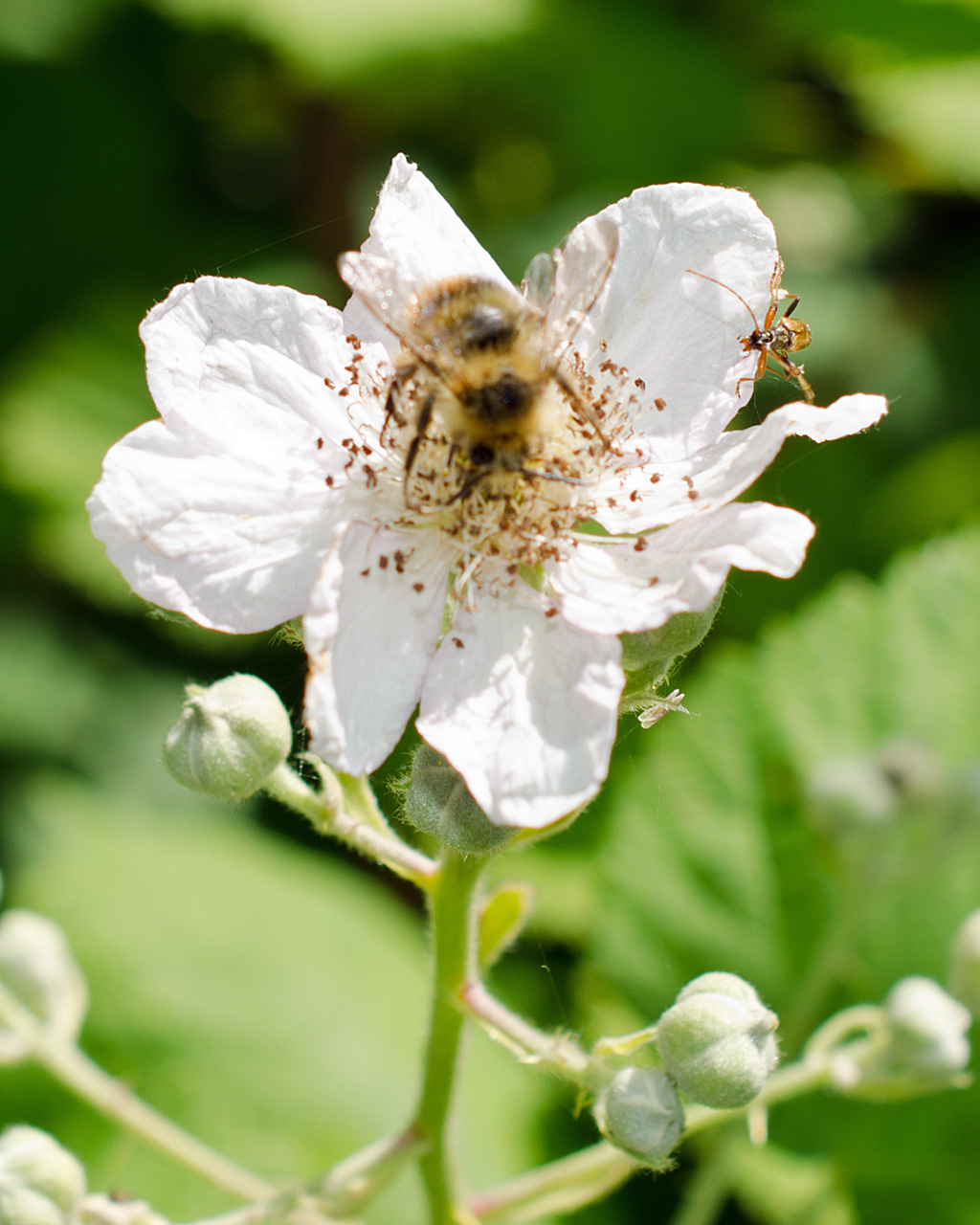
Not a berry. Yet. Will be Himalayan blackberry, Rubus armeniacus.

Now, these you can eat! If you don't mind scratched arms and torn pant legs, bring a bucket and pick your winter's supply. They're plentiful and delicious.


Thursday, July 19, 2012

Water lovers

The water was high in the Fraser River a couple of weeks ago, with some flooding in spots. The Coquitlam River flows into it, just a few metres down river from Colony Farm, which is all low-lying flood plain. When the Fraser floods, the water backs up here.At the exit from the parking lot beside the Kwikwetlem First Nations reserve (IR#1), we found a barricade and sign at our usual trail entrance: Flooded: Do Not Enter. It didn't look flooded; the path, at least, was dry. And while we wondered, a woman came around the bend from the "flooded" area. We asked her about it. "It's fine," she said, adding that the sign should have been taken down.

So we ignored the sign and headed down the trail. After a few bends, there were some muddy spots. And when I stepped, instead, into the grass, I found inch-deep water underneath.

We went on. A few more curves, and the muddy patches became puddles that eventually covered the whole path, inch-deep over stinky mud. Not exactly fine; we were glad to come to the bridge up to the dikes.

High water on the Coquitlam. The square box is a pumphouse.

Standing above the river, we could see that the water was still high, but had been higher; there was a grey layer of scum about 2 feet deep over the stems of the shrubs. And jammed up against the pilings, was a collection of debris and displaced pondweed.

Potamogeton natans, floating-leaved pondweed. The leaves come in two forms; those long, stringy things are the non-floating ones.

Leaves, detritus, and flowers. The flowers are inconspicuous, greenish yellow, and clustered on an erect stalk.

These plants are normally found in standing water, as in sloughs or ponds. The flooding, minor as it was, must have flushed them out of the old drainage ditches.


Beside the ditches, red elderberry is ripe for the picking.

Birds love these seedy fruits. They are edible for humans, but only cooked, and not especially palatable, although they are reputed to make good jams and jellies. Long ago, they were a staple food for native peoples.

But birds do love them. Even chickens; when my daughter had a couple dozen, I used to harvest the berries for them, for the fun of seeing them chase madly all over the place, trying to steal each others' treats.

Orange elderberries. I have never seen these before.

Black hawthorn, the native hawthorn. It is found often on old farm sites, especially along streams.

At this time of year, it seems that the dominant colour for flowers is pink, from native hardhack (alongside the river in the top photo) and lathyrus to stunning invasives:

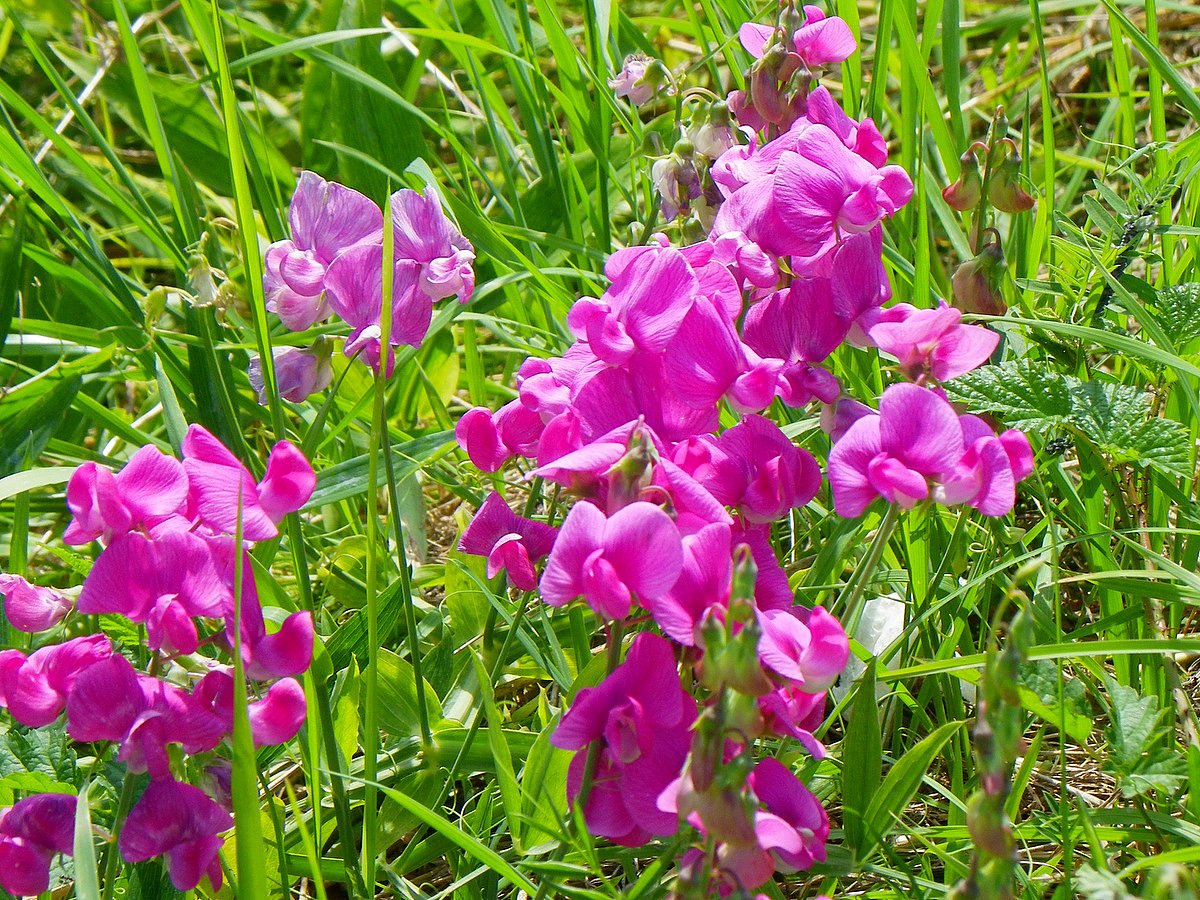
A lathryus, probably purple peavine.

The noxious Policeman's helmet, Impatiens glandulifera. Notice the glowing seed pods.

A pale pink and white variety.

This plant is an escapee from gardens, and has become a worrisome invader. It grows up to ten feet tall, along streams or riversides. (Along the trail at the edge of Burns Bog, they stand with their feet in the shallow creek.) They overshadow native plants, starving them of light and nutrition, and will eventually drive them out altogether.

And those gorgeous seed pods are explosive. When they are ripe, the merest touch will make them pop open and eject the seeds, all 800 of them, up to 20 feet away. The seeds will sprout in soil or even underwater, and can survive up to 2 years, until conditions are right. Ripped out stems will sprout if left on the ground.

Bindweed buds

These are probably the introduced Hedge bindweed, Convovulvus sepium, which likes moist areas, and climbs over other plants more than the native field bindweed.

Bindweed tying up a sheaf of grasses.

Bindweed varies from dazzling white to blush pink.

Under a stand of taller trees at the edge of the reserve, we found an interesting variegated maple.

Two-tone leaf, striped snail

No two alike.
The afternoon was hot, hot, hot. We were sunburned in spite of sunscreen and hats. But our feet were dry again by the time we got back to the car.

Friday, July 08, 2011

Berry red

It's berry time! The salmonberries and thimbleberries are ripening; I tasted the first orange salmonberries of the season last week. Wild strawberries are hiding modestly in the grass. The blackberries are still green, but they'll be red and then black any day now. And along the roadside near Centennial Beach, thickets of red elderberry bushes droop under their heavy crop of tiny, scarlet berries. I've never eaten these, although the BC native peoples did. But when I had chickens, they would come running, squawking excitedly, whenever they saw me coming with an armful. It was their favourite food.

Cedar waxwings love them, too. At the Centennial Beach duck pond, a flock of waxwings has replaced the redwing blackbirds that nested in the reeds earlier. Berry heaven starts just beyond the parking lot, and the protein that enriches their summer diet hovers over the pond on dragonfly wings, with the waxwings in pursuit, swooping rather like slow swallows. And there is that handy dead willow to perch on.

Adult cedar waxwing, with the crest raised.

Back view. Yellow belly and yellow tip of the tail feathers.

Why are they called Cedar waxwings? First, because they eat cedar berries in winter. And waxwing? Look:

What's that red stuff?

On some birds, the tips of the wing feathers, mostly secondaries, secrete a brilliant red wax from the feather shafts. The older waxwings produce more, as well as having more yellow on the tip of the tail. If you enlarge the photo above, you can see a hint of red wax on the tail feathers, too; this is less common.

The tips protrude beyond the feathery part of the wing. This bird has seven tips on each wing (see it full size); this is the average, but they may have as many as nine.

Bird Vancouver has a good photo of the wing tips, here: scroll down. And the Cornell Lab has more information, including life cycle and waxwing song.

Thursday, April 09, 2009

Green lights in the understory

Nothing says "spring" to me like the bright yellow-green leaves in the brown understory of the forest. Every year I wait and watch for them; every year they're new and magic.


Indian plum, each new bud like a burst of green flame.


Yellow-green, or chartreuse, is
the most visible color to the human eye because it sits directly in the middle of the frequencies of visible light. (Wikipedia)
I didn't know that. I did know that a ray of spring sunlight, angling down between the heavy evergreen branches overhead, and shining through a spray of fresh-sprouted salmonberry leaves, catches my breath away.


The newest baby horsetails.


Willow over the slough.


Willow catkins, close up.


Salmonberry leaves.


Elderberry; coarser, tougher, fast-growing. In a couple of weeks, the flowers will be in full bloom.


The holly and the ivy. Dark evergreens, but now even they are fringed with golden light.

.

Tuesday, May 01, 2007

Just a peaceful walk

After the concentrated seeing of the Blogger Bioblitz, a casual, aimless stroll down Cougar Creek was just what we needed.

The last couple of times, we started at the West end; this time we drove to the east end of the official park area; on the Google map, the green belt went on east, skirting school playing fields. We crossed the bridge to the east, following the creek.
A caucus of crows was holding a meeting in the trees above us and a couple of mallards dabbled in the deeper pools. Sunlight shone through open bush on the other side; we crossed on a line of rocks. Beyond, the red elderberry flowers were in full bloom.
The bush opened out into a clearing behind a row of housing, marked off with logs and mowed, not too closely. A red-headed woodpecker shouted out from a tall cottonwood; although we looked from all angles, we couldn't see him. As we walked, he moved ahead of us, calling from one tree after another, always invisible.

The creek turned north, between the playing fields and a cement retaining wall topped by chain-link fence. Along here, it was lined with cherry and plum trees, blooming pink and white.

The green belt over the creek dwindled to a mere line; we crossed it and turned back, across the field. And here we found the trilliums*, three of them. A real treat; something we don't expect to see close to populated areas. *(Or should it be "trillia"? Laurie says he doesn't bother himself with such a trivium.)
And back in the "Park" area, proper, where this winter dozens of mallards dozed and puttered, mushrooms dotted the ground. Some, I hadn't seen before.
Detail of the gills:Time to turn around. At the bottom of the main lagoon, a kid was fishing. He told me that once, he caught a big carp. Enough motivation to sit patiently for hours.
And a final delight. A queue of ducklings trailing Mommy across the lagoon.

In spring, for us, every day becomes a Bioblitz.
Powered By Blogger