The water was high in the Fraser River a couple of weeks ago, with some flooding in spots. The Coquitlam River flows into it, just a few metres down river from Colony Farm, which is all low-lying flood plain. When the Fraser floods, the water backs up here.At the exit from the parking lot beside the
Kwikwetlem First Nations reserve (IR#1), we found a barricade and sign at our usual trail entrance: Flooded: Do Not Enter. It didn't look flooded; the path, at least, was dry. And while we wondered, a woman came around the bend from the "flooded" area. We asked her about it. "It's fine," she said, adding that the sign should have been taken down.
So we ignored the sign and headed down the trail. After a few bends, there were some muddy spots. And when I stepped, instead, into the grass, I found inch-deep water underneath.
We went on. A few more curves, and the muddy patches became puddles that eventually covered the whole path, inch-deep over stinky mud. Not exactly fine; we were glad to come to the bridge up to the dikes.
 |
| High water on the Coquitlam. The square box is a pumphouse. |
Standing above the river, we could see that the water was still high, but had been higher; there was a grey layer of scum about 2 feet deep over the stems of the shrubs. And jammed up against the pilings, was a collection of debris and displaced pondweed.
 |
| Potamogeton natans, floating-leaved pondweed. The leaves come in two forms; those long, stringy things are the non-floating ones. |
 |
| Leaves, detritus, and flowers. The flowers are inconspicuous, greenish yellow, and clustered on an erect stalk. |
These plants are normally found in standing water, as in sloughs or ponds. The flooding, minor as it was, must have flushed them out of the old drainage ditches.
 |
| Beside the ditches, red elderberry is ripe for the picking. |
Birds love these seedy fruits. They are edible for humans, but only cooked, and not especially palatable, although they are reputed to make good jams and jellies. Long ago, they were a staple food for native peoples.
But birds do love them. Even chickens; when my daughter had a couple dozen, I used to harvest the berries for them, for the fun of seeing them chase madly all over the place, trying to steal each others' treats.
 |
| Orange elderberries. I have never seen these before. |
 |
| Black hawthorn, the native hawthorn. It is found often on old farm sites, especially along streams. |
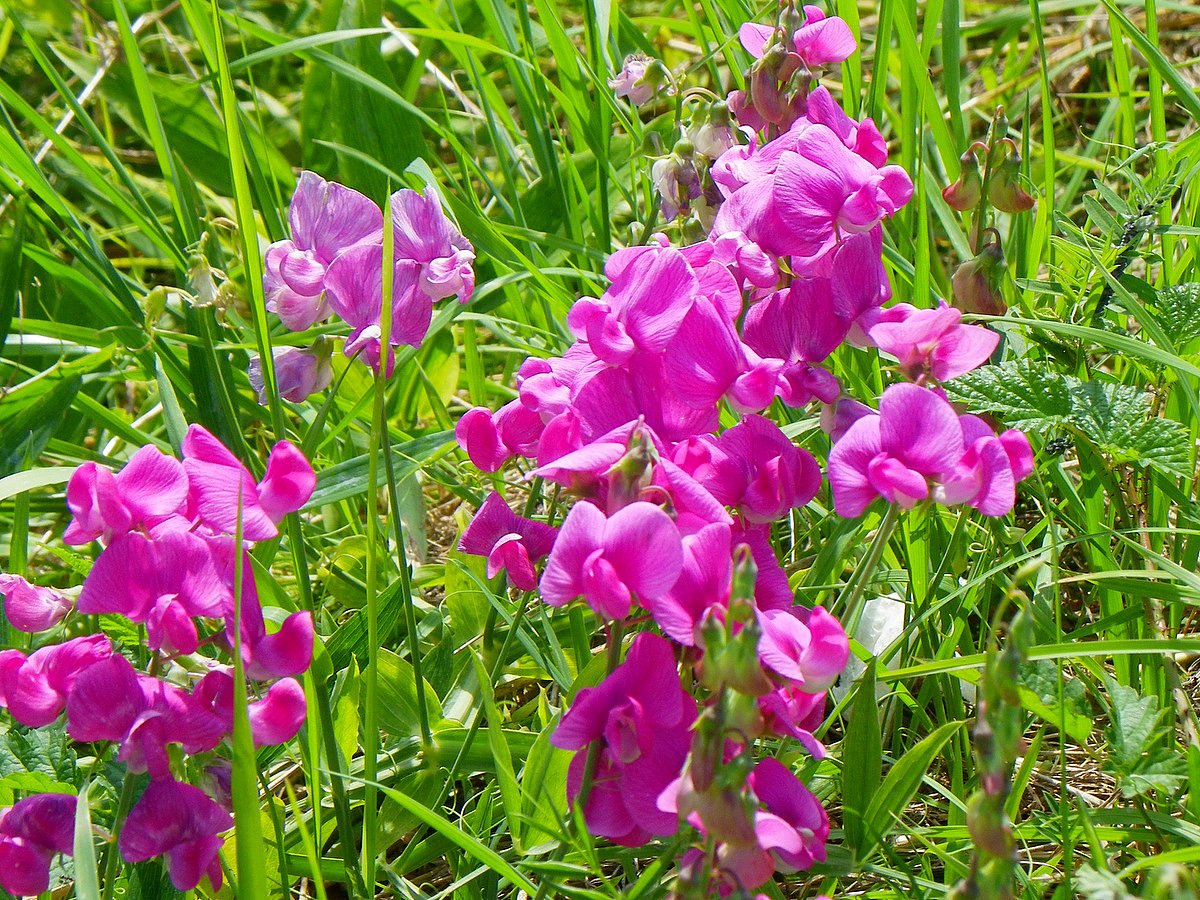
At this time of year, it seems that the dominant colour for flowers is pink, from native hardhack (alongside the river in the top photo) and lathyrus to stunning invasives:
 |
| A lathryus, probably purple peavine. |
 |
| A pale pink and white variety. |
This plant is an escapee from gardens, and has become a worrisome invader. It grows up to ten feet tall, along streams or riversides. (Along the trail at the edge of Burns Bog, they stand with their feet in the shallow creek.) They overshadow native plants, starving them of light and nutrition, and will eventually drive them out altogether.
And those gorgeous seed pods are explosive. When they are ripe, the merest touch will make them pop open and eject the seeds, all 800 of them, up to 20 feet away. The seeds will sprout in soil or even underwater, and can survive up to 2 years, until conditions are right. Ripped out stems will sprout if left on the ground.
 |
| Bindweed buds |
These are probably the introduced Hedge bindweed, Convovulvus sepium, which likes moist areas, and climbs over other plants more than the native field bindweed.
 |
| Bindweed tying up a sheaf of grasses. |
 |
| Bindweed varies from dazzling white to blush pink. |
Under a stand of taller trees at the edge of the reserve, we found an interesting variegated maple.
 |
| Two-tone leaf, striped snail |
 |
| No two alike. |
The afternoon was hot, hot, hot. We were sunburned in spite of sunscreen and hats. But our feet were dry again by the time we got back to the car.