Showing posts with label Cessna float plane. Show all posts

Wednesday, August 12, 2026

Mostly blue

The last couple of weeks I've been busy, with visiting family. I've been on the road a lot. And saw a lot of blue water, some with birds.

Tiny island in the Campbell River estuary. Looking towards the salt chuck and Quadra Island.

Coril Air Cessna, landing off Tyee Spit. With a row of tiny buffleheads.

Coasting into the dock on the estuary.

Just a Pelagic cormorant drying his wings and showing off his green neck. Cormorant's feathers don't repel the water, which helps them dive deep after fish, but then they need to air-dry their wings.

The sad rock at Little Bear Bay.

Willow Point, Campbell River

Gulls and sandpipers at the tip of the Myrt Thompson trail.

Also seen, but there are no photos: an eagle carrying a writhing snake. And turkey vultures, black-headed Bonaparte's gulls, a young bear, and an orca. And some birds I've never seen before; swifts, probably Vaux's swifts, circling around their nests on the far side of a group of pilings on the Comox estuary. This was amazing; one dropped down to the pilings gently, floating down on the air, slowly, slowly, barely moving its wings. Imagine a balloon gradually losing air, or a floating bit of paper ash from a bonfire coming back down. As if the air were a thick soup,

And my camera was back in the car.

A Skywatch post.

~~~~~~~~~~~

En las últimas semanas, he tenido visitas de la familia. Y he pasado mucho tiempo en las carreteras. Y en las playas y los rios, viendo aguas azules. A veces con pájaros.
  1. Una islita en el estuario del rio Campbell. Aquí miramos hacia el estrecho y la isla Quadra al otro lado.
  2. Una avioneta Cessna de Coril Air, acuatizando fuera de Tyee Spit. Con una hilera de aves buceadoras, muy chiquitas.
  3. La misma avioneta en el estuario, acercándose a su muelle.
  4. Un cormorán pelágico estirando las alas para secarlas. Las plumas de los cormorantes no repelan bien el agua, lo que les permite bucear muy hondo tras los pescados que comen.
  5. La roca triste de Little Bear Bay. (Bahía del Osito)
  6. Willow Point, Campbell River.
  7. Gaviotas y correlimos en el extremo del sendero Myrt Thompson.
También vimos, pero no tengo fotos: un águila llevando una víbora que se retorcía tratando de escapar. Buitres cabecirrojos, gaviotas de Bonaparte con sus cabezas negras, un osito (la madre debía estar cerca, pero no la vimos), y una orca. Y unos pájaros que nunca antes había visto; vencejos, probablemente Chaetura vauxi, dando vueltas alrededor de sus nidos en el lado opuesto de un grupo de pilotes en el estuario del rio Comox. Algo sorprendente: vi uno que bajaba hacia los pilotes lentamente, como si flotara en el aire, bajando poco a poco, casi sin mover las alas extendidas. Imagínate un globo que va perdiendo el aire paulatinamente; o un fragmento de ceniza que se llevó el humo y que ahora va cayendo sin prisa. Como si el aire fuera un líquido espeso.

Y la cámara seguía en el coche. Ni modo.

Un poste para Skywatch.

Monday, December 16, 2024

The watchers

 Big birds ...

Tyee Spit, and the water surrounding it, the Campbell River estuary and the northern tip of the Georgia Strait, are home to many birds, mostly small, mostly distant, mostly (except for sleepy mallards) extremely active. And then there are the eagles, content to just sit and watch.

They were there when I arrived, they were there when I left, an hour later.

An inventory of the birds of Tyee Spit is never complete without at least one of these:

Cessna 185 Skywagon. Content to just watch for now.

~~~~~~~~~~~~~~~

Pájaros grandes ...

Tyee Spit, la lengueta de tierra que separa el estuario del Rio Campbell del extremo norte del Estrecho de Georgia, junto con sus aguas vecinas, provee hábitat a muchísimos pájaros, por la mayor parte pequeños, casi siempre allá en la distancia, y normalmente (aparte de los ánades reales, los dormilones) muy activos. Esta pareja de águilas, en cambio, se dedican a quedarse quietos, vigilantes.

  1. Dos águilas adultas. Estaban allí en su rama cuando lleguá, seguían en la misma rama cuando me fui, una hora más tarde.
  2. Ningún inventario de las aves de Tyee Spit se puede considerar completo si no incluye por lo menos uno de estos: esta avioneta flotante es un Cessna 185 Skywagon. Por ahora, se dedica a esperar.

Wednesday, November 22, 2023

Dreaming of the skies

 Around and over Tyee Spit, in mid-afternoon, the birds were enjoying the short hours of sunlight (sunset is around 4:30 these days); the mallards in the estuary, the high-wire perchers, the divers on the water "outside", the sparrows in the rosebushes and grasses. And there were also other winged, water-striding creatures. Beavers and Cessnas.

Floatplanes at their dock. Looking over the estuary, towards the river mouth.

Looking downstream. This one's a Cessna. Mallards sleep in the grass in front.

Looking up the strait towards Seymour Narrows. Here the floatplanes come down before puttering home to their perch in the estuary. None at the moment. But there's a merganser, briefly above the water surface. 

Dreaming of the skies. A Cessna, out to pasture. The one in the centre of the photo is a Beaver, our traditional bush plane.

I wonder: do the mallards and gulls that placidly share the water and sky with these noisy metal flyers accept them as just another type of waterfowl? Not dangerous, although they make an awful racket, but they're not predators like the eagles, always circling overhead.

~~~~~~~~~~~~~~~~

Alrededor de la lengua de tierra Tyee, a media tarde, los pájaros aprovechaban las pocas horas de sol, ahora que el sol se pone a las cuatro y media. Bandadas de patos en el estuario, en los cables aéreos palomas y estorninos alineados, "afuera" en el estrecho, las aves buceadoras, mientras los gorriones buscaban insectos y semillas entre los rosales. Pero además había otras criaturas acuáticas con alas. Beavers (se traduce como "Castores") y Cessnas. Aviones flotantes, hidroflotadores.

Fotos:

  1.  El estuario, mirando rio arriba, con los aviones descansando al lado del muelle.
  2. Desde el puesto de observación de aves. Este avión es un Cessna. Patos, los ánades reales, duermen entre la hierba.
  3. El estrecho, mirando al norte. Aquí vienen a "aterrizar" (en el agua) los avioncitos antes de deslizarse suavemente a su amarradero en el estuario.
  4. Soñando con los cielos. Un Cessna, tal vez retirado de servicio, en un campo al lado del agua. El avión en el centro de la foto es un Beaver, el avión tradicional de los lugares remotos de la isla.
Me pregunto: ¿los patos y las gaviotas que duermen tranquilamente alrededor de estos voladores de metal, tan ruidosos; los ven como si fueran simplemente otra especie de ave acuática? ¿Aves no peligrosas, aunque hagan ese estruendo feroz; pero no son aves depredadores como las águilas que siempre están dando vueltas allá arriba?

Sunday, November 13, 2022

Made me happy Part 2

Here's another handful of photos from my "Things that make me Happy" folder. Again, in no particular order, chosen almost at random from the file.

Oyster Bay. Bird houses on poles, muddy tide flats with busy birdies, calm water.

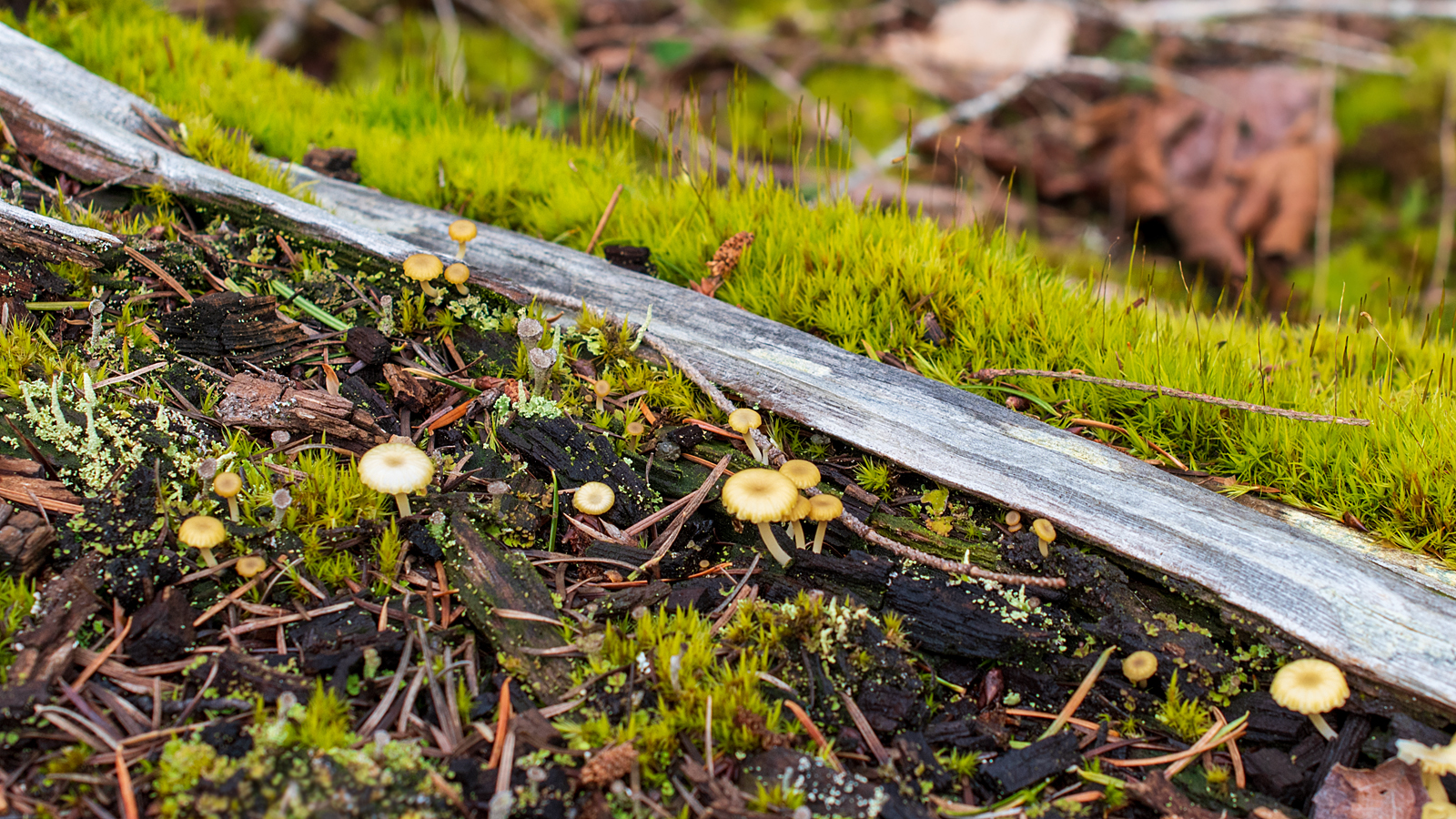
What's left of an old log in the little Oyster Bay woods. With lichens, mosses, and lichen agaric mushrooms, Lichenomphalia umbellifera. Which is really part of a lichen, with its associated alga, Coccomyxa spp.

Orange-striped green anemone, Diadumene lineata, installed in an abandoned snail shell. One the hermits won't get to use.

I love these little floating puddle-jumpers, so essential to contact with many of our Vancouver Island communities. A Cessna Skywagon.

The forest in fog and snow.

The old beaver lodge. I visit several times a year, and have never seen a beaver yet. Their tracks in the mud, yes.

Tartan Dahlia

More tomorrow.

~~~~~~~~~~~~~~~~~~~~~~~~~~~~
Sigo subiendo fotos de mi carpeta de "Cosas que me hacen feliz". Otra vez, escogidas casi al azar.

  1. La lagunita de Oyster Bay, con los nidos de pájaros encima de postes, la zona intramareal llena de lodo y de pajaritos felices, patos y gaviotas en la distancia.
  2. Un tronco caído, ya muy viejo, sosteniendo líquenes, musgos, y esos honguitos Lichenomphalia umbellifera, los cuales son, en realidad, una parte de un líquen, en conjunto con una alga Coccomyxa spp..
  3. Una anémona verde con rayas anaranjadas, Diadumene lineata, que se ha instalado en una concha de caracol marino. Esta no la podrán usar los ermitaños.
  4. Una avioneta con flotadores Cessna Skywagon. Me encantan estos avioncitos, tan trabajadores, tan necesarios para nuestras comunidades isleñas aisladas.
  5. El bosque con nieve en la neblina.
  6. La madriguera de los castores.  Visito esta madriguera varias veces al año y nunca he visto un solo castor. Sus huellas en el lodo, sí los he encontrado. Y cada vez ha crecido la madriguera.
  7. Una dalia, llamado "Tartan". El nombre en náhuatl: atlcocotlixochitl. (Acabo de descubrir esto; me gusta. Otra cosa que me hace feliz.)
Y mañana subo más.


Monday, February 18, 2019

Contact

The little float planes always draw my eyes. When I was a child on the remote west coast of Vancouver Island, they were our main connection to the nebulous "world outside". The planes brought the mail once a week; sometimes they carried people ("in" and "out", out being anywhere else). A visit from the old ship S. S. Princess Maquinna* brought our groceries and packages up from Vancouver three times a month; a couple of times, we hitched a ride into the big city on her; but the buzzing, hurrying little mail planes were our contact with our families scattered around the globe.

Those days are gone. I get my mail now at my desk, wirelessly beamed into this computer. Or it's on our phones; one in every pocket or purse, these days. We are connected, always.

But still the sight of a tiny float plane calls to me, speaking of a time gone by when we all lifted our heads at the sound of their approach; friends coming! News! Family letters! Contact!

I took these two photos at Tyee Spit last month.

On land, resting. Air Nootka Beaver.

Landing, Cessna Skywagon, Campbell River estuary.

*The S.S.Maquinna, known as “Old Faithful,” served the west coast from 1913 to 1952. Through west coast storms and fair seas, she arrived every ten days with passengers, mail and supplies from Victoria. (TofinoTime)


Powered By Blogger