Showing posts with label Nunns Creek. Show all posts

Monday, April 18, 2022

April pink and whites

I went down to the Nunns Creek wetlands to look for pink fawn lilies.. And they are there again, in the millions. It's a bit earlier in April than on previous visits, so the bleeding hearts are barely putting out their first flower buds, and the salmonberry canes are mostly bare, letting more light fall on the ground-level plants.

Pink fawn lilies, Erythronium evolutum, with false lily-of-the-valley (Maianthemum dilatatum) leaves.

And here's one with its own spotted leaves.

And against a backdrop of bleeding heart leaves.

Another salmonberry flower.

And down in the grass along the drier edges of the site, a flock of tiny white flowers caught my eye.

I can never identify these with any certainty.

So delicate!

Update: the tiny whites are slender toothwort, Cardamine nuttallii.

And I'll just have to go back for the bleeding hearts.

~~~~~~~~~~~~~~~~~~~~~~~~~~~~~~~~~~
Fui a los humedales de Nunns Creek para ver a los lirios de cervato que crecen allí en la primavera. Y los encontré, por millones, como antes. Es un poco más temprano que mis visitas en años anteriores, así que las flores de corazón sangrante no son más que botones todavía, y aunque las flores de mora de salmón ya aparecen, todavía hay pocas hojas, lo que permite que la luz del dia penetre hasta las plantas del suelo.

Fotos:
  1. lirio de cervato con hojas de lirio de la valle falso.
  2. lirio de cervato con sus propias hojas, con sus manchas de color morado.
  3. lirio de cervato con hojas de corazón sangrante
  4. flor de mora de salmón
  5. y en las orillas del sitio, donde es más seco, estas florecitas se asoman entre el pasto.
  6. las mismas, de cerca. No las puedo nunca identificar con alguna certeza. (Y ahora me las identificaron, son "hierba de dientes", Cardamine nuttallii.)
Y tendré que hacer otra visita para ver a los corazoncitos.

Saturday, April 16, 2022

18 year blooms

The first time I visited the Nunn's Creek trail, three years ago, I found a half-dozen trilliums. This week, they are flowering everywhere. I had to be careful, even on the trail, not to step on them.

Shy beauty with nibbled petals and leaves.

With a fawn lily. Older trilliums start to turn pinkish.

And a new flower, white and nibble-free.

They come in three layers, each with three points: leaves, bracts, petals.

And I was reminded, once again, that each bloom is the result of 18 years' hard work.

Another interesting fact about western trillium -- it can take up to 18 years for a plant to become sexually mature (i.e. able to produce flowers). It can only reproduce via seed. And it can only be pollinated via insects. (Unlike other trillium species that can reproduce via cloning or self-pollination). 
This makes Trillium ovatum populations super susceptible to any kind of damage. So never pick the flowers, dig up the plants or harvest any plant part for any reason. 

Another reason to step carefully.

~~~~~~~~~~~~~~~~~~~~~~~~~~~~~~~~

Hace tres años, cuando descubrí el sendero que pasa por Nunns Creek, encontre algunos trilios blancos; apenas una media docena. Cuando visité el sitio esta semana, estaban floreciendo por todas partes. Tuve que caminar con cuidado, hasta en el sendero establecido, para evitar pisarlos.

Fotos: trilios blancos, Trillium ovatum.

Y esto me trajo a la memoria esta advertencia, de parte de los Parques Regionales de la Ciudad de Vancouver:

Otro dato de interés acerca del trilio occidental — puede tomar hasta 18 años para que una planta alcance la madurez sexual (es decir, poder producir flores). Solo se reproduce con semillas. Y solamente se puede polinizar por medio de la acción de insectos. (No así otras especies de trilio, que se pueden auto-polinizar o reproducirse vegetalmente.)

Esto hace que las poblaciones de Trillium ovatum sean muy sensitivas a cualquier tipo de trauma. Por lo tanto, nunca hay que cortar las flores, tomar una planta, o cosechar ninguna parte de la plant por ninguna razón.

Otra razón para caminar con cuidado.

Tuesday, January 14, 2020

Nunns Creek icelands

Winter is finally here. Two days ago, it was warm and rainy; today, the temperature dropped to -8° Celsius (17.6° Fahrenheit). I passed by the Nunns Creek wetlands; today they are icelands.

Frozen solid, warmed by afternoon sun.

I walked down to the edge of the ice, over ground that is usually too wet and muddy to dare. It was rock hard.

More photos tomorrow.

Monday, April 29, 2019

Trail, trees, stumps

The Nunns Creek flowers were so astonishing, that I almost forgot to look at the trees. Almost.

The path through the woods, heading down to the creek.

Nurse stumps, one nursing mostly shelf fungi.

Woodpecker snag. Some of those holes, the neat round ones, may be nest holes.

Black fungi buttons.

Oddly-shaped burl, and an unusual lichen.

And that's it for now. I'll have to go back soon, this week maybe, to see the next batch of flowers, the lilies of the valley, the salmonberries, and possibly some early hardhack.

Sunday, April 28, 2019

More perfect tinies

I couldn't identify these flowers. They grew in the shade beside the path, only a few inches tall.

Pale pink flowers, and one bud.

A few more, a bit blurry, with two growing seed pods.

The flowers have 4 petals and 4 sepals, and barely open at the tip before they fall, leaving the fertilized ovary to develop. At most, the flowers are about 1/2 inch long.

Update: It's been identified for me, on Twitter. It's European field bitter-cress. Cardamine pratensis, aka cuckoo-flower, cuckoo bitter-cress, or lady's-smock.

Saturday, April 27, 2019

A promise of future blooms

It's still early in the season for the rest of our wildflowers. But they're coming!

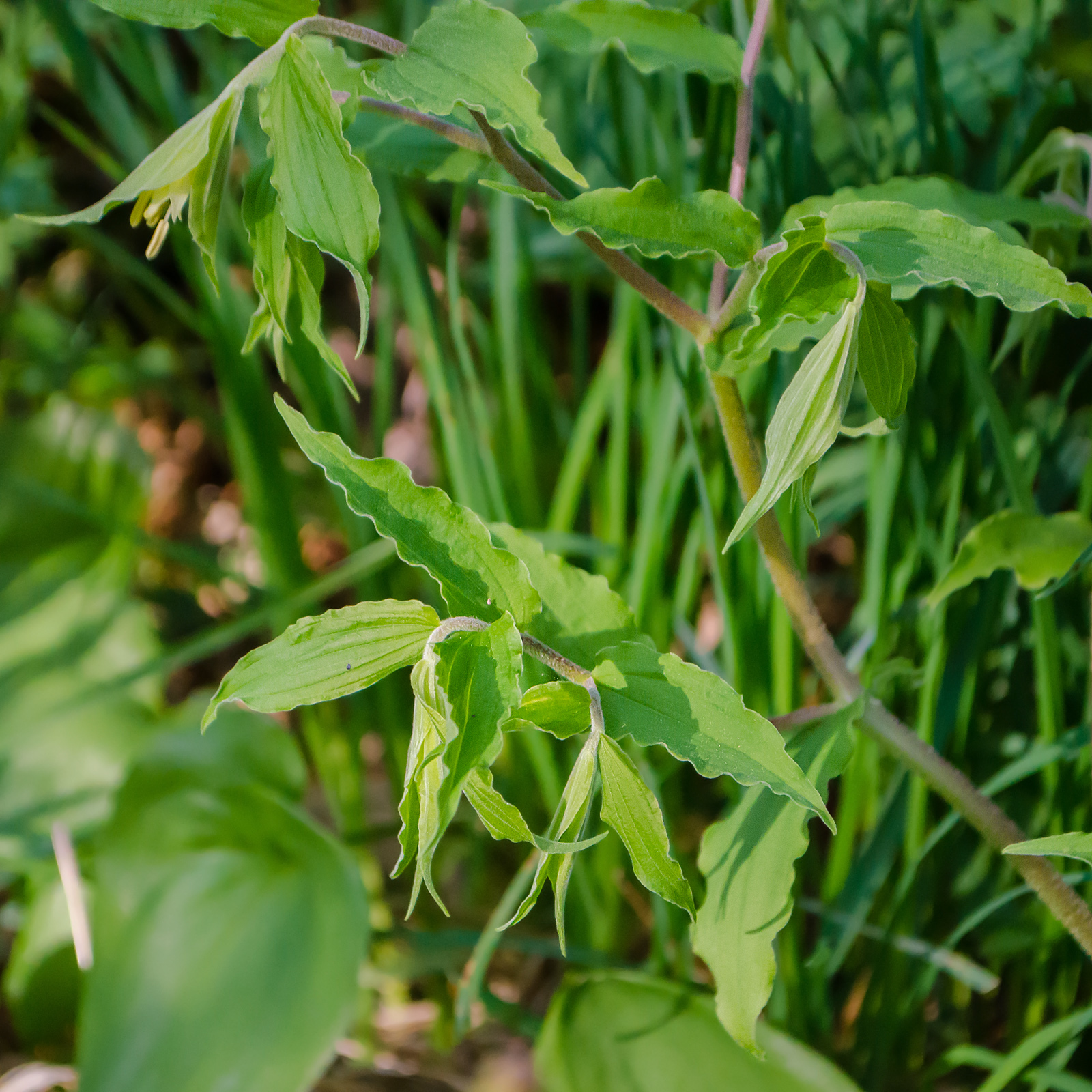
At the base of a stump, a patch of false lily-of-the-valley leaves. At the top, a salmonberry sprout and a couplle of stalks of (I think) Hooker's fairy bells.

About the false (aka western) lily of the valley, E-Flora says:
Occurs ... on very moist to wet, nitrogen-rich soils ... on water-receiving and water-collecting sites, commonly found on stream-edge sites, floodplains ... Grows with ... Lysichitum americanum (skunk cabbage). Characteristic of alluvial floodplain forests.

Pretty much describes the Nunns Creek wetland.

Young horsetail spike. With lily of the valley leaves and ivy (invasive here).

The fertile stems of common horsetail show up early in the spring, mature and die before the leafy stalks (non-fertile) appear.

Hooker's fairy bells, Disporum hookeri. One flower is open; the rest are still in bud.

Another trillium. I think the red dot is a red velvet mite. It's too small to be sure, but the colour and size are right. Blown up to 400%, I can see the shadows of the legs.

And since they were everywhere, another pink fawn lily.

Friday, April 26, 2019

So delicate!

And there are bleeding hearts ...

Two (well, one and a bit) flower heads and bleeding heart leaves.

A closer look.

And another pink fawn lily in a bed of bleeding hearts.

Wednesday, April 24, 2019

AKA swamp lanterns

I did find those skunk cabbages. Behind a stand of salmonberry canes, on the far side of a slippery, muddy creek. Not accessible from the trail system. Typical skunk cabbage behaviour. (I passed another thickly-populated patch in a separate wetland yesterday. It was just as unreachable without jungle-whacking tools and high rubber boots.)

Two loners had separated themselves from the pack. I could get close to one, in camera range from the next.

This one was on my side of the creek. Fresh and new, with small leaves. The leaves around it, down in the mud, are creeping buttercup, an invasive species.

The spadix and its enclosing spathe. The white flowers are lined up along the spadix.

Flowers:
Inflorescence of numerous, densely packed, perfect flowers in a cylindric spike 7-12 cm long, the spike on a 30- to 50-cm long stalk and subtended by a yellowish bract similar to the leaves in shape but much smaller ... (E-Flora) (my emphasis)

"Perfect flowers" just means that they include male and female parts, but I'm sure the beetles find them perfect based on different criteria. The flowers have four petals, closely clasped around the centre.

The skunky smell attracts flies and beetles, which pollinate the flowers. It is rare to find a flower spike without them; this one is new, and seems not to have gathered any yet.

Another young plant, with one mature flower spike, two hidden new ones. And more buttercups.


Powered By Blogger