Showing posts with label turtle. Show all posts

Wednesday, July 12, 2023

Red-eared pond dweller

 Her name is Stella. She doesn't respond to it. She responds to sunlight, warmth, and moving shadows.

Red-eared slider (Trachemys scripta elegans) 

Stella lives in a backyard pond. She was sunning herself on a rock and saw me before I saw her; I caught a flurry of motion, a glimpse of her shell as she dove into the water. But a minute later, she came out to watch me watching her, half-hidden beneath the leaves.

These turtles are listed as an invasive species here in BC. Stella lives in a fenced enclosure; she won't be released into the wild, and won't be producing eggs.

~~~~~~~~~~
Se llama Estela. No responde a su nombre; le pone atención al sol, al calor, a las sombras en movimiento.

Es una tortuga de orejas rojas, Trachemys scripta elegans. Vive en un estanque de un jardín particular. Se asoleaba sobre una piedra, y me vió antes de que yo la viera; apenas vi un movimiento brusco, un vistazo a su caparazón al sumergirse. Pero pasando un minuto, salió para observarme desde su escondite bajo unas hojas.

Estas tortugas, nativas de la región que comprende el sureste de los Estados Unidos y el noreste de México (Wikipedia), aquí en Colombia Británica están contadas entre las especias exóticas invasoras. Pero Estela vive en un espacio cerrado y no va a escapar al medio ambiente natural, ni se reproducirá.


Sunday, August 28, 2022

Impressionist pond

When the water surface works as camouflage.
  
Red-eared slider in a pond.

Red-eared sliders are originally from the midwestern US and northern Mexico, but have been imported here by the pet trade and are now considered in BC as an invasive species that out-competes our native species. This one is in an isolated pond, fenced in and well cared for; she will not be a danger to local turtles.

Notice from the BCInvasives site: Invasive species are plants, animals or other organisms that are not native to BC, and have serious impacts on our environment, economy and society. Never release your plants and animals into the wild or dump aquariums or water garden debris into rivers, streams, lakes or storm sewers!

~~~~~~~~~~~~~~~~~~~~~~~~~~~~~~~

Cuando la superficie del agua sirve como camuflage.

Foto: una tortuga de orejas rojas en un estanque.

Estas tortugas, Trachemys scripta elegans, son originarios del centro de los Estados Unidos y del norte de México, pero se han diseminado aquí por el mercado de mascotas. Ahora se consideran en Colombia Británica y otros lugares como una especie invasiva que amenaza a nuestras tortugas indígenas.Ésta vive solitaria en un estanque bien mantenido, y con rejas para contenerla y no constituirá un peligro.

Una advertencia de parte del sitio BCInvasives: Especies invasivas son plantas, animales, u otros organismos que no son nativos en BC, y que impactan gravemente a nuestras ecología, economía y sociedad. ¡No suelten nunca sus plantas y animales al reino salvaje, ni vacíen sus acuarios o los residuos de sus jardines acuáticos dentro de rios, riachuelos, lagos ni en sistemas desagüe!


Sunday, August 02, 2020

Ancient sea lilies

I got side-tracked from looking at rocks by a trip to the wharf. But there was something I'd discovered among the information about pillow lavas.

This turtle has been sitting on the shelf above my desk for a while.

Carved stone turtle full of fossils

I had wondered what made those circles and stars in the rock. The pdf on the geology of Strathcona Park had a section describing their source: sea lilies.

The other side of the turtle

The circles are sections of the stems of a marine animal, crinoids, animals related to starfish and sea urchins. (The five-pointed star hints at this relationship.) They come in many forms, stalked and unstalked. The stems are made of discs of calcium carbonate. When the rest of the animal disintegrated, the mineral part of the stem remained. So what I'm seeing is cross-sections of crinoid stems.

Five-pointed star shape of the centre of a stem disc.

The crinoid column is also called a stem or stalk. The stem is made from disc-shaped pieces of endoskeleton which are stacked upon each other and are hollow in the middle. They are held together by ligaments which decomposed rapidly after death. The hollow shapes inside of the discs include: elliptical, circular, pentagonal, and star-shaped. (fossilera.com)

The turtle has two carved fishes on the top of its carapace. A reminder that the content of the stone was once underwater?

~~~~~~~~~~~~~~~~~~~~

Había estado viendo piedras (lava almohadillada) cuando lo dejé para subir fotos de alga marina y sus residentes. Pero me quedó una cosa por mencionar.

Esta tortuguita de piedra vive en el estante arriba de mi escritorio. Siempre me ha inspirado curiosidad: ¿qué criatura o proceso hizo estos círculos y estrellas?

En el documento acerca de la geología de esas lavas almohadilladas, encontré su descripción; son parte del esqueleto de unos animales marinos que vivían en este sitio cuando todo estaba al fondo del mar. Se llaman lirios marinos, o crinóideos, animales del grupo a que pertenecen las estrellas de mar y los erizos de mar.

Los animales pueden estar fijos a la roca o pueden alzarse sobre tallos. Estos tallos están hechos de discos de carbonato de calcio. Cuando el animal se muere, se desintegra, dejando solamente estos discos.

El centro del segmento puede tener el espacio en forma de círculo, pentágonos, o estrellas, con cinco puntos.

La tortuga tiene encima del carapacho, dos pescados. ¿Un aviso que lo que contiene la piedra alguna vez vivía bajo el mar?

Tuesday, November 13, 2012

With the head of a dragon

Learn something new every day; they tell you it will keep you young. I don't know about that, but at least it keeps me interested.

I've been learning how to swap backgrounds on my photos. I keep forgetting the commands, so I worked far too long on it last night to do a blog post afterwards. Here's what held me up:

An antique jade turtle with a dragon's head, a Chinese symbol of longevity. It's a tea or sake pot that holds about a shot glass of liquid; the smaller turtle is the lid. I photographed it on a white sheet, for easy selection, then pasted a design from a card over the sheet, taking on the contours of the fabric.

This is fun! Not exactly appopriate for insect and bird photos, unless I mention at the time that the background has been changed, but it may be helpful when the insect in question prefers the wood of my desk to the leaf I have so carefully provided.

Wednesday, June 06, 2012

Forgotten photos

I've spent hours digging through my spare hard drive looking for a couple of photos for a post I'm working on. I've only found one, so far. Still, it wasn't wasted time; my files are more in order now, and I discovered some good photos that I'd forgotten I had.

Pacific forktail, Van Dusen Gardens, 2009

Merlin on a pole, 2009, I don't remember where.

Sasha, at 18 years old, now absent but sorely missed.

Turtles on a rock, Van Dusen Gardens

A very fuzzy photo of a shy mouse behind a flower pot. An outside mouse, not a house pest.

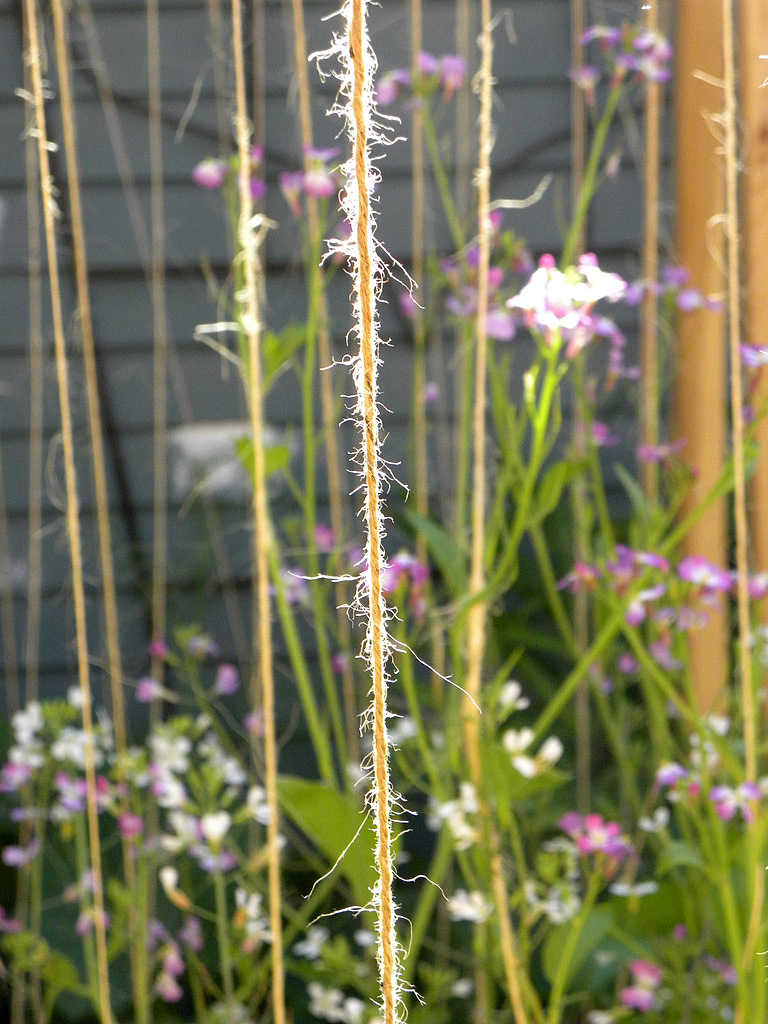
And just because I like it, crazy or not; garden string.

Tomorrow, photos or no photos, an ordinary fruit that suddenly turns out to be weird.

Monday, May 10, 2010

Because Canucks fans are wearing mustaches these days

Hairy:

Purple dead nettle, Lamium purpureum


Luna in a rare quiet instant. At the Mothers' Day picnic, Queens Park.


Midge found drowned in my salt water reservoir. The hairy antennae show that it's a male.


Rex, sure, you're a hairy hermit, but don't you think wearing an anemone on your shell is going a bit overboard?

Not hairy:


Red-eared turtle, Cougar Creek Park. Not a Canucks fan.

Wednesday, April 15, 2009

A couple of non-singing residents of Iona Island

At first I thought it was a rock ...

Just a grey blob, not moving, far away on an island in the pond. But then, any rock there would be covered with reeds, I thought. So I took a photo.


Turtle, catching a few rays.

This one was moving, and fast. Laurie found it in the blackberry patch:


Garter snake. At least, part of a snake. Almost patternless.

The turtle could be B.C.’s only remaining native pond turtle, the Western Painted Turtle, or more probably, the imported Red-Ear Slider. They are distinguishable mainly by the red patch on the side of the red-ear's head. These are often released by bored pet owners; most turtles we see in the ponds are red-ears.

The snake is a native, probably the Northwestern Garter Snake.*

*Update: PSYL asks, in the comments, why the garter snake has no stripes. I really should have "shown my work" in the post, so here goes:

I am used to seeing very stripy garter snakes.

However, quoting from the BC Reptiles page on Northwestern garter snakes, "adults are black, brown, or olive in colour. This may be accented by a stripe down the back. However, the width of the stripe varies, and sometimes the stripe is missing entirely. ... The colours can appear muted because of the strongly keeled scutes (scales with a ridge running from front to back), a trait shared with all other Garter Snake species."

If you click on the photo to see it full size, you can see a very faint yellowish stripe down the side. And the ridge along the back is there.

Thanks, PSYL!

.

Friday, April 18, 2008

Green heads and grey


Spring has come to Cougar Creek, and the beavers have been busy, building habitat. We went down to take a look at the progress.

Here is the map from last March:


In that light green oval, the little pond they had started is now deeper and wider, no longer just a widening in the creek.


They are working on a homestead dam at the outlet, and have been enthusiastically felling trees up and down the creek. At the entrance to the main ponds, a stack of building materials provided a sunning spot for a large turtle. He posed nicely for us, raising his head to display the yellow striped chin.


The resident heron was not so co-operative.


After half a dozen photos of the branches, with a blurry grey mass behind, I finally managed to focus.

So he up and left.


He's camera shy.


This bathing mallard wasn't.


Nor was the widgeon.

The mergansers have gone, so has the cormorant. But the mallards are parading up and down the ponds, in pairs.


And over on the far side, -- oh, joy! -- a new, younger heron was fishing. And not in the least shy.


Heron and widgeon


Stalking, one slow step at a time


Gotcha!
.

Monday, October 08, 2007

The Animeme

This has been going the rounds for a couple of weeks; Bora, at Blog around the Clock, started it off.

We are supposed to blog about interesting animals in our lives, under 5 headings. I already filled in one of them in the comments on Creek Running North; I'll cut and paste that here, under the appropriate heading.
  1. An interesting animal I had:
  2. An interesting animal I ate:
  3. An interesting animal in the Museum:
  4. An interesting thing I did with or to an animal:
  5. An interesting animal in its natural habitat:
1. An interesting animal I had. Jellybean, the cat who chased bears. She is always the first animal to come to mind. It's a long story, which I wrote about on my website: you can find it here.

2. An interesting animal I ate. That would probably be the pan-fried grasshoppers (recipe) I bought in an open-air stand in a Mexican market. (Toluca) Spread in a fresh, warm corn tortilla, sprinkled with lime juice and garnished with a sprig or two of cilantro: Yummy! I wouldn't say the same for the Philipine delicacy I downed; at the time, I still had a cast-iron stomach. Half-developed chicken, still in the shell, hard-boiled. With feathers. Passable, if you don't look at it.

3. An interesting animal in the museum. The feathered serpent of the Aztecs.


4. An interesting thing I did with or to an animal. This was my comment on Creek Running North:

The year I lived in Oklahoma, I kept noticing box turtles on the roads. I would carefully steer around them, but not everybody did. I found a fair number damaged or killed by traffic, and started rescuing those that could survive, releasing them when they seemed healthy again.

At one time, we had around a dozen wandering around the rec. room.

One turtle had been hit on the head and had a large wound over one eye. After a few days, checking him over, I noticed a maggot crawling out of it. I sat down with him and tweezers and pulled out, one by one, a wiggling mass of maggots. The hole left behind must have been a half-inch deep into the flesh, and beyond the broken bone into the brain.

The turtle survived. In mid-summer, I was able to release him.

5. An interesting animal in its natural habitat. Grizzly bear. And that is another post all on its own. Sometime this week.

And a bonus: an animal I loved: Sancho Panza, the horse. Bear Bait: another story from my website. Warning: this is not a tale for the squeamish!
Powered By Blogger