Showing posts with label hawk. Show all posts

Tuesday, February 04, 2025

Speedy blob

It was still snowing, but just barely, when I stopped at Oyster Bay this afternoon. The snow on the ground covered my boots, and in places was about 30 cm. deep, but along the main paths, it had been trampled down already. The path to the dike overlooking the tide flats and purple martin houses was well-travelled, and there, on a vacant nest box, was an almost black blob. Shouldn't have been there. A big bird, maybe? I took photos, just in case, and then the blob lifted off and flew away, circling around me, to disappear into the trees on the shore.

A hawk.

Hawk and pintail ducks. Much lightened; what I saw was a black blob.

Flying low, spreading those wing-tip feathers.

Turned to pass the highway.

And returning, over the meadow and into the woods.

I'm not sure which hawk this is. Maybe a red-tailed hawk, Buteo jamaicensis. "... found virtually everywhere," so they say in Birds of Coastal BC. Turns out it was a young eagle.

~~~~~~~~~~~~

Seguía nevando, pero apenas, cuando llegué a Oyster Bay esta tarde. En el suelo, la nieve me cubría las botas y en algunos sitios, pasaba de los 30 cm, pero en los senderos más usados, ya otras personas habían abierto camino. Tomé la ruta que da al dique de donde se puede observar la laguna con los nidos hechos para las golondrinas purpúreas,y desde allí vi, encima de uno de esos nidos, una mancha casi negra, un bulto sin forma. No debería haber nada allí. ¿Un pájaro grande, tal vez? Saqué unas fotos, por si acaso, y al oir el chasquido del obturador, la mancha abrió alas y se largó, dando una gran vuelta alrededor mio antes de desaparecer entre los árboles al lado de la playa.

Un halcón.

  1. La cámara ve, aun en la oscuridad. El halcón, y abajo, patos rabudos.
  2. Volando bajo, abriendo esas plumas de las puntas de las alas.
  3. Dió vuelta para pasar la carretera que aquí corre cerca del agua.
  4. Y regresando, para cruzar la pradera e ir hacia el bosquecito.
No estoy segura que especie de halcón sea; tal vez un halcón de cola roja, Buceo jamaicensis. "... se encuentra esencialmente en todas partes," dice el libro guía, Birds of Coastal BC. Resulta que fue un águila joven, antes de desarrollar la cabeza blanca.

Saturday, November 06, 2021

Two minute photo op

Driving home in the rain yesterday, I saw a hawk in a tree and did a U-turn to park underneath it. Though it was early afternoon, the light was almost gone, so that my old eyes barely registered a bit of brownish colour in the tail feathers. The camera sees better.

First shot. A red-tailed hawk, dark morph. 1:21 PM

How do they hear the shutter click from inside the car? As soon as I took a photo, the hawk dropped off his branch and flew to a tree farther down the highway. I followed and parked again. This time, he was "hiding" in a tangle of branches.

"You here again?"

"I heard that!" 1:22

Turning his back on me. 1:22:50 Rain on the windshield.

"I can't be having with this!" 1:23:09

Total time, two stops; less than 2 minutes.Why does he perch right beside a busy highway if he doesn't want visitors?

~~~~~~~~~~~~~~~~~~~~~~~~~~~~~~~

Llovía, como siempre. Aun cerca del mediodia, no había mucha luz. En camino a casa por la carretera al norte, vi un gavilán en un árbol. Me di vuelta y me estacioné debajo de su árbol. Con la poca luz, y mis ojos viejos, casi no se veían colores; apenas podía distinguir el color café de la cola. La cámara ve las cosas más claro.

  1. Primera foto. Un ratonero de cola roja, Buteo jamaicensis. ¿Cómo es que pueden oir el click de la cámara, aun dentro del coche? En cuanto sonó, el ave abandonó su rama, y fue a parar en un árbol más denso, un poco adelante. Yo le seguí. 1:21 PM.
  2. Segunda foto, en el nuevo sitio. — Tu aquí, otra vez?
  3. — ¡Eso lo oí! 1:22
  4. Me da la espalda. 1:22:50
  5. Y se va. — ¡Esa intrusión no la aguanto! — dice.  1:23:09
Tiempo en total: menos de 2 minutos. Si no quiere visitas, ¿porqué se sienta justo al lado de una carretera bien frequentada?

Wednesday, June 06, 2012

Forgotten photos

I've spent hours digging through my spare hard drive looking for a couple of photos for a post I'm working on. I've only found one, so far. Still, it wasn't wasted time; my files are more in order now, and I discovered some good photos that I'd forgotten I had.

Pacific forktail, Van Dusen Gardens, 2009

Merlin on a pole, 2009, I don't remember where.

Sasha, at 18 years old, now absent but sorely missed.

Turtles on a rock, Van Dusen Gardens

A very fuzzy photo of a shy mouse behind a flower pot. An outside mouse, not a house pest.

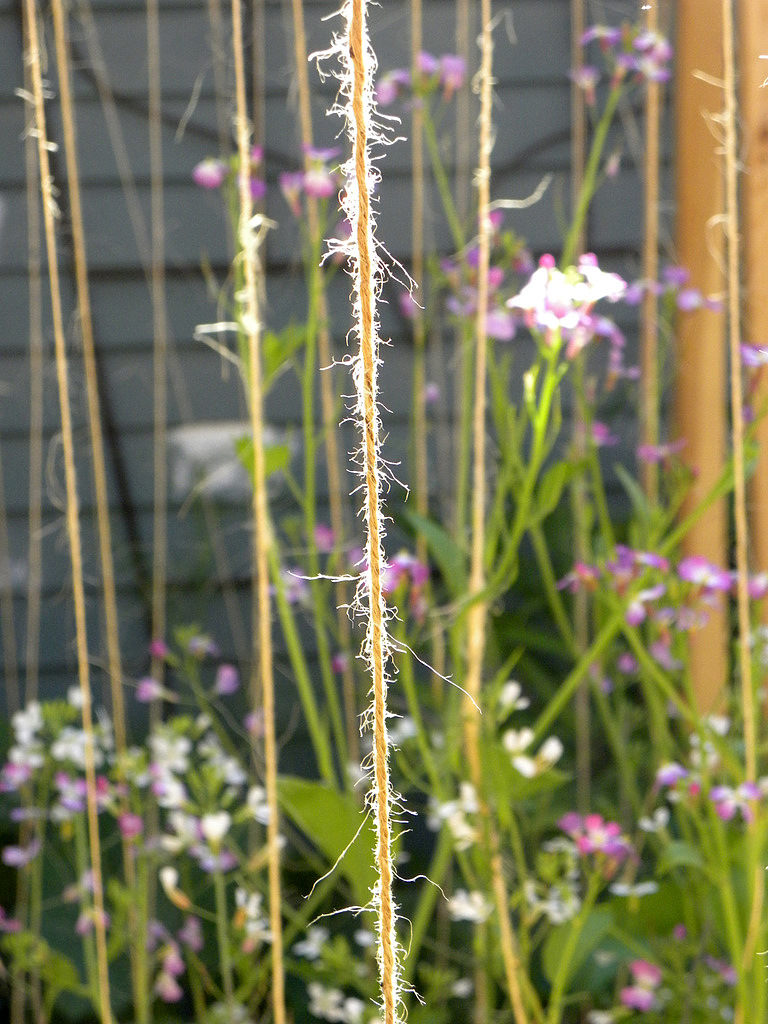
And just because I like it, crazy or not; garden string.

Tomorrow, photos or no photos, an ordinary fruit that suddenly turns out to be weird.

Sunday, February 26, 2012

Substitute eagle

None of the eagles were in their customary trees at Centennial Beach last week. Insted, in the tallest, a little merlin stood guard.

King of the castle, for now

It makes me wonder; crows chase eagles away, even though they're a bit less than half the size of one. Do the eagles also shun hawks? Have I ever seen an eagle and a hawk in neighbouring trees? I don't remember. Do you?

Saturday, February 19, 2011

Creatures great and small

The sun finally overpowered the clouds, and, by the end of the afternoon, even warmed our backs. We wasted no time heading for Tsawwassen and Centennial Beach. At the entrance to the park, the hawks and eagles were out in force, several in every clump of trees, the leftovers sitting on power poles. An osprey was casting back and forth over the swamp, hunting. (And we think we've found their nest; next time, we'll head that direction.)


In the centre of the duck pond, the redwings are nesting, and making quite a racket about it, almost drowning out the chattering ducks (mallards, wigeons and assorted hybrids) and the gulls, who were arguing, as they do, over a few handfuls of bread crumbs.

Juvenile redwing on spotty reeds.

Off-shore were more ducks and gulls, and far out in the bay, flocks of small, dark birds, flying back and forth in long lines or bobbing up and down on distant waves. These came close enough to be identified, just barely:

Surf scoters. The white spots are the backs of their heads; the pink triangles are those ridiculous beaks. The two in drab are females.

And this made us very sad:

Gull with torn foot

He came right up to my feet, begging for food. He even tried to eat the cracked corn I was carrying; most gulls just look at it scornfully. Happily, a woman came along with bread and crackers. I hope he gets a good share of tomorrow's barbecues. (I'm hoping it's still sunny.)

The poor gull could barely put his foot on the ground; mostly he hopped or flew. The foot was not only broken, but badly mangled and torn. Here's another view:

Looks painful.

What could have done this? It looks to me as if he had been grabbed and shaken by a dog. Both the leg and the foot are ripped in several spots, and the bone is broken.

I love dogs, but I wish people would keep them on a leash if they have the slightest tendency to chase birds. It's not as if they were having to hunt down their food; they're not wolves or coyotes any more.

On a happier note, I found this spider running along the sand. I've never seen one like it before. I've submitted a couple of photos to BugGuide.

Orange and black sand spider.
(Update: Lynette Schimming, at BugGuide, says it's a wolf spider, of some kind. Update # 2: Arctosa perita.)

More cheerfulness:

But it's serious business.

And on the way home, we saw this small merlin, the first I have seen close up. I had to lighten the photo quite a bit, because it was silhouetted against a bright sky.

As interested in us as we were in him.

And Laurie got his feet soaking wet inside the boots, collecting water and seaweeds for our critters in the tank. They appreciated it: he's so good to them!

Thursday, February 03, 2011

Muddy food chain

Mud Bay Station Park*. A muddy, pot-holed road across the delta, a muddy parking lot, and a long, straight walk down to the shore, where the deep, sticky mud comes right up to the rocks that hold the pathway from slip-sliding into the goo.

It's beautiful, and we don't go there often enough.

This afternoon, we remedied the situation. It was high tide, and birds would be foraging close to the rocks; an ideal time to visit.

The walk to the shore follows the railway tracks across wet fields, empty except for beaten-down grasses and weedy shrubs. Hawk territory. One swooped and soared ahead of us as we fumbled for the cameras, then crossed the tracks and disappeared. But we found evidence of previous meals:

Hawk habitat. And owls, too. Maybe coyotes. None visible.

In a not-quite-so-muddy spot along the shore, the sketchy remains of a gull.

I like the curves on this feather.

Possibly part of the same gull.

Scat. Owl, hawk, coyote? I can't tell. But it's mostly feathers.

Black and white feathers, a couple of inches long. Can you identify the bird?

We've seen rabbits here, too. This looks like rabbit fur.

Out on the mud, peeps and ducks were busily digging for worms. They're as bloodthirsty as the hawks, but we usually don't notice that, since we don't see the worms. And they're just worms, anyhow; not as cute as bunny rabbits.

And the worms eat other worms, and small crustaceans. Which eat anything they can get, including unfortunately dead seafowl. Munching makes the world go 'round.

*The trains used to stop here, I don't know what for. Hence the name, Mud Bay Station.

Thursday, July 22, 2010

A visit to O.W.L.

Sarah, the barn owl, would greet visitors to her home, if only she weren't so drowsy. While we stood in an admiring circle around her, she opened her eyes briefly, then nodded off again.  An owl needs her beauty sleep!


Sarah, off duty. She is an educator, working with children in the schoolroom.

We, Laurie and I and a couple with a young son, were in the office of O.W.L., the Orphaned WildLife Rehabilitation Society. Our guide, Rob, explained the operation of the society while Sarah slept on her perch by the window. Staff members and volunteers came and went, discussing schedules and the needs of their charges. A chart on the wall keeps track.


I counted 107 raptors presently on the site. The chart divides them into groups; 4 severely injured birds at present in Intensive Care,  some in interim cages, training cages, flight cages. There are flight training sessions in store for red-tailed hawks and a pair of great horned owls. Another section lists the birds soon to be released. The last column names the permanent residents; some are educators, trained for visits to schools and other field trips; the others are unable to be released because of some severe disability. These last are the ones we would be visiting.


Rusty, rough-legged hawk. He was hit by a car and has a broken wing.

O.W.L. takes in injured raptors, mostly from the Lower Mainland, up to 200 per year. It has full medical facilities and a variety of recovery and training cages, and is building a pool cage, where eagles and osprey can recover their fishing skills before release.


One of the outdoor cages, housing three short-eared owls. On hot, sunny days, the birds sit far back in the shade, making photography difficult.


Gunther, Ariel, and Willow. Peregrine falcons. One has been shot; another has had part of a wing amputated.


Sampson and Delilah. Great grey owls. Both hit by cars. Delilah has a blind eye.


Demon. A barred owl. Hit a window in a high-rise building. Brain damaged.
He was called Demon because when he is upset, he flies at you with his head upside down, due to his lack of muscle control, a direct result of his injury. A lot of times he sits with his head at a kind of an odd angle and he has been known to fall off his perch because his lack of balance after falling asleep. We have to put his food on the same perch all the time or he cannot find it.
That makes me worry about the occasional sparrow or chickadee that hits my windows.


Mirage, a Gyr-Peregrine falcon cross. Bred for a falconer's bird, broke her wing and never recovered.


Mirage again.


Either Kermit or Piggy, Snowy Owl. Both birds were hit by planes. I never saw a bird smile before!


Turkey vulture, one of three, Pepe, Precious, and Chuck.
It is a daytime bird with a very keen sense of smell, sight and hearing which enables them to find food by sight and also smell food (parts per trillion) from great distances. Its digestive system has the unique ability to kill any virus or bacteria it ingests. This is apparent in its droppings as there is no sign of any type of disease.
I was glad to see the turkey vultures so close, but they moved around all the time, and we couldn't get a clear photo. Rob told us to notice their nostrils; the holes in the upper part of the beak. Unlike all other birds, these nostrils have no central "wall"; from the right angle, we could see daylight on the far side. This allows a better capture of the smell of rotting meat.

He also explained the bald head; the vulture often buries his head in the rotten carcass he's found. (On the road, as we saw up the Sunshine Coast, maybe.) If he had feathers, they would come out carrying a load of bacteria and maggots. The bald head dries quickly and sheds the offending critters.


Turkey vulture, acting shy.

On our way out, in response to a question from the other couple, Rob mentioned that the BC government has cancelled their annual grant; O.W.L. is just one more of the environmental agencies that the provincial government has defunded, in their misguided "austerity" measures. They may have to shut down operations, after 25 years of caring for these beautiful birds.

"What will happen to the birds?" I asked. They will try to find adoptive homes for as many as possible, Rob says. Some will be released, as they are now when they are ready. And some, not able to survive on their own, will probably have to be euthanized.

But first, the society is trying to raise money from private individuals. There's a button on their home page for donations; if you can help, please do.


Wooden owl, guarding the entrance to the cages.

*Update: Larry, at the Birder's Report, has a post about a rehabilitation centre in California. Great photos, and more details about the operation of these organizations. Check it out.

Monday, February 15, 2010

Slowpoke!

Along the road passing the entrance to Centennial Beach Park, on Boundary Bay, wide open marshland provides good hunting grounds for raptors. We usually see at least one, often perched on a hydro pole by the roadside. We stop to take photos; the hawk flies away. Today there were three, and one was a bit slow to leave. Laurie got three shots at it through the window.


Red-tailed hawk


Trees and clouds at the end of the field. With hawk, unidentifiable.

Wednesday, April 08, 2009

Ladner Harbour Park: the itinerary

The other day, Hugh, at Rock, Paper, Lizard, reported on an outing to Ladner Harbour Park; it was lousy with woodpeckers, he said, and the hummingbirds were buzzing over the lagoon. We couldn't resist. Sunday afternoon, we headed down there.

We started at the far end of the sewage lagoon, where the hummingbirds had been. Everything was quiet. No buzzing hummers, no redwing blackbirds, no chattering sparrows, even.

At this time of year, the wetlands are clothed in mud colours; drab browns and greys. There is no softness to the land. Blackberry canes and scratchy shrubs alternate with rustling stands of last year's cattails. Dead grasses sprawl in oozy mud. Kayakers in the waterways provide occasional flashes of colour.


White kayak, yellow jacket


Not a kayak.


Cattail fluff, blowing away

Over the marsh, two hawks patrolled; one, small and elegant, with a white tail, flew in that characteristic "flap-flap-flap, coast, flap-flap-flap, coast" pattern; the other, a large red hawk, sped along in a straight line, making a beeline for somewhere else. When they were gone, a flock of ducks goofed around in the air, going nowhere.

We walked around the lagoon, and passed the "civilized" part of the park, and took the path through the cottonwood forest. And yes, there were woodpeckers.


This flicker was digging a nest hole high in a topless snag. It was deep enough already that he would disappear inside, except for the very tip of a tailfeather. After a few seconds, he backed out, posed, dropped his chip, and dove back inside. We took umpteen photos, all of his silhouette.

A few steps further on, a brown creeper started up a cottonwood just a few feet from us. After the manner of his kind, he spiralled around to the far side the minute we'd got the cameras focussed. Still, we'd seen him, and fairly close-up.


Cottonwoods, far above. Probably lousy with woodpeckers. We heard them.


We took the trail out to the viewing platform at the end of the spit, took the wrong turn at the fork, and ended up on muddy marsh, with a view over the river. Those black spots in the water aren't ducks; they're deadheads. But there's an eagle's nest far across the water.


Then back through the forest behind the office, and on to the road. We followed the road back past the harbour where we saw the mallard hybrids and a fishing heron.


Awkward pose.


Grasses beside the canal.

We never saw the owl, nor its nest. But all the way back along the canal, we were treated to a red-wing blackbird song-fest; the males, busily staking out their territory before the females arrive, and by the sound of it, very pleased with themselves.

And here's a bird we never expected to see in the bush:


Free-range chicken.

And this is for Hugh's collection: this one must have died of old age.


R.I.P.

What else we saw in the park, the green stuff, will wait till tomorrow.

.
Powered By Blogger