Showing posts with label log. Show all posts

Thursday, December 22, 2022

Hey, Stu!

 4 days until Christmas. Taking it easy.

This is an old log, on the ground in the woods, barkless, and showing off all the insect larval tunnels.

Almost looks like a message.  To Stu, I think.

The leaves are Oregon grape. The dead leaf above may be oceanspray.

~~~~~~~~~~~~~~~~~~~~
Faltan cuatro dias para Navidad. Yo estoy flojeando.

La foto muestra un troncón muy viejo, tumbado en el suelo de un bosquecito. Se le ha caído la corteza, dejando los túneles hechos por las larvas de insecto en la madera viva. Hasta casi parece un mensaje, no puedo leerlo, aparte del designatario: dice, "To Stu".

Las hojas verdes son de uva de Oregón, Berberis aquifolium; la hoja seca puede ser de Holodiscus discolor.


Monday, March 14, 2022

Sleepy

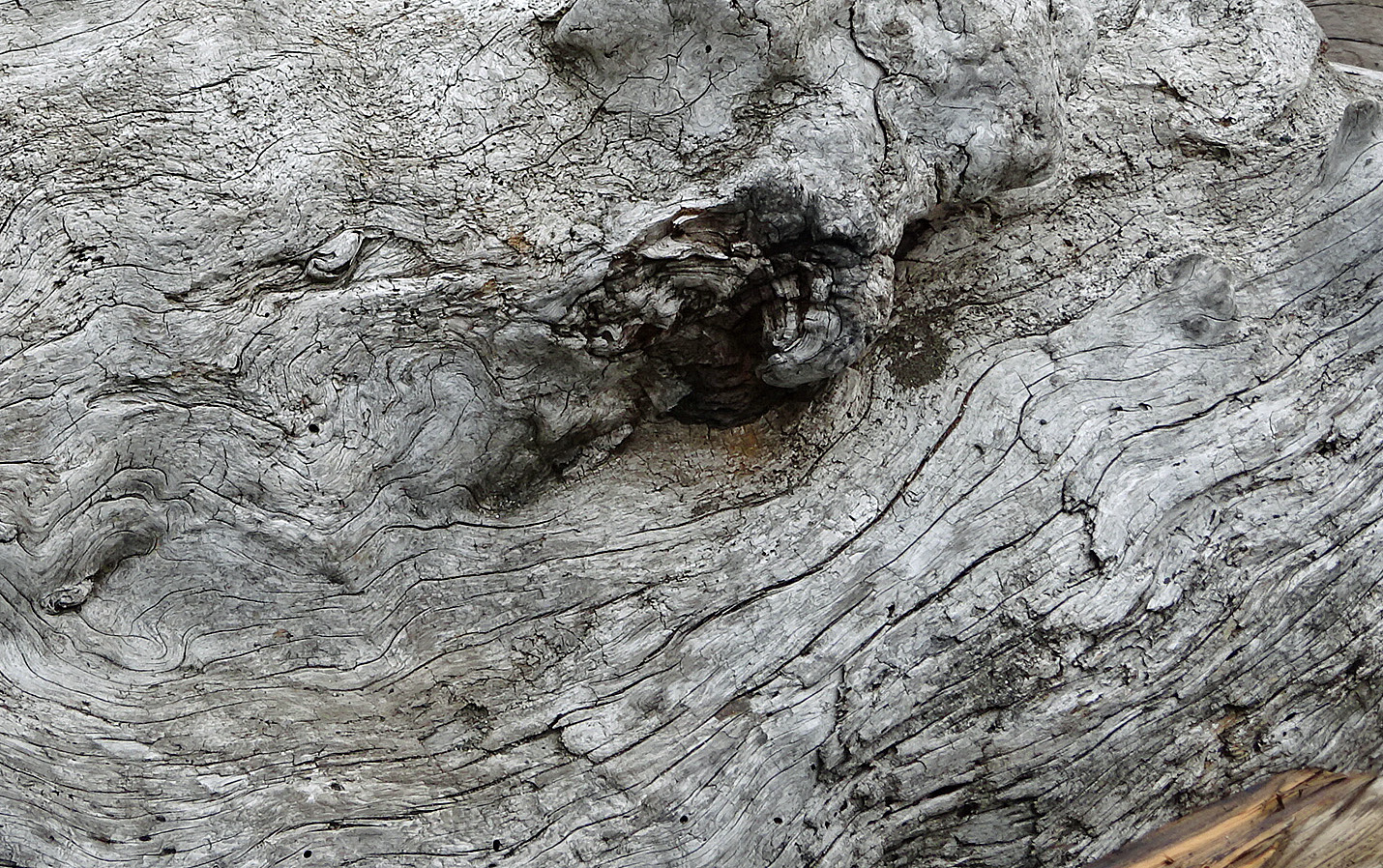
 Just a piece of log lying in dry winter grass.

Looks like a head. Of what?

~~~~~~~~~~~~~~~~

Un pedazo de tronco, tirado entre pastos secos. Parece cabeza de algo. Pero, ¿qué?

Wednesday, March 09, 2022

Log pimples

 An uprooted tree lies on the shore. It's been there a while; the bark is gone, the wood is spalted, taking on a bluish tinge. And all along its length, tip to ground level, small mushrooms are bursting out. On the roots, exposed along with the rest of the tree, not a single one is visible.

The largest mushrooms are about 1 cm. across.

Spalting is caused by fungi growing inside the dead wood. I found it interesting that neither the mushrooms nor the spalting effect showed up in the roots.

~~~~~~~~~~~~~~~~~~~~~~~~~~~~~~~~~
Un árbol entero, arrancado del suelo con todo y raices, yace en la arena cerca de la zona de altamarea. Tiene tiempo allí; ya perdió la corteza, y la madera está teñida por hongos que crecen en el interior y pintan la madera de gris y azul. Y a todo el largo, honguitos brotan. Menos en las raices, expuestas al igual con el tronco, pero ahí no aparece ni un honguito, ni se han pintado; mantienen el color natural de madera seca. Algo interesante.


Thursday, February 17, 2022

Just a log

The end of a log:

With Cladonia lichens and yellow fairy cups, Bisporella citrina. 

And the side of the same log:

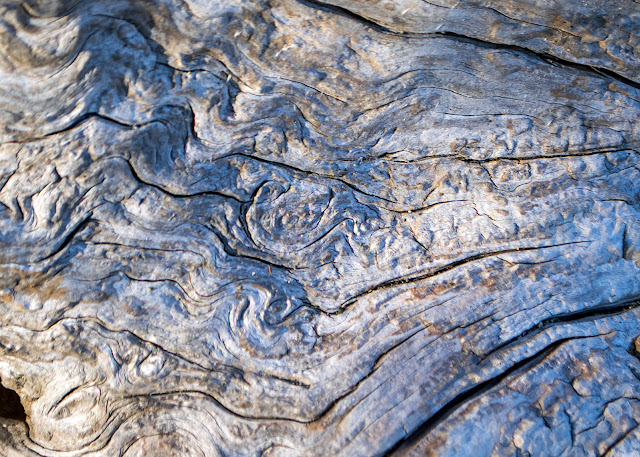
Swirly cracks and a hint of lichen

~~~~~~~~~~~~~~~~~~~~~~~
La superficie cortada de un troncón, con líquenes Cladonia y los honguitos Bisporella citrina.
Y luego, el mismo troncón, visto desde un lado.


Tuesday, January 21, 2020

Playdough log

(Text in Spanish at the bottom: el texto en español sigue al pie de la página.)

On the outer shore at Oyster Bay, among the logs at the upper storm level, one log stands out. First, it's twice the size of any of its neighbours, a bit over 5 feet in diameter; even partially sunk into the sand, the top is at my eye level.

And then, it has been eaten away by teredos, water, salt and wind, rotted and bashed until it is shaped like a mass of childrens clay, squeezed and bulged and twisted. There's no bark left, and the wood is perforated by tiny holes, like a sponge. Mosses and lichens and jellyspot fungi have colonized it; winter storms toss broken shells on top; there are always a few rocks as well.

Yes, that's a log. With a nest of rock eggs. As found.

The roots of an old branch. And more rocks. A few blades of grass add to the life aboard.

On the next log over, because I could reach these: Jelly Spot fungi, Dacrymyces stellatus.

I've been asked to provide text in Spanish for the blog. Con gusto.

En la costa exterior de Oyster Bay (Bahía de los Ostiones) entre los troncos que descansan al nivel más alto de las mareas de invierno, un tronco se destaca. En primer lugar, porque su diámetro es el doble de los más grandes de sus troncos vecinos.

Y luego, porque se ha deformado de tal manera, por la acción de los teredos (almejas que parecen lombrices y que comen madera), por el agua, la sal, el viento, y todo lo que el viento y las olas le avientan; hasta que ahora se parece más bien a una masa de plastilina que los niños han machucado, aplastado y torcido. Ya no tiene corteza, y la madera está perforada con los túneles de los teredo hasta que parece una esponja. Allí crecen los musgos, el liquen, y hongos "Punto de Gelatina", Dacrymyces stellatus: las tormentas del invierno le echan pedazos de concha; siempre hay algunas piedras encima.


Friday, April 12, 2019

Beware of the trees!

Before all the new leaves cover them, I stopped to look at bare logs and tree roots along the Myrt Thompson trail and found them a bit worrisome.

Tangled roots at the river's edge. The water frequently covers this spot, washing out the silt, leaving the roots a couple of feet above ground.

Shades of Old Man Willow! This tree has captured an unfortunate hiker.

Another capture. "Oh, woe, woe, woe! I've been swallowed by this log and I can't get out!"

Snag. Looks vicious. May bite.


Tuesday, June 14, 2016

Deep thought

Wise old log:


Nobody knows the trouble I've seen ...

My internet connection is sick again tonight. I may be offline for a day or two.

Monday, February 10, 2014

Does a bird see the man in the moon?

Pattern from the root end of a driftwood tree, cast up on Crescent Beach:

How many faces do you see here? How many species?

Our brains do funny things. From earliest infancy, we focussed on any two spots, looking for faces. And still, if there are two remotely similar spots in a pattern like this, they immediately become incorporated into yet another "face". Any markings below them become a mouth or maybe a beak.

I wonder; some butterflies, some caterpillars, and other critters wear two conspicuous spots, which serve as camouflage, making them look like a larger animal, or maybe fooling a predator into grabbing a disposable wing rather than the head. Is this another instance of pareidolia; like us seeing Jesus in our breakfast toast or the face on Mars?

Oh, and the last I looked, I saw 17 faces in that stump. Most were not human; quite a few are not even earthly.  I'm lucky there aren't any collections of 8 spots, or I'd be seeing spider faces, too.


Powered By Blogger