Showing posts with label dry summer. Show all posts

Sunday, April 21, 2024

Data point.

View from the shore of Upper Campbell Lake, mid-island, 50°N, -125°W, filling a long valley 221 metres above sea level, mid-April, 2024. The water is low, with plants that I usually see growing with their roots in water, now sprouting through dry mud. On land, the moss is crunchy dry, crackling underfoot. But new, yellow-green leaves on the shoreline trees promise summer shade.

From the Reservoir campsite.

A BC government bulletin warns of another dry summer this year:
As of February 1st, the provincial snowpack remains very low, averaging 61% of normal (39% below normal) across British Columbia. ... Low snowpack and seasonal runoff forecasts combined with warm seasonal weather forecasts and lingering impacts from previous drought are creating significantly elevated drought hazards for this upcoming spring and summer.
Doesn't look good.
~~~~~~~~~~~~
Esta es la vista desde la orilla del lago Upper Campbell, situado a media isla, 50°N, -125°W, llenando un valle a una altura de 221 metros sobre el nivel del mar, a mediados de abril de 2024. En la orilla, plantas que normalmente encuentro con las raices en el agua, ahora brotan en lodo seco. En el bosque, el musgo está seco, tostado, crocante. Pero las hojas nuevas, verde/amarillos, prometen sombra para el verano.

Un boletín del gobierno de Columbia Británica nos advierte que esperamos otro verano seco este año:
A la fecha del primero de febrero, la nieve acumulada de la provincia sigue muy baja, con un promedio 61 porciento del nivel normal (39% bajo el normal) en toda la provincia de CB. ... Pronósticos de niveles bajas de nieve acumulada y escorrontía estacional combinados con pronósticos de temperaturas de temporada elevadas, además de los impactos sostenidos de sequías anteriores crean peligros elevados de sequía para la primavera y verano.
Desalentador.


Friday, November 04, 2022

Poor dry Mitlenatch!

The day before the storm ... Clear and sunny, with a hint of wind. I was looking across the water, watching distant birds, and noticed Mitlenatch Island gleaming in the sunlight.

The view from Shelter Point. Mitlenatch Island; behind that, the southern tip of Hernando Island, and then the mainland, 30 km. away.

Mitlenatch Island sits in the rain shadow of Vancouver Island, and gets less than half the rain we get over here, so close. Here, it's rainforest; there, it's semi-desert, with prickly pear cactus and all. So from here, it usually looks pale, with just a hint of green on top. But this Wednesday, the plants were a toasty brown.

Zooming in. Mostly rock.

Here in Campbell River, we get on an average about 200 cm. of rain every year, most of that in November and December. Mitlenatch gets less than 75. July is our driest month, with an average of about 8 cm. of rain. But this year, after a normal July, we got 3.3 cm of rain in August, and less than 7 in September. No wonder our trees turned brown! And poor Mitlenatch probably got nothing. The cactus was happy, I think.

I'm glad it's raining now, a regular BC soaker. And they say it will rain for a few more days, and then we might get snow by Thursday. Things are looking up.

Those distant birds? One came a bit closer.

Harlequin duck, a male in breeding plumage.

~~~~~~~~~~~~~~~~~~~~~~
El dia antes de la tempestad ... El cielo azul, con unas nubecitas, el mar asoleado, un poco de viento. Yo estaba en la playa, mirando aves en la distancia, cuando me llamó la atención la isla Mitlenatch, reluciente bajo el sol.

Foto: Vista desde mi playa; la isla Mitlenatch, el extremo al sur de la isla Hernando. y luego, a 30 km. de distancia, el continente.

La isla Mitlenatch se sitúa en la sombra pluviométrica de nuestra isla de Vancouver y recibe menos de la mitad de lluvia que recibimos nosotros, tan cerca. Aquí, bosque pluvial, allí, desierto, con todo y nopales. Desde aquí casi siempre se ve pálida, pero con un poco de verde en lo alto de las rocas. Pero anteayer, las plantas todas estaban tostadas y sin verde que se pudiera ver.

Foto: Haciendo zoom, para ver la isla mejor. Casi pura roca.

Aquí en Campbell River, recibimos un promedio de 200 cm. de lluvia cada año, con la mayor cantidad cayendo en noviembre y diciembre. En Mitlenatch, solo alcanza a 75 cm, o menos de lluvia cada año. Y el mes de julio es el de la sequía para nosotros; nos llega apenas 8 cm. de lluvia en ese mes por regla general. Pero este año, después de un julio normal, recibimos 3,3 cm. de lluvia en agosto, solo 7 en septiembre. ¡Con razón se nos volvieron cafés los árboles! Y la pobre de Mitlenatch probablemente no vió ni una gota de agua. Los nopales estarían contentos, por lo menos.

Y ahora llueve. Una lluvia normal, mucha agua, todo el dia, toda la noche, empapándolo todo. ¡Qué alivio! Y nos prometen más lluvia, y luego, para el jueves próximo, nieve. ¡Formidable!

¿Y esos pájaros en la distancia? Uno se me acercó.

Foto: Un pato arlequín, en plumaje nupcial.


Tuesday, November 01, 2022

Where there are roots ...

 Around the museum, year after year, October mushrooms, pink and purple, tan and brown ones, sprout in the same locations on the lawns and in the woods. Not this year. I drove up to Lake Roberts to see mushrooms in a spot I'd found them before: nothing there, either.

I checked my photos from the last 3 years. There have always been many mushrooms in those same spots, year after year in October.

But that's on the ground. Where mushrooms have grown before on old stumps, they're back. Not as many as in previous years, but the ones that did show up look healthy. Maybe the dead roots, going deep into the soil, bring up moisture even when the topsoil is toasted.

Old Faithfuls. The grass is green again, after a few days of rain.

A clump of round yellow balls on stems.

The same ones, from the opposite side.

On the base of the donkey engine.

In other years, these last ones, on the donkey engine, grew larger, but in groups of 2 or 3. This year, one crack in the logs is full, but they're tiny. Maybe they'll be bigger in a few days.

~~~~~~~~~~~~~~~~~~~~~~~~~~~~~~~~~~
Alrededor del museo año tras año, hongos han aparecido en el césped y debajo de los árboles cada octubre. Muchos hongos, variados, en colores desde morado o color de rosa hasta café claro u oscuro. Pero este año, debido a la sequía, nada. Fui hacia el norte, al lago Roberts, a buscar hongos donde antes los encontré. Otra vez, nada.

Revisé mis fotos de años anteriores. En estos mismos sitios, encontré hongos en el mes de octubre desde 2016. (Antes de esto, no los había buscado.)

Pero eso es en el suelo. Donde los hongo crecían en troncones viejos, aquí están de nuevo. No tantos, ni en tanta variedad, pero sí los hay, y se ven sanos. Tal vez sea porque las raices muertas penetran profundamente en la tierra hasta encontrar agua, aunque el suelo cerca de la superficie esté bien tostado.

Fotos:
  1. Con estos se puede contar. El césped se está volviendo a enverdecer después de unos dias de llovizna.
  2. Un grupo de honguitos redondos.
  3. El mismo, desde el otro lado.
  4. En una grieta de un tronco de la base del "burro de vapor".
En otros años, estos hongos que crecen en el burro de vapor, han salido en grupos de 2 o 3, pero fueron más grandes. Este año aparecen en una sola grieta, muy pequeños, pero hay muchos. Tal vez crezcan más en los próximos dias. Hay que regresar a confirmarlo.

Friday, September 23, 2022

Deciding on a name

 It's been a long, hot, dry summer here in the rainforest. But it rained last night, briefly and scantly. But it was rain! And today, the skies are our normal grey, the humidity is 85%, and it's 13°C. Feels like fall, finally!

I'm still searching for spiders for Arachtober. Meanwhile, here's Lake Nameless.

Green water, with hidden heron.

This is from last April, while the salmon berries were just putting out their first leaves. The lake is beside the route to Brown's Bay, one of two lakes too small to earn names. This one, from Google maps, has a sort of dolphin shape; should I rename it Dolphin Lake?

Google maps image.

I was trying to get close enough for a photo of a heron, but I took one step into that salmonberry thicket, and immediately sunk up to my ankles in sticky mud. I managed to escape without losing a shoe; I was lucky. Maybe I should name it Booby Trap Lake, instead.

~~~~~~~~~~~~~~~~~~~~~~~~~~~

Ha sido un verano largo, caluroso, y seco aquí en los bosques pluviales de la isla. Pero, por fin, llovió anoche. Unos momentos de lluvia escasa, pero sí que fue lluvia. Y hoy el cielo es del color normal: gris. La humedad está a 85 porciento, y la temperatura es 13°. Empieza a tener señales de otoño. ¡Ya era hora!

Sigo buscando arañas para el mes de Arachtober.  Por mientras, aquí está una foto de un laguito sin nombre. Esto es en el mes de abril pasado, cuando las primeras hojas de "salmonberry" arbustos apenas brotaban. El lago está situado al lado del camino a Brown's Bay, uno de dos laguitos tan pequeños que no han recibido nombre. Este, mirado en Google Maps, parece un delfín; creo que le llamaré Lago Delfín.

O tal vez no. Trataba de llegar a la orilla para sacar una foto de una garza, pero al dar un solo paso bajo esos arbustos, me hundí hasta los tobillos en lodo pegajoso. Logré escapar sin perder un zapato; tuve suerte. Tal vez sería mejor llamar el lago "Trampa Cazabobos"


Wednesday, September 14, 2022

Well, that was a short walk

In my search for non-smoky air, I went to the Sayward turnoff, gave up, and headed back south. The Dalrymple Creek trail, just south of the turnoff, beckoned; maybe under the trees, among the ferns, the air would smell green.

Not quite. The last time I walked the trail, two years ago, everything was damp, down there in the deep shade. Now it's all dry. The moss crunches underfoot, the air smells of dying evergreen needles. The creek bed holds a slow trickle of water between dry stones.

Still green and brown.

And everywhere trees were down. Freshly fallen logs lay on top of others, also still showing recently-broken wood. The trail makes a loop; I took the upper leg, and soon found the trail blocked by a tree, still bearing green needles, but broken in long sections. I returned to the lower trail. And there, too, a fallen tree stopped me.

Awkward

I decided not to crawl under the log.

Even on the truncated walk, I found many shelf fungi.

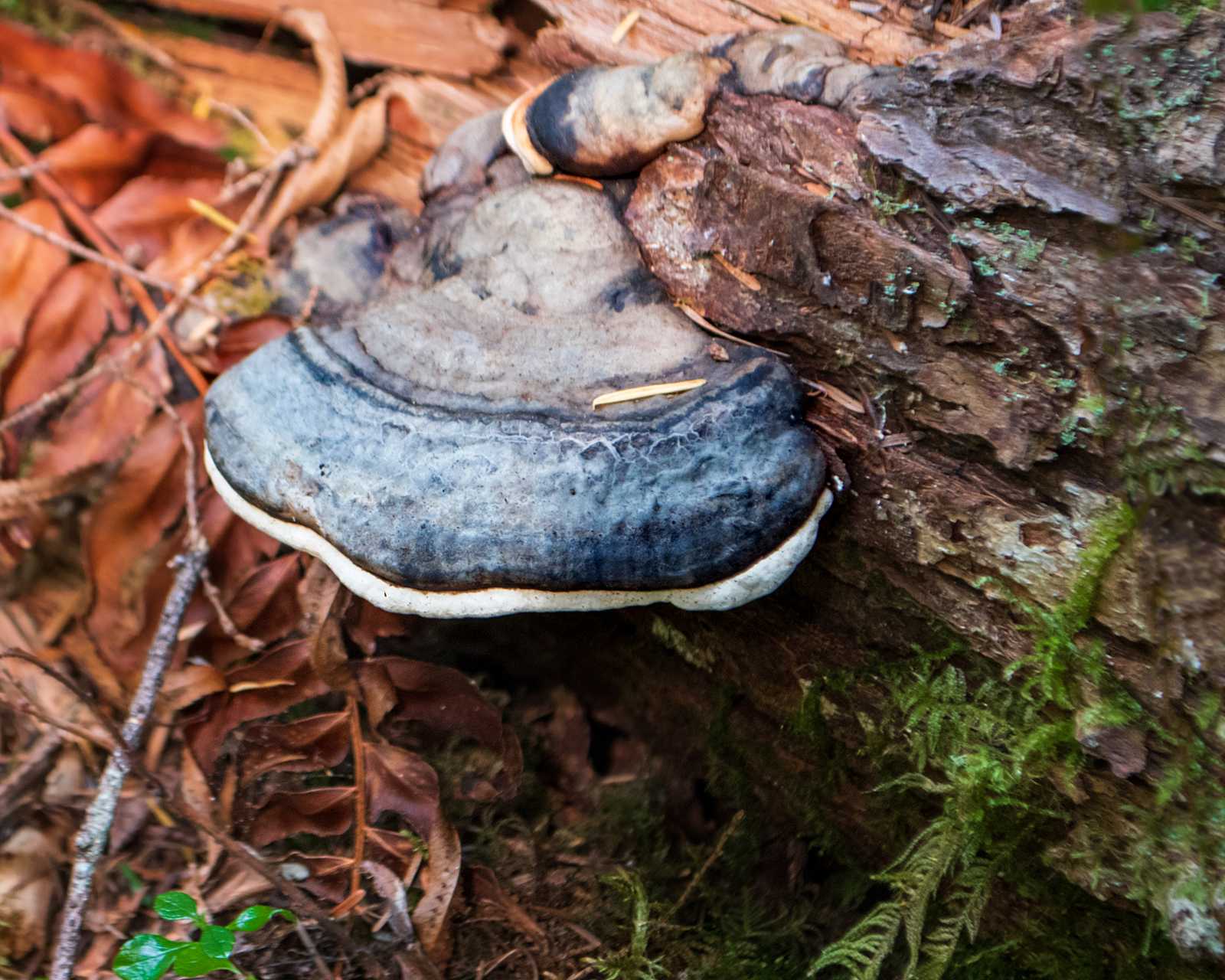
They're more blue than black here.

Red-belted polypore, Formitopsis pinicola.

And another. I managed to get low enough to see the underside of this one.

Stacked shelves.

There were no other mushrooms; it is too dry. The huckleberries are ripe, but flavourless this year.

Links to a previous visit: 
  1. The creek, when it held water.
  2. The trees.
~~~~~~~~~~~~~~~~~~~~~~~~~~~~~
En la búsqueda de aire sin humo, fui hasta donde la carretera sale para Sayward, sin éxito; me di por vencida y volví hacia el sur. Y allí el sendero del riachuelo Dalrymple, me llamó; tal vez allí, bajo los árboles, entre los helechos, habría olor a "verde".

Pues no. La última vez que visité todo estaba húmedo; ahora está seco, sequísimo. El musgo cruje bajo mis pies, el aire huele a hojas muertas. En el riachuelo, un lento chorrito de agua se cuela bajo las piedras secas.

Foto: el bosque. Sigue verde.

Y dondequiera, había árboles caídos. Troncos recién tumbados descansan sobre otros que todavía muestran madera apenas rota. El sendero hace un círculo; tomé la ruta que subía el cerro, pero pronto encontré el camino bloqueado por un árbol caído, todavía con todas sus hojas, pero roto en secciones por el golpe. Regresé al camino al lado del riachuelo. Y allí también había otro tronco.

Foto: el sendero, con un tronco grande caído encima.

Tendría que gatear para seguir adelante. Desistí.

Pero en ese tramo cortito, hubo muchos hongos políporos.

Fotos: Fomitopsis pinicola.

No hubo otros hongos; está demasiado seco. Los arándanos rojos están maduros, pero este año no tienen sabor.

Links: la visita hace dos años. El riachuelo, cuando hubo agua. Y los árboles.

Sunday, June 23, 2019

Between bee season and bear season

Bees come for the flowers. Bears come for the ripe berries. They'll be ready soon.

Thimbleberries, green, and just getting started.

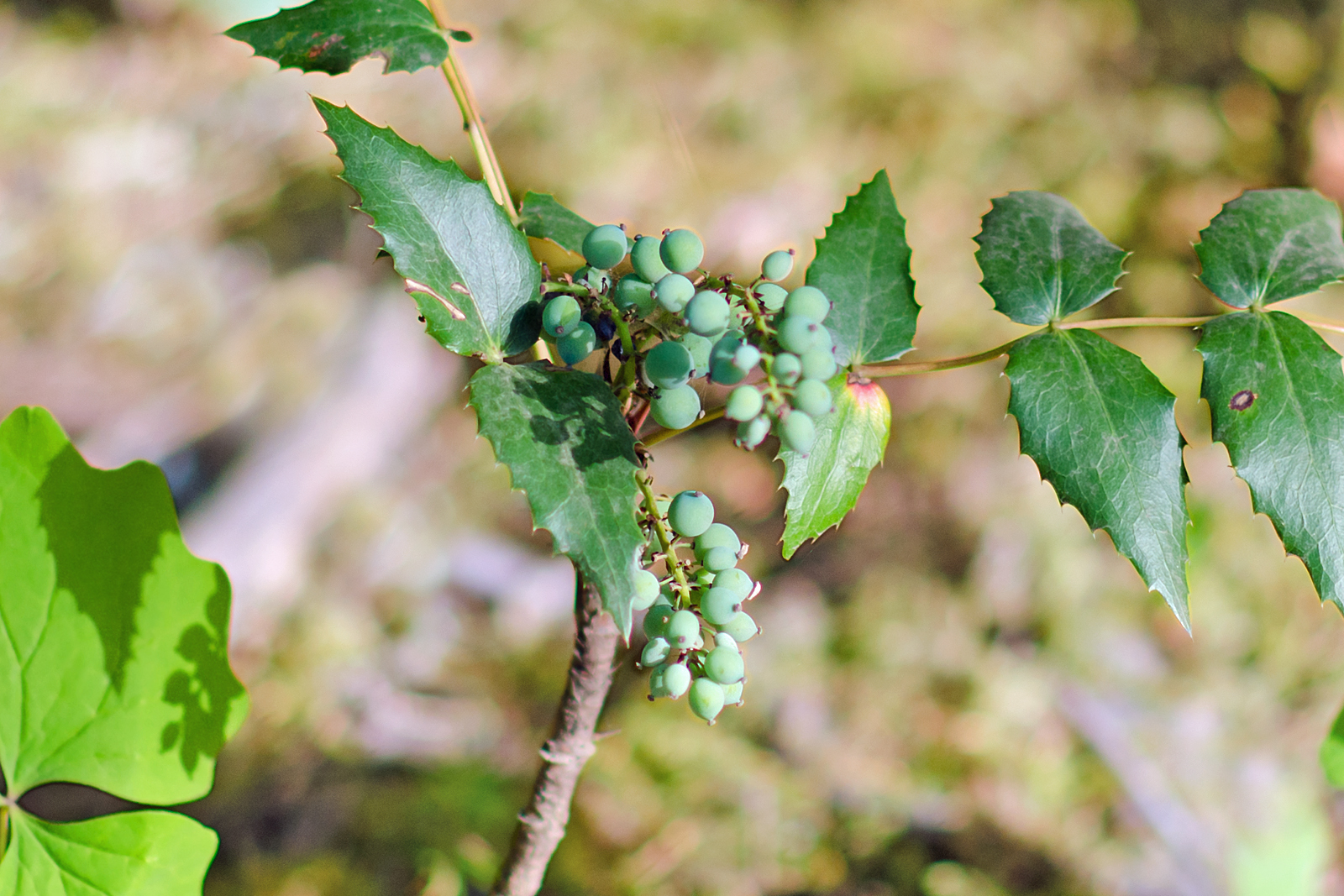
Oregon grape. The berries will be deep purple, and semi-sweet.

I haven't seen many salmonberry flowers this spring, and only one or two green berries. Many of the salal bushes are turning brown, and they have only a few flowers. It may be too hot and dry this year for these rainforest plants.

These two plants were on the side hill at Elk Falls. The whole area is brown and dry this year, the hillsides crumbling and dusty, the moss crunchy. We need rain!

Powered By Blogger