Showing posts with label black twinberry. Show all posts

Wednesday, July 23, 2025

The birds are smarter than I

I've taken a hint from the birds and the deer for the rest of the summer; laying low in the heat of the day (by my weather app, anytime after 10AM), waking and walking in the cool hours. Here's what I saw on an early morning walk around Tyee Spit, 7:30 to 9 AM, 15°C. 

"Chadwick" the cougar. A DriftedCreations critter. Doesn't mind the heat.

Two big birds. Do you see the second one?

Black slug, Arion rufus, out in the open before the day heats up.

View over the estuary, at low tide, with Canada geese.

Low tide exposes a few gravel bars in the main saltwater channel. Gulls settle there, but never stay still for long.

Checker-mallow, Sidalcea sp. Growing on tiny islet in the estuary.

Wild rabbit. I've seen 4 so far, only in the mornings.

Rabbit who has seen me. Showing off his white underbelly.

This looks like those three ceramic ducks people hung on their walls back in the 1950s.

Black twinberry, Lonicera involucrata.

And then, home for breakfast.

~~~~~~~~~~~~~
He decidido seguir el ejemplo dado por los pájaros y del venado que viene a comer mis rosas; se esconden durante las horas de calor (empezando alrededor de las 10 de la mañana, según el programa en mi computadora), y salen temprano y tarde, con las temperaturas templadas.

Estas cosas las vi, dando la vuelta a Tyee Spit, una mañana, de las 7:30 a las 9 AM, con una temperatura de 15°C.
  1. La puma hecha con madera que trajo la marea. Se llama, dice su creador, "Chadwick".
  2. Dos pájaros grandes. ¿Ves el segundo?
  3. Una babosa negra, Arion rufus. Cuando el sol quema, se esconde en las sombras.
  4. Una vista del estuario, con la marea baja. Y con gansos canadienses.
  5. Del otro lado de la lengua de tierra, en el estrecho, con la marea baja aparecen unas islas de grava. Allí descansan las gaviotas, echándose al aire frecuentemente con gran alboroto.
  6. Una flor de tierras húmedas, Sidalcea sp.,  creciendo en una islita en el estuario.
  7. Un conejito. He visto 4 hasta ahora, solamente en las mañanas.
  8. El conejito, habiéndome visto, mostrando el pelo blanco del abdomen.
  9. Esto se parece a esos grupos de tres patos cerámicos que la gente colgaba en sus paredes en los años de mediados del siglo pasado.
  10. Madreselva bayas de oso, Lonicera involucrata.
Y luego regresé a casa para desayunar.


Thursday, June 06, 2024

Look again.

 When the flowers' petals have fallen, when the birds have eaten their fill, when wind and weather have done their worst, keep on looking. Ma Nature creates beauty at all stages of growth and decay.

One salmonberry, starting to ripen, and another already spent, still shapely.

Twinberry, Lonicera involucrata.

Twinberry berries are deep, shiny, bluish black, and grow in pairs, backed by these red bracts. They're not considered edible. By humans; the birds evidently like them, and First Nations people called them "crow berries". On this whole bush, not a single berry remained.

Another bee, on a salmonberry bush. With a dead berry.

Look again.

So here, one salmonberry flower has produced a berry, still solidly green; look just behind the bee's head. The stamens still seem to be carrying enough pollen to interest a bee. The deep magenta one may have been a bird's snack; its central core is exposed.

And look again; there are two blobs of spittlebug spit.

And isn't the bee's outfit cute?

~~~~~~~~~~~~
Cuando la flor ya ha perdido sus pétalos, cuando los pájaros ya comieron toda la fruta, cuando el viento y el sol han tostado o congelado las ramas; sigue observando. La Madre Naturaleza produce sus bellezas pase lo que pase.

Ejemplos:
  1. Rubus spectabilis, llamado en inglés "salmonberry", fruta de salmón, sea porque la fruta madura en ciertos arbustos tiene el mismo color que la carne del pescado o porque las tribus indígenas comían la fruta con ese pescado. Aquí una flor produjo la fruta, que se pondrá roja o anaranjada al madurarse.
  2. Lonicera involucrata, madreselva bayas de oso, en inglés bayas gemelas, porque las flores y sus bayas se producen en pares. La baya es negra y brillante, y viene protegida por estas brácteas rojas. La fruta no se considera comestible, por lo menos por nosotros los humanos, pero a los pájaros sí les gustan. Las tribus indígenas las llamaban "baya de cuervo". ¿Por el color, o porque los cuervos las comen? En este arbusto, no quedaba ni una sola baya.
  3. Una abeja en el arbusto de salmonberry.
  4. Mirando más de cerca: una flor ha producido su fruta; mira atrás de la cabeza de la abeja; esas bolitas verdes son las frutas (drupas) inmaduras. Los estambres, parece que todavía llevan suficiente polen como para atraer la abeja. Creo que un pájaro ha comido parte de la fruta madura roja. Y mira otra vez: hay dos insectos, los llamados salivazos, escondidos en su espuma. Y ¿no es lindo el traje de la abeja?

Thursday, May 04, 2023

Flower spotting

 April showers (of which we had plenty) bring May flowers, so the saying goes. And it's May, so I went flower hunting down by the river.

There were salmonberry flowers:

Looks like something has been feasting on a leaf already.

And bleeding hearts, all very pale this year.

Dicentra formosa

Always one of my favourite flowers.

Hiding under the leaves, I found the yellow flowers of twinberries, and some buds:

Lonicera involucrata

The flowers grow in pairs, each pair surrounded by a cup of large bracts. The berries will be blue-black, also in pairs.

And down in the grass by the riverside, many small white flowers with lilac markings:

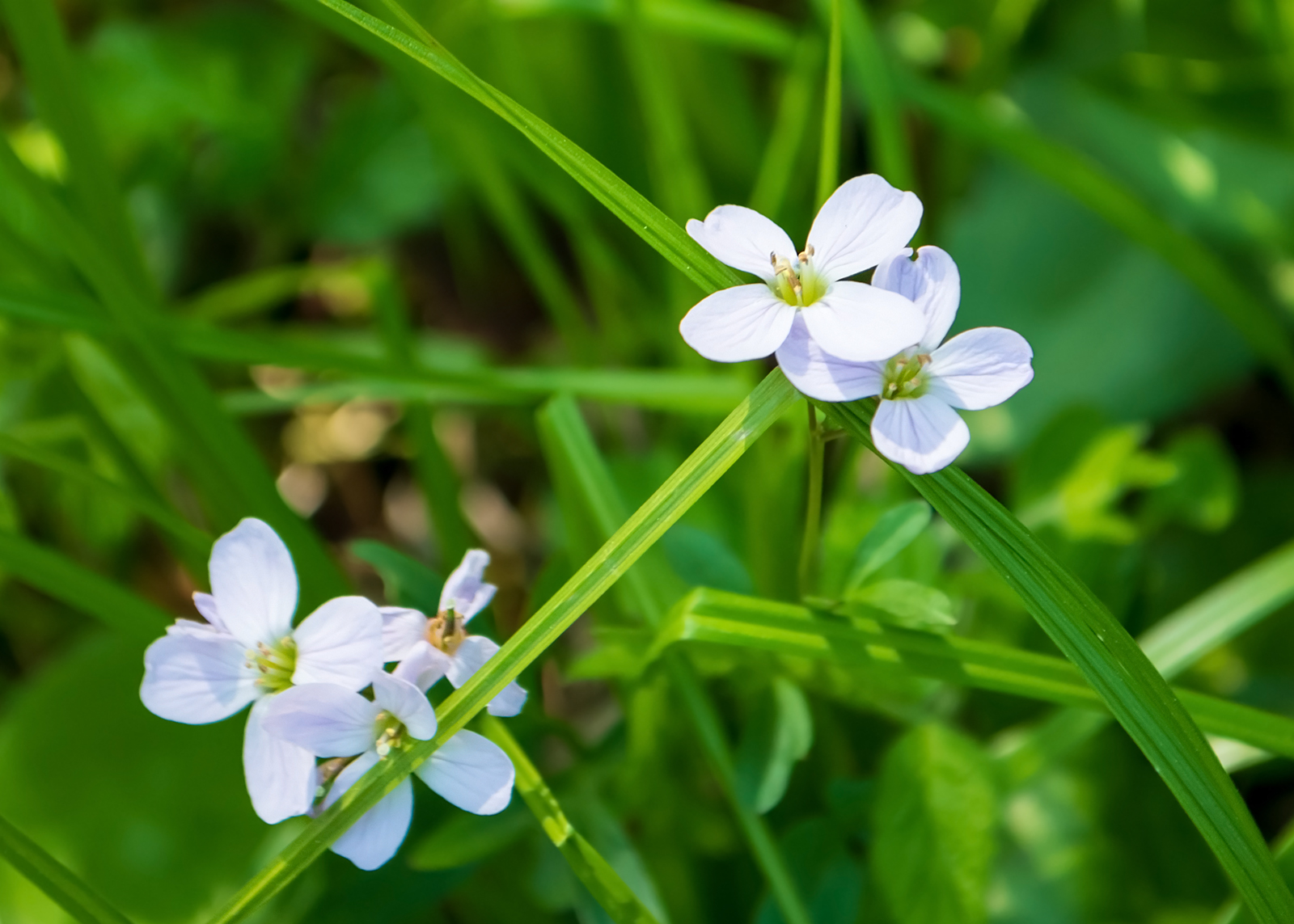
One of the drabas?

Overhead, by the parking lot, wild cherries line the river bank.

I know they're cherries because last year, I picked and ate a few. They were sour.

And I'm still sorting the rest.

~~~~~~~~~~~~~~
Las lluvias de abril, dicen, traen las flores de mayo. Y estamos en mayo, así que fui a caminar al lado del rio para buscarlas.

Fotos: 
  1. Había flores de salmonberry, Rubus spectabilis; sus frutas son parecidas a las frambuesas.
  2. Y corazones sangrantes, siempre una de mis flores favoritas. Este año salieron muy pálidas.
  3. Más. Son flores nativas, Dicentra formosa.
  4. Escondidas bajo las ramas encontré las flores amarillas de Lonicera involucrata, la baya gemela.
  5. Las flores crecen dos juntas en en cada bráctea. Las bayas son casi negras.
  6. Entre las hierbas y pasto junto al rio, crecen estas florecitas blancas, una de las Draba.
  7. Y el cerezo nativo alza sus ramas cargadas de flores al lado del estacionamiento. Sé que es un cerezo porque el año pasado coseché algunas cerezas y las comí. Eran amargas.
Y sigo revisando las demás.


Tuesday, July 09, 2019

The colours of summer

Against a background of green, blue, brown, grey; BC's year-round colours.

Beach pea, Lathyrus japonicus, among the logs on the Oyster Bay dunes.

Gumweed, Grindelia integrifolia. It's blooming near the shore everywhere. This one was on Tyee Spit.

The gumweed flowers, according to my guide, are covered with an extremely sticky latex. Actually, the glue goes much farther. I touched the lower stem of this plant, removing an intrusive dead straw, and my fingers got so glued up that they stuck to the camera.

Foxgloves in full sun, Brown's Bay.

Foxgloves in the shade, Elk Falls.

Hardhack, Spiraea douglasii. Likes wet feet, bogs and streams and marshes, but this one was growing on the shore beside a well-watered lawn.

A more modest flower, Silver burweed, with an ambitious name: Ambrosia chamissonis. The flowers are small and greenish, enclosed in their bracts. These are growing just above the high tide line at Oyster Bay.

Black twinberry, Lonicera involucrata. Past the flower stage, but the red bracts remain. Tyee Spit.


Sunday, July 07, 2019

Critters, critters, critters

... collected from here and there, some alive, some recently dead. I'm sorting last month's photos, playing catch up.

Harvestman on a house plant (Kalanchoe tomentosa)

Hover fly on yarrow. I'm not sure of the other beetle with the spots. Tyee Spit.

Twin berries, Lonicera involucrata, with an orange fly. Tyee Spit.

A crane fly who died on my windowsill. Aren't those wings pretty?

Looking at you.

Grasshopper on the Oyster Bay shore. Probably Pallid-winged Grasshopper, Trimerotropis sp. Mostly, they jumped away as soon as my shadow came anywhere near; for this one, I crawled up, inch by inch, down at his level. (No shadow!)

Another Oyster Bay grasshopper, same afternoon, same location. But this one didn't wait around for me. He may be a different species, but I can't identify him, and the Pallid-wings are quite variable.

Recently squashed spider. Just the eyes and mustache. One of the mesh web weavers, by the eye arrangement. (See BugGuide)

Water shots next, I think.

Wednesday, August 01, 2018

More beaver pond plants

Our hot spell has broken. We had a couple of flashes of lightning this evening, a quiet roll of thunder, and maybe half a dozen raindrops, with more to come in the morning, "they" say. And five or six days of normal island temperatures ahead of us. Our forests breathe a great sigh of relief.

Rain or shine, hardhack is happy, as long as it has its feet in the water.

Hardhack, Spiraea douglasii, spp. douglasii. Grows in thickets, along stream banks. This one borders the road across the beaver pond.

Most hardhack flowers in tall spikes, but this one may have been bitten off by a browsing deer, and flared out. Busy bee collects hardhack pollen.

Red-osier dogwood also likes wet feet.

Fruits of R-O dogwood, Cornus stolonifera. A white berry when ripe, inedible.

Why only some of the berries have developed, I don't know. Maybe it's too hot, maybe it's just an off year. Maybe the rest will ripen a bit later.

And a bit further from the edge of the beaver pond, but still on damp soil, a few Black Twinberry shrubs add their colour to the greenery.

Lonicera involucrata. This is a twin, but the second fruit hasn't developed.

The twins that give the plant its name. The red bracts give it its Latin name, L. involucrata.

We used to call these pretty berries "loco berries", and were warned not to eat them. The Kwakwaka'wakw (speakers of the Kwak'wala language, a local tribal group) thought that if you ate one, you'd go dumb, unable to speak. Paralyzed by the horrible taste, probably. I never dared try.

Sunday, May 14, 2017

It's Mother's Day. There should be flowers.

It's mid-May, and our early spring flowers are finally appearing. These are black twinberry flowers. The fruits should be ready by July, although new buds will still be appearing until the cold weather sets in.

Lonicera involucrata, on Tyee Spit. Two yellow flowers hang together under each pair of fused, red bracts.

Flower buds. The berries will be dark, glossy purple, also in pairs.

The berries are attractive, even appetizing, but they are extremely bitter; some say they are poisonous. I'm not about to experiment.

Changing the topic: Help!

I've been told that the photos on my blog take too long to load. I tested on a tablet, and found one that took forever. Have you noticed this problem?

For this post, I down-sized the photos to 1/3 their original size. Do you notice any difference in the quality?
Powered By Blogger