Showing posts with label Menzies Bay. Show all posts

Wednesday, January 12, 2022

That was fun

 And the last of the snow photos. For now. It has finally stopped raining, but more is coming; the weather forecast for all the week ahead is rain, rain, rain. We're back to our usual winter colour scheme of grey, blue-grey, and grey-green.

But the snow was beautiful while it lasted.
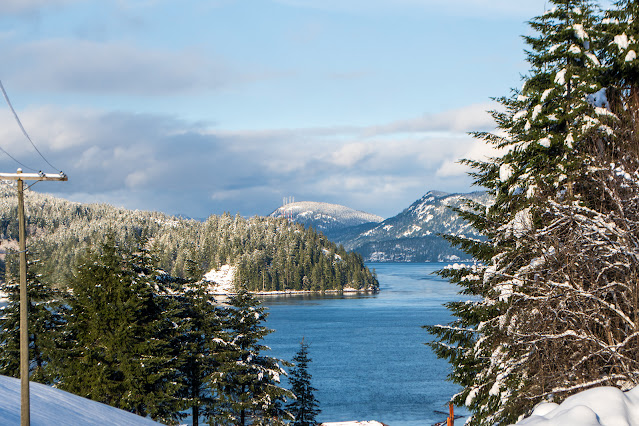
Menzies' Bay, looking up towards the Ripple Rock trail. Where I saw skiers the other day.

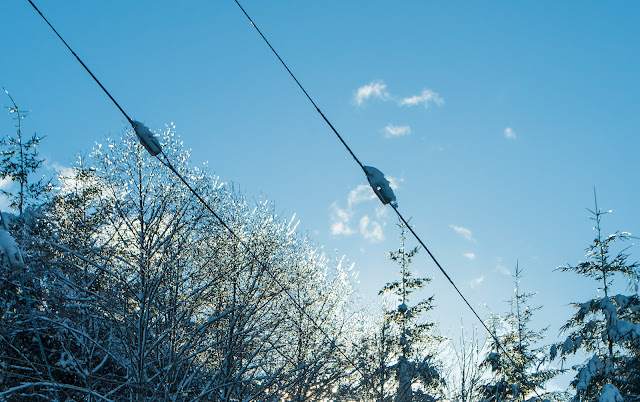
Late afternoon sun turning the frozen branch tips into fairy lights.

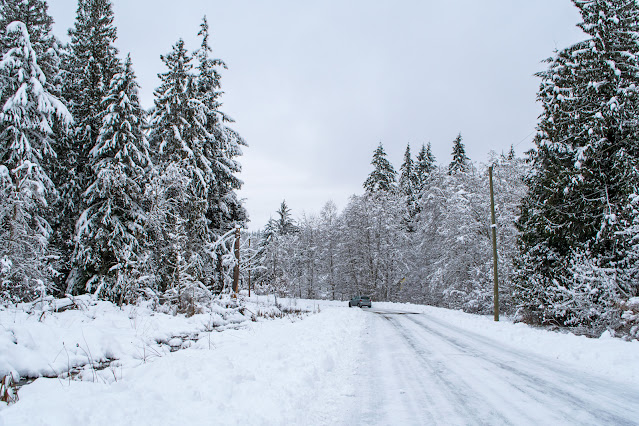
And from the first of our snow days, the York Road winter wonderland.

Tomorrow, rain or shinedrizzle, I'll go find those lichens.

Another Skywatch post.

~~~~~~~~~~~~~~~~~~~~~~~~~~

Estas son las últimas de las fotos de nieve. Por ahora. Ha dejado de llover, por un rato, pero nos prometen una semana entera de lluvia, neblinas, y más lluvia. Hemos vuelto a nuestra mezcla normal de colores: gris, azul grisáceo, gris verdoso.

Pero, por mientras, la nieve era una belleza.

Fotos:

  1. La bahía de Menzies, mirando hacia el norte, hacia el sendero de Ripple Rock, donde hace dos días vi una pareja equiando.
  2. Cuando el sol declinaba en la tarde, alumbró las puntas heladas de las ramas.
  3. Esta, del primer dia de nuestra nevada, en el paraíso invernal que era el camino York.
Y mañana, por fin, llueva o nollovizne, iré a buscar esos líquenes.

Monday, March 11, 2019

Old burn

In the summer of 1938, Vancouver Island sweltered through the longest drought seen for over 50 years. Sparks from logging operations set off dozens of small brush fires. Smoke hung over the hills.

Fire broke out in a log pile on Menzies Bay, just north of Campbell River, and leapt into the forest. A couple of days later, in spite of the 400 firefighters trying to quench it, it was burning over several thousand acres of timber. By the third day, it was threatening Campbell River, and racing up-river, past Elk Falls. The smoke rose two kilometres into the air, and covered almost two-thirds of Vancouver Island.

The fire headed south then, passing Campbell River, racing towards Comox, and east up the mountainsides to Mount Washington. 2000 men fought it, hopelessly. 470 square kilometres of forest were in flames, and the wind was picking up. At times, it reached 150 km/hr.

And then the rain came. The blessed, drenching West Coast rain, pouring down steadily for weeks. In the ancient forest off Elma Bay, these days called the Miracle Beach Provincial Park, the roaring blaze sizzled into damp coals.

Some say that's how Miracle Beach got its name.

Today, many of the older trees in Miracle Beach Provincial Park still wear the scars of that fire.

Survivor, still green up top.

Older Douglas-fir bark is thick and deeply grooved, providing habitat for many insects and nesting sites and groceries for birds and small animals. And old, damaged bark is even more hospitable. This old tree still retains some old scorch marks; it looks like most has been riddled by insects and then birds collecting insects.

The crevices go deep into the tree; I tried to light the bottom of several holes with the camera's flash, but the light didn't reach that far.

Near the centre of the section above, if you look closely, you'll see a white circle. I moved in to get a better look.

"Come into my parlor ..."

A spider hole, wide enough for a chickadee to wander in.

From another angle

I can't be sure; is that a spider lurking deep inside, or just blotchy patches in the bark? I didn't risk sticking a finger in to find out.

For comparison: a pair of unburnt Douglas-fir trunks. Grooved, but much neater.

And the remains of a smaller tree, after the woodpeckers have eaten their fill.


Monday, November 26, 2018

Better late than never

I was running late. I didn't get started out for my Sunday afternoon drive (in the rain) until shortly after four. And by then, it was so dark that the colours had leached out of the trees. I set out with the camera, anyhow. I could at least watch tree silhouettes. And maybe see some wildlife, a deer or two, maybe.

Alder against the sky. 4:41 PM The camera sees more light than I do.

Chutes and ladders. And a pair of trees. 4:45. Quinsam Coal Barge Terminal

Crooked tree. 4:46

Looking out over Menzies Bay. 4:52 The bit of colour in the foreground was from my headlights.

As for wildlife, I saw four eagles, and a pair of moths in my headlights. No deer.

But Chia was waiting for me at home, and she's sort of wild.

Chia and her shadows. 10:15.

They're promising us rain for the entire week. I need to get some rain gear.

A Skywatch post.

Saturday, June 10, 2017

Viewpoint

Today I hiked the Ripple Rock trail. Made it over half way, then rested at Viewpoint 1.

Menzies Bay, from Ripple Rock trail viewpoint, high on a rocky cliff.

More photos and story, later. I'm taking my aching muscles to bed.

A Skywatch post.

Thursday, March 30, 2017

Spider gang members

As the weather improves, after this wet, wet, winter, (at least now, some days, it doesn't rain. Much.) I'm beginning to see spiders again. Around home, they're mostly still the specks that hang webs from the ceiling and drop mini-frass under the window sills. But in the drier areas along the shores, I see the occasional one scuttling under a log or racing across the sand.

Something I've never seen before is a mob of spiders; most spiders are loners. Spiderlings, yes; they hang around together for a short while after they hatch, and then disband quickly before their brothers and sisters eat them.

But last week, I came across a small heap of dead grasses and sticks, with bits of bark and broken branches, not more than a couple of feet across, on a rocky shore. And it was covered in adult spiders, too many to count; they dashed for cover when my shadow beat me to them.

Two spiders, running.

I approached from the far side, with my shadow behind me, and waited. After a bit, one spider ventured out, looked me over, then hid again.

A wolf spider, maybe. The wood grain gives some idea of the scale. A mid-sized spider.

I looked carefully, both live, and later in my photos. There was no sign of webs, at least on the surface of the pile. The shore around this pile was mostly bare rocks. I saw no more spiders anywhere in the vicinity.

Spider hangout, at the tip of the red arrow.

When (if) it stops raining again on a weekend, I'll hike down the Ripple Rock trail again and look for more of these.

And I'll post these photos to INaturalist; maybe I'll get an id. (Update: It's a wolf spider, according to the eyes, they say on BugGuide.)

Tuesday, March 28, 2017

Bull's-eye!

On the shore of Menzies Bay, just above the usual water line, lichens decorate large rocks.

Bull's-eye lichens, Placopsis sp.

Zooming in on one of the targets. The roughened, round structures, mostly toward the centre, are reproductive organs.

Another bulls'eye, on a rock higher on the shore. This one is a pale green; whether it's a different species, or just damper, I can't tell. Note the bit on the far right; it's blue-grey, and the leaf shape matches those on the previous rock.*

The red arrow points to the lichen. I was following the trail to Ripple Rock, at the narrow point of the channel, but stopped here.

*Update: On INaturalist, this one has been identified as a Rockshield, Xanthoparmelia sp.

Powered By Blogger