Showing posts with label beach rock. Show all posts

Sunday, August 21, 2022

Gull on a rock

 Just a gull.

Gulls, rocks, seaweed brown and green. Stories Beach, low tide.

~~~~~~~~~~~~~~~~~~~~~~~~
Una gaviota descansando sobre una roca cubierta de algas cafés y verdes. La playa "Stories", con la marea baja.

Eso es todo.


Wednesday, March 30, 2022

No hurry

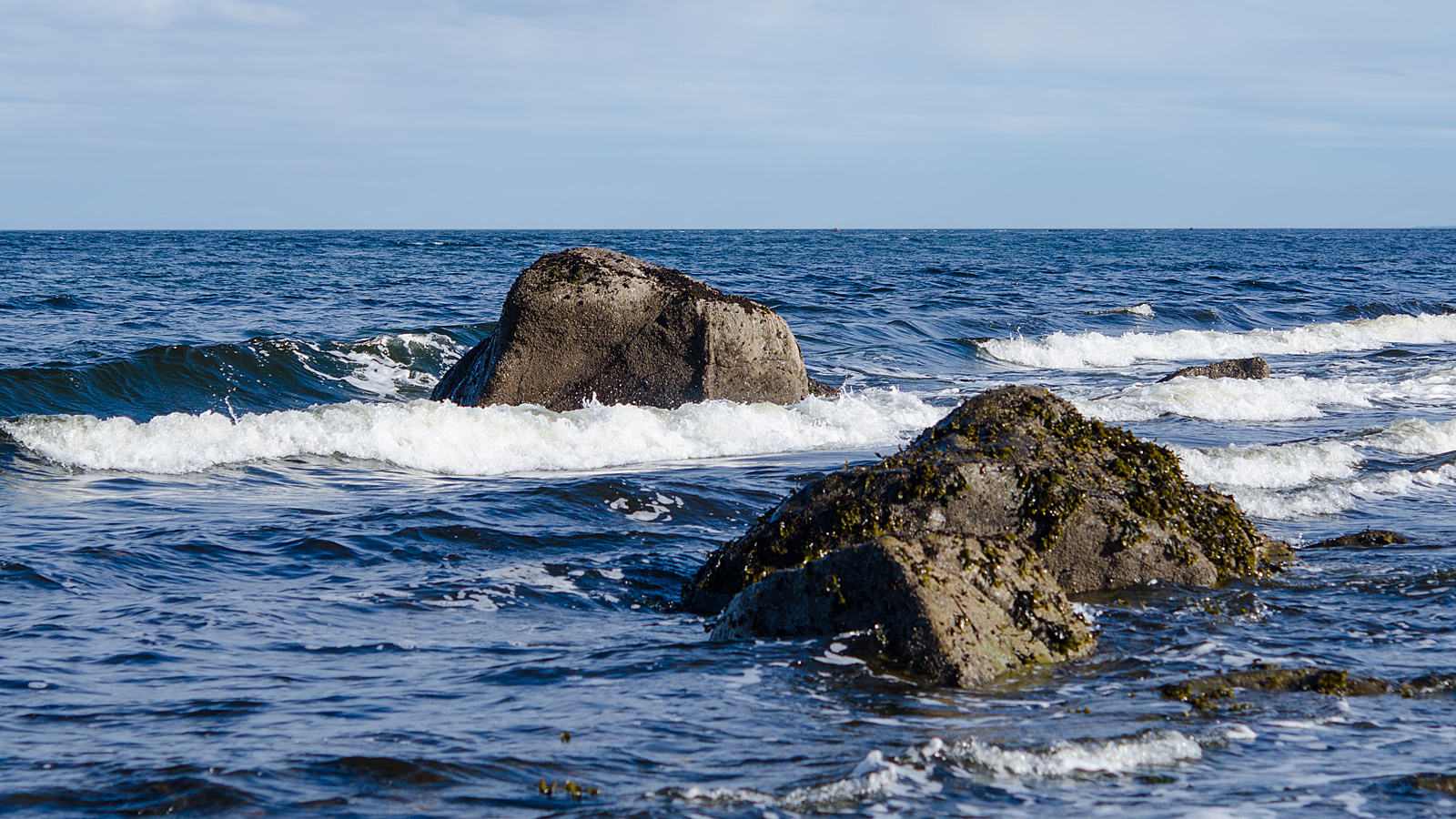
The rocks just sit there. The tide comes in, the tide goes out; rain and wind pound the shore, sun bakes it, seaweed grows and dies, crabs and sea urchins come and go. The rocks just sit there.

Stories Beach glacier tracks.

Well, not really. Our sense of time is off. We're so short-lived; everything has to happen NOW!

Back when the island was young, a dying tribe of glaciers raced down into the ocean, scraping the ground as they went, dropping the rocks they had collected up on the mountain tops as they melted.

Abandoned erratic

The activity didn't stop when the ice had joined the sea. Wind and water took up the task and have pounded the shore for thousands of years, shaping soft sandstone, rolling, cracking, and polishing harder rocks, sometimes sweeping the shore clean of encroaching seaweed, sometimes nourishing it. Stand on the edge of the water on a pebbly beach and listen; with each wave, you will hear the stones rolling back and forth.

Sandstone outcrop among harder, tide-polished stones.

The shoreline is still changing. From year to year, I see the differences; a new spit at Oyster Bay, freshly shattered layers of sandstone, a change in the seaweed cover on Stories Beach, a new crop of barnacle and oyster scars, deeper muck below an estuary; sand and stone and their living guests responding to the world around them. On their own schedule.

~~~~~~~~~~~~~~~~~~~~~~~~~~~
Las rocas no hacen nada. No se mueven. Sube la marea y baja, el viento y el agua golpean la costa, el sol la quema, algas marinas crecen y se mueren. Cangrejos y erizos de mar van y vienen. Las rocas se quedan tranquilos y en paz.

Fotos:
  1. Huellas de los glaciares en la playa Stories.
  2. Bloque errático, abandonado por el graciar.
  3. Piedra arenosa entre piedras pulidas.

Bueno, no es cierto que las rocas no se mueven. Nuestra idea de tiempo anda mal.

Cuando la isla era joven, una tribu de glaciares moribundas corrieron hacia el mar, raspando el suelo en camino, dejando caer las rocas que habían juntado, allá arriba en las montañas ahora que se estaban derritiendo.

No cesó la actividad cuando los glaciares se habían hundido en el mar. El aire y el agua empezaron su obra de moldear lo que los glaciares abandonaron. Durante miles de años han seguido tallando la piedra arenosa, rodando y quebrando y puliendo las rocas más duras. Hoy en dia, párate justo a la orilla del agua en una playa de piedras chicas cuando baja la marea: oirás el rumor de las piedras rodantes.

La costa sigue cambiando. De un año al otro, veo las diferencias: una lengua de tierra nueva en Oyster Bay, estratos de piedra arenosa recién rotos, un cambio de la vegetación de algas en la playa Stories, nuevas incrustaciones de conchas de ostiones y bálanos, más lodo orgánico a la boca de un rio: la arena, la piedra y sus huéspedes vivos responden al mundo a sus alrededor. Todo a su tiempo.


Monday, April 16, 2018

And a few more rocks on the shore

They intrigue me. I wish I knew their history.

Stripes on a large rock. With tiny barnacles in the cracks.

Peeling rock.

Trying to imagine how this came about: a solid core was bathed in sediment, which hardened into a smooth coating, and now, after a pounding by waves bearing pebbles and alternately frozen and heated, the coat is peeling off. Just a guess, probably not quite correct.

The snails like to bask in the sunshine at low tide, like tourists on a tropical beach.

A small clump of sea lettuce washed up, adding a touch of softness and colour.

Seaweed on rocks that are usually underwater.


Friday, October 13, 2017

Even the kitchen sink

From the catch-all drawer of forgotten or off-topic photos, I rescued the latest additions. Here they are, in random order; there's no unifying theme.

2. Number plate dug out of a garden, long ago, now resting on a household shelf.

Field cricket found dead in the middle of a school classroom the first day back. It's dry, desert-dry miles, in cricket wanderings, from an outside door. She probably died of thirst.

Look for a mature cricket and examine the end of its abdomen. Locate the paired slender appendages protruding backward from the sides of the abdomen; these are called the cerci and function like a pair of backward antennae.
Look between the cerci to see if an unpaired slender ovipositor projects backward from the end of the abdomen, resembling a spear or needle. ... Your cricket is female if the ovipositor is present and male if not. (From Sciencing)

In most of the photos I looked at, the female has one ovipositor. Why did this one have two, I wondered. I looked at her under the microscope; they're definitely twinned; there's a good gap between the shafts.

I found the answer on BugGuide: the shafts stay together while the cricket lives; when she dies, they may separate.

Top view.

From a northern expedition: Amour de Cosmos Creek, from the bridge.

The Steller's Jay is too far away, but I like this photo, anyhow. Sayward Junction farm.

Scraps of lichen on a twig. Near Upper Campbell Lake.

These Cladonia lichens are extremely common, but very difficult to see clearly, even on the ground; they're covered thickly with tiny scales, arranged in dense clusters.

Cement and wood structure, tossed up on the beach, and colonized by barnacles. Sometimes I wonder how they get there, so far from home.

Stone "planks" at the mid-tidal zone. This pattern of beach rock looks almost too regular to be natural.

Another view of the slabs underfoot.

And I had neglected to mention it earlier, but we're halfway through Arachtober already. We've each been posting a spider photo a day since the beginning of the month. These are two tiny ones that turned up behind (and later in) my kitchen sink.

On tap.

Tiny, tiny. On the back side of a clay tile.

And now that the drawer is empty, I'd better grab the camera and head for the beach again.

Sunday, March 30, 2014

Stone chicken and barnacle tentacles

It rained again yesterday and the day before. The sun came out for a few minutes at noon, just long enough for us to decide to go to the beach; it's been too long. We didn't make it. Before we went for our jackets, the weather was back to wet and windy.

Just as well; we've been making great progress on sorting and clearing out years of photos, film and digital. Laurie's prints are down to two trays (from 21), and I've got a few extra Gigabytes to play with on the hard drive. Another week of this weather, and I'll have everything in some logical order.

But I do miss the beach!

These two photos are from 2012, on the White Rock beach.

I see a chicken in that egg.

Just an ordinary barnacled rock, but I could easily imagine it to be a large camouflaged cuttlefish.


Powered By Blogger