Showing posts with label Saskatoon. Show all posts

Monday, May 27, 2024

What is happening here?

 I have never seen this before. Serviceberry is a common, native shrub, flowering up and down the slopes at this time of year. This one is on a hillside above the highway that crosses the island; it has been taken over by masses of lichens (at least two species) and moss, maybe also something else.

Amelanchier alnifolia, still flowering bravely.

Mostly lichens.

This is a large specimen; the photos show the branches nearest to me, but the whole shrub, stem to top, was covered with these clumps. I couldn't get any closer, not without bush-whacking tools.

What is happening here? 

UPDATE: I've been told that this is completely normal in an older plant, a sign of healthy air quality. Nice to know.

~~~~~~~~~~~~~~
Nunca antes he visto nada como esto. Los Saskatunes, Amelanchier alnifolia, son arbustos nativos a la región, muy comunes. En esta temporada se ven sus flores blancas en las laderas de todos nuestros cerros; este crece cerca de la carretera que cruza la isla. Y lo que no he visto antes; ha sido invadido por una multitud de líquenes (por lo menos 2 especies) y musgos, tal vez otra plaga.

Fotos: secciones de la planta, con los invasores.

Este fue un arbusto bastante grande; las fotos incluyen solamente unas ramas, las más cercanas al punto donde pude acercarme, sin disponer de un buen machete. El arbusto entero estaba cubierto de estas masas negras.

¿Qué pasa aquí?

NUEVO: Me dicen que esta condición es totalmente normal en arbustos maduros, y es señal de una calidad sana del aire.


Sunday, May 19, 2024

White, white, white

 More on the theme of "everything blooming out in the bush this week is white": now I'm looking up. These four are shrubs or small trees.

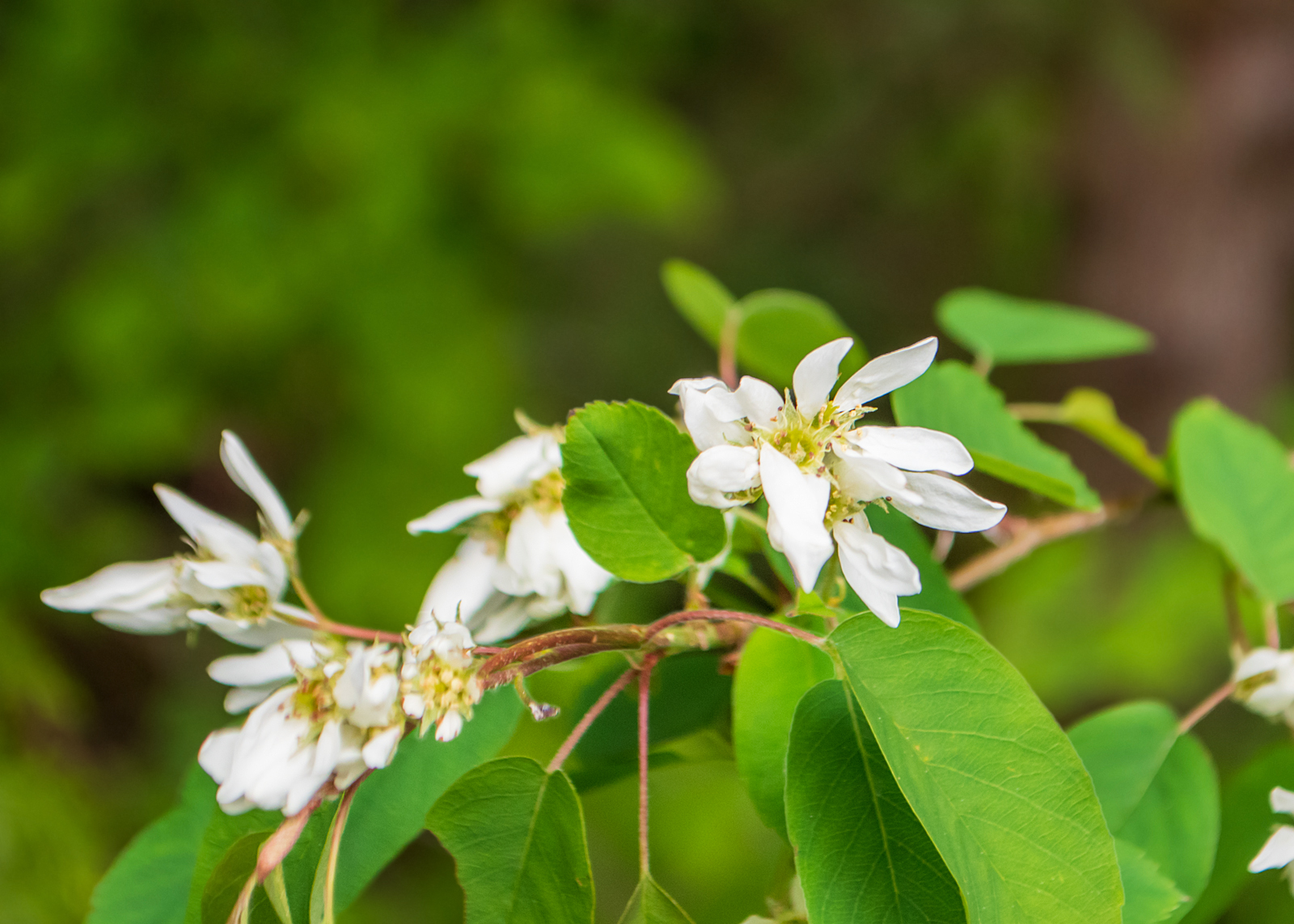
Saskatoons, aka serviceberry, Amelanchier alnifolia.

These are everywhere right now. Later, they will have delicious purple berries.

Red elderberry, Sambucus racemosa.

The flowers don't last long; this is one of the first plants to produce their red berries, a great favourite of the birds, domestic and wild. The bears and raccoons and squirrels like them, too. For humans, they're sort of edible, cooked, although they're bitter. The flowers, though, are fine; Dad used to make pancakes with a whole inflorescence dipped in batter, a spring treat.

The flower head, ready to harvest.

Red osier dogwood, Cornus stolonifera, another relative of our provincial flower.

I think these are bitter cherry flowers, Prunus emarginata. Too bitter to be edible. For humans, at least; the bears like them.

These are plants native to the region. Driving along the highways, I see them, on the slopes, in the valleys, along river banks: speckles of pure white among the spring greenery. What am I missing? Mountain-ash, crab-apples and salal, Indian plum, Pacific nine-bark, Devil's club, thimble-berries; all natives, all with white flowers in bloom now.

And now, blotches of yellow are showing up; the horribly invasive Scotch broom, not a native, not following the "rule": this is the month for whites. How dare they?

~~~~~~~~~~~~~~

Sigo con el tema de "todo lo que florece esta semana en el bosque lleva flores blancas"; ahora alzo la vista y veo cuatro arbustos.

  1. El Saskatún, o fresa de junio, Amelanchier alnifolia. Se ven por todas partes ahora. Más tarde, llevarán bayas moradas, deliciosas.
  2. El saúco rojo, Sambucus racemosa. Estas flores no duran mucho; este arbusto produce sus bayas en poco tiempo. Son favoritas de los pájaros, tanto domésticos como salvajes, así como de los osos, los mapaches, y las ardillas. Para los humanos, cocidas son apenas comestibles, muy amargas. Pero las flores si se pueden comer: mi papá las bañaba en masa de crepas, y las cocía en un sartén; una delicia de primavera.
  3. La inflorescencia del saúco rojo.
  4. Cornejo amarillo, Cornus stolonifera. Otra planta del género de nuestra flor provincial.
  5. Y creo que estas son las flores del cerezo amargo, Prunus emarginata. Demasiado amargo para ser comestible. Para los humanos, por lo menos; a los osos les gustan.
 Estas son plantas que son nativas en esta región. Pasando por las carreteras, las veo en el bosque, en los cerros, en los valles, a la orilla de los rios. Estas y muchas más; fresno de montaña occidental, manzana silvestre, salal (Gaultheria shallon), Indian plum (Oemleria cerasiformis), Pacific ninebark (Physocarpus capitatus), el garrote del diablo (Oplopanax horridus), thimbleberry (baya dedal) (Rubus parviflorus): todas especies nativas, todas con flores blancas abiertas en el momento.

Y luego veo las manchas amarillas de la retama negra, horriblemente invasiva. No es originaria de Canadá, no se adhiere a las reglas del lugar, la regla no oficial que manda que las flores de este mes sean blancas. ¿Cómo se atreve?

Tuesday, May 16, 2023

Catching a few rays

Cutting paths through the forest lets in a few scattered rays of sunlight. Where the surroundings are all blanketed with moss and evergreen ferns, the edges of the trails are sprinkled with mostly tiny flowers. These were some I saw this week.

False Solomon's seal, Maianthemum racemosum

Serviceberry, aka Saskatoon, Amelanchier alnifolia

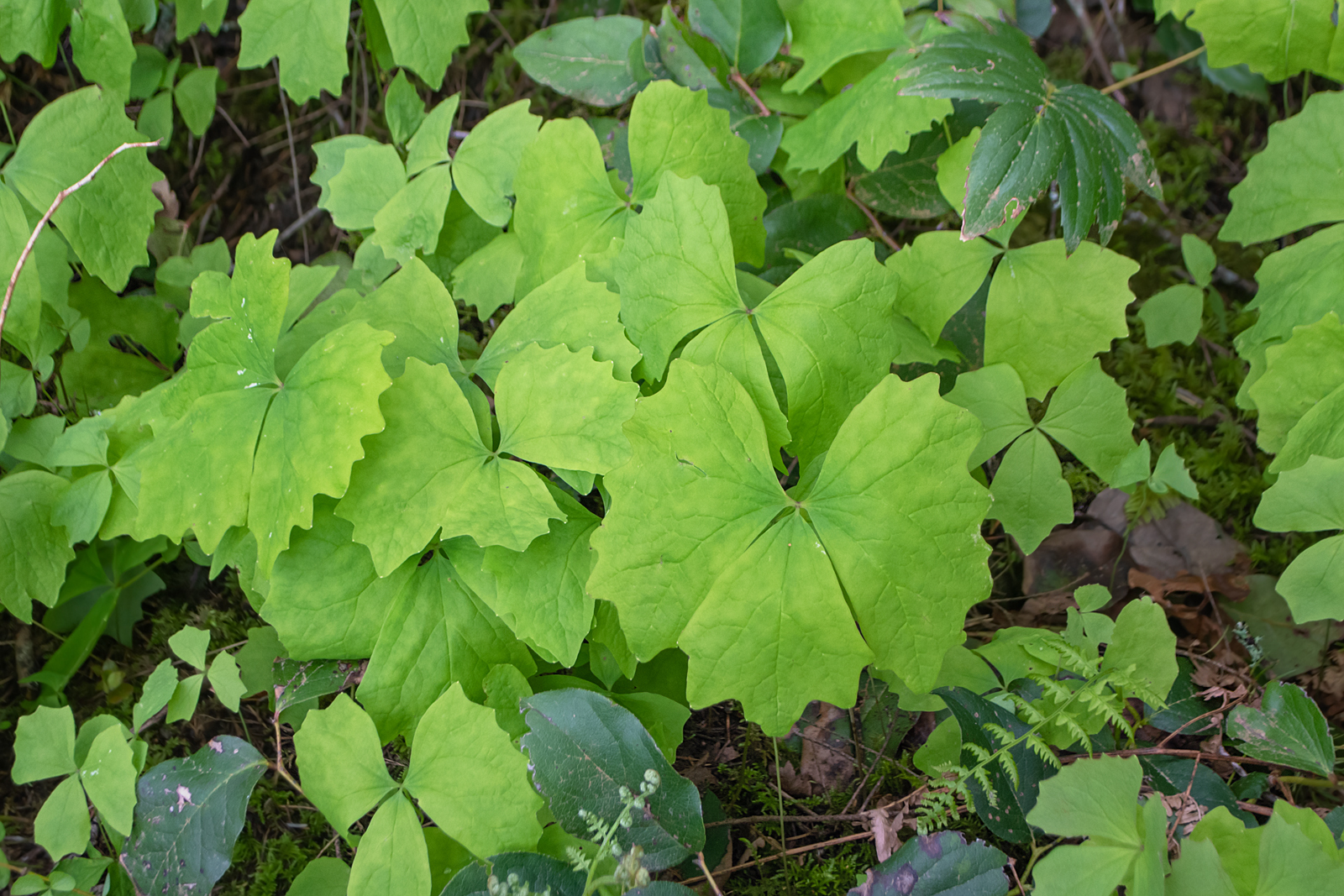
Vanilla leaf, Alchys triphylla

Yellow violet, Viola sp.

Oregon grape, Mahonia sp.

And out in the open:

English daisies, not really a daisy (Erigeron spp.). An introduced species, Bellis perennis.

Most of these are spring blooming flowers, although our weather now is suddenly more like mid-summer, hot and dry only a few weeks after near-freezing temperatures and daily rain; in sunnier spots along the trails, the vanilla leaves were wilting. This may be another challenging summer for our temperate rain-forest species.

~~~~~~~~~~~~
Cuando cortamos caminos entre nuestro bosques densos, dejamos entrar la luz del sol y donde el bosque alrededor lleva una alfombra verde de musgos y helechos perennes, al borde de los senderos crecen florecitas, en esta temporada casi todas blancas o amarillas.

Fotos:
  1. La pluma de Salomón (entre varios nombres comunes), Maianthemum racemosum.
  2. El Saskatún, o fresa de junio, Amelanchier alnifolia.
  3. Hoja de vainilla, Alchys triphylla.
  4. Violeta amarilla, Viola sp.
  5. Uva de Oregon, Mahonia sp.
  6. Y creciendo en campo abierto, una flor no nativa, la margarita inglesa, Bellis perennis.
Casi todas estas son flores que se abren en la primavera, aunque el clima ahora más bien se parece a mediados de verano, caluroso y seco, y eso después de temperaturas heladas y lluvias constantes apenas hace unas semanas. En los sitios más asoleados al lado del sendero, las hojas de vainilla ya se marchitan. Este verano puede ser otra temporada difícil para nuestras plantas del bosque pluvial templado. 

Saturday, May 21, 2022

In their own good time

This is a great time of year to hit the old, familiar trails. They're never the same, one week to the next, with plants and mushrooms, birds and animals each showing up according to their own personal schedules. 

These are some of this week's new spring flowers along the Elk Falls trail:

Oregon grape, Berberis nervosa.

Serviceberry, aka Saskatoon, Amelanchier alnifolia.

The flowers of serviceberry.

Solomon's seal, just starting to flower. Maianthemum racemosum.

Vanilla leaf, Achlys triphyllla. Just the leaves; only a few were starting to flower.

One of the few vanilla leafs sending up its single flower stalk.

And this was something I hadn't seen on the island before: chocolate lilies. Unfortunately, too far away for a good look. Maybe if I lay down on the steps and stuck my head and camera through the rails? Another attempt is in order.

Chocolate lilies, Fritillaria lanceolata.Only one is fully open.

Also in flower, not photographed: Pacific dogwood, red elderberry, miner's lettuce, more yellow violets, and blue-eyed Mary. There were still a few pink fawn lilies, and a couple of late trilliums.

They're promising us three more clear days before the rain sets in again. Another quick visit is in order.

~~~~~~~~~~~~~~~~~~~~~~~~~
Ahora es una buena temporada del año para volver a los sitios acostumbrados, familiares. Cambian de una visita a la próxima; nunca se presentan igual, ya que se están abriendo o regresando las flores y los hongos, los pájaros y los animales, cada uno según su horario individual.

Estas son las flores que se presentaron esta semana, la tercera de mayo:

  1. Las flores amarillas de mahonia (uva de Oregon), Beriberis nervosa.
  2. El arbusto de Saskatoon, Amelanchier alnifolia.
  3. Y las flores del mismo.
  4. Sello de Salomón falso, Maianthemum racemosum, apenas empezando a abrir sus flores.
  5. Hoja de vainilla, Achlys triphylla. Estas son solamente hojas; solo en algunas plantas aparecían las nuevas flores, todavía sin abrir por completo.
  6. Uno de los pocos tallos con botones apenas abriéndose.
  7. El lirio de chocolate, Fritillaria lanceolata. Uno está abierto.
Esta es la primera vez que veo estos lirios de chocolate aquí en la isla. Malafortunadamente, estaban demasiado lejos para sacar una buena foto. ¿Tal vez si me acuesto en la plataforma, y saco la cabeza y la cámara por entre las tablas de la cerca? Hay que probar.

Tambien en pleno flor, aunque no les saqué fotos: el cornejo del Pacífico, el saúco rojo, lechuga del minero, más violetas amarillas, y María de los ojos azules. Todavía hay unos pocos lirios de cervato, y un par de trilios, ya casi pasados.

Nos prometen otros tres dias antes de que empiecen otra vez las lluvias. Habrá que hacer otra visita.


Powered By Blogger