Monday, March 30, 2009

Gutsy moss.

"There are more things in heaven and earth, Horatio, Than are dreamed of in your philosophy." (Hamlet)
Or, as R.L. Stevenson puts it, more simply;
"The world is so full of a number of things ..."
Forget heaven and earth, forget the world; there are more things in my little corner of it than I could have ever dreamed. The bryozoans I found on seaweed, for example.


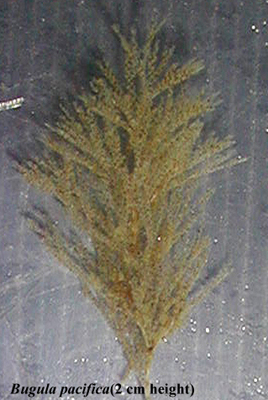
Bugula pacifica (I think) and unidentified bryozoan.

Bryozoans. The "moss animals". The Latin name is derived from the Greek word βρύον (bruon), "tree-moss", from βρύω, "to be full to bursting, to teem" and from the Greek word ζῶον (zoon), "animal; a live thing". In other words, an animal that looks like moss. (The plants, Bryophytes). Which it does, sometimes. And often it doesn't.

The basics, first.

The moss animals are minute animals, each less than a millimetre long, living in tiny "boxes", usually calcified like barnacle shells, but sometimes leathery. Most of them live in colonies composed of many individuals; Wikipedia mentions millions in one colony. I am tempted to call them cities.

Each species arranges the colony in its own individual way. Some are like crusts, barely a scum on the rocks, kelp, or other animals. Others build mounds or coral shapes, still others attach themselves to each other in branch or leaf formations. These last are the "mossy" ones.

They are all aquatic, mostly marine dwellers.

I looked at my sampler under my hand microscope. Of course, all mine are dead; there is no sign of the animals inside the cases. But I got an idea of the shapes and arrangements. Apparent tubes, little barrels, balloons, and prickly pear cactus shapes, all made of white chalk or even glass. Breathtakingly beautiful; oh, for a microscope with a camera attached! (One day.)

Vocabulary: The body of the animal is called a zooid. (From zoon, life.) Its box or case, often called a "house", goes by the name of zooecium (zooecia, plural). Sessile: attached, not moving. Most bryozoans are sessile.

Anatomy: The bryozoan is basically a digestive tube in a box. At the open end, the lophophore, tentacles wave particles of food towards the mouth. On the same end, just beside the mouth, the anus discharges undigested remnants. Besides that, there is a muscle to pull the mouth closed (some have a lid, or operculum), and the reproductive organs (male and female; the animal is hermaphroditic).

This diagram, from Living Invertebrates, by Pearse and Buchsbaum, was helpful.

All that is background. Here's the weird stuff:
  1. A zooid lives for a few days or weeks, then basically digests its innards, leaving a "brown body" inside the wall. Then the wall gives rise to a brand-new gut, etc. (That would be a handy trait for some of us whose "cast-iron stomachs" have rusted!) The brown bodies either stay inside the body, or are defecated through the anus, depending on the species.

  2. A colony somehow keeps track and staggers this process so that the zooids with functioning guts can feed the rebirthing ones.
    Within a colony the individual zooids are not completely isolated. Each zooid is connected to its nearest neighbours by a strand of protoplasm. This enables nutrients to be transferred from one individual to another. Earthlife.net.
  3. Each zooid has a nervous system composed of one bi-lobed ganglion (look on the diagram, just at the base of the tentacles) and a few nerves, connected to the internal organs and muscles, the body wall, and the tentacles. In many species, the ganglions also connect to a nerve network common to the whole colony.
    "Disturbance of the lophophore can result in rapid retraction of the lophophore by most or all of the zooids in the colony." Living Invertebrates.
    A hive mind, where we least expected it! Hail our moss animal overlords!
  4. "The retractor muscles ..." (That long, straight line from the base of the tentacles to the bottom of the box) "... are among the most rapidly contracting muscles known, shortening more than 20 times their length per second, nearly twice as fast as the fastest vertebrate muscle."
  5. Not all zooids of the same species look alike. They may take on different shapes and functions for the aid of the colony. In other words, the colony functions, in some way, as a single animal.

    • The basic zooid is the box with tentacles, mouth and anus. It becomes part of the digestive system of the colony; it passes nutrients to the other forms.

    • Some zooids become avicularia; they look like a bird head, with a snapping beak. (Look at the diagram again; there's one attached to the side of the large zooid.) They either bite invaders, or sometimes pin them down until they die and disintegrate. I found a fuzzy movie segment that shows their snapping action, here.

    • Some are vibricula, just a bunch of tentacles that sweeps the colony.

    • In some colonies, a few of the zooids at the base become little more than empty cases, serving as supports.

    • And when the zooids reproduce sexually, (They do this and also bud asexually. Can't be limited to one lifestyle.) some become gonozooids or ovicells, brood-chambers. I think those glassy "balloons" I saw would be these.

    • One more; zooids at the edge of some colonies sometimes produce spines. In some species they
      "form only on zooids ... after the prescence of nudibranch" (sea slug) "predators is detected ..."
    How they manage all that with one ganglion and a gut, I can't imagine.

  6. Bryozoans are sessile. Except for those that aren't.
    "... but in some species, particularly those which live in freshwater, the whole colony is able to walk, or glide to a new locality. Species of Cristatella can move up 10 cm (4 inches) per day. However the fastest species is Selenaria maculata which can move up to 1 metre per hour." Earthlife
  7. With (almost) anything you say about Bryozoans, you have to add, "except for these cases ..." No one rule holds for them all.
A few handy links for more info:
.

Stumble Upon Toolbar

Just one more chapter to read ...

I'm still working on Bryozoans. The more I learn about them, the more I want to look up. And I'm getting a bit cross-eyed from examining photos. I'm going to bed.

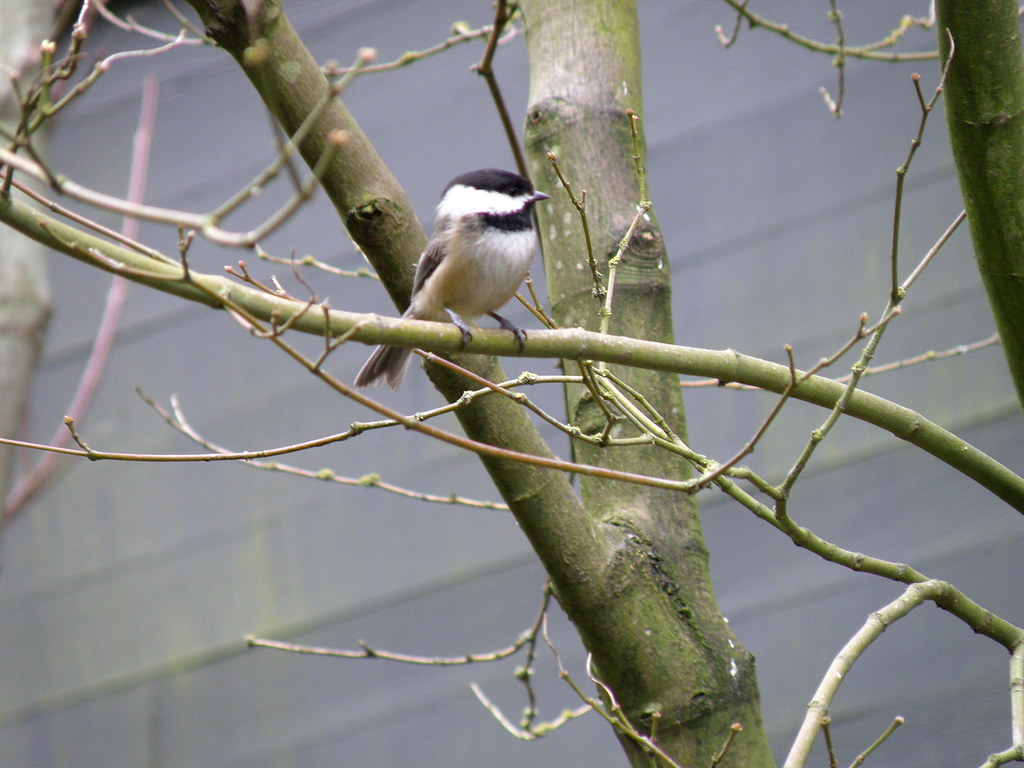
Here's a patient chickadee:


He's been fed, and the bryozoans will be served up in the morning.

.

Stumble Upon Toolbar

Sunday, March 29, 2009

Zoo in the palm of my hand

The incoming tide brings with it organisms from deeper waters. I plucked a few samples of red seaweeds from the waves on Boundary Bay beach and brought them home for closer inspection. On one piece of Turkish towel, barely two inches long, I found a miniature zoo.


I could distinguish at least four different animals on this piece, maybe up to 6. (It's helpful, with all these photos, to look at them full-size; just right-click on the photo and open in a new tab.) Most apparent are the looped pinkish tubes. The whitish patches are little tubes, short and pudgy, or taller and slimmer, arranged in rows. There are twigs with tiny greenish spots, and near the bottom, a few tiny spirals.


This is a closer view. Some of these tubes are arranged in a fan shape; they stand a bare millimetre or two above the leaf. A lacy pattern under them lies flat against the blade; still another species.


From a different angle; I was trying to get a decent look at those twigs.


And on one tip of the seaweed, two of these little egg cases were glued.

The egg cases were tough, but soft. Everything else growing on the seaweed was as hard as a barnacle shell. I picked at them with a metal hook; not one broke or came away from the leaf. Even the twigs were made of hard shell.

After the seaweed had dried, I examined it again. The various shapes are easier to distinguish now, so I took another round of photos.


Coiled tubes, the twiggy things, bunches of "grapes", "glass" bubbles (under the coils) and straight tubes.


The fan-shaped arrangement of tubes is clearer here.


Another view of the "glass" bubbles and the twigs.


I pried one twig to an upright position (so delicate and tiny, yet it didn't break) and held it directly up to the light. The detail is washed out, but you can see how it's formed; each leaf is smooth on one side, curved in to cup a nest of spikes on the other.


The whole zoo is less than 4 cm. long.

Some of these were fairly easy to identify. The leathery lemon donuts are snail eggs: I'd seen their photos before. A chink snail, Lacuna sp. The pink and white coils are the shells of Dwarf tubeworms, Spirobis.

As for the rest, I think they're Bryozoans. And these are fascinating animals, which deserve a whole post to themselves, so I'll leave them until tomorrow.

.

Stumble Upon Toolbar

Saturday, March 28, 2009

Love in the treetops

It's honeymoon season in my back yard. A pair of squirrels plays tag up and down the tree trunks. Pine siskins are busily collecting palm fibers from my planters for their nests, the bushtits are feeding in couples, chickadees are calling, "Here, sweetie!" In the blackberry hedge, sparrows are exchanging tuneful sweet nothings. Even the crows are in the mood.


Courting twosome in elegant, formal black.

Being crows, however, they express their emotion in raucous, uncouth shoutings and insults.


"And furthermore, get off our lawn!"

.

Stumble Upon Toolbar

Friday, March 27, 2009

Favourite doggy game

Seen on Boundary Bay beach:


Waiting for the thrower of sticks.


I'm on my way!

.

Stumble Upon Toolbar

Thursday, March 26, 2009

The "I can't believe it's a moth!" moth.

Spring! Finally! The sun shines, the birds are looking for construction materials, and the insects have appeared. About time.

On a sunny wall, last Saturday, a few dozen dark "grains of rice" were hanging. Close up, they turned out to be coated with sand.


A few were moving; they had some sort of larva poking out of the upper end.


I touched one, and it came off in my hand, so I dropped it in a plastic bag and brought it home.


Left alone in a tin, it crawled out of the case, and began moving around, dragging the case behind itself.


With a ladybug, for size comparison. It is about 8 mm. long.

I propped the viewing tin up on its side, to give the larva a wall to climb on. It went up to the top, over to the middle of the top, and dropped on a long silk to the bottom. Then it climbed up the silk, stretching out of the case, grabbing the silk, pulling the case up after itself until only the head was exposed, stretching out again ...


Later, it attached itself firmly to the top, and went into hiding. It is still inside, three days later.

What is it? I had no idea. What makes a case out of sand, besides the aquatic caddisflies?

A bagworm, Dahlica triquetrella. Which is a moth. A moth with no wings, eyes, or mouth. A female moth, in a population without males, at least while they're in Canada.

It gets weirder still.

The adult moth, in Canada, is parthenogenic; always a female, but needing no fertilization by a male. All the offspring are female. In Europe, where they originated, some are parthenogenic, but others do produce males, and reproduce sexually.

The parent produces her eggs, and then either lays them in the case, or dies there with them still inside her body. Laid or unlaid, they hatch. They even hatch if the case has been eaten by a bird; the eggs pass unharmed through the bird's digestive tract.

The newborn larva leaves the parent's case, and builds her own; a silk bag pasted over with grains of sand. The bag has three sides, a hole at the top for eating and moving about, and a hole at the bottom for waste discharge. Where there are males, in Europe, the mature male moth leaves through this bottom exit.

The larva wanders around, dragging the bag behind her, eating lichen, until the fall, when she attaches herself to a handy tree or wall to wait out the winter. She is still a larva; she will not pupate until the spring.

When the spring thaw comes, she pupates. This would be the stage where my specimen is now. I could not find out how long it lasts, but soon enough, the adult emerges. If "emergence" is the right word; the adult moth stays inside the case.

Not that we would recognize her as a moth, if we found her outside the case. She has only vestigial wings, if any. She is eyeless and has no mouthparts; she doesn't eat. She looks more like a worm than anything else.

She lives inside her case for a few days, lays (or doesn't lay) her eggs, and dies. If she leaves the case at all, it is only to lay her eggs back inside the case (through the sides, not the top or bottom hole), die and drop to the ground.

In this area, there are two species; this one, Dahlica triquetrella, and another, Dahlica lichenella, so far seen only near the Alex Fraser bridge. The only photos I have found of this latter one are distinguished by its choice of lichen as a covering material.

Seabrooke, over on the far side of Canada, has photos of a couple of species of bagworm; this one covers its case with sticks, and this one, the snailcase bagworm, uses sand, like the D. triquetrella. The Backyard Arthropod Project has a snailcase bagworm empty bag, and details of its lifecycle; slightly different than triquetrella, as far as diet and timing goes, but still parthenogenic and confined to her bag.

This kind of lifecycle leaves me full of questions. If the female never leaves her bag to interact even with other females, and each of her offspring is basically a clone of the mother, how does the species survive as a species? Would they not gradually change in different ways until each one is almost a species to itself? How did they survive when they first arrived in Canada (first sighting, 1941), if they were "used to" reproducing sexually back home in Europe?

And: how did anyone realize that they were moths?

.

Stumble Upon Toolbar

Wednesday, March 25, 2009

Jagged, spiky, blobby mushroom, with claws

I found these white fungal growths on a dry log on Boundary Bay beach:


They seem to be encrusted on a branch scar, which gives them the three-toed claw shape. Further down the log, the second clump looks almost like a different species:


And both of them are like and unlike the ones I saw last November, probably on the same log. Here they are, again:


Common Split Gills?


The underside, showing the split gills.

This year's crop didn't have the same "mushroom" shape, nor were gills apparent. And the spiky, blobby ones were twice the size of last year's.

I am still not sure what they are.

.

Stumble Upon Toolbar

Monday, March 23, 2009

Flight of the ladybug

On the first day of spring, we saw this ladybug on a sunny fence.


The Sevenspotted Lady Beetle, Coccinella septempunctata

She* got away.


So did this one.


But we caught this one, and brought her* home. I put her in my little viewing tin, and she tried to escape:


Lifting the wing coverts.


Stretching those wings.


Dragging the parachute.


Folding up again.

The tiny tin was hampering her style, so I let her go free. Fly away home!

*Courtesy pronoun. She's a ladybug, after all.

.

Stumble Upon Toolbar

Sunday, March 22, 2009

Ask a simple question ...

I promised Dawn a post to answer her questions about New Westminster Quay.

There are things that you don't even wonder about until someone asks. I've been a regular at the Quay since the time, 15 years ago, when I lived just up the hill and walked its length every non-rainy day. And now I had to look up the word in the dictionary.

What is the New West Quay? Well, for starters, it's not exactly a quay, at least for most of its length. A quay is

"A mole, bank, or wharf, formed toward the sea, or at the side of a harbor, river, or other navigable water, for convenience in loading and unloading vessels." Dictionary.net
Upriver of the hotel, there's a long loading dock for large boats, and three smaller wharves for smaller craft. This was the original development which gave the whole area its name.

Here's a satellite view, courtesy of Google:


The right side of the photo is upriver. The quay goes alongside the parking lot, and the big boat is the Royal Casino. It's the only boat that docks there, these days. The pale blue roof is the Quay Market, now closed for renovations. (We will miss this, once the warm weather arrives; so will the pigeons and sparrows that forage around the outdoor tables.)


By the parking lot, and the disused loading dock, looking upriver towards the Patullo Bridge.


The Casino.

The three smaller docks service assorted tugs and fishboats,


Working tug

...the Samson V, a sternwheeler/museum, open all summer (for now),
"The Samson V is a wooden steam-powered sternwheeler built for the federal Department of Public Works for use as a snag-boat on the Fraser River."
and a dock for river tour boats.


Sternwheeler tour boat, with a glimpse of the Samson's paddlewheel at the next dock.

And now the quay has become a promenade. No boats tie up here; it is a half-mile of paved path and boardwalk along the river bank. On the landward side, in the narrow strip between here and the railroad tracks, luxury condominiums have sprung up.

This is the "Banana Belt"; here on New West's south slope, temperatures are mild, and spring starts early. And so do the gardeners, to good effect:


Mid-July along the "Quay".

Weekends, the walk is always busy; families with small children on tricycles, parents taking the kids to the playground at mid-point, joggers and skaters, older folk sunning on the benches, tourists giving their cameras a workout, shoppers on their way back from the market, dogs of all shapes and sizes, on leash. We usually come mid-week, when we have space to admire the gardens properly.


Jaya, collecting fallen rhododendron petals.


Fritillary

We walk down the promenade a couple of times a month. Often, the plants are new to us; exotic species from farther south, or newly-developed varieties, sporting colours and patterns never seen before. Most do not survive the winter. But come spring again, the gardeners will appear, bearing gifts.

The condos below the railroad bridge are surrounded by shallow ponds, in lieu of lawns. This is where we took those watery photos last week.


The dark green areas are ponds.

So, no, Dawn, it's not like Venice; no gondoliers on these ponds. Only the ducks and goldfish use them for transportation.

But we do have UFOs.


(Ok, I cheated. It was there, all right, but I deleted a tiny bit.)

.

Stumble Upon Toolbar

Sometimes enough's enough.

I've been wrestling with a balky computer for hours. I'm calling it a night.


"Ok, you can stop right there!"

.

Stumble Upon Toolbar

Saturday, March 21, 2009

Water, water everywhere.

On the beach, the water is in front of us, and sometimes underfoot. At New Westminster Quay, it is everywhere. But our feet stay dry.

There's the river, of course:


B&W. Tug and goose.

And each building on the landward side has its own cement-bound pool, where ducks paddle in the reflected light.


Inner "courtyard".


On the lip.


In the back alley, the water is shady and green with algae.


A mallard stirs up the reflections.


"If I can't see you, you can't see me!"


Fountains break up the colours.


Can you find the duck?


Pigeon feathers, circling the drain.


Red buildings make the water at least look warm.


Back by the river, the sun shines, briefly.


Homeward bound.


Water underground, under control.

And it's still too cold for flowers. Crocuses and daffodils, and some first-year witch hazels. That's it. We'll try again in a couple of weeks.

.

Stumble Upon Toolbar

Friday, March 20, 2009

Poor little redhead!

This will be a sad post, and if gruesome photos disturb you, you're better off to skip it and go on over to The Birdchaser, I and the Bird #96, for a cheerful oyster hunt.

I wrote, last Monday, about the house finch with an infected eye who stayed on the chickadee feeder after dark, until I chased him off. This is an update on his condition.

He was back on the feeder Monday night, and I had to wave my hands around near him to get him to leave and find a warmer site for the night.

Tuesday morning he was back, poking around the place where the bucket of seed usually is, and squalling at me when he didn't find it. A bit later, I found him sitting on the chickadee feeder perch, sleeping; I woke him up, but he stayed put. This time, the flash didn't scare him off, either.


He looks almost normal. Except for a bit of crustiness around the eye, and his sleepiness and lack of concern at my approach, he seemed ok. When I finally got him to leave, by shaking the feeder with a stick, he was navigating fine.

He wanted to spend the night at the feeder again. I wouldn't let him.

Wednesday was a repeat; begging for food, sleeping on the chickadee feeder.

Thursday. In the morning, there was an outburst of chirps and squeals; I went to see what was up. A chickadee was on one arm of the feeder, the house finch on another. A pine siskin was attacking him, beak to beak, the two of them yelling as they jabbed at each other. The pine siskin saw me and left, and the finch began digging for a black oil seed. Good! He's got some energy, and he's eating!


Dark photo because it's pouring rain.

He stayed put most of the morning, sometimes eating, sometimes sleeping. A couple of times, I rousted him out, once prodding him with a stick to make him leave the perch, but he always came right back.

I got a chance for a close examination. What I saw was not encouraging.

The right eye (from his point of view; on the left in the photo) looks more or less normal. But even from a front view, the left side is swollen. And notice that spot below the eye. It was there, but not so pronounced, on Monday, too. (Look at the top photo again.)


But the left eye is a mess. And that spot looks like a hole. Or is it an abscess?

He flies ok, although he has a bit of difficulty coming in for a landing.


One of the symptoms of salmonellosis is diarrhea, with "pasted vents" as a sign of this. I had seen no evidence of this, yet, and he was cooperative, so I photographed his butt. Everything seems fine. No smearing, no "pasting". But look at the feet:


One talon is badly inflamed. Poor guy; sore from head to toe.

So, now I'm wondering. Maybe it's not salmonellosis. I hope not, though I'm still taking precautions (bleaching everything, every day). Could it be House Finch Disease?
Birds infected with this disease (also called mycoplasmal conjunctivitis) appear to have red, swollen, runny, or crusty eyes; in extreme cases the eyes become swollen shut or crusted over, and the bird becomes blind and unable to fend for itself. You might observe an infected bird sitting quietly in your yard, clumsily scratching an eye against its foot or a tree. While some infected birds recover, many die from starvation, exposure, or predation.
And will he recover? I do hope so; at least, he shouldn't starve. He was eating well.

Or is this, seeing that his foot is also damaged, a result of an accident or a run-in with a predator?

Life is so difficult for these little ones, so surrounded by dangers and so alone. We see them bouncing around, singing, flying, preening, splashing merrily in the bath; they look happy, and we don't often notice their frailty.

Little red finch, I'm rooting for you. I'd help more if I could.

(And now, to cheer yourself up, go on over to The Birdchaser.)

.

Stumble Upon Toolbar

Thursday, March 19, 2009

The house with the pink doors

This is one of the last houses this side of the American border, on the cliffs overlooking the ferry landing. Maybe the last of the older cabins, now overgrown with blackberry canes, and slated for demolition to make way for a house ten times its size.


Front door.


Side door.


View from the end of the road.

I have tons to blog about, but I'm down with a touch of the flu. Tomorrow will be better, I'm sure.

.

Stumble Upon Toolbar

Wednesday, March 18, 2009

Wordless (almost) Wednesday

Just a pair of mallards at New Westminster Quay.


And now, goodnight.

.

Stumble Upon Toolbar

Tuesday, March 17, 2009

Armadillidiidae. Pill bugs, for short

I like that word, Armadillidiidae. Step back and take a look at it. It kind of looks like a pillbug, on its back, with the legs waving in the air.

Digging through the mulch, checking to see if my perennials are starting up, I came across three shiny black balls. I collected them and brought them inside. On my desk, they immediately unrolled themselves and started running. Pillbugs.

Armadillidium vulgare

I have at least two different species of their relatives, the sow bugs or woodlice, in my garden, but I hadn't seen these here before. Nor had I seen any, anywhere, so big. The largest of the three was well over 1/2 an inch long. The woodlice that I collect for my spider are half that, at most.

Woodlice (Oniscidea sp.) and pill bugs (Armadillidiidae sp.) are isopods (meaning same or equal feet), and look almost alike, but only the Armadillidiidae roll up into a ball. And the A. vulgare makes a nice, tight, perfectly spherical ball; not all Armadillididae do. (Sorry. I just like that word.)


Unrolling.

These guys ran fast, and pushed aside even plastic lids meant to contain them. They're like little tanks. I photographed this one inside a jewelry tin that I have fixed up with a non-slip bottom.


Trying to escape.

It has two long antennae, and two short, stubby ones that you can see in this photo. The eyes are behind these and to the sides.


Seven thoracic segments, head and abdomen (the tail end). Seven pairs of legs. Nicely sculpted armor-plating.


On its back, legs waving.

I finally put them into the spider's bottle. She tried to tie them up, but they kept breaking her web; too sturdy, too well protected. Eventually, they died, probably because it's too dry in there. They need moisture to be able to breathe.

The next ones I find go back to the garden after a brief, damp photo session.

.

Stumble Upon Toolbar

Monday, March 16, 2009

Salmonellosis in house finch?

This house finch fell asleep on the feeder. When I went to close the curtains after dark, I discovered him, just a dark blob where there shouldn't be one, and opened the window, a bare two feet away. He didn't wake up, so I got the camera.


The first photo, a face shot, didn't turn out because the feeder was swinging in the wind. The second woke him up, and he left. I hope he found a better place to sleep.

One of my finches has something wrong with one eye. It was swollen shut a week ago; today I saw it again, and it is looking much better, but the eye is open a mere slit. I'm wondering if this is the same finch; I can't tell from the back.

I am worried about this bird; there is a possibility that he is suffering from salmonellosis, which attacks the eyes. I found the symptoms on the Wild Birds Unlimited website:

If you have Pine Siskin, American Goldfinch or House Finch at your feeders showing symptoms of salmonellosis, these are the symptoms. They include droopiness, diarrhea, and severe lethargy, fluffed out feathers and birds are easy to approach. Some birds may appear severely emaciated or be observed to seizure.
I have seen none of this, unless sleeping on the feeder tonight was a result of the "severe lethargy". Otherwise, the finch seems happy and active enough.

The Cornell Ornithology Lab mentions the swollen eyelids and lethargy. Another symptom to watch for seems to be "pasted vents". I have not seen this.

They also describe House Finch Disease, which causes swollen eyes, sometimes leading to the death of the finch.

What to do? Again, from WBU:
What to do if you find any sick birds
1. Remove all feeders for a few days.
2. Clean and sanitize all feeders, poles and the feeding area
3. Reinstall multiple feeders in new locations that are spread far apart from one another. Reducing crowding at feeders helps reduce stress and the transmission of the disease.
4. Replace wooden feeders with ones made of plastic or recycled materials. Wood is very difficult to sanitize.
5. Do not reinstall feeders that allow contact between fecal material and food (such as platform or tray feeders)
6. Initially provide food and feeders that will not attract finches (suet, safflower, peanuts, hummingbird feeders, etc.)
7. Reinstall finch feeders and food after an additional two weeks.
8. Clean feeders and birdbaths with a 10% bleach solution several times a week, be sure that feeders are dry before filling them with seed.
I cleaned all the feeders with hot water, then bleach, last week, and removed the bucket the finches use, and the bowl of nyger seed. I don't use a platform feeder. The chickadee feeder gets sanitized and thoroughly dried every few days. Tomorrow, I'll bleach the perches on the chickadee feeder again, and start looking for plastic to replace the wooden chopstick. I'll bleach the bird bath while I'm at it: I didn't do that last week, since it was frozen solid until yesterday.

Looking for info, I discovered that Jayne, at Journey Through Grace, has an outbreak of salmonellosis in her pine siskins. Very sad; she has seen several dead and dying birds. I hope it doesn't come to that here.

.

Stumble Upon Toolbar

Sunday, March 15, 2009

In which I take pity on my friends

It's nice to know there are people, and readers of my blog at that, who are as crazy as I am. In other words, they spend a nice, rainy* Sunday poring over a photo of mussels to see where the whelk is.

But enough is enough; here is Mr. Whelko!


Zooming in:


*At least, it was rainy, here. Was. Now it's snowing again. (Runs out, screaming and waving the calendar.)

.

Stumble Upon Toolbar

Invisible fences

Whelks (Nucella sp.) eat barnacles. And mussels. And at the south end of Crescent Beach, we have been photographing whelks.

So why, in over a dozen photos of mussels and barnacles on that same beach, can I find only one lonely whelk?


Barnacles and mussels, undisturbed by Nucella lamellosa.

Nestled in among the mussels, I find periwinkles and black turbans. They are vegetarian, algae eaters. So are the limpets around the edges of the mussel beds. But where are the whelks?


Plenty of periwinkles. No whelks.

I went back to my Pacific Seashores book for an answer. In the chapter on the causes of intertidal zonation, I found a few clues. It may have to do with the distance from the high tide line. Mussels, barnacles, and periwinkles tolerate being out of the water for longer periods than do whelks. They can close themselves down tightly against heat and dry air. Not whelks.

Wikipedia says, of the dog whelk (Atlantic),
The dog whelk can only survive out of water for a limited period, as it will gradually become desiccated and die if emersed (out of water) for too long. Metabolic processes within cells take place in solution, and a decrease in water content makes it impossible for the organism to function properly. ... Furthermore, the dog whelk has to excrete ammonia directly into water, as it does not have the adaptation possessed by many upper shore species which would allow it to produce uric acid for excretion without loss of water. When kept emersed for seven days at a temperature of 18°C, 100% of dog whelks die, in contrast to many periwinkle species which can lose even more water than the dog whelk (i.e. more than 37% of their total body mass) but survive as a result of their ability to excrete toxic waste products more efficiently.
Another factor, mentioned in the book, is the time involved. A whelk fastens itself to its chosen mussel, then drills through the shell to reach the meat. On a large mussel, meal preparation and eating may take up to 60 hours. But in the upper intertidal zone, much of this time is, of necessity, out of water. (Barnacles take less time, because the proboscis is inserted between the valves, instead of in a hole that has to be manufactured.)


Periwinkles, mussels and barnacles. No whelks.

So I come to the conclusion that the tide was higher this last Wednesday than the previous two times we visited the same spot. Since each time we were examining the life at the very edge of the water, we found the species most suited to that level. I think I may have to start measuring, pacing the distance out, to see where the individual habitats begin and end.


Healthy mussels. No whelks.

I examined all the photos, at twice full size, several times. At last, I found a whelk. One only.


There is one whelk here. Can you find it?

.

Stumble Upon Toolbar

Saturday, March 14, 2009

Resting after the climb

Fred Gingell, a plaque at the lookout in the park named for him tells us, viewed the park as a place for Delta's residents to sit and watch the sunsets over Georgia Strait. Mostly, though, we find people running. Down all those steps to the beach (a 50-metre vertical drop), and often, up again and down again, counting as they go. "How many trips does that make?" I asked a runner on Wednesday. "Nine," he puffed. "One more to go."

(I am pleased with myself if I make it down and up once. Walking.)

One visitor, though, remembers, and sits to watch the afternoon sun.


.

Stumble Upon Toolbar

Friday, March 13, 2009

Crescent Beach sampler

We always take far too many photos for one or two blog posts. Which is fine, because most of them don't turn out all that well, anyhow. But every so often, I go back to sort and save, and discover some that I really wanted to share.

These are from last week, on Crescent Beach.


Sky, and sky reflected. A long view at low tide.


Yellowlegs, showing off his beautiful underwing feathers. Click on this for a full-size view.


The orange flesh of a whelk.


Against the light, the beach is silver and black. That's a heron, fishing the tidepool.


Eelgrass and sky, reflected.

We spent some time at the high-water line, flipping over boards and piles of dead eelgrass, cameras already focussed, trying to catch some of those elusive sand fleas. They hop all over as the shelter is disturbed, but within less than a second every single one has disappeared.

We took dozens of photos of eelgrass and sand. We didn't get a single sand flea. We did get this ferocious bit of red seaweed, though.


Look at those "teeth"!

Off-topic, entirely: you've got to see today's post at Laura Goes Birding. (It should be "Bearing" for this entry. Very funny!

.

Stumble Upon Toolbar

Thursday, March 12, 2009

Three bucks well spent

We found ourselves on the roof of a parking garage in downtown Vancouver, with the clock running. So we "wasted" 15 minutes ($3.00 the half-hour or portion), taking photos from that vantage point.

The garage is sandwiched between St. Paul's Hospital,


Comox Street side of St. Paul's.


Detail of facade.

and St. Andrew's-Wesley United Church,


Windows of St. Andrew's-Wesley's upper storey.

and sharing the building with the Century Plaza Hotel.


Back side of the hotel. Across the way, the Wall Centre.

The garage has only three storeys above ground, so from here, in every direction we are hemmed in by walls and staring windows.


A child's block structure, in boring grey.


A "window room", maybe a greenhouse, atop a plain brick structure.


Warm brick and dull windows.

And from the corner, we could look past the hotel, across Burrard, to a glass and steel jungle.


The Wall Centre: 48 storeys of blue glass. The low green glass roof below is the Provincial Courthouse.

And every window shows its own delirious vision of the city.


Identify these.


St. Andrew's-Wesley, Century Plaza, and (your guess here) reflected in the Wall.


St. Paul's, reflected in an unidentified building across Burrard.

We weren't alone on the roof; a crow brought down his lunch, intending to eat it in privacy.


He wasn't pleased to find us there; we were supposed to hurry into our car and go away. Roofs are for the birds! But we just kept wandering around, exclaiming and clicking. I walked over to the crow, and he moved to another wall, then to a light fixture,


then, when I was still following him, to the big communications dish,


where he bobbed up and down, cawing angrily. I tried to get a photo of this, so he stopped. (But Laurie, sneakily, got a shot from the far side of the roof.)

We outlasted him. There were still some buildings to photograph; we weren't going to leave until we'd got them all. Poor Mr. Crow gave up and went next door.


"People! They're everywhere these days! Meddling, nasty, noisy people! Can't a crow even eat his lunch in peace around here any more? Caw!"

.

Stumble Upon Toolbar

Wednesday, March 11, 2009

Hole in the clouds

Sky over the Alex Fraser bridge, Monday afternoon:


Those clouds hold more snow.

One year ago today, it was raining, my hostas were sprouting, and the slugs and pillbugs were thriving. This year, everything's frozen. Did the powers that be forget to schedule spring this year?

.

Stumble Upon Toolbar

Tuesday, March 10, 2009

Cold, grey skies, warm birds

When I turn over a rock or planter in my garden these days, I find a squirming mass of earthworms; they've woken up from their long winter's nap. In Cougar Creek Park the other day, the robins were out en masse, getting their protein.


Never mind the cold! Dinner's ready!


Cold afternoon. Bare, chilly branches, with crows.


Warm robin.


It's starting to snow again.


Cheerful mallard.


More cold, grey skies.


Cold water, warm duck.

I love the lacy bare branches of deciduous trees. But they do look chilly.
.

Stumble Upon Toolbar

Monday, March 09, 2009

Yesterday's flowers

These are the flowers I meant to post last night. They were in the courtyard of the Art Gallery, where they are protected from the weather on all four sides.


Deep pink primula. (Mine are just barely showing a tip of colour on the bud.)


Yellow ditto.


Upside-down bell clapper.


Mini daffs.


And tiny irises.


And just over our heads, a crow's nest, ready for occupancy.

That was Saturday. Today, Sunday, it snowed. Hard and furiously. Everything is white again. Laurie and I came home singing, "It's beginning to feel a lot like Christmas."

.

Stumble Upon Toolbar

Sunday, March 08, 2009

"Grand, awe-inspiring" insanity

What do you do on a windy Saturday when it threatens to snow -- again! --? We went to the Surrey Art Gallery. The exhibition that drew us was Edward Burtysnky's "An Uneasy Beauty - Photographs of Western Canada". From Wikipedia:

Burtynsky's most famous photographs are sweeping views of landscapes altered by industry: mine tailings, quarries, scrap piles. The grand, awe-inspiring beauty of his images is often in tension with the compromised environments they depict.
"Sweeping views" doesn't do justice to the photographs. These were huge, detailed photos, maybe 3 or 4 feet long. Railway and road cuttings (some locations I recognized; a wire net holding the rock face on the Hope-Princeton highway, for example), homesteads, in all their grunginess, a copper mine. These were from the 1980s. Peaceful, and at the same time, disturbing; the stark beauty of our interior cluttered with our machinery.

The display is laid out in a U. The second leg is dedicated to Alberta's oil sands. An online gallery includes the ones we saw, and a few more. (Click on "Oil", then on "Oil Sands".)

The photos are heartbreaking, horrifying. Look at this one. Imagine yourself a waterfowl, on your way North, looking for a place to get a bite to eat, spend the night. Imagine seeing this shiny lake and landing, only to find that the water is poisonous. I read just last week about a flock of 500 ducks dying this way last May. (Story on CTV, stoptarsands, The Star ...) From the Star story:
And they warn the number of bird deaths will jump dramatically as more heavy oil plants are built unless governments bring in tougher environmental rules, including how to deal with billions of litres of poisonous sludge the plants produce.
I was planning to post some cheerful photos of spring flowers from the Art Gallery courtyard, but I don't have the heart for it after looking at the oil sands photos again, even the small versions on the web.

Burtynsky's webpage has more, much more; Eastern Canada, Australia, the US, China, India, Spain, etc. Go see. But be warned; it's not easy viewing.

.

Stumble Upon Toolbar

Saturday, March 07, 2009

Oh, the frustration!

We parked the car in a little lane just off Crescent Beach. While Laurie got his beach boots on (and I'd forgotten mine, again; will I ever learn?), I walked on ahead, looking for budding leaves.

A woman was standing in the lane, craning her neck. In the tall, half-dead trees far overhead, something was making an awful racket; repeated machine-gun drumrolls a few seconds apart. A woodpecker.

We examined every branch, every tree. After a while, Laurie joined us. There was nothing there, but the drumming; no sign of a bird, it seemed. Finally, 'way up at the tip of a thin snag, a bump moved. Laurie got a tiny photo. (We must invest in a telescopic lens one of these days.) How does such a small bird, on such a tiny stick, make such a noise?


Long, sharp beak, speckled or striped breast, barely visible.

Another passerby discovered the second bird, a bit lower down, but still almost invisible. All I could see with the naked eye was a slight bump on the snag.


A brown, mottled bird, with whitish underside.

I think it's a flicker. It's hard to tell when you're looking from the bottom up.

Later, coming back to the car, we found this wren song Lincoln's sparrow* waiting for us:


It hung around, scrabbling through the duff quite tamely, for a while. We shot umpteen photos, but only in this one was it recognizable; mostly, it blended so well into the background, that the camera couldn't find it to focus. Half the time, I couldn't see it until it moved, even though it was only a few feet away.

And down on the beach, all the birds, hundreds of them, made sure they kept far away from us, and against the afternoon sun.

*After examining all the sparrows in the book, comparing it to this one, we've settled on a Lincoln's, blown off course. We could be wrong.


.

Stumble Upon Toolbar

Friday, March 06, 2009

Flipping Periwinkle

Somewhere, in my reading about sea snails, I came across a short video showing a fallen snail flipping right side up, with the shell following the body. So when I found a periwinkle yesterday on a handy rock, I experimented:


Periwinkle, Littorina scutulata.

The Checkered periwinkle is a bit smaller than the Sitka periwinkle. This one was about 1/2 inch high. It is not checkered; some are, some aren't. But the description fits; purplish, longer than it is wide, with a purplish interior. And it was just below the highest tide line; these snails live mostly on the dry shore. They can drown if stuck underwater too long. As the tide rises, they retreat to safer ground.

This one has two passengers on the shell; a pair of barnacles.

I removed it from the slanted side of the rock and placed it, upside-down, on a flat area. It closed itself up immediately, but by the time I had the camera focussed, it was ready to check out the situation. Now watch the action:


Periwinkle, with stowaways.

(The brown circle is the trap door, the operculum. The creamy meat is the body of the snail; it is carrying a small clump of baby snails. I can't tell if they are periwinkles, or another species. There's another, a bit larger, on the left side of the shell.)


Poking out a tentacle (the black triangle). The eye is the spot at the base.


Here comes the second tentacle. They are white underneath.


Waving those tentacles about, up, down and around. Scoping out the territory.


(Close-up, to show the passengers. I counted 6.)


More tentacle waving. That black patch in the middle is on the top of the head.


Looks safe enough. Starting the rollover, by shooting out a "lower lip".


Farther. The "lips" are actually the folded foot.


Making contact with the rock.

There was a brief pause here, while the snail made its calculations. Then, too quickly for my camera to catch it:


Rolling over; the shell goes up, over, and down on the far side of the foot, which acts as a pivot point.


4 seconds later; upright, but still moving. The operculum is still visible.


And 8 seconds later, it's straightened out and ready to go.

The movement was precisely measured; once the snail was in position, it stopped rolling. No overshooting the mark, no recovery needed.

I'm wondering about those little snails, along for the ride; they are now on the underside of the foot, being scraped across the rock. Sounds uncomfortable.

.

Stumble Upon Toolbar

Wednesday, March 04, 2009

Just got back ...

... from an all-day family affair, ending with the traditional 10-course meal in a Chinese restaurant.


King crabs in the restaurant tank. No, we didn't eat these.

I'm exhausted, can hardly keep my eyes open. I'm off to bed.

G'night!

.

Stumble Upon Toolbar

Afternoon at the beach

Random shots at Crescent Beach:


Wader in red.


Loon Crossing


Laurie and a seaweedy rock


Low-flying gull


Beginner's lesson


Coming in for a landing


Barefoot


A good log for watching the changing view


"Come on, lazybones! The afternoon's a-wasting! Let's get going!"

.

Stumble Upon Toolbar

Monday, March 02, 2009

Accidental flower garden

A week ago, I noticed a reddish tinge on the branches of a "weed" tree in the ditch outside our back wall. I broke off two and put them in a vase, to see what they would do. Today, they rewarded me with these miniature spring flowers:


A very merry yellow.


The whole flower clump, pink base to waving stamens, is barely 1/2 inch long.


Same flowers, different lighting.

The previous photos were taken under my halogen desk lamp; for this one, I used a small LED flashlight, which gives a very blue light. It whitens the yellow, but shows off the pink tips of the six petals.


Buds and bugs at the tip of the branch.

I don't know what tree this is; I'll have to wait for the leaves to attempt an ID.

.

Stumble Upon Toolbar

Three handy books

When I come home from the beach with photos or samples of unfamiliar animals or plants, I head, first of all, to my old trusty "Kozloff". (This is a solid paperback with the unwieldy title of "Seashore Life of Puget Sound, the Strait of Georgia, and the San Juan Archipelago", by Eugene N. Kozloff. "Kozloff" is easier to remember.) I have linked to its page on Amazon from here, many times.

My copy is from 1973, and the book has since been updated, with new photos and text. My older version doesn't include newer invasives, such as the Asian mud snails, but otherwise, it is, so far, the best hard-copy guide I have found.


Yellowlegs on Crescent Beach. Greater or lesser? I can never tell.

Some time ago, in a second-hand bookstore, Laurie picked up a copy of "Pacific Seashores - A Guide to Intertidal Ecology", by Thomas Carefoot. (I'm sort of glad he didn't list the place names in the title.) It's another oldie, from 1978, 200+ pages, 8 1/2" by 11". At the time, I glanced through it, but didn't see anything really relevant to the questions I was asking at the time; the book got shuffled to the bottom of a stack.

This past week, while I read and re-read Kozloff, Googled and bookmarked, trying to ID the latest batch of photos, Laurie dug out "Seashores" for me. And this time, it was just what I needed.

Carefoot looks at the "pattern of distribution of plants and animals on the shore, ... the ways they got there, and ... the(ir) myriad interactions ...", focussing mainly on rocky shores. Whereas Kozloff divided his subject matter by type of location (muddy, rocky, docks, etc.), Carefoot looks at it in the context of activity; water movement, predation, grazing, cultivation, and so on. (He refers to an even older version of Kozloff, by the way.)

Leafing through the pages on grazing and predation, intriguing phrases jump out at me:
  1. "Tooth wear in the sea urchin,"
  2. "Thais (that's Nucella, in modern nomenclature), the schemer,"
  3. "... worst of all is a prey that bites back."
  4. "... the cockle quite literally erupts from the sand and makes away with great leaping movements."
I kept getting side-tracked by these grabbers. But I found what I was looking for, a detailed description, with good, clear diagrams, of the whelks' method of eating mussels and barnacles.

I will be using the book consistently from now on.


Curlew and the regulars, Crescent Beach.

And then, yesterday afternoon, in Chapters, Laurie found me another book. This one is "Marine Life of the Pacific Northwest - A Photographic Encyclopedia of Invertebrates, Seaweeds and Selected Fishes", by Andy Lamb and Bernard P. Hanby, published in 2005. (Another mouthful, but it was all essential information.)

Wow!
  • 1400 species, with 1700 beautiful, clear photographs, 25 years' worth. Hanby is a talented photographer; some species can be ID'd on the basis of the photos alone.
  • Three separate, sensible ways to find what you're looking for.
  • Clear descriptions, located beside the photos. (If you've ever leafed back and forth through a book looking for "Illustration # 11 on Plate V", keeping your finger in the page where the relevant text is, dropping your bookmarks on the floor half the time, you'll appreciate this.)
  • Precise locations of photos, also with the photo. Habitat, depth, alternate names ... it's all there, and accessible at a glance.
Again, Wow!


Crows, White Rock beach.

And there are egg cases and egg masses pictured, sometimes, with their parents. Very helpful. On the lugworm, referring to those transparent sacs we found at Boundary Bay, and finally ID'd as Arenicola and, I thought, A. pacifica, Lamb writes,
"... the discovery of suspicious-looking, tongue-shaped, gelatinous, stalked egg masses ... in Boundary Bay ... may also prove to be those of the Pacific green lugworm, Arenicola crustata."
Wonderful! In my first browsing, I discovered several other organisms that I recognized but hadn't been able to identify before. And I think I can find here the egg cases that I found on eelgrass.

One thing I really liked about this encyclopedia; the authors are not afraid to say, "We don't know." For example, a worm:
"NE18. The identity of this subtidal white ribbon worm may never be known ..."
And a listing of 24 unidentified sponges, included in "appreciation and enjoyment of the wide variety of species ...", along with encouragement to "keep your eyes open." Because there is still so much to be learned.

I could go on. But I won't; I've got to get back to my browsing.


Yellowlegs, Crescent Beach.

The encyclopedia ends with a section on selected vertebrates, mostly fish active in the intertidal zone. But the last three entries are the Wandering Garter Snake, because it "routinely visits the beach to prey on intertidal creatures ...", then Homo sapiens "intertidalus" and Homo sapiens "subaqueous". The Beachcomber and the Scuba diver, respectively.

(There's a good review in Diver Magazine.)

.

Stumble Upon Toolbar

Sunday, March 01, 2009

Driftwood critters

Pattern recognition on White Rock beach:


Eyes in the log


Name that bird!


Elephant


Dino?


Heartwood. I should have saved this for next Valentine's Day.

.

Stumble Upon Toolbar
Related Posts with Thumbnails