Showing posts with label May flowers. Show all posts

Monday, June 01, 2026

Flowers and a folded beetle

June already! Tomorrow I must do an inventory of my flower beds; they're bursting out all over. These, though, are a few left over from May, clearing the deck for the new ones.

Allium. This one is a volunteer, growing in the gravel beside my driveway. And it's harbouring a hungry carpet beetle. Look for it near the centre.

Beach pea, Lathyrus japonica. Just above the high tide line.

Another, because I couldn't resist those purple veins. With typical "pea" leaves.

Sweet William, Dianthus barbatus. Another volunteer. The original plant is growing around the corner under a rosebush.

While I'm at it, here's another carpet beetle. This one came into my kitchen, probably with flowers for my table.

Varied carpet beetle, Anthrenus verbasci.

These little guys have a bad reputation, because, in your house, the larvae hide in dark spots and eat wool and other organic fabrics; your best sweater, for example. In labs and museums they are sometimes pests, sometimes useful for cleaning old bones. But in the garden, they're inoffensive. The adults are minor pollinators, feeding on pollen and nectar.
 
Here he is upside-down. I love the way they fold their legs into slots on the bottom of the abdomen. So tidy!

Here he is, struggling to flip himself right-side-up, showing off those unfolded legs.

There; I'm almost all caught up, with no processed files on hold, only a few bird fotos to deal with. Ready for all the June flowers! (And June adventures, too.)

~~~~~~~~~~~~~~

¡Y ya estamos en junio! Casi la mitad del año ya se fue, no sé a donde. Mañana pienso hacer inventario de las flores en mi jardín; ya casi todas se están abriendo. Pero estas son unas flores del mes pasado; estoy haciendo espacio para las nuevas.

    1. Allium sp., uno de los "ajos ornamentales". Esta es una planta voluntaria, que brotó entre la grava al lado del camino de entrada. Y trae un escarabajito Anthrenus verbasci; búscalo cerca del centro de las flores.

    2. Lathyrus japonicus, una flor de las Fabaceae; estas crecen cerca de la playa, apenas fuera del alcance de las olas.

    3. Otras de las mismas, porque me gustan las venas tan marcadas.

    4. Dianthus clavatus, el "clavel del poeta". Otra planta voluntaria; la original crece a la vuelta, debajo de un rosal.

Y ya que estoy subiendo las fotos olvidadas, aquí hay fotos de otro escarabajito como el que estaba en el Allium. Este lo encontré en la cocina; probablemente vino con unas flores que había cortado para la mesa.

Estos bichitos tienen muy mala fama, porque, en tu casa, las larvas se esconden en sitios oscuros y comen artículos de lana u otras telas naturales; como por ejemplo, tu suéter favorito. En los laboratorios y los museos a veces son plagas, y a veces se emplean para limpiar huesos viejos. Pero en el jardín, no hacen ningún daño; los adultos sirven como polinizadores, comiendo polen y néctar. 

    5. Anthrenus verbasci.

    6. Aquí está volteado patas arriba. Me encanta como estos escarabajos doblan las patas para insertarlas en ranuras al propósito en el abdomen. ¡Tan perfectamente ordenadas!

    7. Aquí se trata de volver a ponerse de pie, mostrando esas patas extendidas.

Y con esto, ya estoy al corriente, por lo menos con respeto a las fotos procesadas. Me quedan unas pocas fotos de pájaros, y ya voy a estar lista para todas las flores y aventuras de Junio.


Thursday, May 25, 2023

Just because

Just a few flowers from a friend's garden.

Petunias

Pyrachantha
 
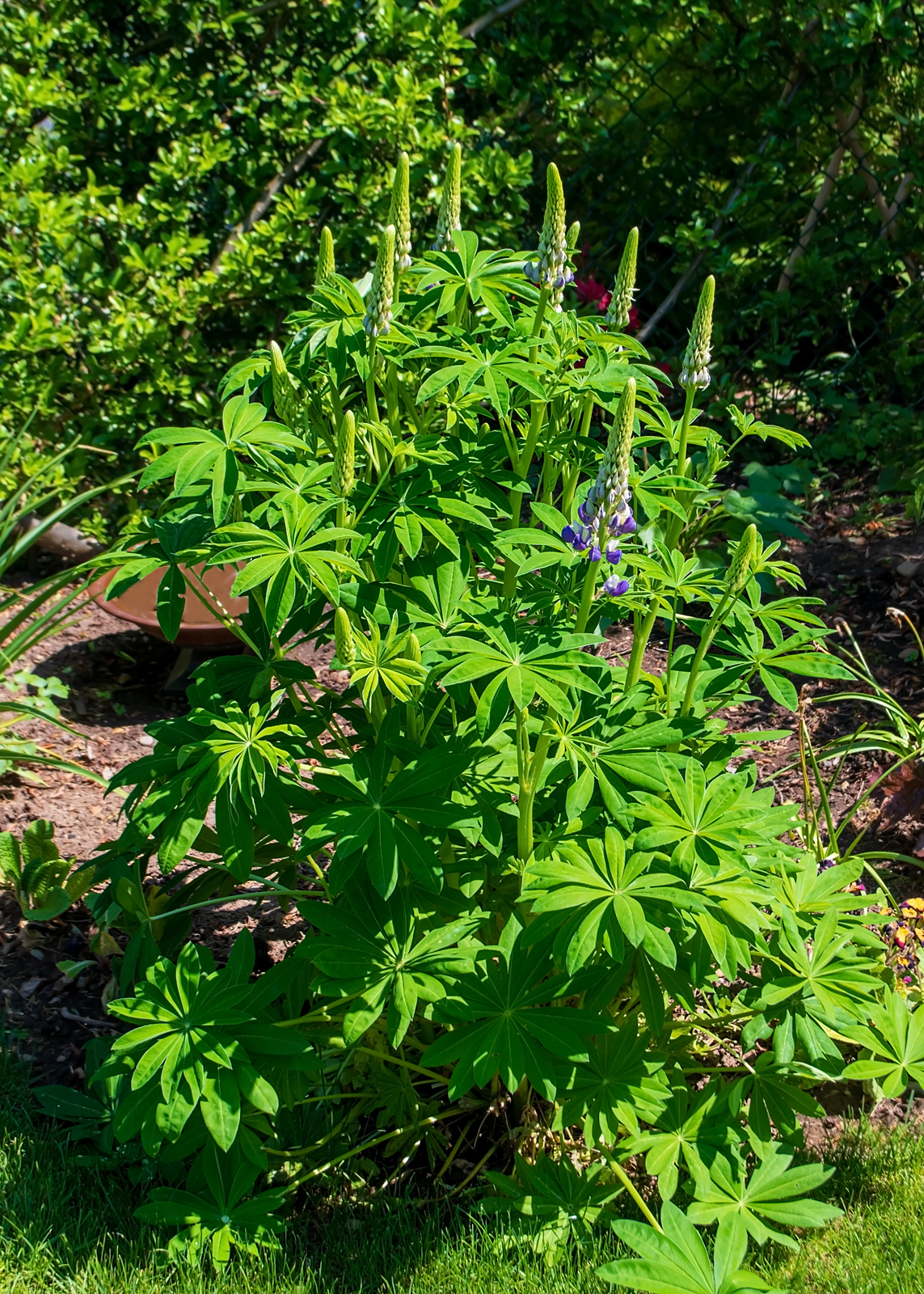
There will be lupins

And there are always geraniums.

And here at home, my mock orange bush has two flowers and umpteen buds.

~~~~~~~~~~~~~

Unas cuantas flores del jardín de una amiga.

  1. Petunias
  2. Espinas de fuego, Pyracantha spp.
  3. Habrá lupinos azules
  4. Y siempre hay geranios.
Y aquí en casa, mi arbusto de Philadelphus ya tiene dos flores, y un montón de botones.

Tuesday, May 23, 2017

Tiny whites.

It pays to stop and sit on the ground, to crouch down to an ant's level; standing tall, we miss so much! These white gems in Kin Park, for example.

Field chickweed, Cerastium arvense, with Indian consumption plant. The larger leaves are Beach Pea, just getting ready to flower.

Another field chickweed, with tiny wasp (I think, because of the long antennae).

And yet another, almost the whole plant. None were taller than a hand's width.

Wild strawberry, with ant. I'm not sure of the tiny white cluster of flowers. A miniature in the Brassica family, maybe?

Another wild strawberry, another ant. But look closely: see the heart-shaped seed pods along the bottom of the photo?

The seed pods, or silicles, look like those of the Prairie Pepper-grass, Lepidium densiflorum. The flowers match and are the right size, but these plants were all barely taller than the moss. Looking closely, these seed pods show up in most of the photos above; the plants were everywhere, but so tiny that I never saw them until I blew up the photos.

Zooming in on the silicles. One stem, at centre bottom, is flowering.

And here's the moss, Roadside rock moss, with their white bristle tips. And a couple of busy ants.

Where the ground is a bit damper, English daisies bloom in a clover patch.

Monday, May 23, 2016

Rock garden

In the late 1800s, a local sheep herder rowed his stock over to Mitlenatch Island every spring. The island is small, with an area of 35 hectares (one third of a square kilometre), mostly bare rock, reached only by water. It's 13 kilometres from Manson's Landing on Cortes Island; imagine ferrying a herd of sheep and a few calves over this stretch in a rowboat!

In the fall, the sheep, now fatter, were rowed back to Cortes, or over to Comox (30 km) to be sold. The cows, too large for the rowboats now, had to be butchered on the island.

The effort was worth it; back on Cortes, wolves had decimated Mike Manson's herd. There are no wolves on Mitlenatch, no cougars, no coyotes. The herds thrived.

Mitlenatch Island. Google map with colour enhanced and background replaced for visibility.

The sheep and cattle are long gone, but the grasses they browsed on remain. A few trees have recently taken root, and Saskatoon berry bushes and wild roses grow in crevices, but the rest of the vegetation is low and small, suited to thin soil and dry weather.

View over Camp Bay, on the Northeast end of the island.

The park receives less than 75 cm (30 inches) of rain each year – about half the Campbell River average. Rain-bearing clouds pass eastward from the Pacific Ocean and drop much of their moisture on Vancouver Island. As they descend across the Strait of Georgia, they warm and pick up new moisture, which will be dropped on the Coast Mountains of mainland British Columbia. (BC Gov. brochure)

An information kiosk above Northwest Bay shows some of the plants we could expect to find here.

Of these, I saw only the blue camas. Someone else saw the tiger lily, but I missed it.

I saw all of these, except the harebells and the brodiaea.

Blue camas chocolate lily, gone to seed.

Death camas.

The blue camas is edible, and was an important food crop for BC's native peoples. The death camas is extremely poisonous. In the spring, while they are flowering, they are easily distinguished; once they've gone to seed, they're almost identical.

Though the bulbs were traditionally gathered after the flowers had withered, weeding was done during flowering. The primary objective was to remove death camas (Zygadenus venenosus), which often grows mixed with blue camas. (North American Native Plant Society)

Most of the blues were already forming seeds last week on Mitlenatch; the whites, or death camas, were still flowering.

Above our heads (we had to stay on the trail) clumps of prickly pear cling to the rocks. The pimples on the rock are lichens.

Stonecrop, Sedum acre

Fence detail, with stonecrop

Typical mix; stonecrop, Hooker's onion, grass, lichen, gumweed (not flowering yet), and the woolly sunflower. Plants that grow both here and in Campbell River, like the gumweed, are generally smaller here.

Salal flowers. These generally like a wetter climate, but this one was growing in a deep crack between the rocks.

More plants tomorrow.

(4th in a series of 9 Mitlenatch Island posts. #1#2#3#4#5#6#7#8)

Friday, December 18, 2015

May morning

Reviewing last year's photos on a rainy evening, in a melancholy mood after a lonely party, I came across this photo of my garden last May. Just what I needed!

Columbine, with London Pride, hostas, and pachysandra in the background.

It's been a difficult year, losing Laurie, and then leaving everything behind to come here. But spring is coming soonish, and gardens are healing. I've cleaned out the small garden plot here, ripping out a barrel of weeds, to find the mud full of bulbs. I don't know what they are, but now they're all sprouting. Life goes on.

And this garden will have sunshine! And winters are for browsing seed catalogs! Time to start making lists of perennials. Columbines and cosmos, daffs and azalea ... And some ferns for Laurie: I know just where they'll do nicely.

Sunday, June 01, 2014

Baker's dozen; beauty and beasties

Random moments from our May wanderings:

Banana slug eating a faded leaf, Cougar Canyon

Columbine in my garden

Nootka rose, with 4 critters. The orange bee I was following left before I could catch him. Burns Bog.

I've never seen a wasp nest like this one before. Overhead, as we went out our door. About 4 inches long.

Osprey spiderwort, Potter's nursery.

This was strange. It's a short branch off a dead tree; just the stem and then this - thing. A beginning of a burl, maybe?
White flowers under shrubbery beside the road. Unidentified.

Down to the beach . . .

Centennial beach, from the new concession stand.

Mussels, barnacles, and sea lettuce on the rope holding a boat float.

Tide coming in, Crescent Beach

Laughing log? Beach Grove shore.

Glossy water and cloud, Point Roberts.

And more clouds:

Centennial Beach and Point Roberts.

A Skywatch post


Monday, May 19, 2014

Deep pink

Evergreen rose, Crescent Beach

This is a huge rosebush, growing wild, towering far above our heads.

We've been taking too many photos. There's just so much to see! I must do an everything-and-the-kitchen-sink post to catch up. Maybe tomorrow, if the weather isn't too beautiful.

Powered By Blogger