Showing posts with label community garden. Show all posts

Friday, November 06, 2009

A relapse of spring fever

It's November already. Winter. This isn't supposed to be growing out in the open:


Young green pepper, unprotected, and doing fine.

I was expecting, when I walked into the Strathcona Community Gardens this week, to find desolate plots of dead vegetable remains, rotting leaves, and silence. Instead, I found gardeners setting out new plants, bird song, and fresh flowers.


White dahlia

There must be a pocket of warmth, some quirk of the air currents, maybe, that postpones winter in this corner of the city. There were still some raspberries on the canes, even. A gardener gave me a chayote, a mid-summer squash, to take home for supper. I met another, on his knees in a freshly-planted bed of garlic; he was squeezing the last few lettuce seedlings around the edge. He expects to be harvesting until the snow comes.


Salad fixings; arugula, I think.


Fennel. A hand-written sign says, "90 days to maturity".


The brassicas will last right through the winter. I saw chard, kale, winter cabbage, Brussels sprouts, bok choi, and more.


Some kind of brassica. I don't recognize it.


Borage flower. A nice addition to a salad. It tastes somewhat like cucumber.


A willow-branch fence around a plot grows as happily as the veggies.


Yellow squash, waiting to be taken home for supper.


An allium head, tied to a stake for the seeds to dry.

The gardeners were busy, some planting, some cleaning. One man had tied up his bare grape vines, and was busy taking down the dried bean vines, leaving the stakes for the next season. A woman trundled a wheelbarrow of stalks for the compost along the path.


Each plot has its own style of fence (or no fence); some are tangles of sticks, others recycled metal grids. Rocks, bricks, logs, boards, even broken pots do the job. This neat rose garden has a new front.

At the back, beside the chain-link fence, a shiny new plastic compost bin is hard at work. I noticed many of these, all through the gardens. Several of the plots, the ones cleaned off for the season, have been dug over and covered with a fresh, black layer of compost.

The people aren't the only workers:


Dozens of crows picked over the recently-turned soil, breaking apart lumps to get at seeds and bugs.


The sentinel.

Following a spate of birdsong, I took the trail on the south-east corner, leading to the main composting area. It skirted a small remainder of the wetlands that formerly covered the whole lot.


Behind a tangle of vines and weeds, a small flock of birds were bathing. There were a pair of robins, at least one junco, and several others.


I think these two are juvenile redwing blackbirds. The little white lines on the photo (full size) are bathwater spray.


And the bees, wasps, and bee mimics are buzzing around the marigolds.

It's a hive of activity, even in November.


.

Tuesday, July 29, 2008

Cornucopia

Strathcona Community Garden, continued ...

(Part I, here)

Tide flats. It wasn't all that long ago, as geographical features go, that the garden area was a tide flat; the water is still there, barely under the surface. In spots, it determines the use of the land.

I ended the previous post with a photo of a wooden ramp that leads to a small pool. A bench on it provides a resting place surrounded by greens and flowers; I sat there to listen for frogs ...


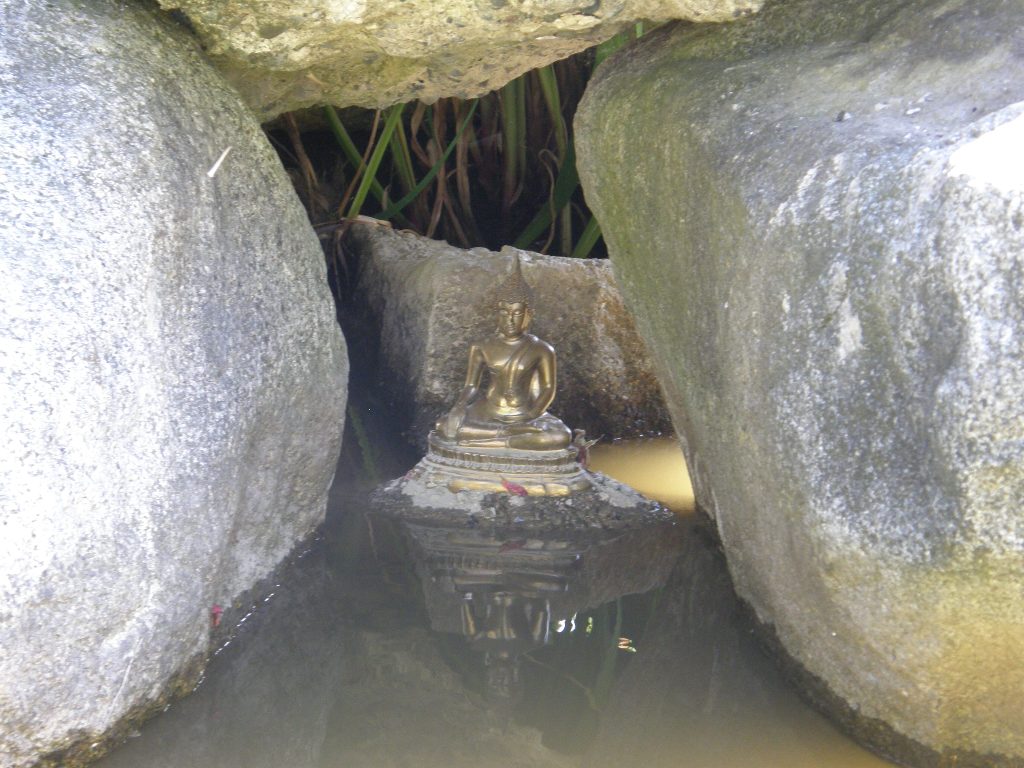
... and discovered a secret shrine:


In that "cave" in front of Laurie, a small Buddha sits, presumably to spread his beneficient karma over the garden.

buddha
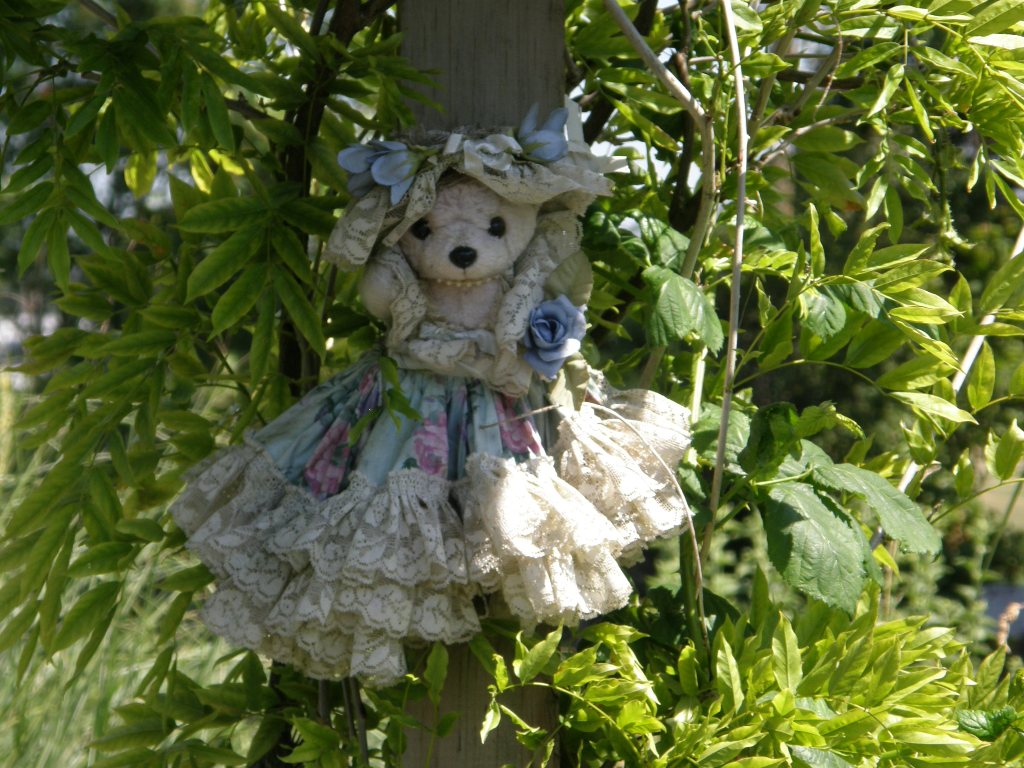
He's not the only guardian angel here:


On the post of a shady arbor.

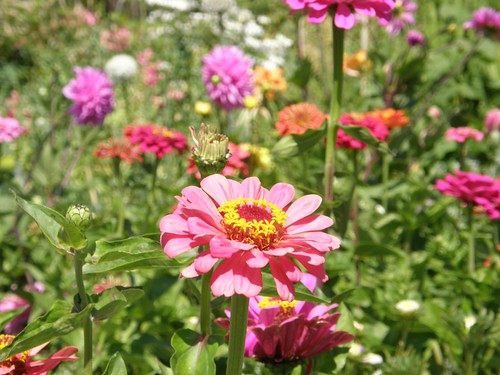
pink
One of the many flower plots. Due to good karma, fairy dust, compost, or hard work? Or all of the above?

borage
Borage.

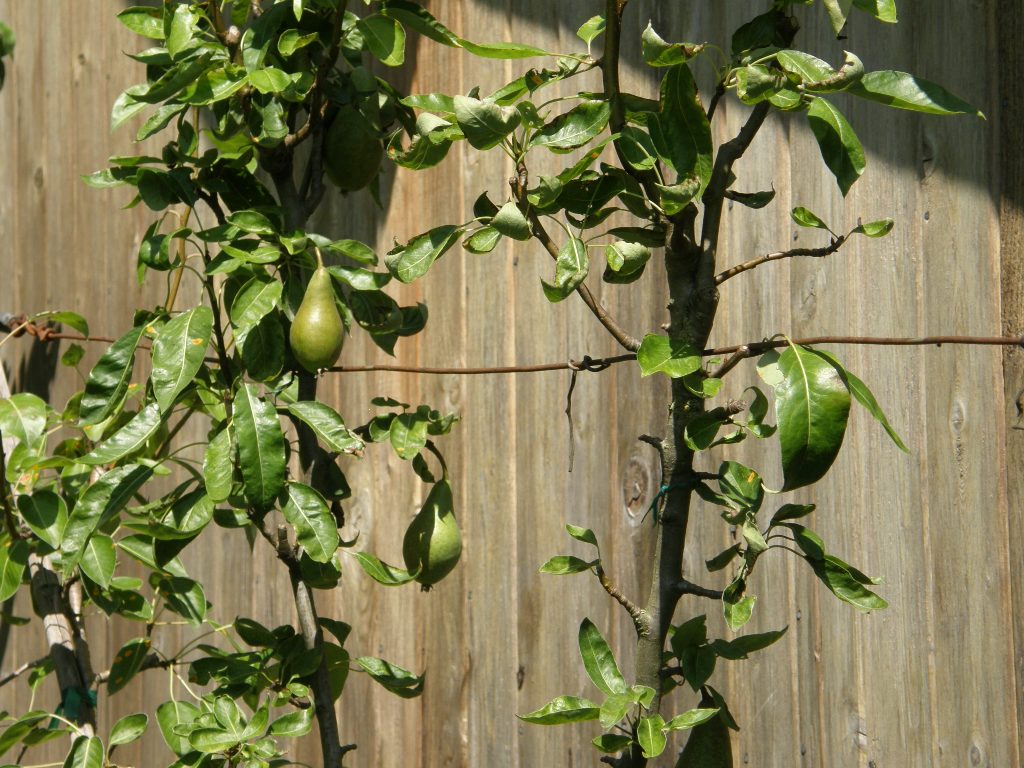
Going on, deeper into the garden, we came to a row of espaliered fruit trees, painstakingly pruned and secured, bearing red apples and hard, green pears.

pears
"This espalier uses the oblique cordon system with the tree stock grafted onto dwarf rootstock."
Next, the waterlily pool:


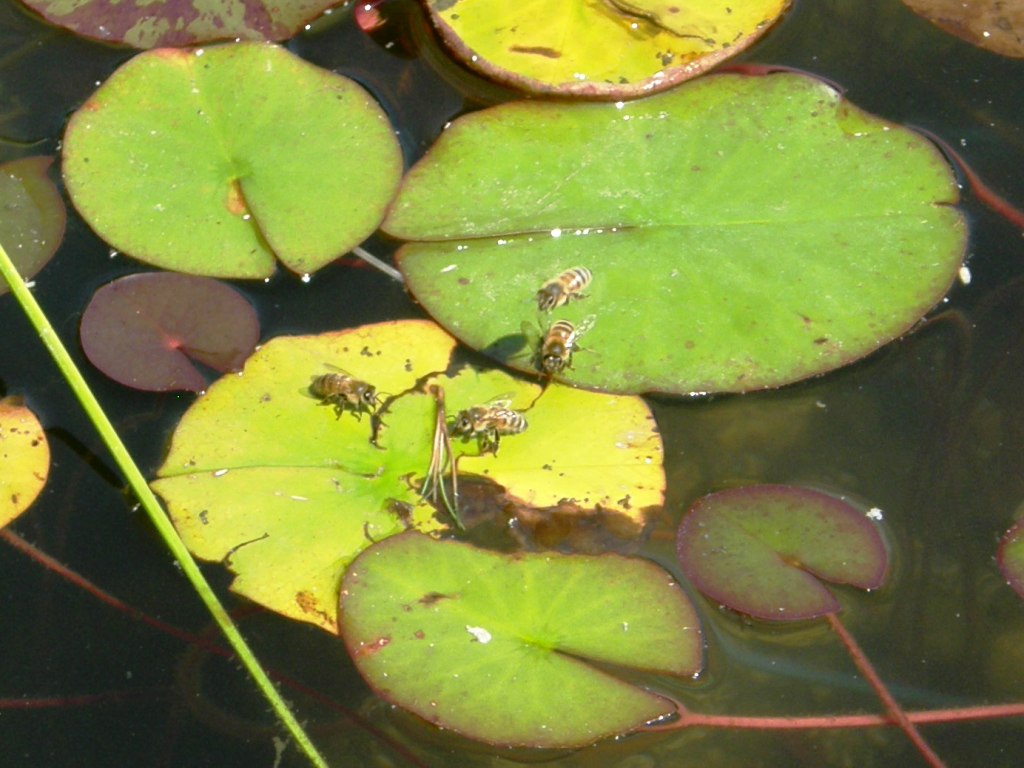
... a mirror in the centre of an herb garden with gravelled paths, following a Tibetan Buddhist mandala pattern. Butterflies flutter here from one herb to another, dragonflies zip to and fro, and the bees are busy.

bees
Time for a break, and a cooling drink of water.

lily padsAnother pool pic. Just because.

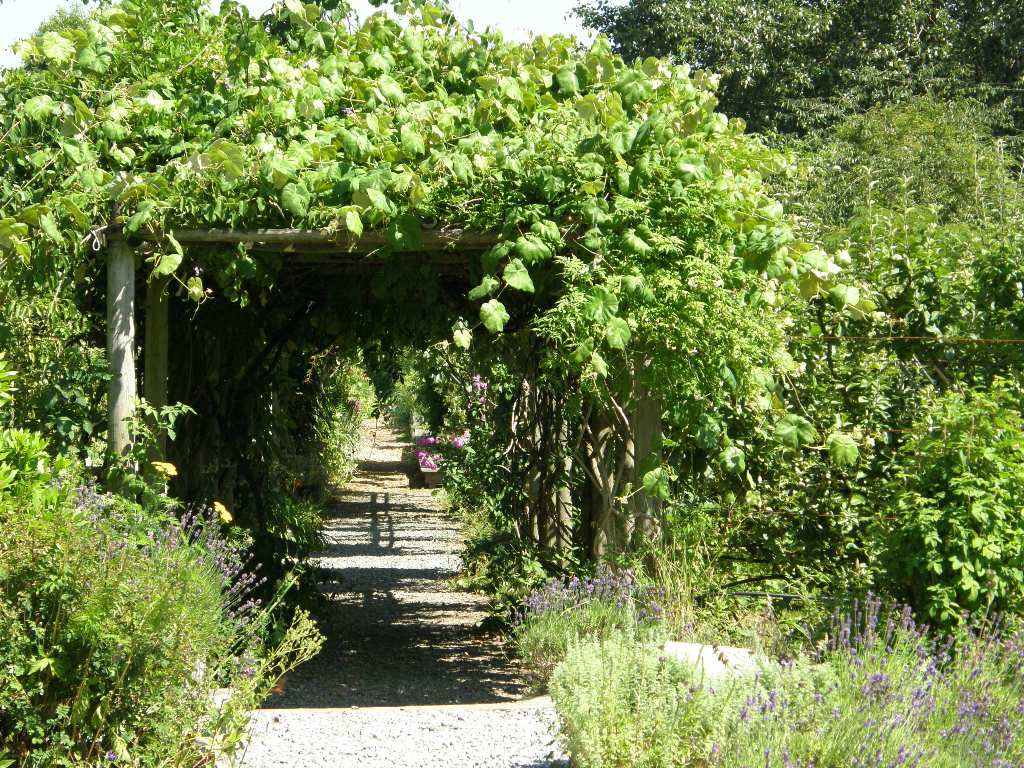
Back through the vine walk, heaped with grapes, clematis, kiwis and honeysuckle:

shady walk
... to the garden house,
"a space for meeting, seed collection, herb drying and archives / library. The building was created using sustainable and reclaimed materials, and incorporates natural systems such as solar power, rainwater collection, grey water cleansing as well as a composting toilet."

Solar panels.

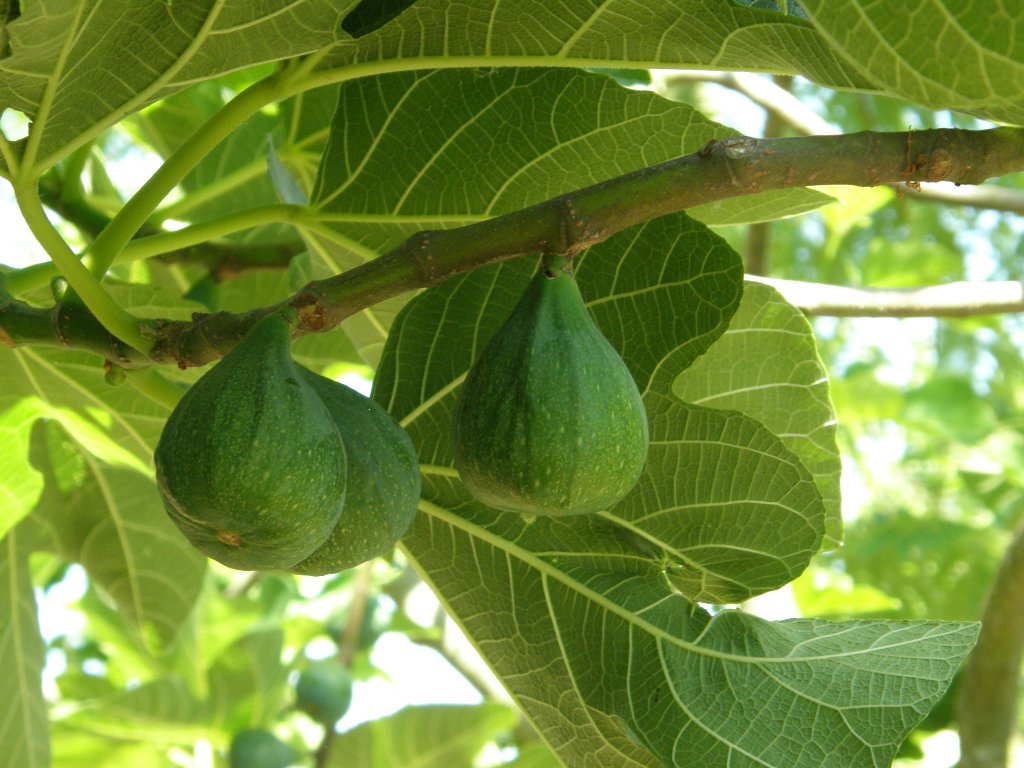
figs
Figs.

Time to go home for tea. We walked back around the west edge of the plots, past a children's area,

wagon
... and a berry patch,


Black gooseberries.

... down the path, and home, sunburnt (again!) and foot-weary.

We missed the wetlands area, down in the southeast corner, the composting bins, and the native sweat lodge. A route for another day.


Section of the Environmental Youth Alliance map.
.

Monday, July 28, 2008

Greening the dump

Downtown Vancouver is shaped like the belly of a seahorse, with Stanley Park being the head. It swims between Burrard Inlet and English Bay; False Creek bathes the lower back.

At the beginning of the 20th century, the water continued down and around the tail as tidal flats. A dam was built at Main Street, the "land" was deeded to the CPR (who later gave some of it back, as unusable) and the wetlands were slowly drained and filled. What is left now, is a large, barren area, partly wasteland, partly scarred by railway lines and warehouses. I have marked it on the map in pale brown.


On the north side of this blot, a small bright green V marks the Strathcona Community Garden. This was originally part of the tide flats; over the better part of half a century, the city has been gradually filling it with soil, garbage and gravel. In spots, the water still surfaces.

The flats have seen varied activity over the decades: railway parking, industrial landfill, city garbage dump, "Hobo Village" during the Depression years, and later on, the site of the main city firehall and mixed industrial use. All of this, of course, was laced together with the irrepressible blackberry thickets.

Since the end of the 1970s, residents of the area have been working towards creating a shared garden on the dump. It has not been easy; between the difficulties of the terrain, the encroachment of the city, conflicts with other worthwhile projects, and the on-again, off-again battles with the city government, it took ten years to formalize a temporary lease on the property, in 1985.

The garden at first covered 3.5 acres; in 1993, it was expanded to include the Cottonwood, along the street to the southeast, and the Environmental Youth Alliance garden (on a blackberry-infested garbage heap), bringing the total area under cultivation up to 7 acres.

Enough stats; on to the photos. Follow our footsteps:


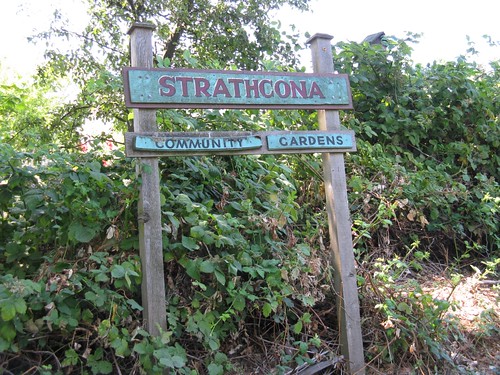
The sign on Hawks Avenue does not encourage visitors; it doesn't even mark an entry-way. Up at the corner of Prior, a narrow wood-chip trail cuts through the blackberries and bindweed.


This wild border serves a useful purpose or two: it insulates the garden from the smoke and racket of Prior Street, and provides a safe habitat for birds and other wildlife. Besides, it disguises the garden, discouraging non-garden-oriented visitors. It almost discouraged us; we passed the corner several times before we noticed the trail.

Around a gentle curve, the garden dozes in its sunny enclosure. At first, we wander among the expected allotment fare.


Lettuces and other salad greens.


Big blue cabbages.


Herbs in containers.


Nasturtiums and dillweed. With a chair for the weary weeder.


With the occasional decorative element thrown in. Here, crab shells on poles.

The plots go on and on, and we went around and around, up and down the rows. A few gardeners worked quietly on their squares of land; a woman showed us her neighbour's grape vines, woven together with flowering purple clematis, white bindweed, and laden with green grapes.

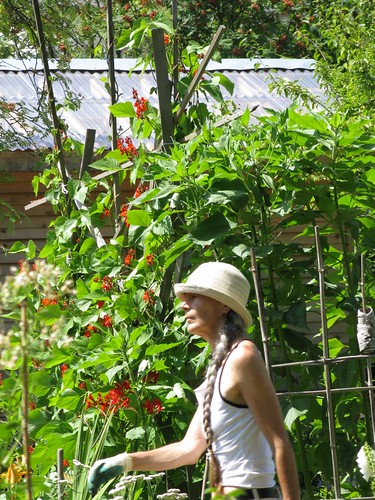
Heading for the garden shed, for another tool, perhaps. Scarlet runner beans bloom overhead.

The plots petered out. We passed a row of tall boxes; beds raised to waist height.


I learned later that these beds were built for the use of disabled gardeners, who would not be able to handle the stooping and lifting that most ground-level gardening entails. (Oh, my aching back!)

A few picnic tables under fruit trees, and this round "dining suite" in a sunny spot. And just beyond, the orchard; apple, pear, and crabapple trees.


And across the orchard, the beehives, housing the pollinating crews.


Doing the map dance.


To be continued: water features, solar panels ...
.

Saturday, July 26, 2008

Hard at work

I'm still sorting Community Garden photos; the promised history, etc., will be delayed until tomorrow.


... Now, where was that hoe?
.

Friday, July 25, 2008

They call it the "BiodiverCity"

A scant half dozen blocks from the bustle of Chinatown, we walked into a fragrant oasis, quiet except for the buzzing of a million bees and the chatter of chickadees and sparrows.

Strathcona Community Garden. Once a dump, now ... let me show you:


Environmental Youth Alliance map.


Apples, redding up.


Yellow squash.


Weeding the rows of onions.


A few plots on the southeast corner.


Tomorrow: history of the garden, current projects, more veggies, fruit and flowers, beehives, and a hidden Buddha.
.
Powered By Blogger