Tuesday, September 30, 2008

Crow in a hurry

It was hot today; 30 Celsius on the balcony, a bit less on the street. Too hot for September, well above the usual range for this time of year. The weather people promise (threaten?) more of the same tomorrow. I'll be glad when the rain starts again, later this week.

We walked down to the mall, keeping to the shady side of the street.

On a hedge across the street, a crow was busy at something:


Look what I found!

He saw us pointing cameras in his direction, and took off in a hurry. Look at that wing action!


This yummy whole-wheat bread is mine! Mine!


I'm outta here!

He didn't have to hurry so much; we didn't want his bread.
.

Monday, September 29, 2008

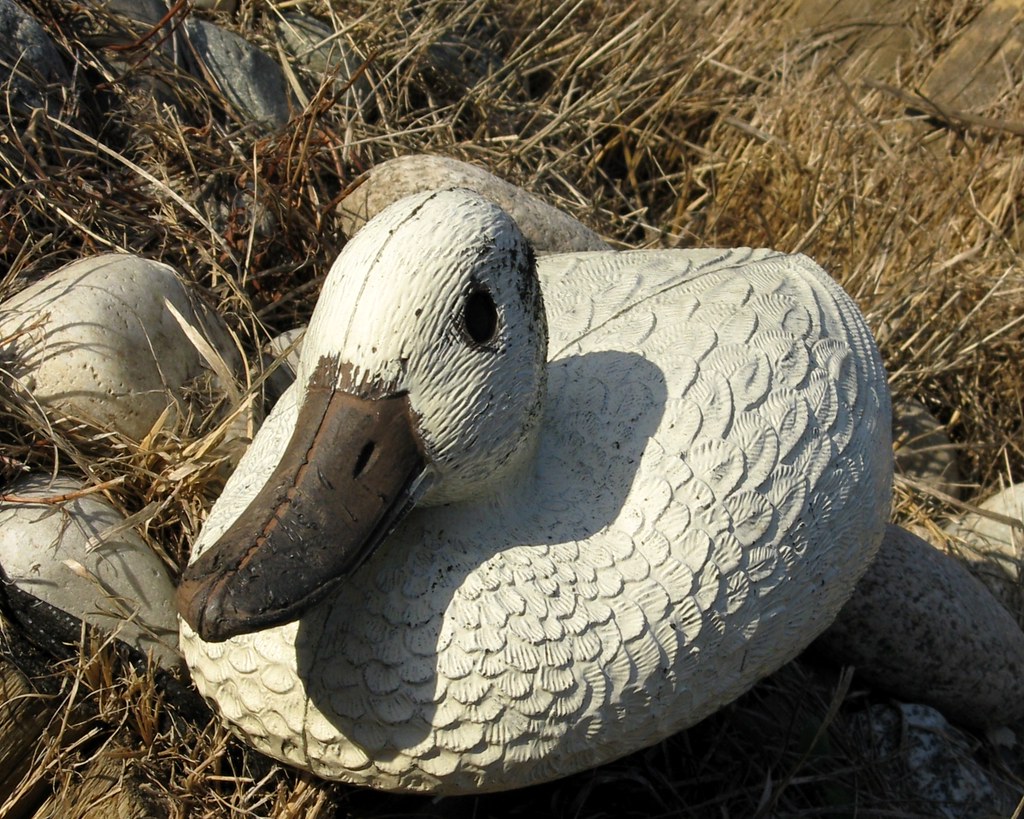
White duck

She's been sitting on those stony eggs since early spring: admirable persistence!


Hang in there, ducky!
.

Sunday, September 28, 2008

In a handful of duff

It keeps raining. And raining. Except for the times I can't get out of the house.

And I had a Bioblitz assignment to do this week.

So, I improvised. I did a mini-blitz. I went out with a pair of plastic bags and filled them, one with the duff from under a nearby pine tree, the other with assorted cones dropped in the vicinity. And inside, warm and dry, and with good lighting, I examined my haul.

There were a dozen Douglas fir cones, and a few tiny cedar cones. I was surprised not to find any cones under the pine tree; last year they were plentiful. I think the squirrels have been harvesting them, because I did find quite a few individual seeds, broken off the cones.

Douglas fir.

And the duff, about two double handfuls: It looked good, brown and rich and fragrant. Just the stuff for acid-loving plants and insects looking for a warm place to winter. Sorting through it, I found:
  • pine needles and seeds - the bulk of the duff
  • dying ivy leaves
  • skeletons of deciduous leaves
  • tendrils of assorted mosses
  • broken twigs
  • tiny cedar cones
All well and good. But there were also:
  • a ball of fibers, seemingly scrapings from a plastic rope
  • strips of transparent plastic
  • a couple of chunks of styrofoam
  • shreds of treated lumber from a recent roof job.
Not so good.

A sampler of duff ingredients.

Both the bags, duff and cones, were crawling with assorted beasties, the same general mix in both.


Pillbugs were everywhere.


So were springtails.

These little guys were really hard to pin down for photographs; they would be right in front of the lens as I pressed the shutter, and by the time it had clicked, they were several inches away. I never saw them go, they bounced so quickly.

Here's the mechanism:


A long spring attachment that folds under, then releases with a snap. (This guy had been inadvertently squished; I think that's brains leaking out the top end. It's the only way he would have lain still for a photo.)

I tried to capture a springtail by floating them in water; it worked before with the little white ones. Not these; they sprung off the water just as merrily as on solid ground.

But:
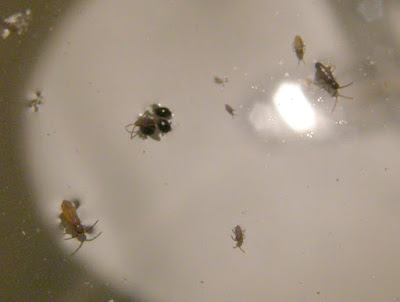

Here they are, on water, directly under my lamp. They come in all sizes; some of the tiny specks are also springtails. Note those little round critters; I'll get back to them in a minute.


Detail of the previous photo. See how the springtail's feet make deep depressions in the water surface? And yes, that is just plain water.

And here's another of those little round things:


I've seen these before; they're barely visible to the naked eye. (If you know where they are, and they're on a white background, you can see a tiny dot moving.) Under a hand microscope, they're semi-spherical, reddish-black; no features visible except for toe-tips. And they're tough; I've sandwiched them between strips of Scotch tape, and watched them crawl (slowly but steadily) through the glue and out to freedom.

I don't know what they are. I've got some more Googling and BugGuiding to do.

This one was easier:


Isn't he cute? He's on the tip of my microscope tool, about as thick as a sewing-machine needle. And below him is a snail, not much bigger than he.


The snail. I don't know what species this is; I've never seen a beehive-shaped one here before.


And another snail, a bit smaller. This one is our common grove snail, I think.

There were a few of these white springtails. They scuttle in and out of crevices, always busy, never stopping...

One last photo. I am wondering about this one.


Just another pillbug. But see, down at the bottom, that black and white strip? What is that? It almost looks like another of the western conifer seed bugs, except that there are too many sections, and it is too small.

I was surprised to find no slugs, nor centipedes. A few metres away the soil is full of them. And I think I saw one tiny earthworm, but it slid out of sight into a fir cone before I could be sure.

The other half of the Bioblitz project entails identifying the finds. My eyes are burning already.
.

Saturday, September 27, 2008

Working late

I've been bioblitzing. And now I have a bunch of critters to identify. I'll post some of them tomorrow.

For now, here's a root and a creeper of some sort from next door.

See you tomorrow!
.

Friday, September 26, 2008

It's been too long ...

... far too long, since we were on a beach.

But we should have a car, finally, by Sunday. And then, the first day it's not pouring rain, we'll be here:


Boundary Bay

I think I can hold out that long.
.
Thursday, September 25, 2008

Embarrassing!

Is there such a thing as foot-in-keyboard disease? 'Cause I think I've got it.

Yesterday I typed out a description of my new guests, the Western Conifer Seed Bugs, dutifully changing every "bug" for "beetle," assuming that "bug" in this case was a misnomer. I thought of double-checking with BugGuide, but, no, I was too tired for that, I decided.

So, this afternoon there is a comment from Christopher Taylor; "Ummm.... that's not a beetle." Oh. It's a bug. I looked it up; he's right. And I knew that; I'd studied the BugGuide page last year. Dumb!

(The blogosphere is a wonderful place; so many, many helpful people live in it!)

So I've gone back and made a few corrections. And I've done my homework, re-read the BugGuide page and Googled for more info.

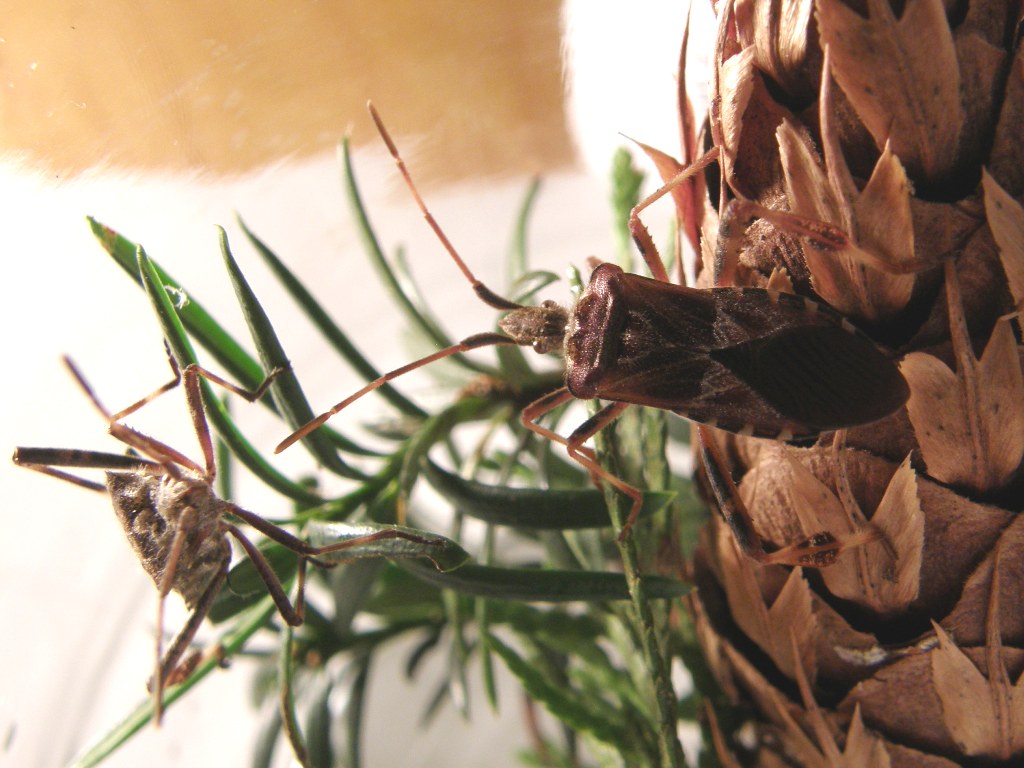
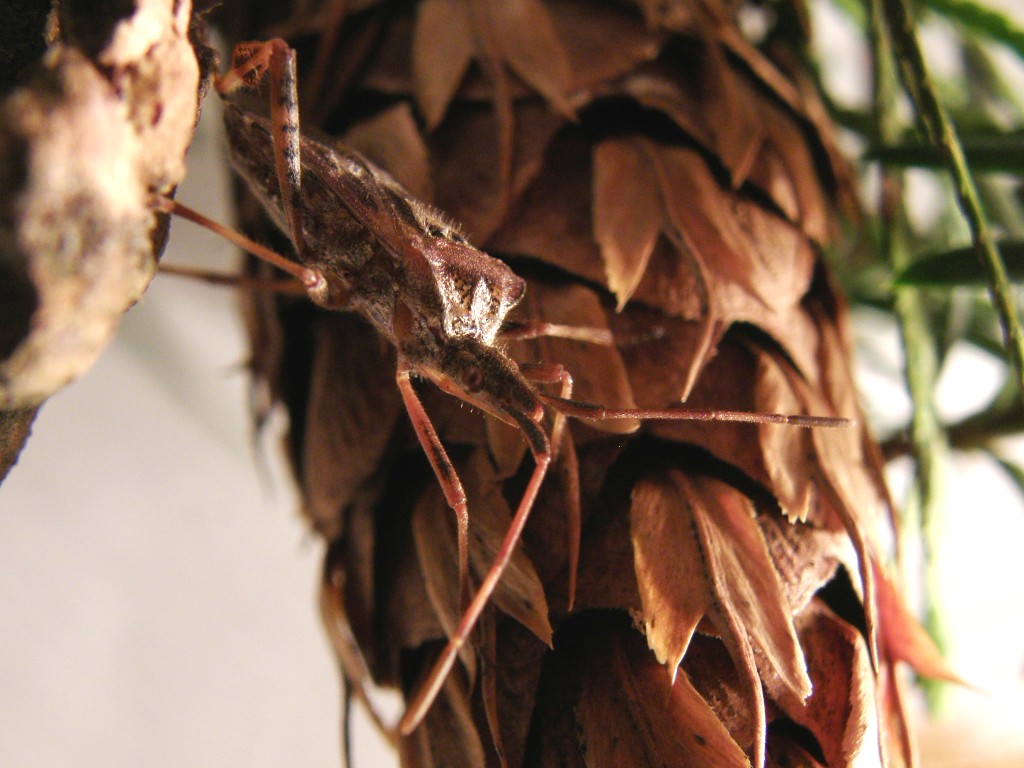
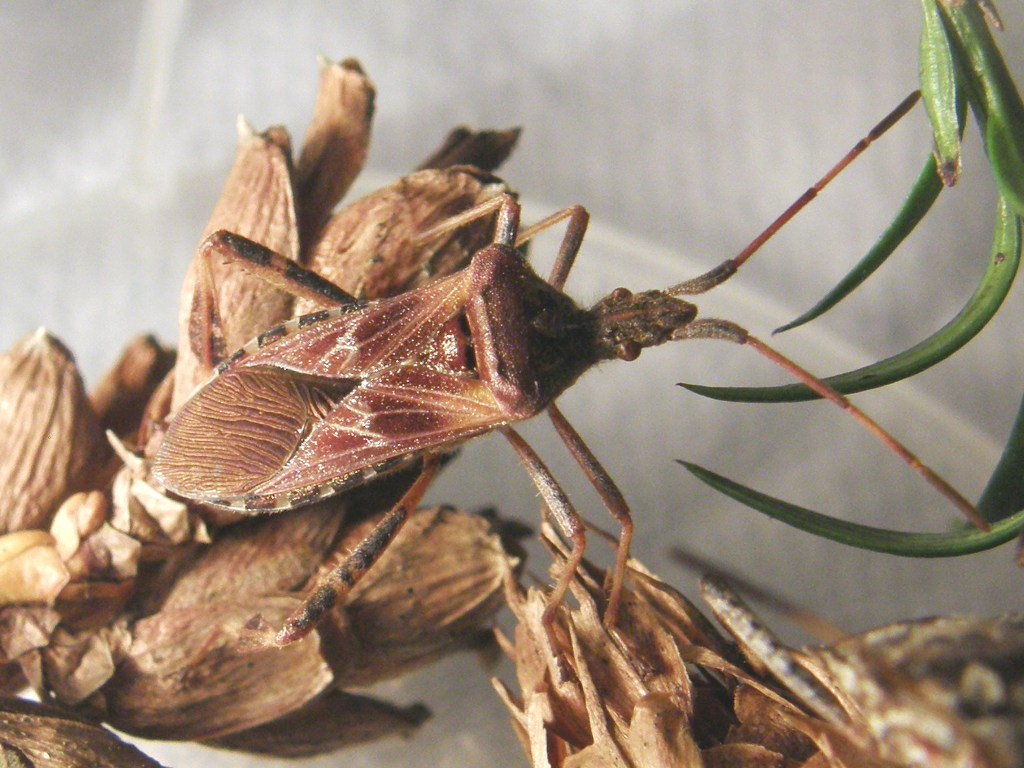
Bug One and Bug Two are Leaffooted Bugs, Leptoglossus occidentalis. Which translates as "Western thin tongue", as far as I can make out. They're "leaffooted" because of the flattened section of the hind leg; it's like a narrow leaf, spine in the centre and all.

Here's the classification, from BugGuide:
Order Hemiptera (True Bugs, Cicadas, Hoppers, Aphids and Allies)
Suborder Heteroptera (True Bugs)
Family Coreidae (Leaffooted Bugs)
Genus Leptoglossus
Species occidentalis (Western Conifer Seed Bug)
They live on Douglas fir and pine trees, and "can be a pest". (U. of Guelph fact sheet) This is why I won't put them outside; the first ones we found, last year, were on Laurie's dying conifers. BugGuide says,
"Nymphs and adults use their piercing-sucking mouthparts to feed on sap from green cones, twigs, seed pulp, and sometimes needles of several species of pine, plus hemlock, spruce, and Douglas-fir."
And that book, "Care and Feeding of Seed Bugs as Pets," that I was looking for? I don't think I need it, after all. When the weather turns cold (about now), they burrow down into leaf litter or move into human houses to spend the winter. They do not breed indoors; they're here to sleep. In the spring, they will look for fresh Douglas fir needles to lay eggs on. Maybe I'll be able to provide some. In captivity, of course. I don't want their babies eating our trees.

Meanwhile, Bugs One and Two are not sleeping; they're wandering around their container, mostly staying close together. They wave their antennae at me when I check on them.


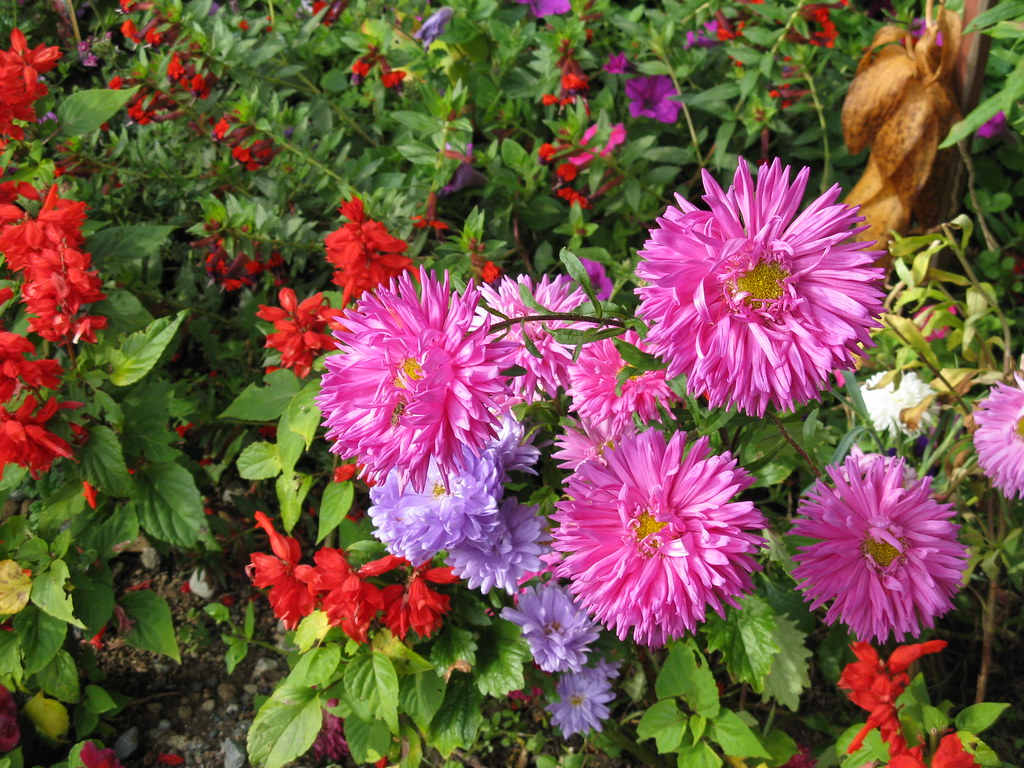
Off-topic. My neighbour's garden, yesterday.

Another thing I had forgotten; in all the hustle and bustle of the last month or so, I wasn't checking on the dates for the Annual Bloggers' Bioblitz. I found out Sunday that it is this week, Sunday to Sunday. So I think I'll do a mini-bioblitz this weekend. I do hope it's not pouring rain.
.
Tuesday, September 23, 2008

Matchmaker, matchmaker

It's been over a week since Laurie brought me that Western conifer seed bug. ** And it spent most of the week sitting alone in a plastic container, with only a few twigs off my evergreens for comfort. It was looking pretty sad, when I checked up on it last Saturday; lethargic, uninterested in life (barely twitching an antenna when I tickled it with a paintbrush).
That has changed.

Sunday morning, back in Strathcona, I noticed another bug on the floor under my daughter's window. I brushed it into a plastic bag, bundled it into my backpack and brought it home. I dropped it into the first bug's new home, with a handy pine cone for a perch.


"Aha! A companion! A new best friend!"

Immediate result; a whole lot of grooming going on. Every time I looked, one or the other beetle was busy scrubbing hands, scraping back legs, or smoothing its forewings (elytra). Antennae waved wildly, capturing data. Bug # 2 roamed about. By Monday evening, # 1 was following suit.


These are interesting bugs; intelligent, as bugs go, brave and inquisitive. They seem to have no fear of my camera lens, a bare centimetre away from their faces. They neither run away nor play dead, but instead wave their antennae at the camera; "Hi, all my fans!" One kept following the lens around, as I tried to position it where the light was good.

They wear a brick-red formal jacket trimmed with a large garnet, opening to reveal an inset of luxurious chocolate-brown silk, a red and black shirt-front with checkered trim and a thin, red tie.


Jacket. (Hemelytra or front wings)


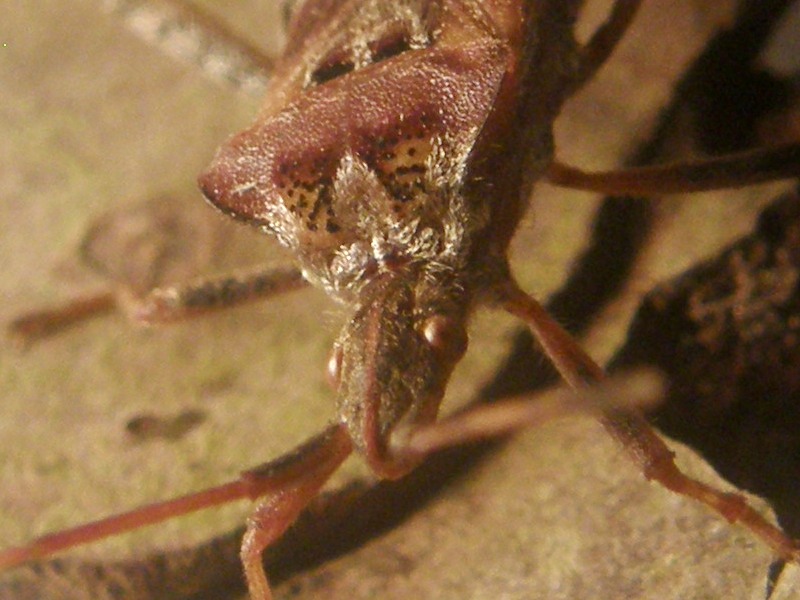
Shirt-front, with tie. (Mouth parts, actually.)

And around the shoulders, they wear a feathery collar, with jester's corners and cream lace inserts:


"Handsome, aren't I?"

By Monday night, both bugs were alert and busy; they kept opening and closing their wings, and occasionally attempting a short flight. I caught a glimpse of a back, yellow and black, like a wasp.

It took a while, but I got a photo:


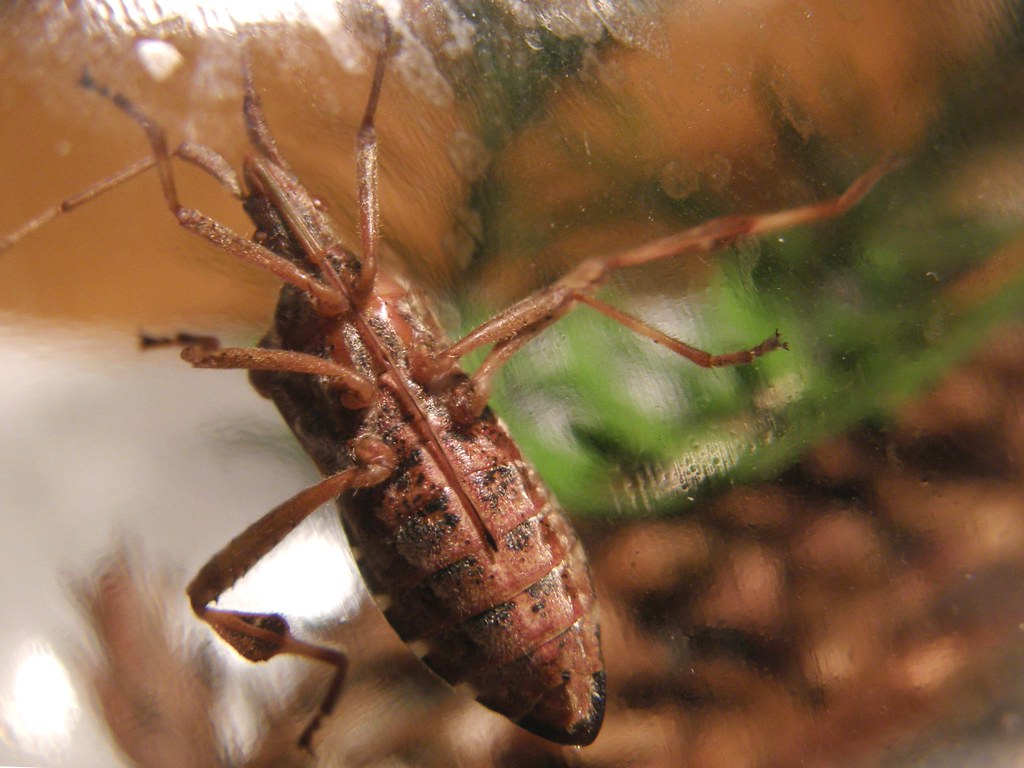
Three layers: hemelytra (forewings). Gauzy, transparent flight wings underneath. And below that, the upper abdomen.

I don't know how to tell if they are male or female. Or when, or whether they will be interested in breeding if they are opposite sexes. Something to look up. And I'll keep an eye on them for mating and/or fighting.

I'm keeping them both in the plastic container. I don't dare let them go; they, or their young, destroy our evergreens. Nor can I "put them down", not after I've been watching them for a week. So I'll have to provide a home for them, I guess.

I wonder if there are books on the Care and Feeding of Seed Bugs as Pets.

**Corrections made after input from Christopher (see comment #1). Thanks, Christopher!
.

Eight legs, two boxing gloves

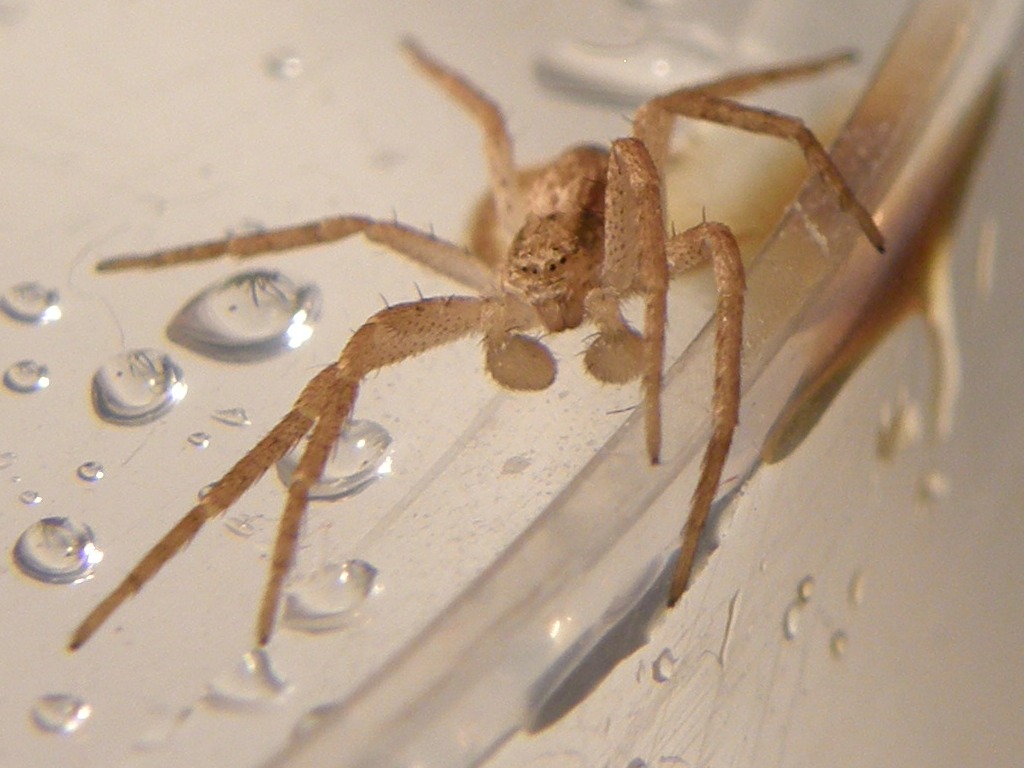
Tiny spider, on a plastic container:


This guy has been hanging around on the cabinet beside my favourite chair for quite a while. This is the first time he sat for his portrait.

Those fat "boxing gloves" are the pedipalps, male edition.
.

Monday, September 22, 2008

Mossy Wall

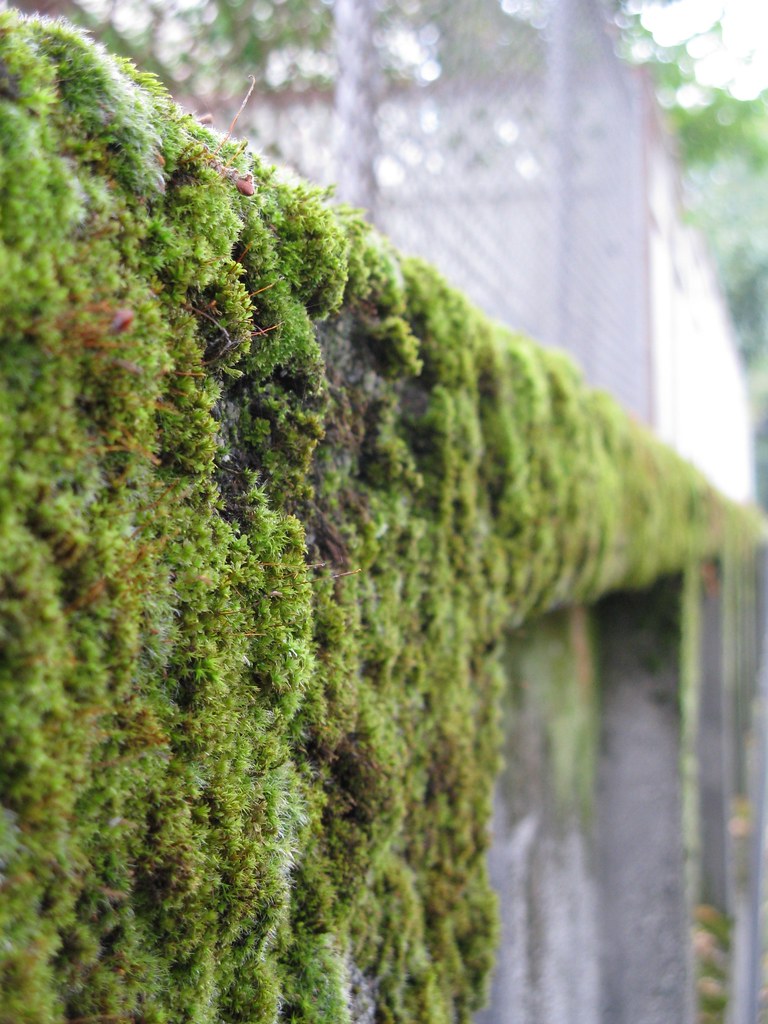
Moss and leaves on a cement wall, Strathcona:


Top of the wall


Side and end.

These really should be seen full-size. Check out the Flickr pages, here and here.
.

Sunday, September 21, 2008

Graffiti in the sky with diamonds

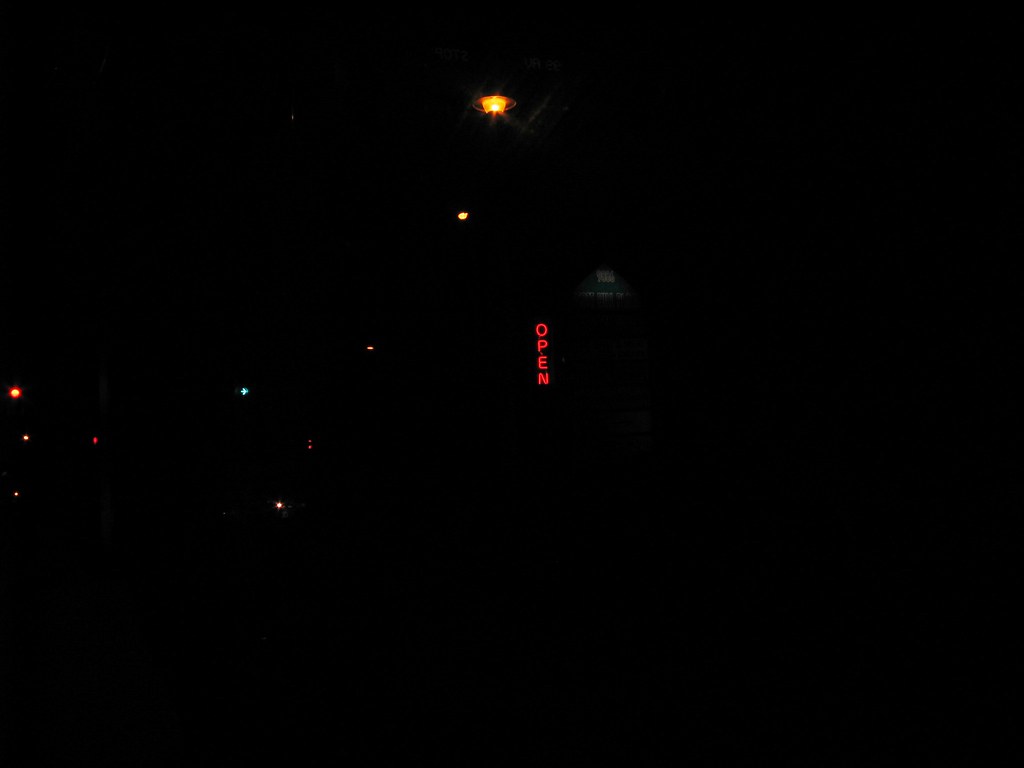
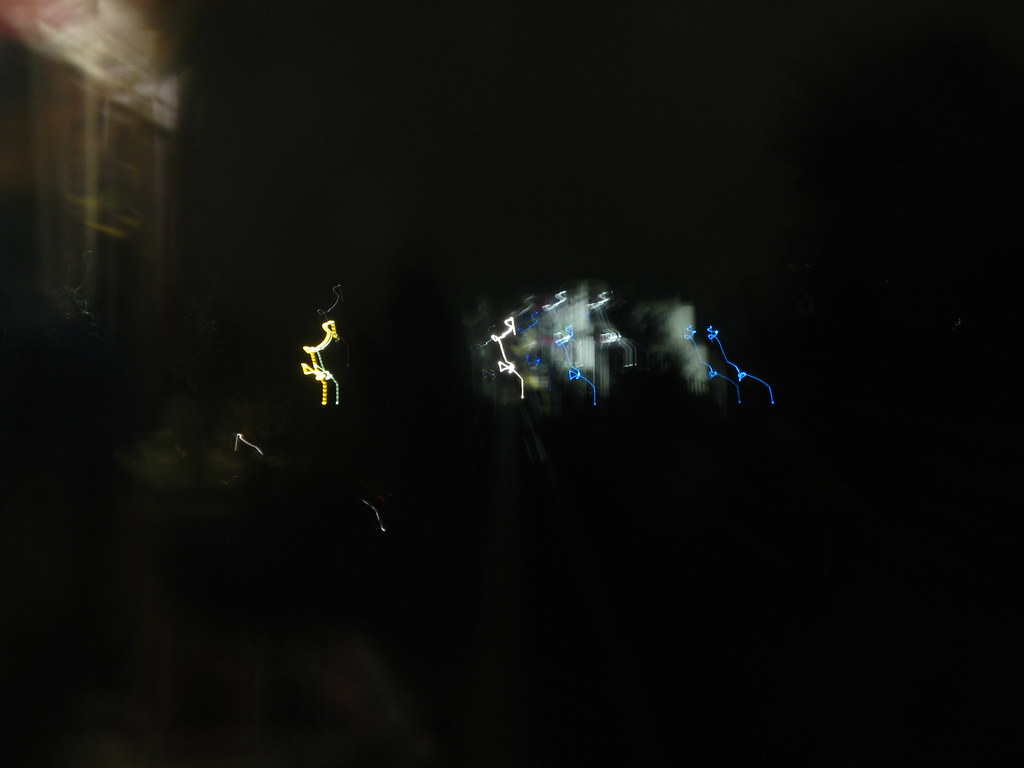
I am becoming enamoured of night photography. Here are a few of the ones I took on the trip to Strathcona Friday night.

From the first bus:


OPEN. A good place to start an album.

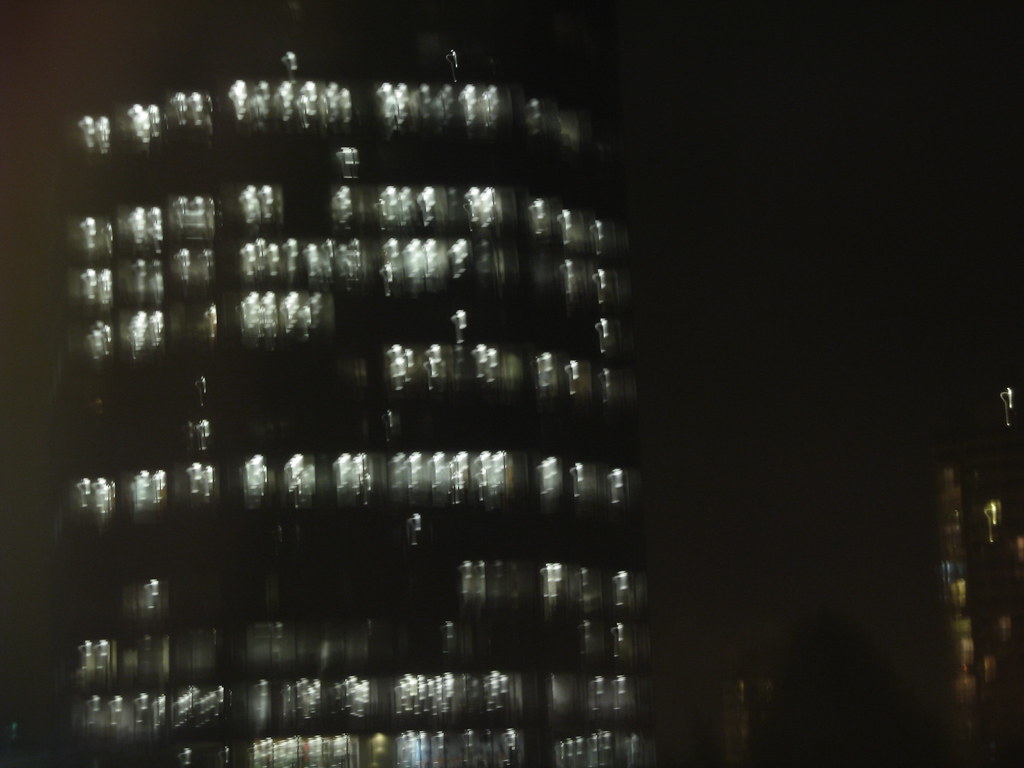
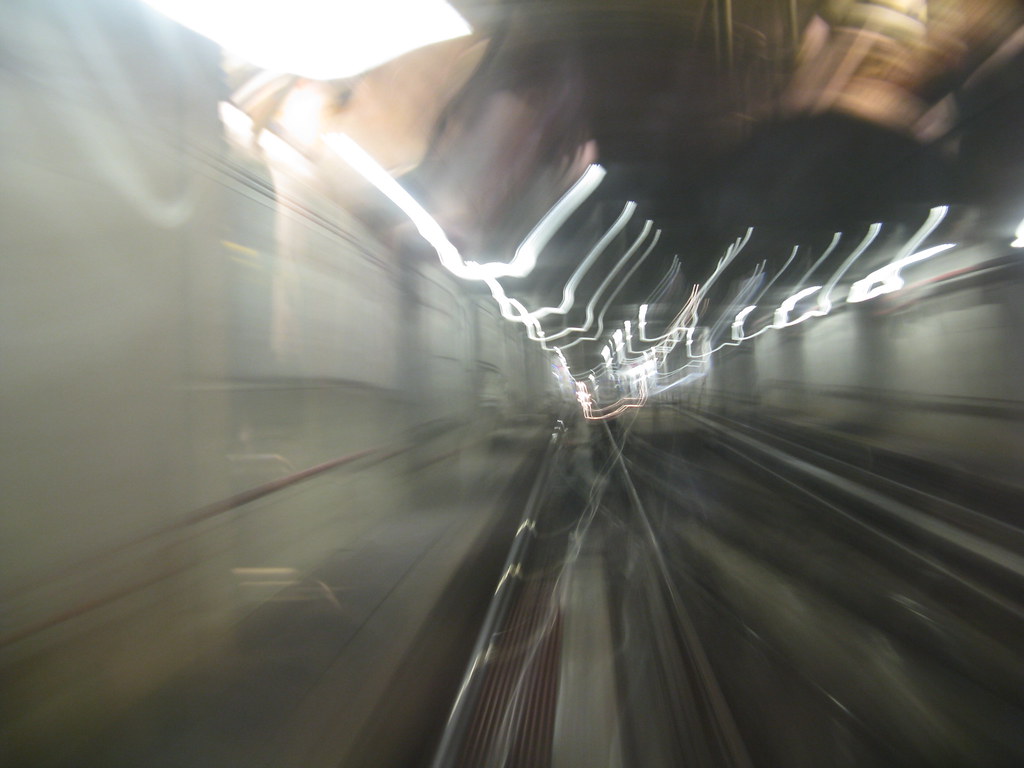
From the SkyTrain, the bumping, jerking, swinging, all-over-the-place SkyTrain. The camera was anchored. The sky graffiti is entirely the work of the train:


Down arrows. And a bridge over the Fraser.


Office building, MetroTown.


Ghosts of giraffes over New Westminster.


Leaving a station. With reflections of the train ceiling. This photo, especially in full size (click on it) draws me in, then makes me dizzy.


A pair of light-worms heads into town for a night of celebration.


Sign on the dotted line.

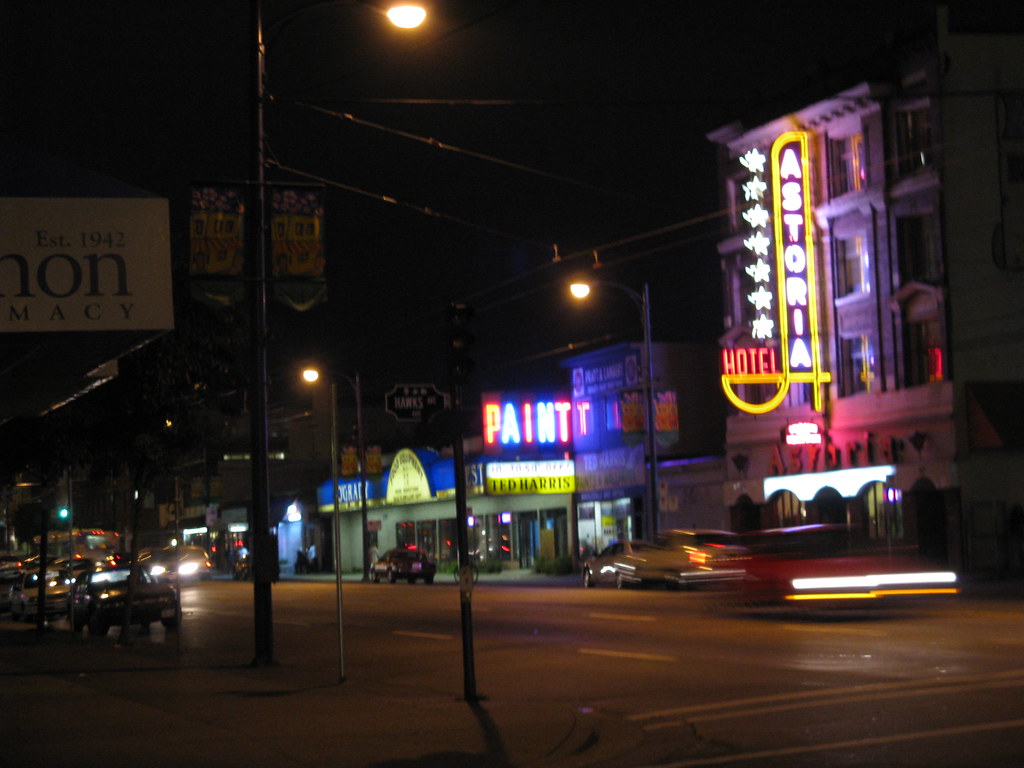
Almost there. On foot, now:


Jewel tones on Hastings, at my bus stop.


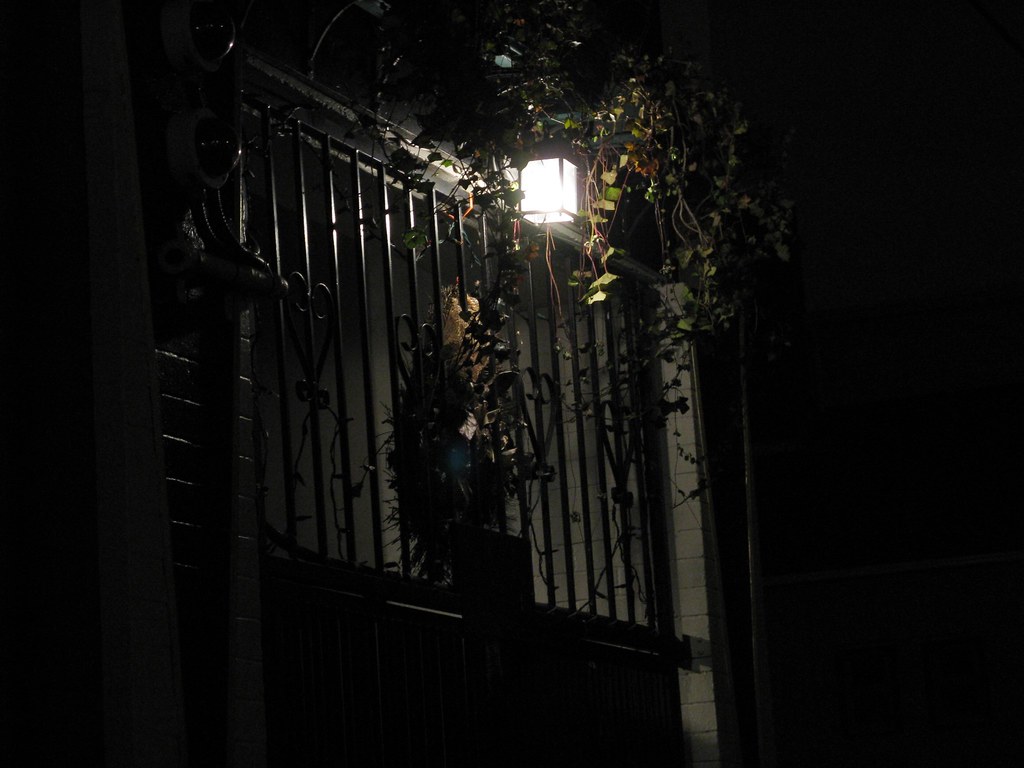
The lights fading: Lamp over a door at the corner.


Had to provide my own lights here.

And tomorrow, I'll be back to a daylit world. I like that one, too.
.

Saturday, September 20, 2008

The fast-retreating past

At the end of a long, long day (Laurie had his second cataract surgery), I travelled across town to house-sit in Strathcona.

I kept myself awake on the SkyTrain by sitting in the rear and taking photos of the receding tracks:


In between, I got some interesting shots of the city. I'll post a few tomorrow. 

And now, goodnight!
.

Friday, September 19, 2008

Fungus, Spore, and Anvil

This is just so cool!

The firing of spores from fungi, set to operatic music. Carl Zimmer has the video. Go watch.

Tomorrow's a busy day; I'm off to get a few hours sleep before the alarm starts its infernal racket.
.

Thursday, September 18, 2008

What Ike left behind

Before and after photos:


That's Bolivar Peninsula, the companion to Galveston.

Words fail me.

From USGS. More photos there.

Hat tip to Sheril, at The Intersection.
.

Smarter than I realized!

I already knew the chickadees were intelligent, but this ... !

Background data:
  • I am not a morning person. I tend to sleep in, if at all possible. (I once had a T-shirt/nightdress with the legend, "I don't do mornings." I wore it until it disintegrated into witches' lace; it was "me".)
  • The chickadee feeder hangs outside my bedroom window, about a foot away, and maybe four feet from the head of my bed.
  • I sleep with the window open.
  • The chickadees are "morning persons". They are at the feeder at first light.
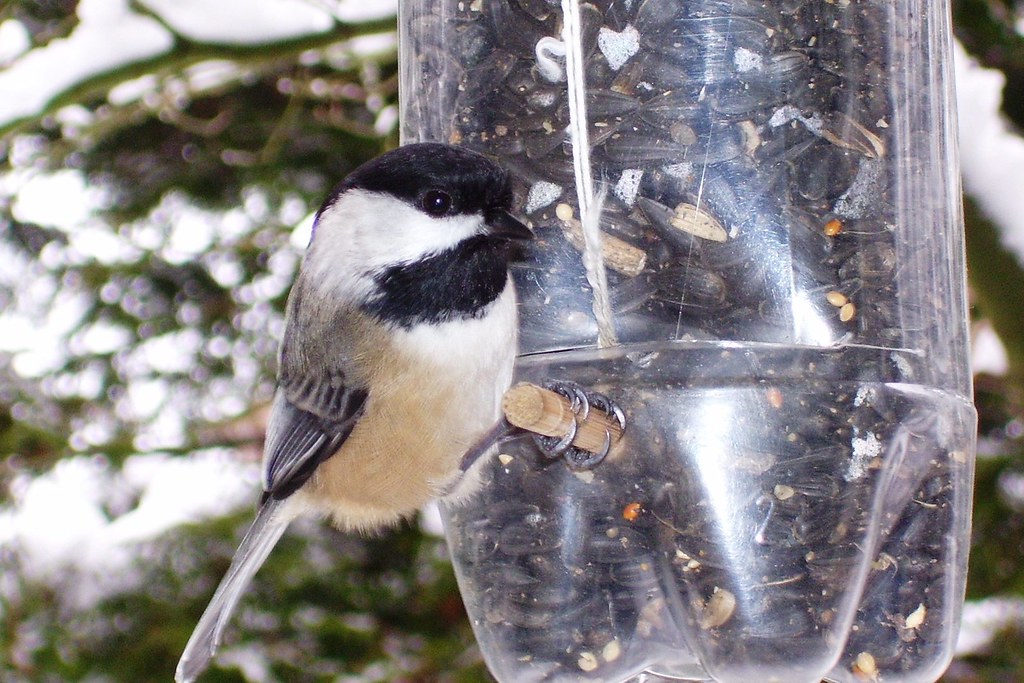
Sometimes, the feeder is low on seed, and by the time the chickadees have had breakfast, it has dropped below the level where their tiny beaks can reach. But they have devised a strategy for getting it filled again; they drum on the feeder until I wake up. "Tap, tap, tap, tap, tap. Tap, tap, tap, tap." And again, "Tap, tap, tap, ..." For a tiny bird, and a plastic bottle, the noise produced is surprising; as loud as an upholstery hammer with old-fashioned tacks. After a while, the tapping enters my dreams and I struggle to the surface, realize that I am guilty, yet again, of grave derelection of my duty, and creak out to fill a replacement feeder and hang it for them.


(I've posted this photo before. But it shows the structure of the feeder.)

I thought this was incredibly smart of these chickadees. I haven't seen others do that, in other places. Somehow, they have caught on to the fact that I am in hearing distance and will eventually respond. And they've taught the next generation to do it, too.

But I also thought that inventing the trick was probably a matter of accident: they were probably (I imagined) knocking on the bottle to shake the seeds into a position where the birds could reach them, and waking me up was just a side effect.

I may have to revise that opinion.

This morning, the tapping woke me up again. But I stood looking out the window for a few minutes before I dragged myself into the kitchen. And watched a chickadee tapping. He doesn't drum on the plastic at all; he turns himself around, and pecks at the end of the stick that goes right through the bottle, turning the whole thing into an echo chamber.

I tried it out, later (after I'd hung a refill). Tapping the bottle itself produces a muffled, "soft" sound. Tapping the perch is better. But to get the true wake-up call, you have to bang at the flat end of the stick, the one facing you in the photo above.

I find it hard to imagine them coming up with that by accident. What do you think?
.

Wednesday, September 17, 2008

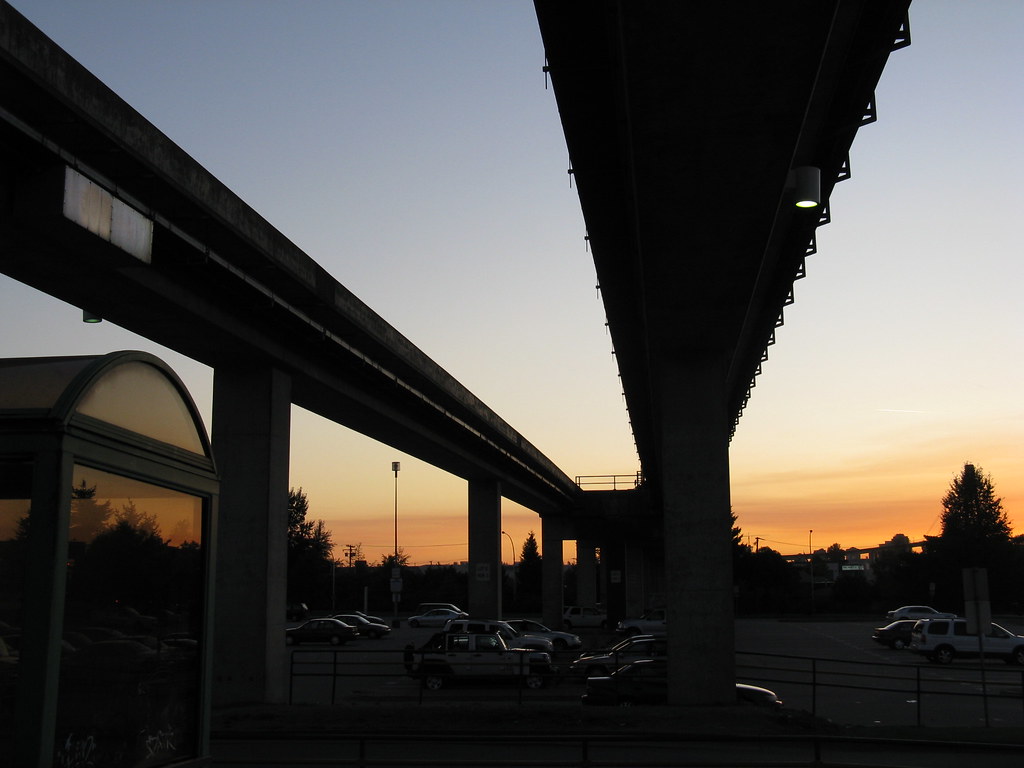
At the SkyTrain station

Noon:

Waiting for the 319 bus


Not waiting

Evening:

Skyline from the platform


And SkyTrain line from below.

.

Monday, September 15, 2008

Don't bring me chocolates!

Laurie biked down to Home Depot to look for some tools today. On the way back, he picked up a gift for me:


Western conifer seed bug.

I am so fortunate!

(Really. He knows what I like.)
.
Powered By Blogger