Showing posts with label trilliums. Show all posts

Friday, May 03, 2024

Hitchhiker, maybe?

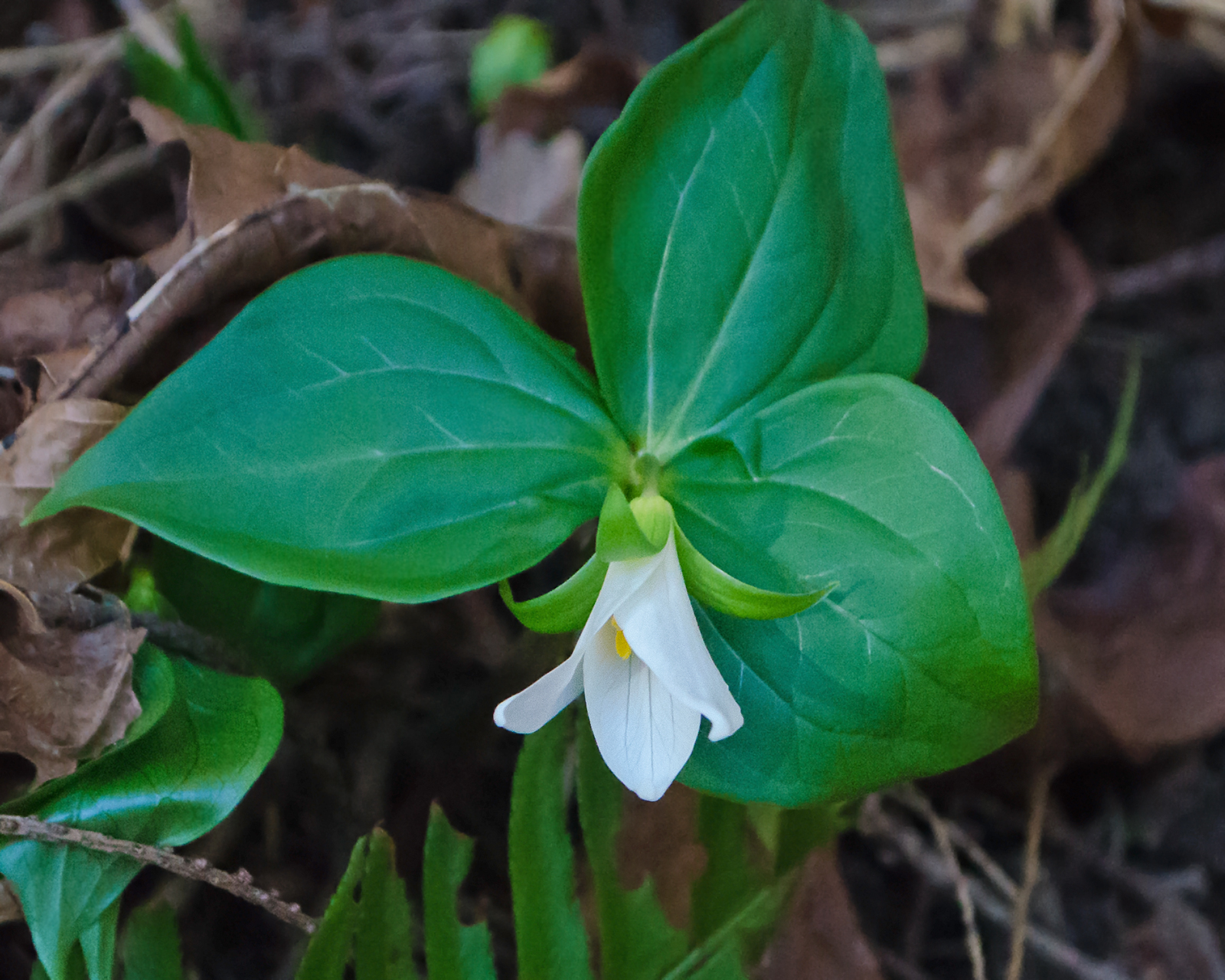
"Moist to wet woods, streambanks, shaded open areas ..." "Moist forests ... and mossy bluff ledges and river boulders ..." So say my guidebook and E-FloraBC, about where to find trilliums. Not where I found this clump; on the shoulder of the highway, on a dry, rocky slope.

Just the one, lonely clump.

It almost looks like someone discarded a potted trillium plant here, 14 km. from the edge of town. So far, it looks like it finds the site comfortable. I'll look for it again next spring.

~~~~~~~~~~
"Bosques húmedos o empapados, las orillas de rios y riachuelos, sitios abiertos pero en sombra ..." "Bosques húmedos ... y laderas cubiertas de musgos y piedras en los rios ..." Aquí, dicen mi libro guía y el sitio E-FloraBC, es donde puedo encontrar los trilios. Donde crece este grupo, en el borde de la carretera cruzando un declive seco, no. Pero allí está; parece tal vez que alguien haya tirado una maceta con la planta, aquí a km. del pueblo más cercano.

Hasta ahora, parece que le conviene bien el sitio. Los buscaré de nuevo en la próxima primavera. 


Monday, April 22, 2019

Hidden treasure

It was all because of the skunk cabbage. I saw a patch of it through the trees as I drove past, and went looking for a trail entrance. I'd never visited Nunns Creek before; from the road, it looks like a difficult tangle of forgotten undergrowth, almost completely encircled by large commercial sites and weedy vacant lots. But I wanted to see if I could get near that skunk cabbage without rubber boots.

At a corner of the lot, behind a patch of untended, weedy shrubs, I found a sign and what looked like a trail head. I parked and went in. Weeds, broken trees, more weeds. And then - a patch of pink fawn lilies. Then more, dozens more, hundreds more, thousands more, all along a network of trails, going deep into the bush. In spots, they were joined by bleeding hearts. And, dotting this carpet of pink and green, a scattering of trilliums, white and pinkish.

A pair of pink fawn lilies, with their blotchy basal leaves, and a few bleeding heart leaves.

A young trillium, still small, very white.

An older trillium, pink. With a crab spider that I completely failed to see until I blew up the photo.

I circled around, walking down every branch of the trail system Except this one: it was barricaded.

More flowers tomorrow.

Tuesday, April 02, 2019

New white trilliums

Spring. There are flowers everywhere, yellow, pink, purple. Under the trees in the shady woods at Kitty Coleman Park, a short drive south of here, white trilliums were joining in.

Trillium ovatum, the Western trillium. White when they're new, turning pink as they age.

Most were still barely open.

Fully open, these will spread the three petals almost flat.

This is an "ant plant". My guide book, Plants of Coastal British Columbia (Mackinnon and Pojar), explains:

"Each seed has a little, oil-rich appendage that is attractive to ants.The ants lug the seeds back to their nests, where they eat the appendages or feed them to the larvae and then discard the remaining seeds on their rubbish piles. This is a reasonably effective mechanism for seed dispersal, especially for plants of the dim, becalmed forest floor. Ants disperse up to 30% of the spring-flowering, herbaceous species in the deciduous forests of eastern North America. Our forest flora is less dependent, but we do have several spring-flowering "ant plants", including bleeding heart, inside-out flower and wild ginger, as well as trilliums."

The Kitty Coleman forest is mostly evergreen; cedar, hemlock, old-growth Douglas fir, and sword fern, with a few red alders to provide more shade in the summertime. I didn't see any ants.


Sunday, April 23, 2017

Once in 18 years.

Under a sign on the museum trails, the trilliums are blooming.

Western trillium, Trillium ovatum var. ovatum

Trillium likes shady, wet forests, and riverbanks where its feet stay wet. At the Campbell River museum, the trillium patch is on a dry (comparatively) slope, just below the paved walkway, in semi-shade, an unexpected location. (There may be some underground irrigation.)

Young flowers of this variety (ovatum) are white, but with age they may turn pinkish or even purple. (I haven't seen any purple ones, though.) Zooming in on this one, I can see the merest hint of pink; it's still young.

I checked bloom times for the area; at the southern tip of the island, in Victoria, trillium flowers in late March to early April. And near here, halfway up the island, I found records in the third week of April. 250 kilometres: 2 weeks delay in bloom. I noticed this same time delay when I drove north last week; travelling north is like setting the calendar back.

Around a corner, on the sunny side of the museum, in an unlabelled patch, I found a couple of unusual trilliums:

Multi-petalled trillium 

These were slightly smaller than the others, but they have the characteristic trillium three-fold pattern: three leaves, three pointed sepals, three petals. But these have three inner petals, as well. I found a match in E-Flora; it was also found in Campbell River, in the forest.

Another interesting fact about western trillium -- it can take up to 18 years for a plant to become sexually mature (i.e. able to produce flowers). (From Metro Vancouver Regional Parks' Facebook page.

Just one more reason never to pick a trillium; it's the fruit of 18 years' work!


Monday, April 30, 2007

Trilliums!

Today, at Cougar Creek:

More on these, plus ducklings, later. For now, back to the salt mines.
Powered By Blogger